
As manufacturers and distributors prepare for 2027, North America’s building materials industry is placing renewed emphasis on business resilience, supply partnerships and the changing economics of distribution.
The 2026 NAFCD + NBMDA Annual Convention, held November 3–5 at the Hilton Anatole in Dallas, brought together professionals from the flooring and specialty building materials industries. Organized by the North American Association of Floor Covering Distributors (NAFCD) and the North American Building Material Distribution Association (NBMDA), the three-day gathering focused on strengthening commercial relationships and addressing challenges affecting distribution channels. Organizers promoted the convention as a networking opportunity connecting more than 1,000 distributors, suppliers and service providers.
The event arrived at an important time for the U.S. building materials sector. Manufacturers and distributors continue to face questions surrounding economic uncertainty and operating costs while preparing their purchasing strategies for 2027. Rather than concentrating solely on product innovation, the convention’s program emphasized how companies can improve business performance and adapt to changing market conditions.
For international wood manufacturers and suppliers, these discussions are relevant beyond the North American market. Distribution businesses influence which materials enter retail assortments and how new products reach contractors or furniture manufacturers. Understanding their priorities can help overseas suppliers develop more commercially effective manufacturing programs.
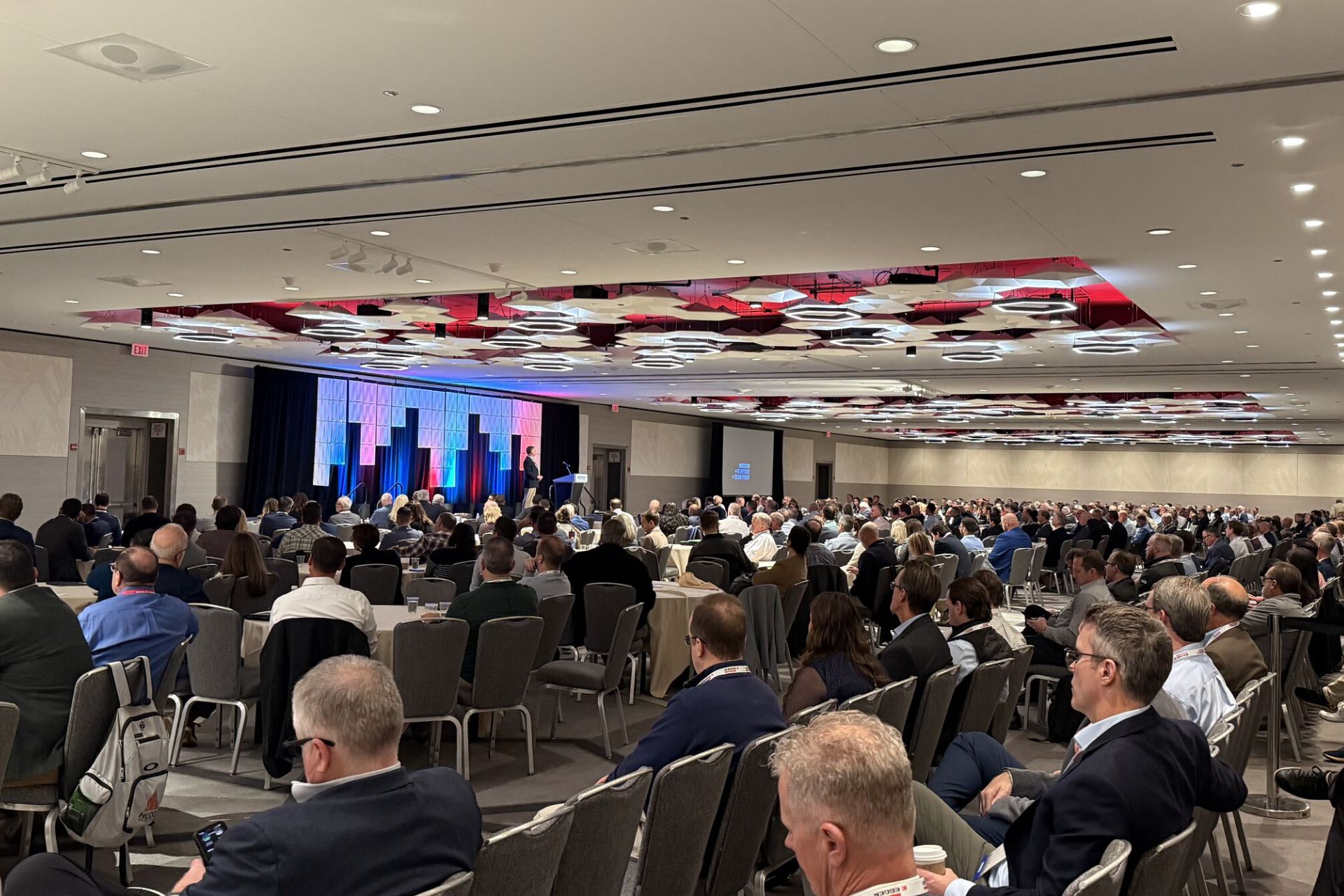
Industry professionals attending the NAFCD NBMDA Annual Convention 2026 in Dallas. Use an organizer-approved photograph for publication.
A Distribution Event Connecting Two Major Industries
The convention brings together two organizations representing closely connected segments of North America’s construction and interior materials supply chain. NAFCD serves businesses involved in flooring distribution, while NBMDA focuses on specialty interior building materials. Its membership areas include decorative surfaces, composite panels, cabinet hardware and other products used in woodworking and interior manufacturing. (distributorconvention.org)
Although these segments serve different applications, their commercial challenges frequently overlap. Distributors must manage inventory while responding to changing customer demand, and manufacturers need sufficient visibility into downstream requirements to plan production efficiently. Product quality remains essential, but profitability increasingly depends on how effectively materials move through the distribution network.
The annual convention provides a setting for these companies to exchange practical information about operations and future demand. Its format includes supplier meetings and industry education alongside opportunities to establish new business partnerships. Such connections are particularly relevant to manufacturers seeking long-term relationships with U.S. wholesale distribution companies.
More Than 1,000 Industry Professionals Within One Distribution Network
The organizers positioned the NAFCD + NBMDA Annual Convention as a gathering of more than 1,000 industry participants. The event featured an exhibition environment designed to support direct conversations between distributors and suppliers, together with educational programming and networking activities. Its emphasis on individual meetings distinguishes it from trade events focused primarily on large product displays.
For manufacturers, direct access to distributors can improve understanding of what the market actually needs. Discussions about product specifications or stocking requirements may identify opportunities that are not immediately apparent from broad industry statistics. These conversations also help clarify whether a product fits an established distribution category or requires a different route to market.
The value of this approach extends to overseas manufacturers seeking U.S. distribution partners. Buyers may be interested in new product programs, but long-term cooperation depends on the supplier’s ability to meet established commercial and technical expectations. That makes relationship development a significant component of the industry’s sourcing process.
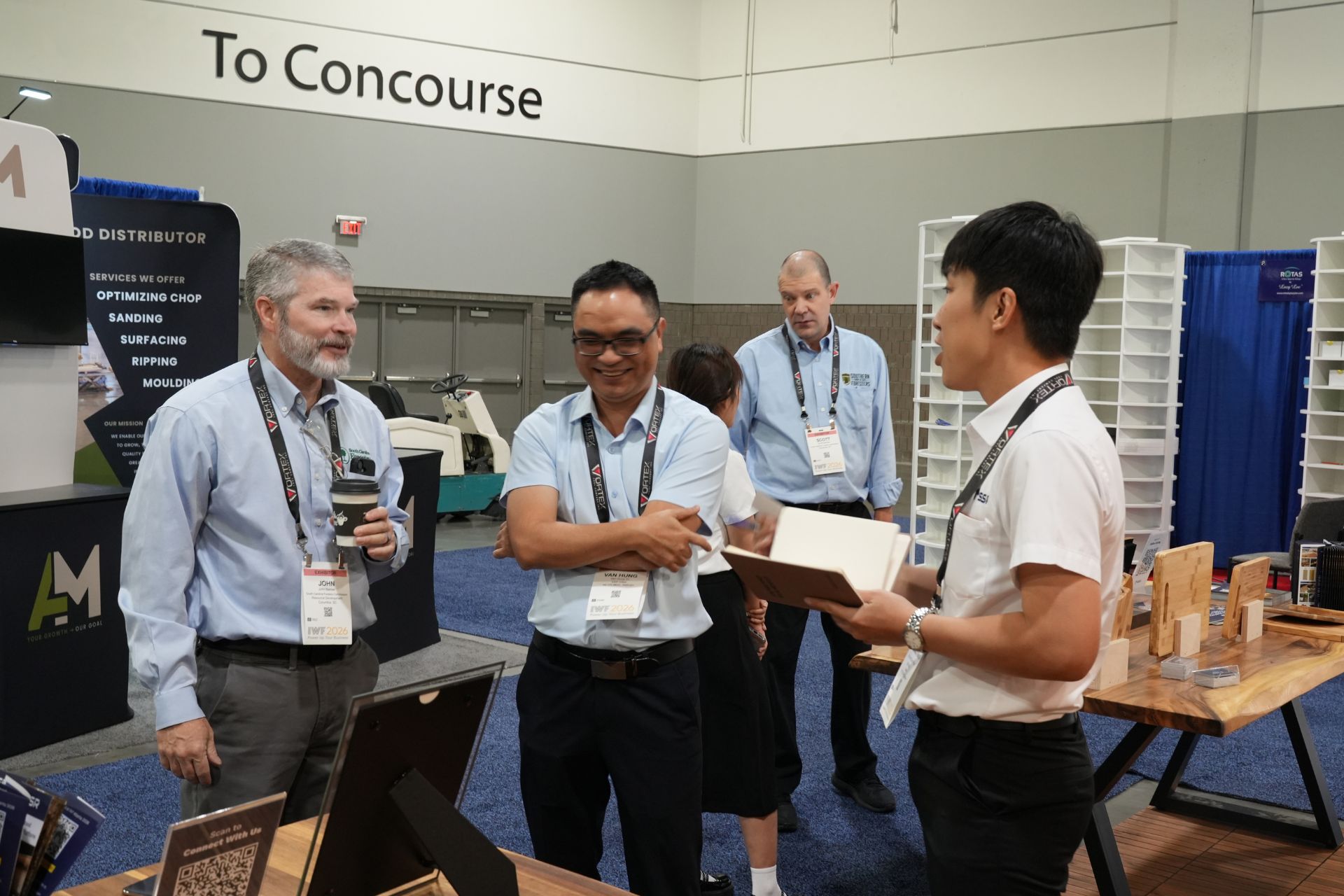
U.S. Building Materials Distributors and Supplier Partnerships
Economic Uncertainty and the Outlook for 2027
Economic planning was among the convention’s most important themes. The confirmed speaker program included Grace Schatz, managing director of economic consulting at ITR Economics, whose presentation, Setting Expectations for 2027 and Beyond, was designed to address the outlook for business conditions. Topics included inflation and interest rates alongside labor conditions and geopolitical uncertainty. (woodfloorbusiness)
These issues have direct implications for building materials distribution. Financing costs affect inventory decisions, while labor availability can influence operating efficiency across warehousing and logistics. Changes in demand can also affect how much stock distributors are prepared to carry before receiving confirmed orders.
For suppliers, the implication is that manufacturing capacity should be considered alongside the customer’s purchasing cycle. A production program that supports consistent replenishment may be more commercially useful than one based only on maximum volume. This is particularly relevant to imported wood products, where production schedules and international transportation introduce additional planning requirements.
Business Resilience Becomes a Competitive Priority
The convention’s leadership sessions also addressed the organizational changes required to navigate uncertainty. Former NFL running back and business executive Justin Forsett presented a session on resilient teams, while researcher and speaker Meridith Elliott Powell explored how organizations can respond constructively to unpredictable business conditions. These topics formed part of a program connecting leadership and strategic planning with distribution management.
The emphasis on resilience reflects a broader concern among businesses that operate between manufacturing and end-market demand. Distributors cannot control every change in construction activity or customer purchasing patterns, but they can improve how quickly they respond. Supplier communication and reliable product information become especially valuable when businesses need to adjust their commercial plans.
For manufacturers, these considerations highlight the importance of operational consistency. Accurate production schedules and clear specifications help distribution partners make purchasing decisions with greater confidence. Such capabilities are particularly important for international suppliers that must coordinate manufacturing and export logistics across different markets.
Stronger Distribution Networks Begin With Better Supplier Relationships
Coverage published by Floor Covering News on November 5 highlighted how relationship-building remained central to the convention. The publication reported strong participation in educational sessions and exhibition activities, alongside recognition of established industry leaders. Jack Adleta received the 2026 NAFCD Lifetime Achievement Award in recognition of his contribution to the distribution industry over more than five decades.
The association also introduced initiatives intended to strengthen professional development across the distribution sector. Its regional Distributor Forum series expanded opportunities for shorter training sessions, while the proposed Vision 2030 strategy aims to reshape how the organization serves members. Plans for an expanded online learning hub further indicate the importance of continuing education beyond the annual convention.
These developments suggest that distributors are investing in more than short-term sales opportunities. Industry associations are placing greater attention on professional skills and long-term organizational capability. For manufacturing partners, this reinforces the value of relationships based on reliable performance and open communication.
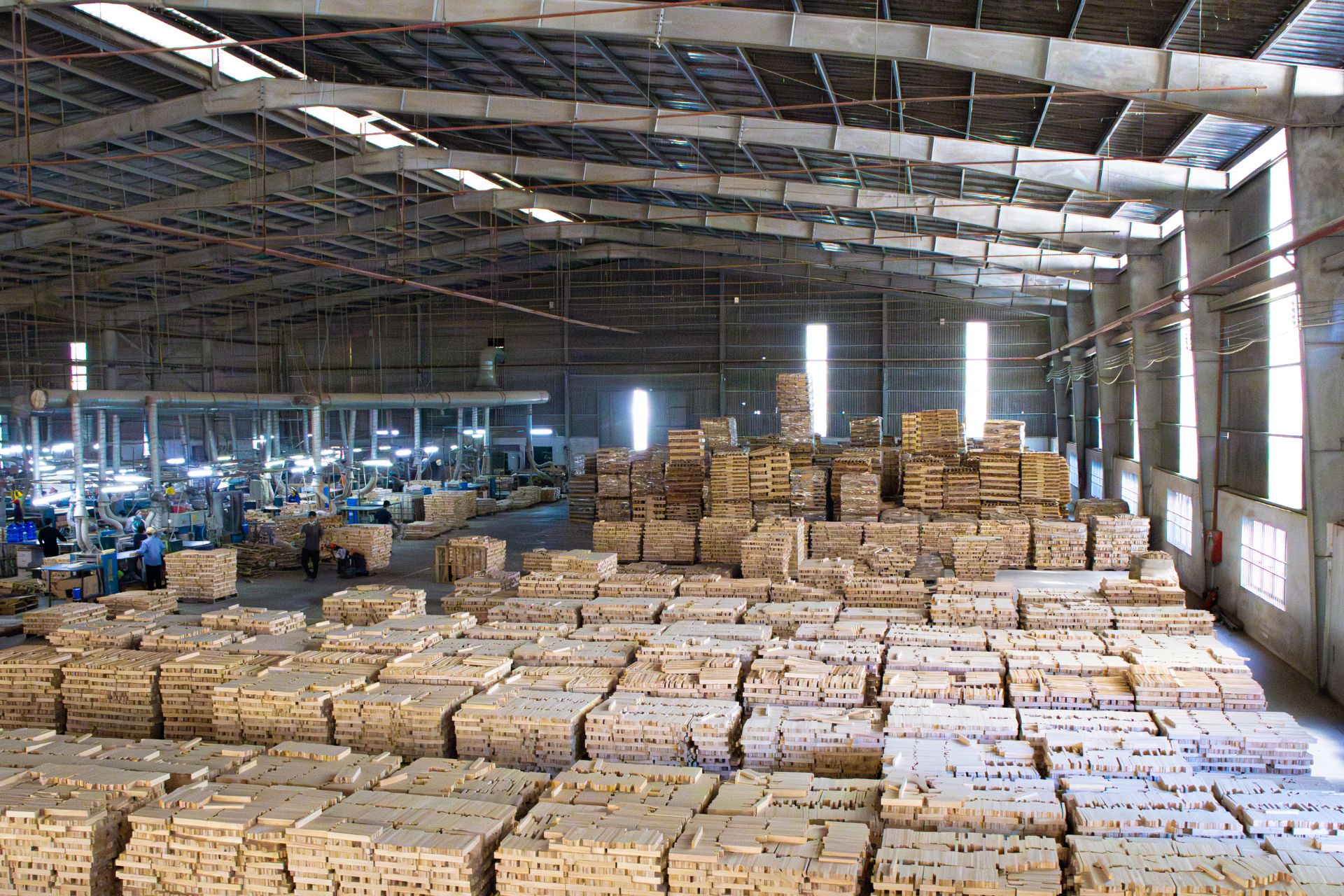
Wood panels stored in a wholesale building materials distribution warehouse
What the Convention Means for Wood Product Manufacturers
The convention’s focus on supply partnerships carries direct relevance for companies producing wood panels and interior building materials. NBMDA represents distributors active in categories that overlap with woodworking and cabinet manufacturing, making it an important industry reference point for manufacturers developing wholesale supply programs.
For example, a wood panel supplier entering the U.S. market needs to understand how distributors evaluate dimensional consistency and product availability. Retail-oriented programs may also require specific packaging or labeling standards, while manufacturers supplying fabrication businesses may prioritize technical specifications and repeatable production quality. These considerations influence whether a product can be successfully introduced into an established distribution network.
International manufacturers can use these market signals to refine their approach to U.S. buyers. Rather than offering products solely according to factory capabilities, suppliers can develop programs around the downstream requirements of distributors. The resulting partnership becomes more useful when manufacturing and distribution decisions are connected early in the sourcing process.
SSR’s Perspective: Connecting Vietnam Manufacturing With U.S. Distribution
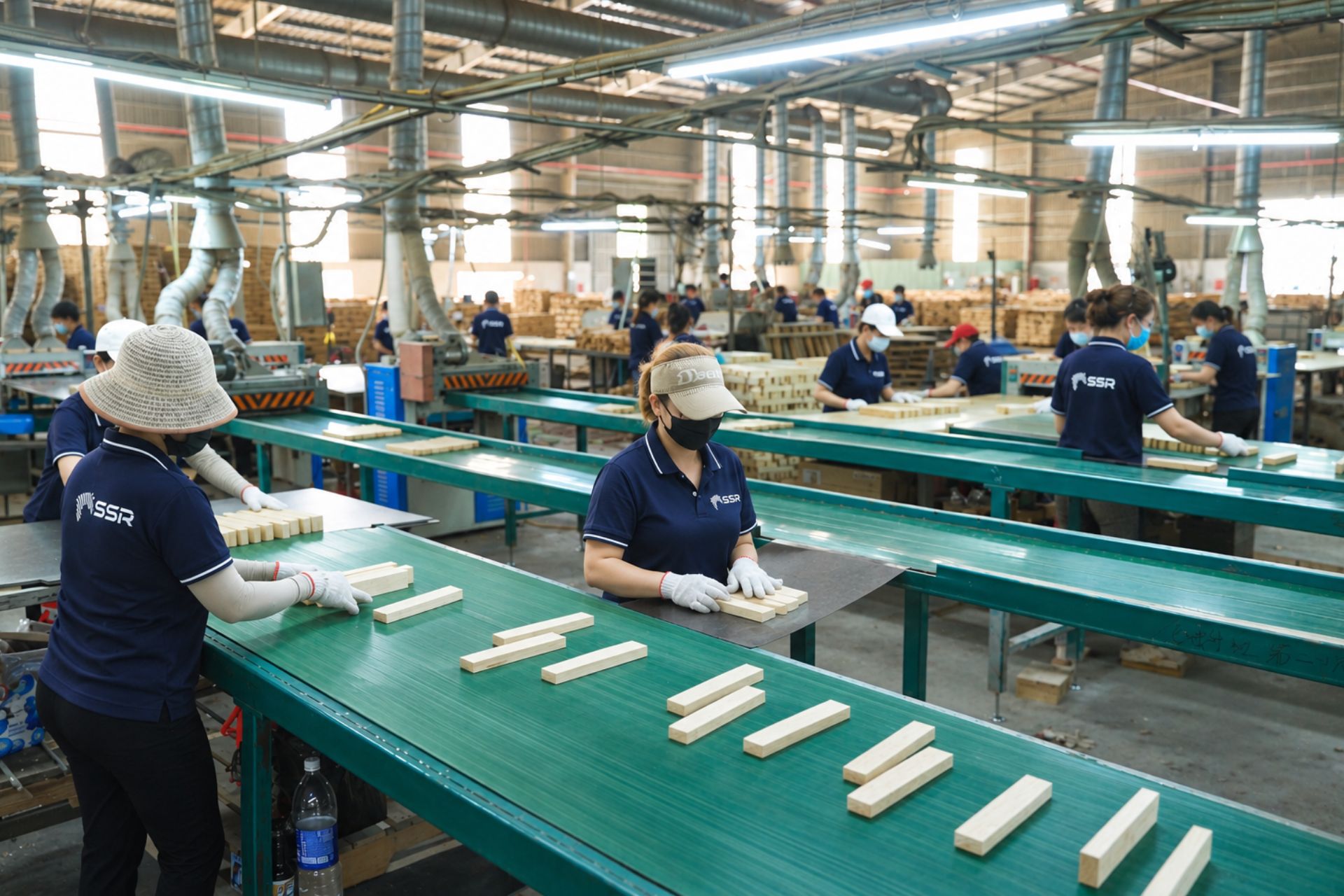
For SSR, the themes highlighted at the NAFCD + NBMDA Annual Convention align with the company’s broader focus on international wood manufacturing and distribution partnerships. SSR supports B2B product programs through its manufacturing network in Vietnam, serving importers and distributors seeking solid wood products for furniture and interior applications.
Its portfolio includes finger joint wood boards and butcher block countertops manufactured according to customer specifications. Standard finger joint wood panels can be produced in 1220 × 2440 mm formats, while butcher block programs support customized dimensions and finishing requirements. These manufacturing capabilities are relevant to the purchasing needs of U.S. businesses sourcing material for wholesale distribution or downstream production.
The convention also reinforces the importance of balancing competitive sourcing with product consistency. Reliable moisture control and clear quality specifications can help distributors reduce uncertainty when evaluating imported wood products. For SSR, maintaining this connection between manufacturing capabilities and market requirements remains central to developing long-term international supply relationships.

Solid wood boards and butcher block countertops manufactured in Vietnam for wholesale distribution
Looking Ahead: Distribution Strategy for 2027
The 2026 NAFCD + NBMDA Annual Convention demonstrated how closely business relationships and operational planning are connected within the North American building materials industry. Its program brought together the practical concerns of wholesale distribution with broader questions about economic conditions and organizational resilience. Those themes remain relevant as manufacturers and distributors establish priorities for 2027.
For the wood products sector, the implications extend across the supply chain. Manufacturers need reliable market feedback to develop suitable product programs, while distributors benefit from suppliers capable of maintaining consistent specifications and dependable communication. Greater coordination can improve the commercial performance of both sides without relying exclusively on price competition.
The convention’s wider message is that distribution competitiveness depends on more than product availability. Successful supply relationships require alignment between manufacturing capabilities and the commercial needs of the businesses bringing products to market.
For international wood manufacturers such as SSR, that connection creates opportunities to serve U.S. customers through specification-driven production and long-term sourcing cooperation.