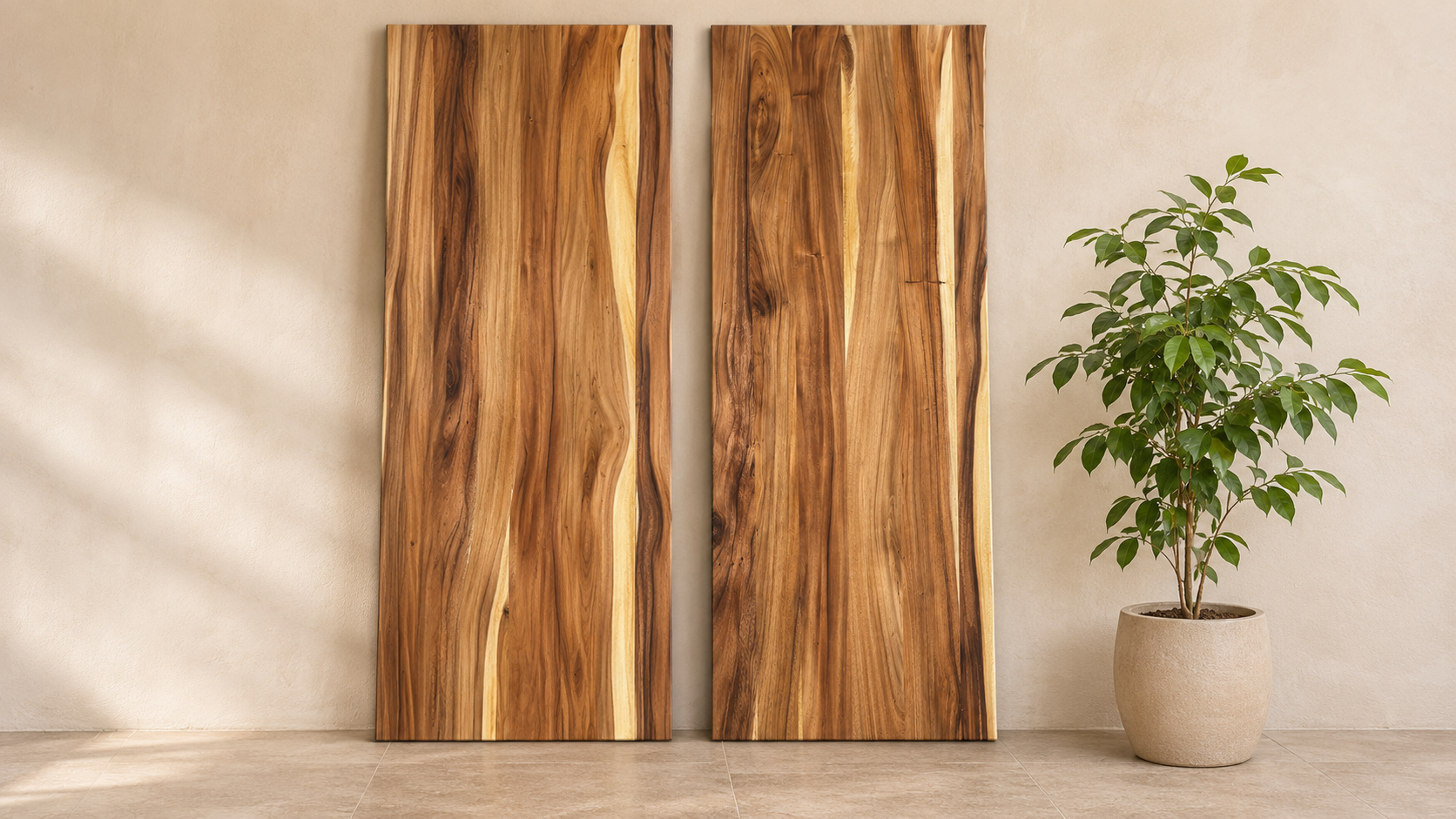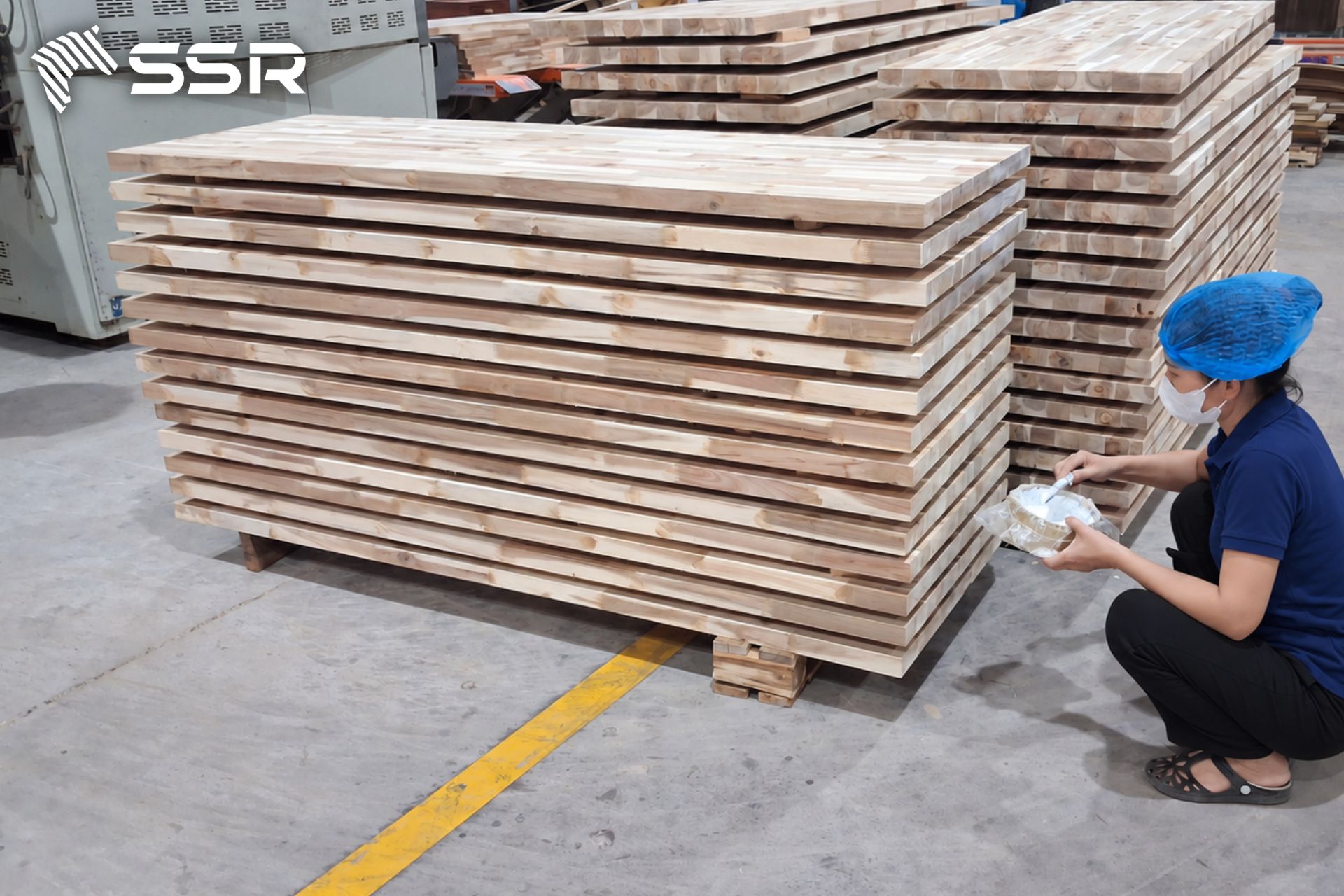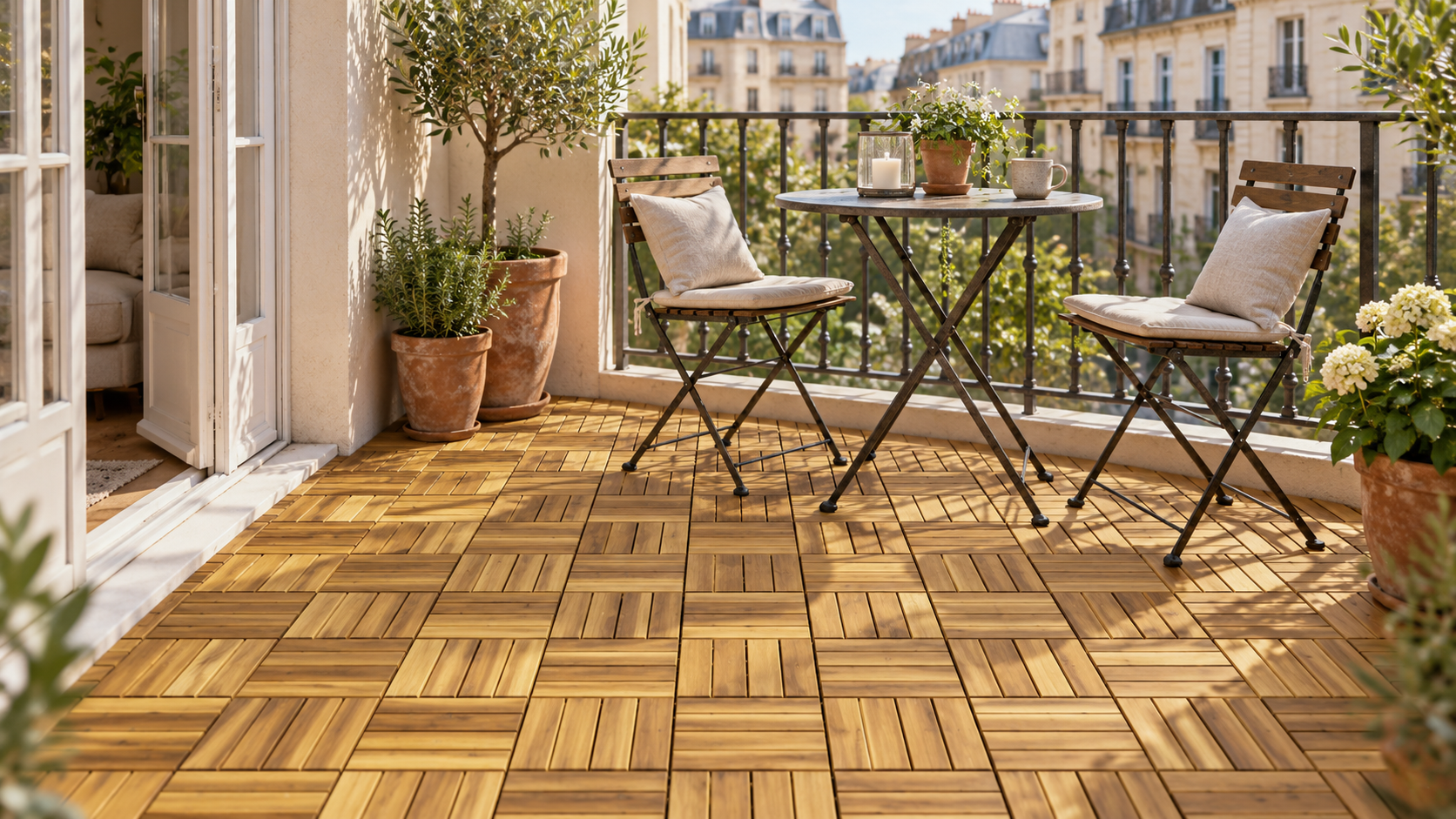
A wood species becomes more valuable when it can move beyond one product category. Acacia Wood Products can begin as a solid wood panel, become a kitchen countertop or dining table, move into furniture and shelving, then appear outdoors as deck tiles or patio furniture. The applications may look very different, but they remain connected by the same natural material story.
That flexibility is what makes Acacia particularly suitable for a broader product program rather than a single SKU. Its warm tone, visible grain and natural variation can give a butcher block surface character inside the home, while the same wood identity can continue into furniture and outdoor spaces.
The opportunity is therefore not simply to offer more Acacia products. It is to develop related applications around the way people actually cook, eat, work, organize their homes and spend time outdoors.
A well-built Acacia Product Program allows those applications to feel connected while giving each product the construction, appearance and performance required for its final use.
One Wood Can Move Through Different Parts of Everyday Life
Consumers rarely think about a home as a collection of unrelated product categories.
The kitchen connects to the dining area. A dining table may sit within view of a shelf or storage unit. A home office becomes another part of the living environment, while a terrace or balcony increasingly functions as an additional place to eat, relax or gather.
Material choice can help connect these spaces.
Acacia has enough visible character to remain recognizable when it moves from one application to another, yet it can also be processed into very different formats. A broad panel can become a countertop. A finger-jointed board can move into furniture production. Smaller components can become shelving or cabinet parts, while exterior formats can develop into Acacia wood deck tiles and outdoor furniture.
This does not mean every product should look identical. Instead, the wood provides a common visual foundation while the construction changes according to how the finished product will be used.
That is where a material begins to function as a program.
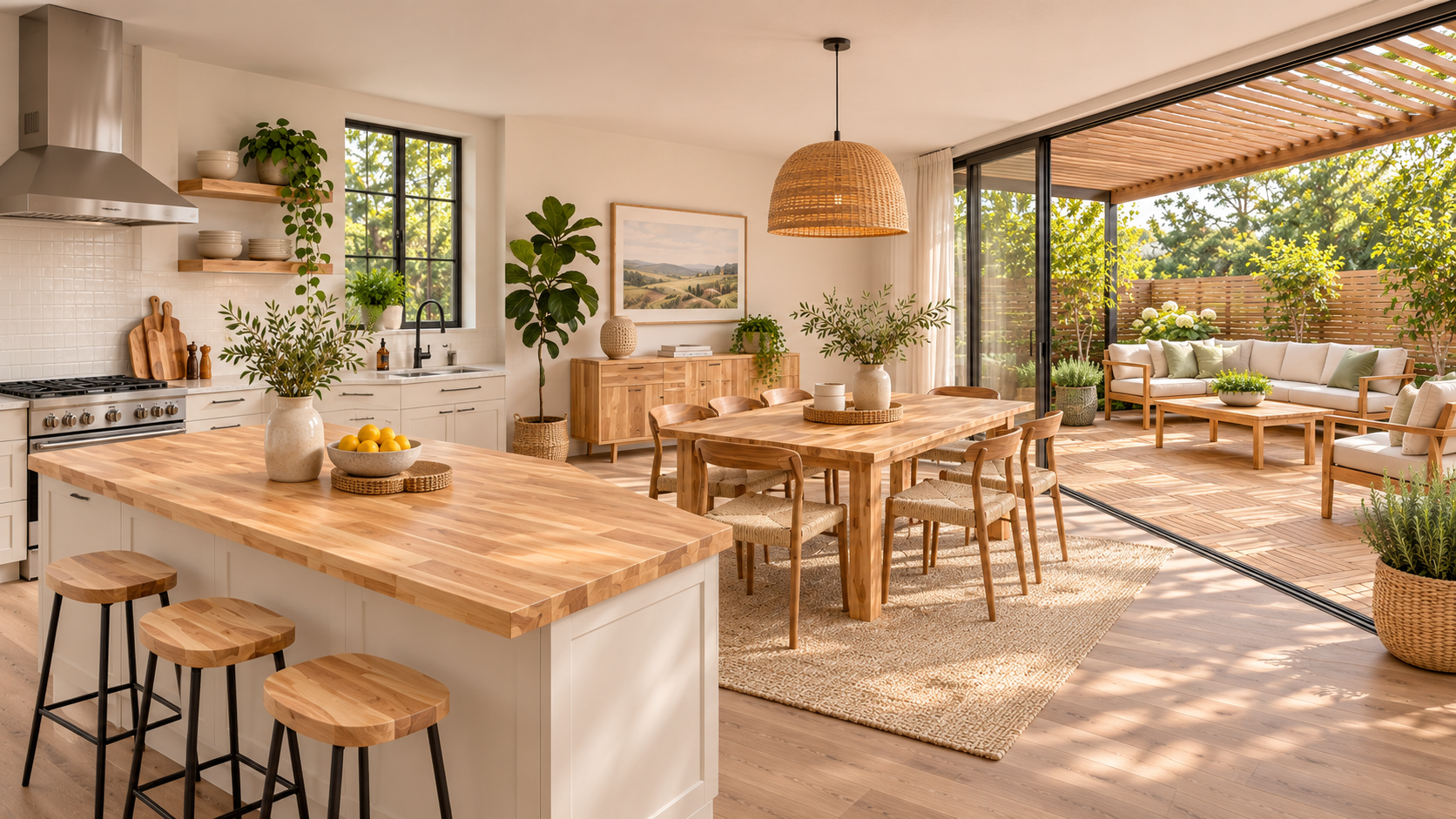
Acacia Wood Products for indoor and outdoor living applications
Kitchen Surfaces Put Acacia Where the Material Is Most Visible
A countertop is one of the largest continuously visible surfaces in a kitchen, which makes the character of the wood immediately noticeable.
An Acacia butcher block countertop introduces warmth beside cabinetry, appliances, tile and stone while keeping the natural grain visible across a broad horizontal surface. Instead of functioning only as a worktop, the wood becomes part of the visual balance of the entire room.
This becomes even more noticeable on a kitchen island.
Because an island can be viewed from several directions and often acts as a gathering place as well as a working surface, Acacia has more room to express its natural color and grain. The surface can distinguish the island from surrounding countertops without requiring every surface in the kitchen to use the same material.
The appeal comes from this combination of function and visible natural character. Consumers experience the surface while preparing food, sitting at the island or simply moving through the room, so appearance, edge quality, smoothness and finish become part of everyday interaction with the product.
For an Acacia wood surface program, the countertop is therefore more than one product. It establishes a material identity that can continue into other interior applications.
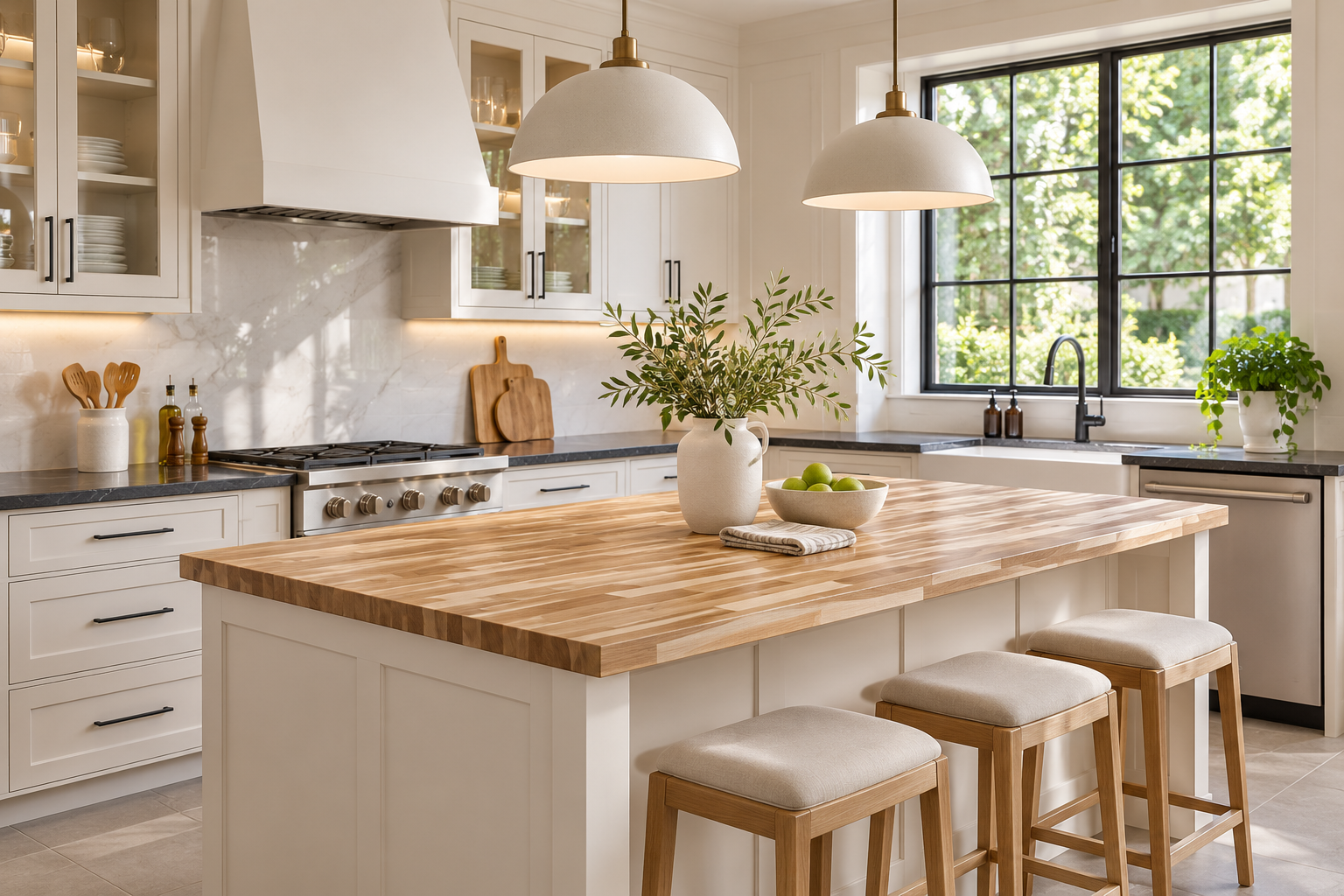
Acacia butcher block countertop and kitchen island
Dining Tables Let the Wood Become the Main Feature
When Acacia moves from a countertop into a dining table, the role of the material changes.
The table is no longer one component within a larger kitchen system. The wood itself becomes the furniture.
People see the grain from across the room, sit directly beside the edge and experience the surface during meals, conversations and everyday activities. This makes color balance, surface preparation and the overall relationship between wood pieces more visible.
An Acacia table top can use this natural variation as part of its design. A simple base paired with a warm solid wood top can create a finished product without requiring complicated decorative features, because the surface itself provides much of the visual interest.
The same material can also support different product directions. Cleaner grain selection can create a more restrained dining collection, while stronger natural variation can be used where a more expressive wood appearance is part of the product identity.
In both cases, the application determines how the wood should be selected and presented.
The Same Surface Can Move Into the Workspace
The qualities that make Acacia suitable for tables can also translate naturally into desks and work surfaces.
A desktop requires a broad, comfortable area that works visually with monitor equipment, storage and a desk frame. Here, natural wood can soften a workspace that might otherwise feel dominated by metal, plastic and electronics.
An Acacia desktop also changes the priorities compared with a kitchen surface. Flatness, smoothness and usable working area become particularly important, while the grain remains part of the visual experience because the consumer sees the surface at close range every day.
A heavier workbench application shifts those priorities again. The wood may be selected less for a highly refined furniture appearance and more for a substantial working surface that can handle repeated use and potentially be sanded or refinished as it ages.
The material remains Acacia, but the expected experience changes.
This is exactly why the program should begin with the application rather than forcing one specification across every product.
Solid Wood Panels Create the Link Between Material and Furniture
Not every Acacia product needs to leave the factory as a finished consumer surface.
Acacia solid wood boards and Acacia finger joint boards can become the material foundation for furniture, shelving, storage systems, cabinetry and other interior products.
In these applications, the panel has to work at two levels.
First, it needs to support downstream manufacturing. The board may need to be cut, routed, drilled, CNC-machined, sanded or finished according to the final furniture design.
Second, it eventually becomes something the consumer can see and use.
A furniture manufacturer may think about machining consistency and material yield, while the person who eventually buys the bookcase, cabinet or table will notice whether the surface looks balanced, whether adjoining parts feel related and whether the finished piece has the natural character they expected.
This creates a direct connection between panel quality and finished-product experience.
The board may be an intermediate material, but its appearance and manufacturing consistency eventually become visible in the furniture.
Finger Joint Construction Expands What Acacia Can Become
Finger joint construction adds another direction to the material program.
Shorter wood sections can be joined into longer elements before being assembled into wider boards, allowing Acacia to move efficiently into furniture panels and other solid wood applications.
The visible finger-jointed pattern can also become part of the product’s identity rather than something that always needs to be hidden. In table tops, shelving, furniture panels or utility surfaces, the repeated construction creates a recognizable real-wood appearance.
The important point is that Acacia finger joint board should not be treated as an isolated raw material category.
Its relevance comes from what it can become afterward.
A board may eventually form a desk, shelf, cabinet component, table, furniture part or another interior surface. Each destination creates different expectations for face quality, dimensions, sanding and appearance.
Application should therefore define the panel rather than the panel defining the application.
Shelving and Storage Bring Acacia Into Smaller Interior Details
Large countertops and tables receive the most visual attention, but smaller wood applications can be equally important in creating a connected collection.
Floating shelves, bookcases, pantry storage and open shelving allow Acacia to appear throughout the home without requiring another large piece of furniture.
These applications also give the front edge and visible face of the wood more importance. A shelf may have a relatively simple construction, yet it sits directly at eye level and often displays objects against the natural surface.
This makes finishing quality and color relationship easy to notice.
For product programs, shelving can also create an accessible entry point into natural wood. A consumer who may not be ready to replace an entire countertop or dining table can still introduce Acacia through smaller pieces that complement existing furniture.
The material therefore moves across different price points and product sizes while maintaining the same underlying identity.
Outdoor Living Gives Acacia a Completely Different Role
The material story does not need to stop at the door.
Acacia can move from interior surfaces into Outdoor Living products where the consumer experience shifts toward balconies, terraces, patios and garden spaces.
Here, the products become more modular and activity-focused.
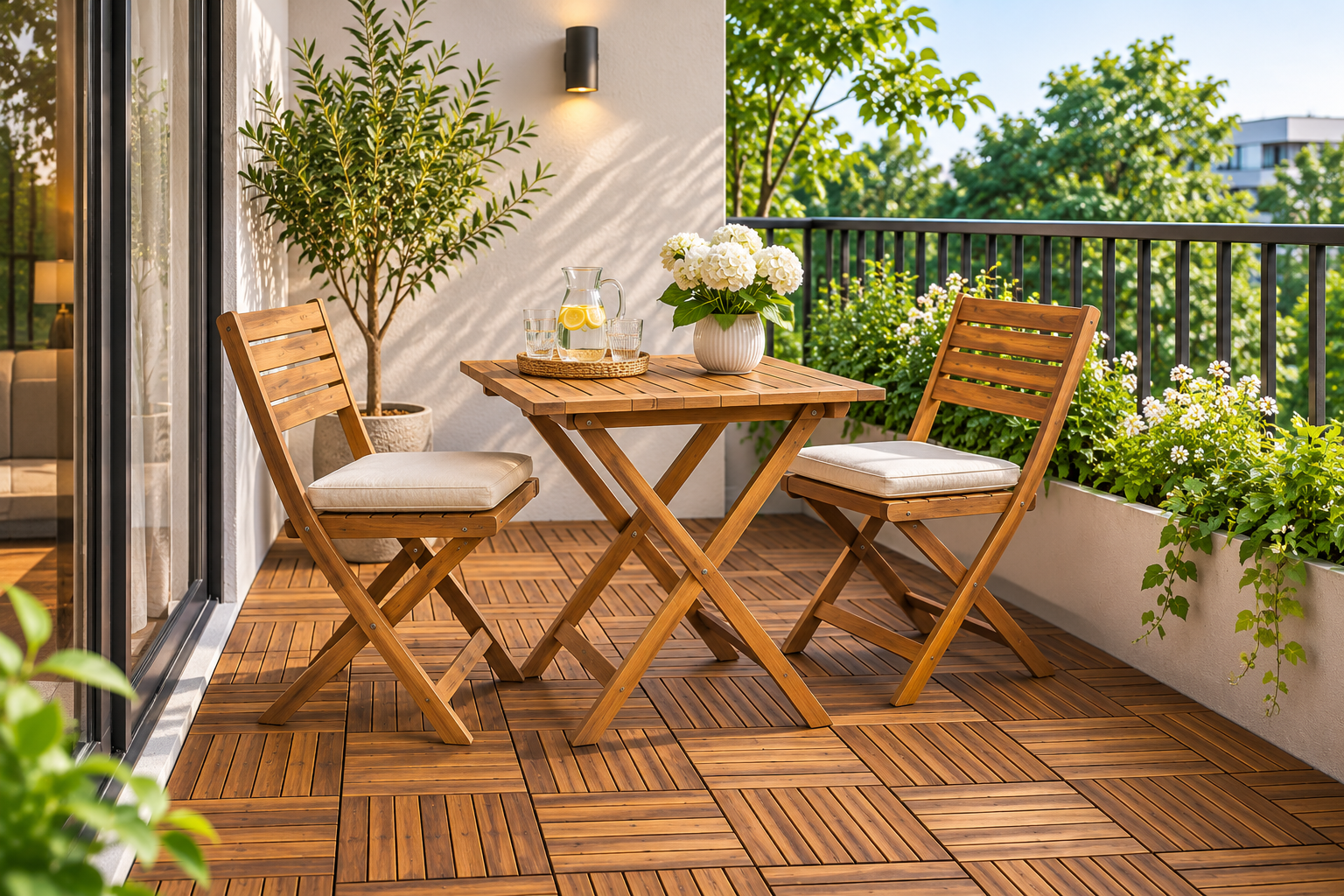
Acacia wood deck tiles can transform a hard balcony or terrace surface by adding natural texture underfoot. A folding bistro set can turn the same area into a place for morning coffee. A larger patio set can support outdoor dining, while lounge furniture can create a space designed for longer periods of relaxation.
These products belong to different categories, but when the wood tone and overall design direction feel related, they can be presented as one coordinated outdoor collection.
The consumer no longer sees a deck tile on one shelf and a chair somewhere else.
They see the possibility of a finished outdoor space.
Deck Tiles Create the Foundation Before Furniture Is Added
Outdoor furniture usually receives more attention, but flooring often changes the character of the space first.
A concrete balcony or plain terrace may already be functional, yet it can still feel unfinished. Interlocking Acacia deck tiles introduce a natural surface without requiring the area to be redesigned as a permanent timber deck.
Once the floor changes, the furniture placed above it starts to feel more intentional.
A two-seat bistro set can define a compact corner. A four- or six-seat dining set can create a clear social zone. Plants and accessories can then complete the environment.
The deck tile therefore performs two roles: it is a product in its own right and the visual base for the rest of the Outdoor Living collection.
This relationship is valuable within an Acacia Product Program because the same material story can extend from the floor into the furniture positioned above it.
Outdoor Furniture Turns the Material Into an Experience
A patio set is evaluated differently from a wood panel or kitchen countertop.
Consumers interact with its proportions, comfort and layout as much as they interact with the wood itself. The table needs to support meals or drinks, chairs need to work within the available space and folding designs may need to be stored when the season or layout changes.
The Acacia surface therefore becomes part of a larger experience rather than the only reason for purchase.
Natural wood can help the furniture relate visually to planting, gardens and other outdoor materials, while coordinated deck tiles can reinforce the same material direction beneath it.
A compact balcony may only need a small folding set.
A terrace may support a larger dining collection.
A poolside or garden setting may require lounge furniture instead.
The strongest assortment is not necessarily the one with the greatest number of furniture SKUs. It is the one that gives consumers clear ways to create the outdoor space they want.
One Material Does Not Mean One Quality Standard
A connected program still needs different manufacturing priorities for different applications.
A kitchen countertop places significant attention on the visible face, edge preparation and finish because the surface is seen at close range every day.
A furniture panel may need to move efficiently through machining and assembly before it reaches the consumer.
A deck tile requires consistent dimensions and a reliable connection between the wood surface and interlocking base.
Outdoor furniture adds another layer because joints, hardware and surface finishing need to support repeated use in an exterior environment.
This means an Acacia Product Program should share a material identity without forcing every product into the same production specification.
The application determines which characteristics need the tightest control.
That principle is central to SSR’s broader product-program approach, where wood products are developed around their intended use before construction, dimensions and manufacturing controls are finalized.
Natural Variation Needs to Feel Intentional
One of Acacia’s strengths is also one of the areas that requires the most attention.
The wood naturally brings variation in tone and grain, giving the finished surface more character than a completely uniform material. Consumers often choose natural wood because they want this distinction.
But there is a difference between natural variation and uncontrolled inconsistency.
On a countertop, several wood pieces need to read as one finished surface. On a dining table, the grain balance influences the entire piece of furniture. Within an outdoor collection, products displayed together should feel related even when no two pieces are exactly the same.
Material selection and grading therefore need to preserve the natural character of Acacia while maintaining enough visual control for the intended product.
The goal is not to make wood look artificial.
It is to make variation feel deliberate.
A Product Program Becomes Stronger When Applications Feel Connected
A consumer may first encounter Acacia as a kitchen countertop.
Later, they may see the same warm wood character in a dining table, desktop or shelf. Outdoors, related tones can continue into deck tiles or patio furniture.
These products are unlikely to be purchased at the same time or even through the same category, but together they create a much broader perception of what Acacia can be.
For retailers and distributors, this makes the material easier to extend into adjacent product categories.
For furniture manufacturers and OEM/ODM programs, one wood direction can support the development of multiple finished products.
For the consumer, the connection is simpler: the wood they like can appear in more than one part of the way they live.
That is where an Acacia Product Program creates more value than a collection of unrelated Acacia SKUs.
From Plantation Wood to Higher-Value Applications
Acacia also has a strong material foundation behind these applications.
Research indexed by FAO AGRIS notes that Acacia plantations play an important role in supplying Vietnam’s wood-processing industry and that larger-diameter logs can move into higher-value processing for export furniture. This helps explain why Acacia has developed beyond basic timber supply into a material used across increasingly diverse value-added products.
For a product program, the important point is not simply that Acacia is available.
The opportunity comes from converting the material into applications where design, manufacturing and consumer use create greater value than the raw wood alone.
A countertop, furniture panel, dining table, deck tile and patio set all begin with the same material category, but the final product is defined by what happens after that material enters production.
Acacia Works Best as a Platform, Not a Single Product
The strongest way to understand Acacia Wood Products is not as a list of things a factory can make.
It is as a material platform capable of moving through different parts of everyday life.
Acacia butcher block brings natural wood into kitchens and islands. Table tops and desktops carry the same character into dining and working spaces. Solid wood and finger joint boards provide a foundation for furniture and interior products. Deck tiles establish the surface of outdoor environments, while patio furniture turns those spaces into places where people can eat, gather and relax.
Each application needs its own construction and manufacturing controls, but they can still share one recognizable Acacia identity.
SSR develops Acacia across wood surfaces, solid wood panels and Outdoor Living programs, beginning with the final application and then aligning the construction, appearance and production requirements around how the product will ultimately be used.
One material. Multiple applications. One connected Acacia Product Program.
Frequently Asked Questions
What products can be made from Acacia wood?
Acacia can be developed into butcher block countertops, kitchen islands, table tops, desktops, solid wood panels, finger joint boards, shelving, furniture components, deck tiles, patio furniture and other indoor or outdoor wood applications.
Is Acacia suitable for butcher block countertops?
Yes. Acacia is used for butcher block countertops and other broad wood surfaces where its warm natural tone and visible grain can become part of the finished design.
What is Acacia finger joint board used for?
Acacia finger joint board can be used for furniture, shelving, tables, cabinets, interior components and other products that require a solid wood panel suitable for downstream machining and finishing.
Can Acacia be used for outdoor products?
Acacia can be used in outdoor product programs such as wood deck tiles and outdoor furniture when the product construction, finishing, hardware and maintenance requirements are developed for exterior use.
Why combine several products into an Acacia Product Program?
A product program allows related applications to share the same material identity while adapting construction and quality requirements to each final use. This can create a more coherent collection than developing each Acacia product independently.
Do all Acacia products need the same grade?
No. A highly visible countertop or table top may require a different face quality from an internal furniture component or another application where appearance is less dominant. Grade should follow the intended use and finish.
What is the difference between Acacia solid wood board and Acacia butcher block?
Solid wood board is a broader panel category that can be processed into furniture, shelving, cabinetry and other components. Butcher block is a wood-surface construction developed for applications such as countertops, island tops, table tops and work surfaces.
Can one Acacia program include both indoor and outdoor products?
Yes. The same species can support indoor and outdoor product families, although each application needs its own construction, finishing and performance requirements.