
Finger Joint Wood Board
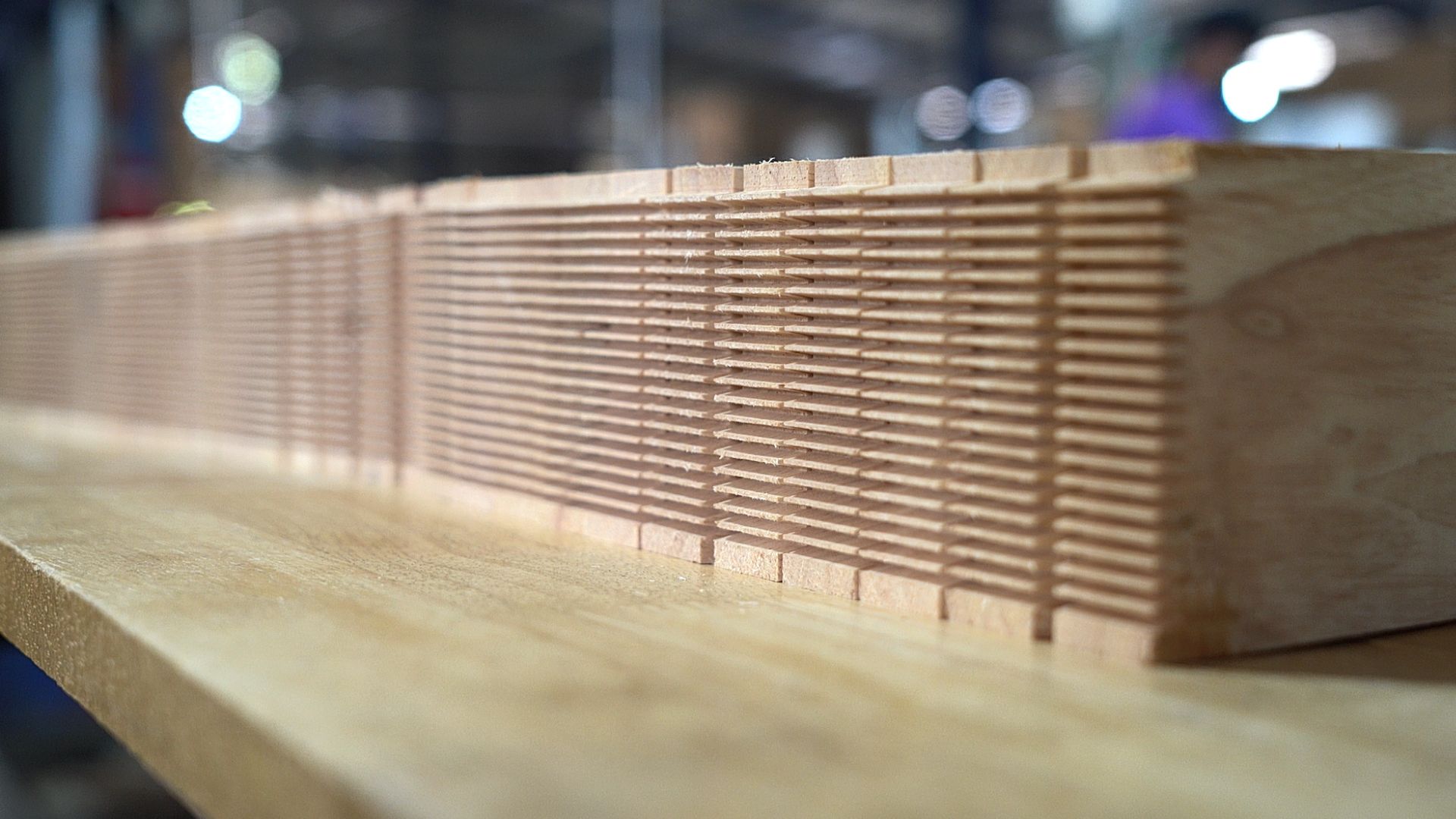
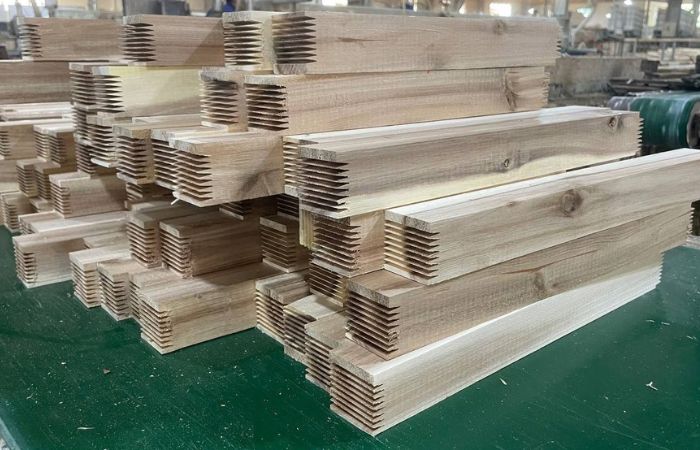
A finger joint wood board is made by joining shorter pieces of solid wood end-to-end using interlocking finger-shaped joints. These pieces are then bonded edge-to-edge to form a wider panel suitable for furniture and interior manufacturing.
This construction makes efficient use of natural timber while providing consistent panel dimensions and a workable surface for cutting, sanding, machining, and finishing.
SSR supplies finger joint wood boards for manufacturers, importers, and distributors seeking practical solid wood materials for production and wholesale programs.
Who We Work WithAvailable Board Dimensions
Custom dimensions are available to match your distribution or retail program.
Finger Joint Wood Boards for Global Applications

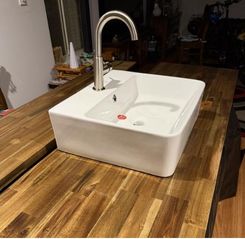
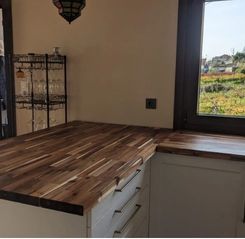
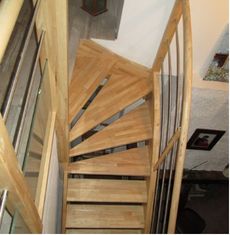
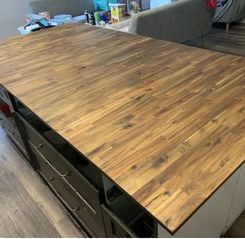
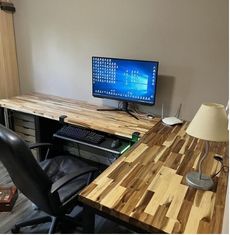
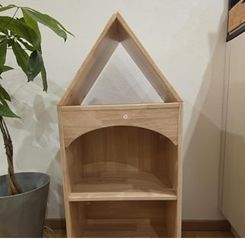
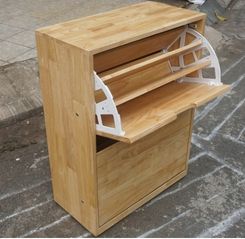
Wood Panel Supply Built Around Your Business

Distributors

Importers

Retailers

OEM/ODM
Whether you're expanding a wholesale product line, sourcing materials for retail, or developing a custom manufacturing program, SSR supports your requirements with flexible specifications, quality control, and export-ready supply.
Discuss Your ProgramFind the Right Finger Joint Wood Board for Your Program
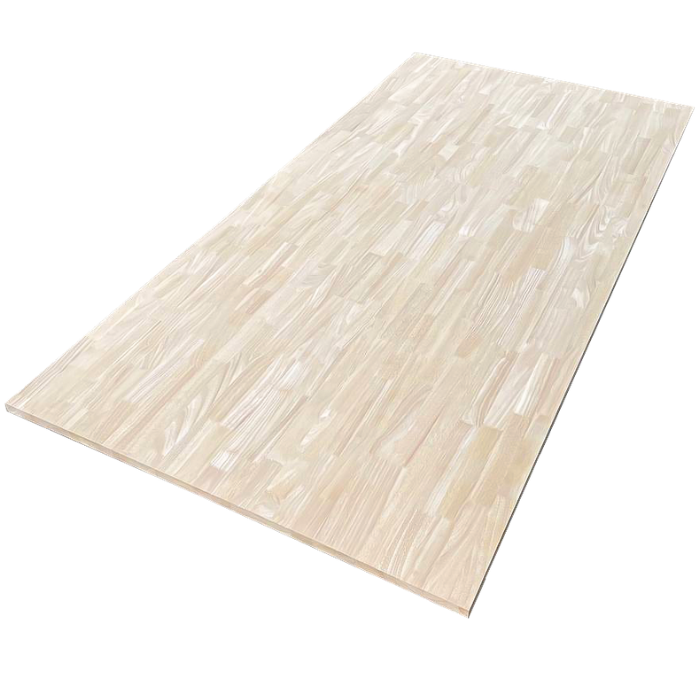
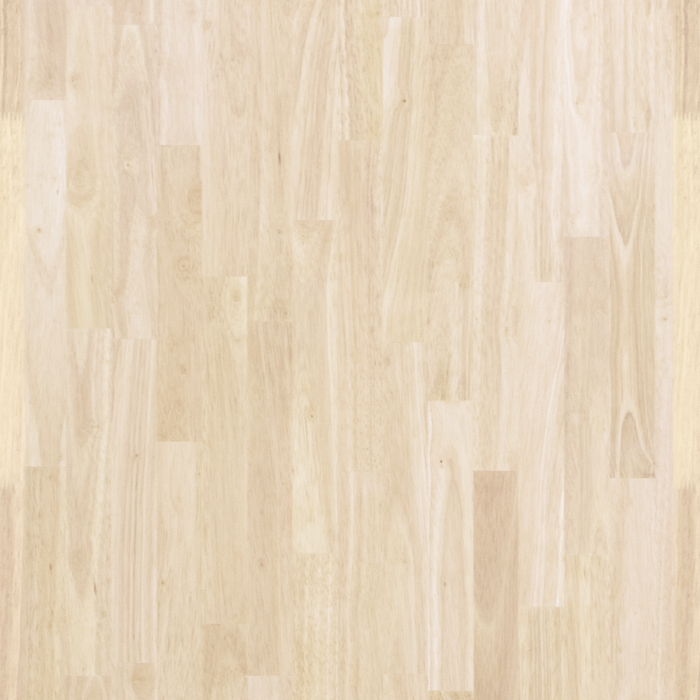
Hevea / Rubberwood
Finger Joint Wood Panels
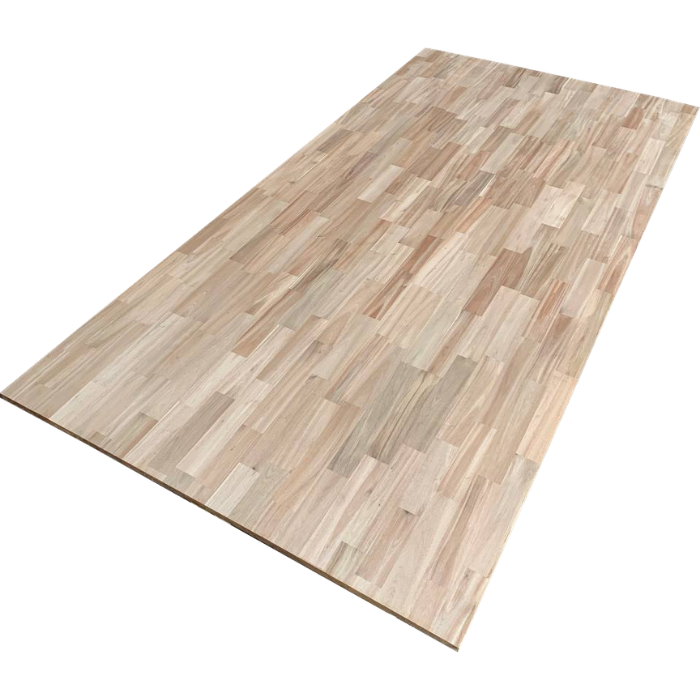
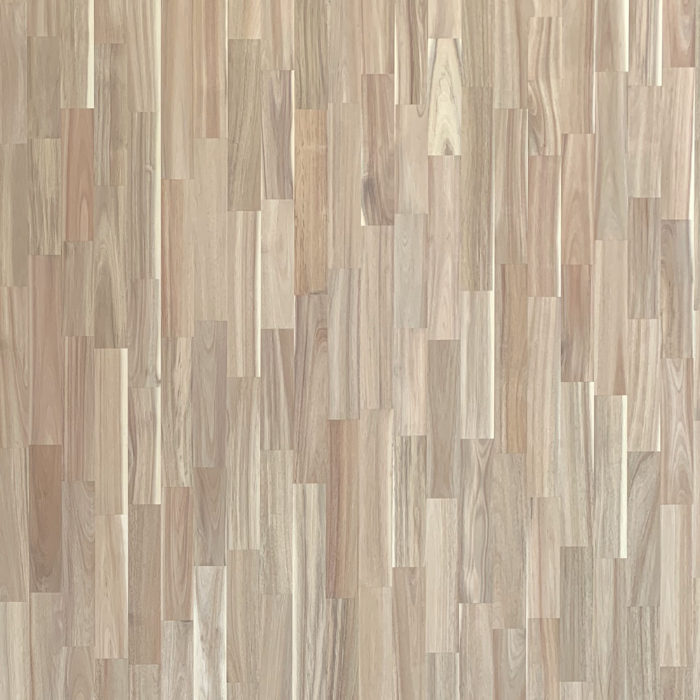
Acacia
Finger Joint Wood Panels
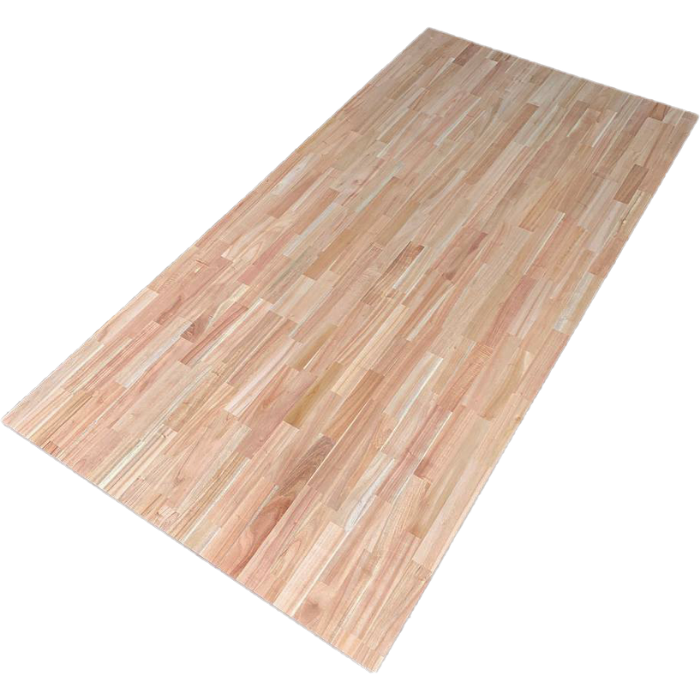
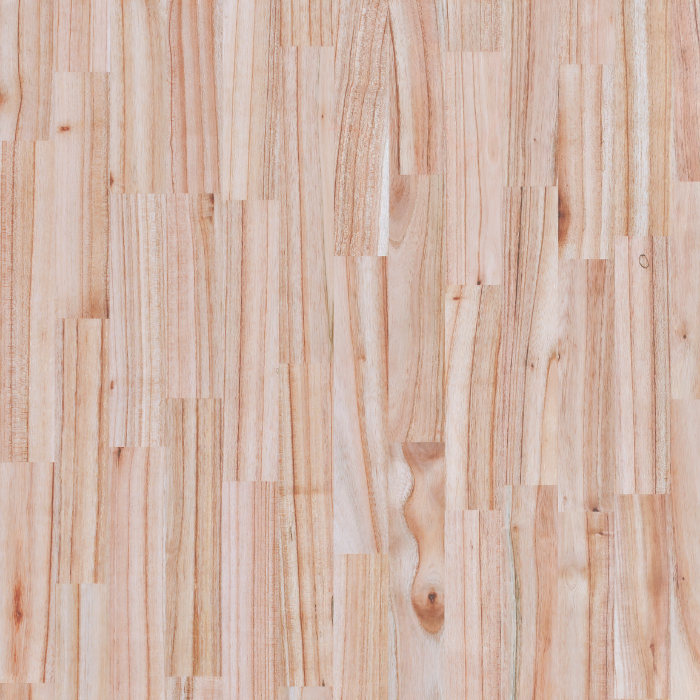
Melia / Sapele
Finger Joint Wood Panels
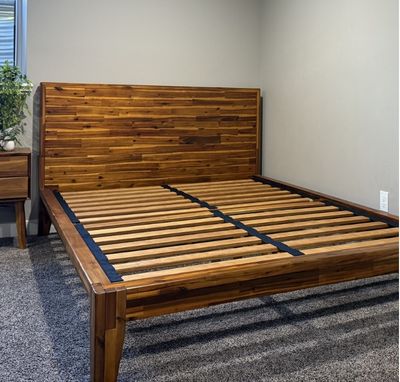
Bed Frames
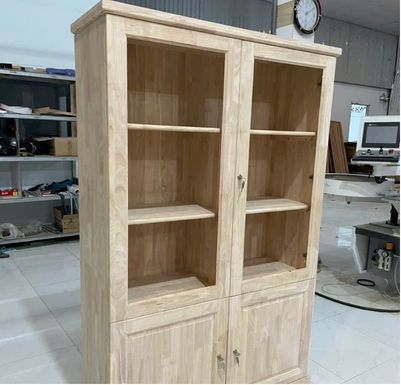
Cabinets
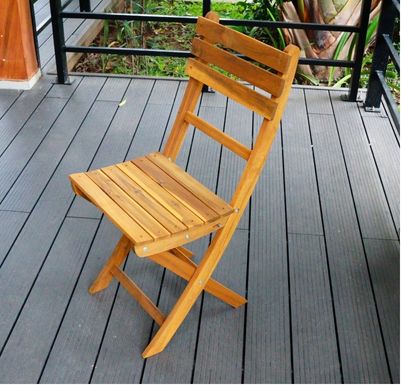
Tables & Chairs
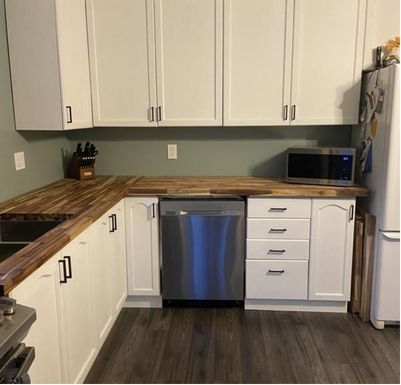
Kitchen Countertops
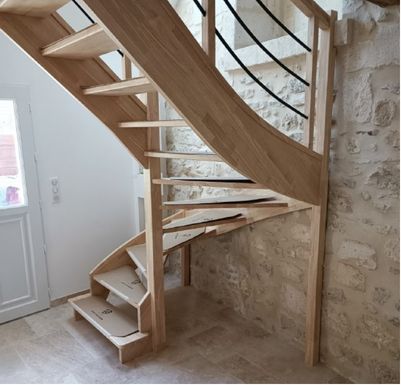
Staircases
Moisture: ≤ 12%
Stave width: 35–80 mm (customizable)
Stave length: 150–600 mm
Glue: D4 (Koyobond)
Sanding grits: 240 / 320
Surface finish: UV / PU / Oil coated
Density: Approximately 700 kg/m³
MOQ: 1 container (20ft)
Lead time: 30–45 days
Custom specifications are available based on your distribution or retail program.
| Application | Dimension | mm | inches |
|---|---|---|---|
| Furniture | Thickness | 12 / 15 / 18 / 24 / 30 | 0.47 / 0.59 / 0.71 / 0.94 / 1.18 |
| Width | 1220 | 48 | |
| Length | 2440 | 96 | |
| Countertops & Table Tops | Thickness | 38 | 1.5 |
| Width | 635 | 25 | |
| Length | 1270 / 1829 / 1880 / 2439 / 2489 / 3048 / 3100 / 3658 | 50 / 72 / 74 / 96 / 98 / 120 / 122 / 144 | |
| Staircase / Building Materials | Thickness | 15 / 18 / 22 / 30 / 33 / 40 / 44 / 56 | 0.59 / 0.71 / 0.87 / 1.18 / 1.30 / 1.57 / 1.73 / 2.20 |
| Width | 650 / 1100 | 25.59 / 43.31 | |
| Length | 4500 / 5100 / 5900 | 177.17 / 200.79 / 232.28 |
Hevea / Rubberwood
Finger Joint Wood Panels
Grade A
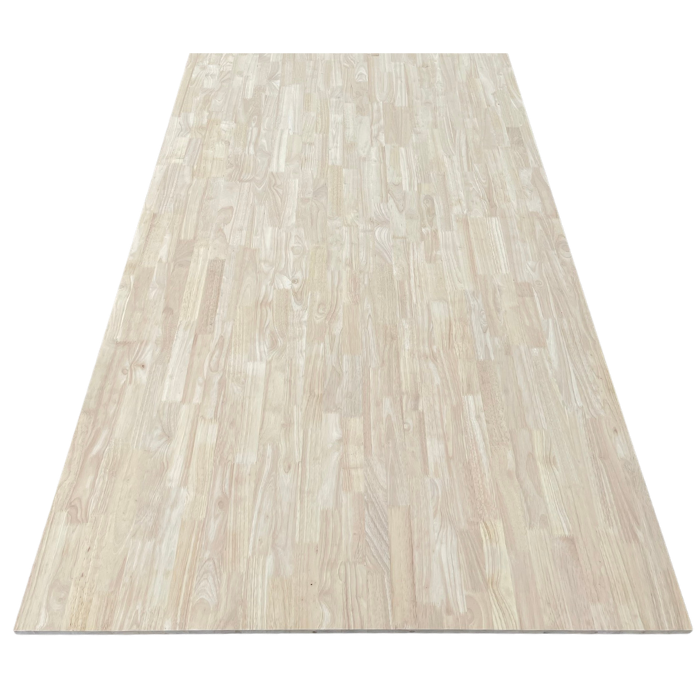
Grade B
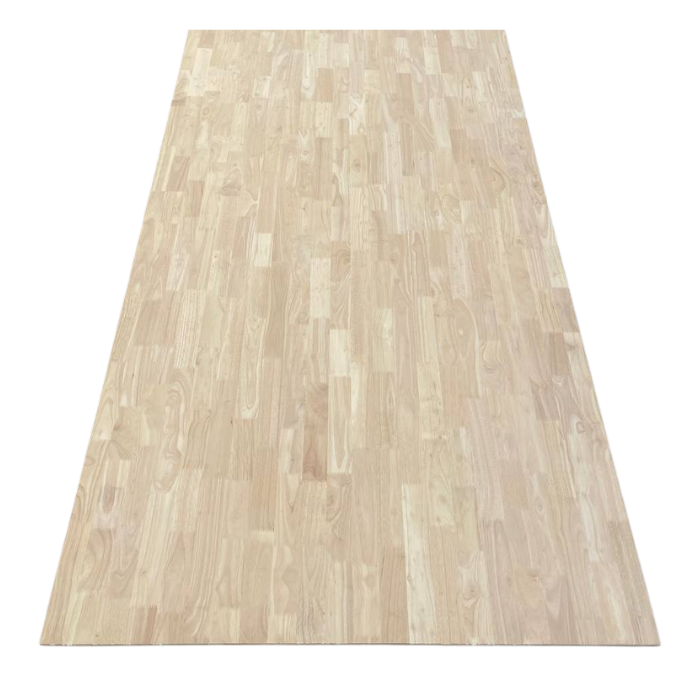
Grade C
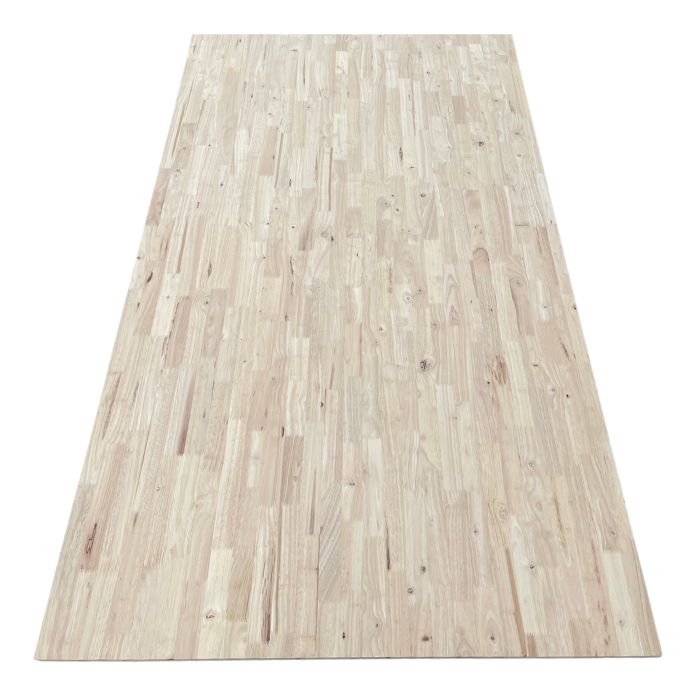
Acacia
Finger Joint Wood Panels
Grade A
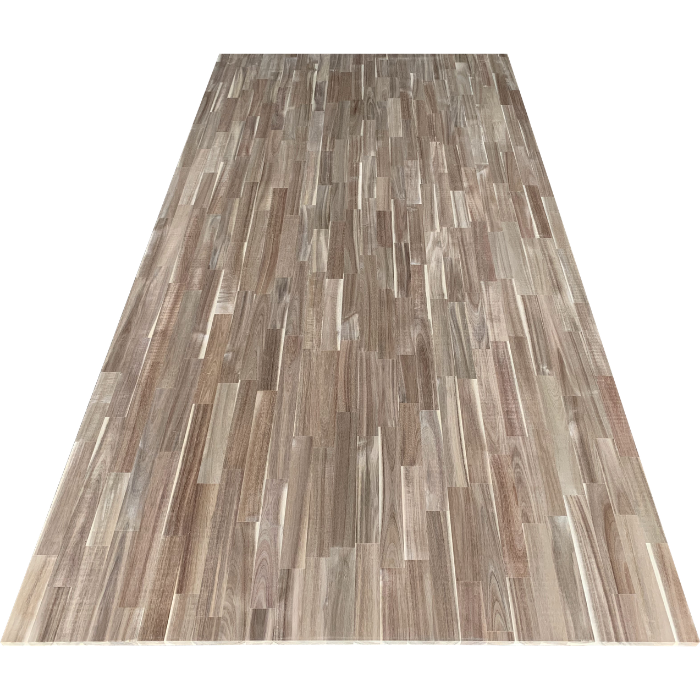
Grade B
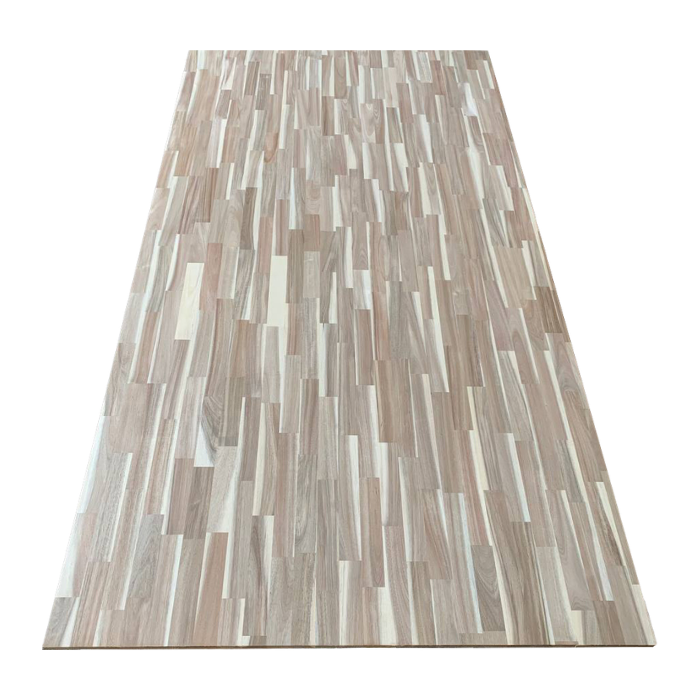
Grade C
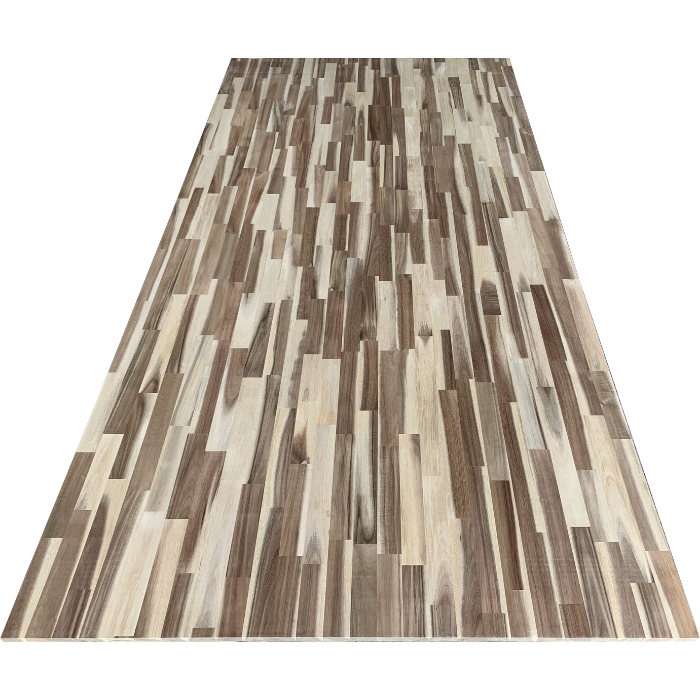
Melia / Sapele
Finger Joint Wood Panels
Grade A
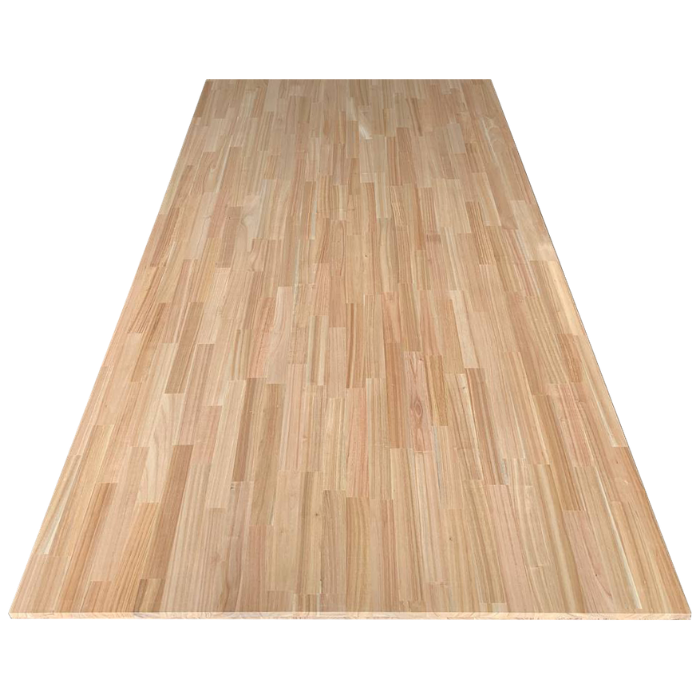
Grade B
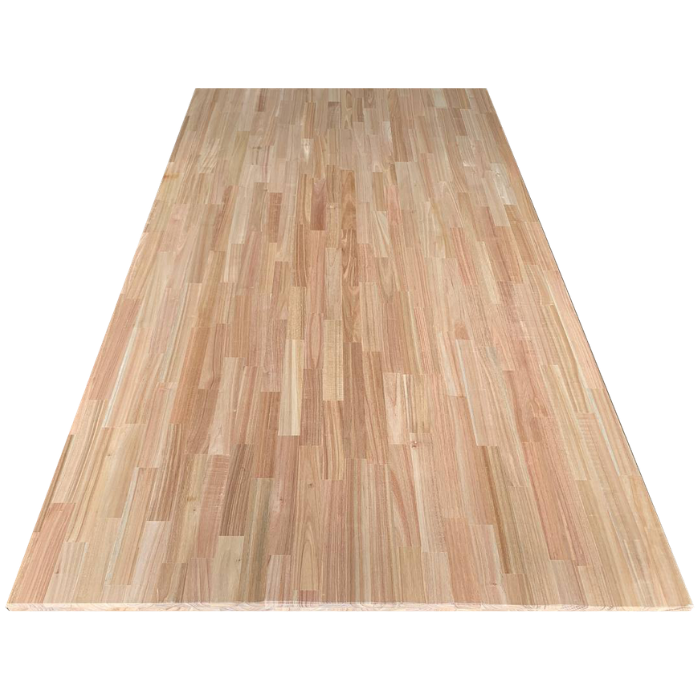
Grade C
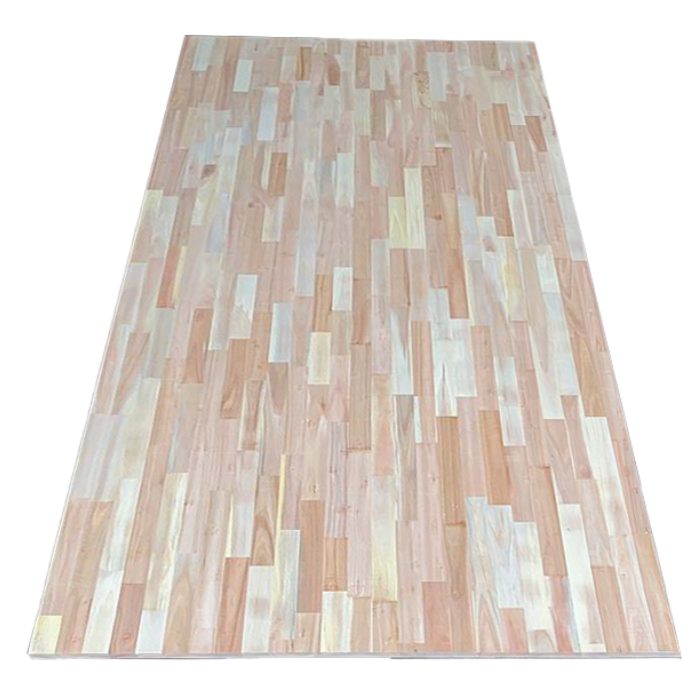
Surface Grade Classification
Grade A
Sapwood limited to 10% of the stave. No dead knots, sound knots, bark encasement, or heartwood spots. Preferred for premium, appearance-focused applications.
Grade B
Sapwood permitted up to 30% of the stave. Dead knots below 5 mm and sound knots up to 20 mm. Dark streaks and small fine black streaks may occur.
Grade C
Sapwood and heartwood with visible natural variation are permitted. Black streaks, lines, and dots may appear, with large black lines and dots allowed up to 100 mm. Suitable for hidden or secondary-use applications.
Wood Panel Manufacturing from Timber Sourcing to Container Loading
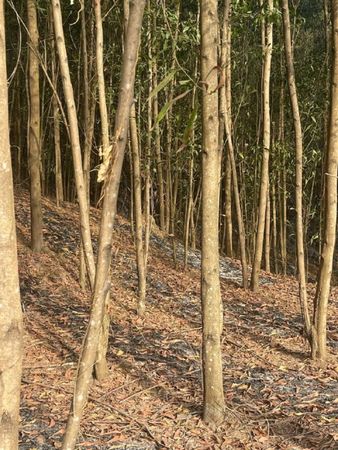
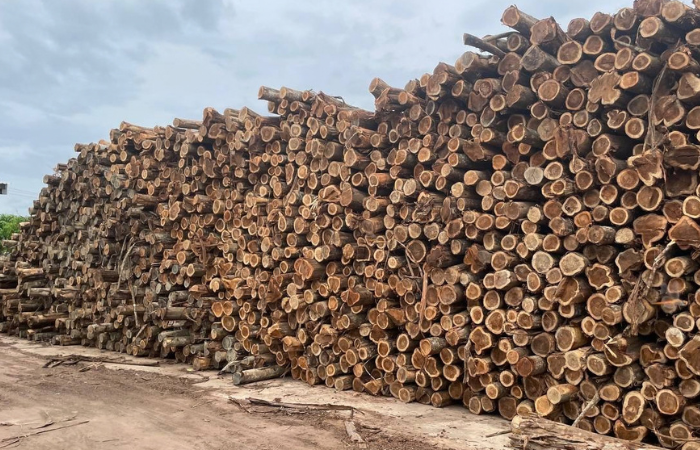
01. Timber Sourcing
SSR sources timber from plantation and supply networks according to the requirements of each wood panel program. Raw materials are selected based on species, quality, dimensions, and intended manufacturing applications.
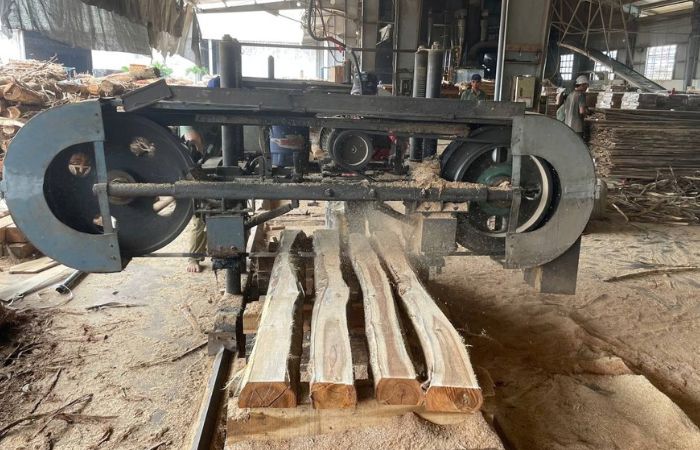
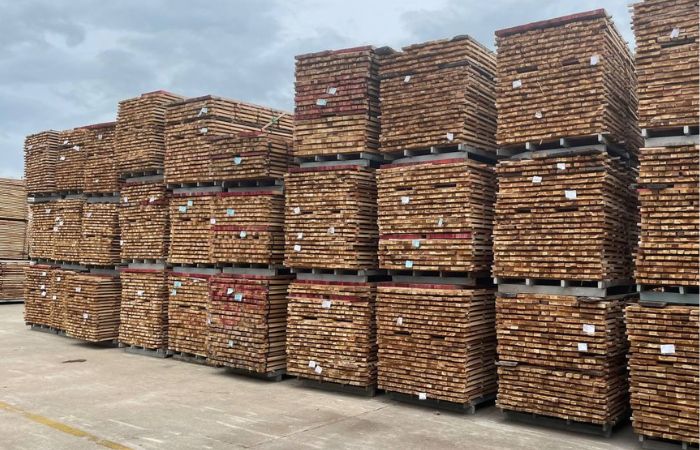
02. Sawmill & Raw Timber Preparation
Harvested logs are transported to the sawmill, where they are sawn into workable timber dimensions, sorted, and prepared for drying. The material is organized by size and condition before moving into the kiln-drying stage.
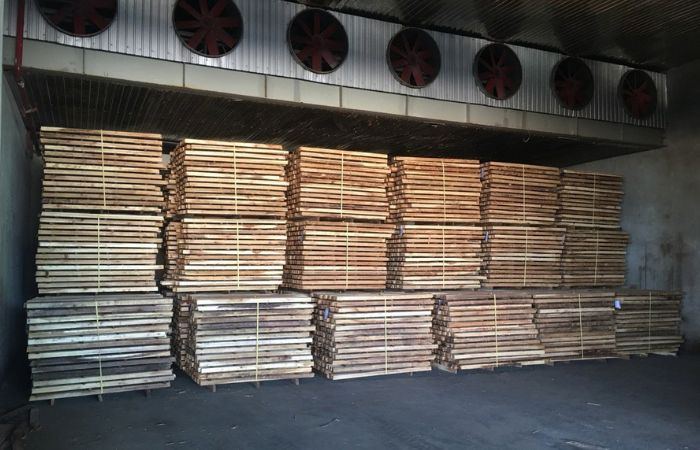
03. Kiln Drying & Indoor Storage
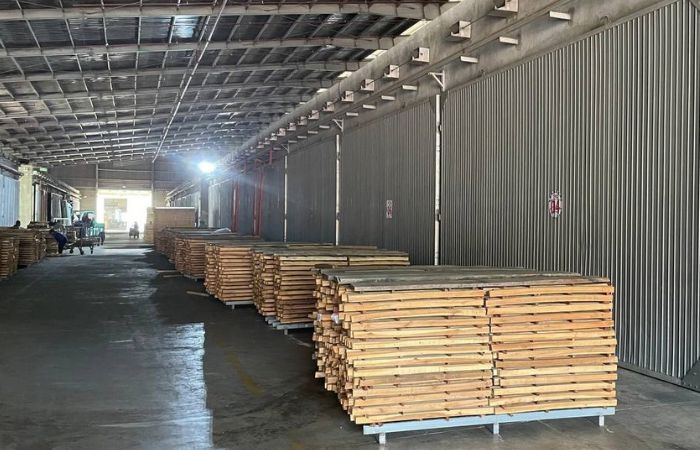
Sawn timber is kiln dried under controlled conditions to reduce moisture and improve dimensional stability. After drying, the timber is stored indoors before being released to the finger joint production line.
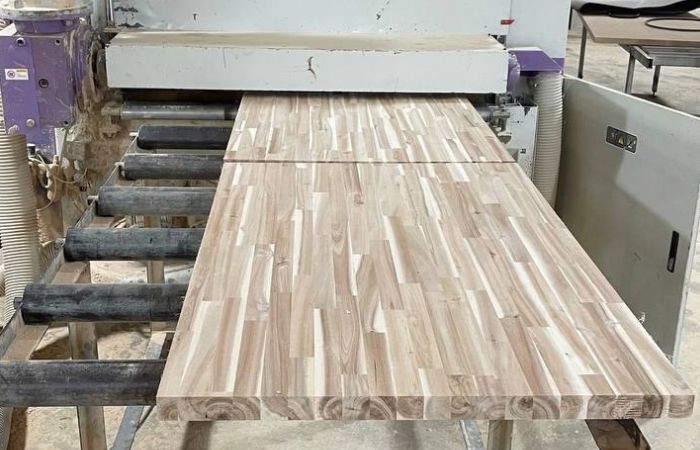
04. Finger Joint Panel Manufacturing
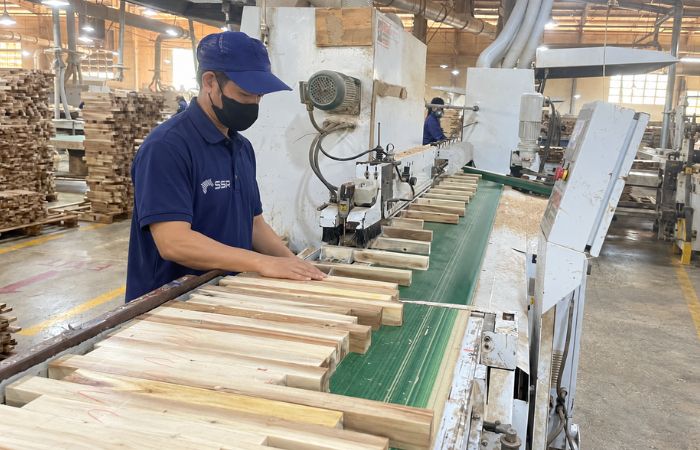
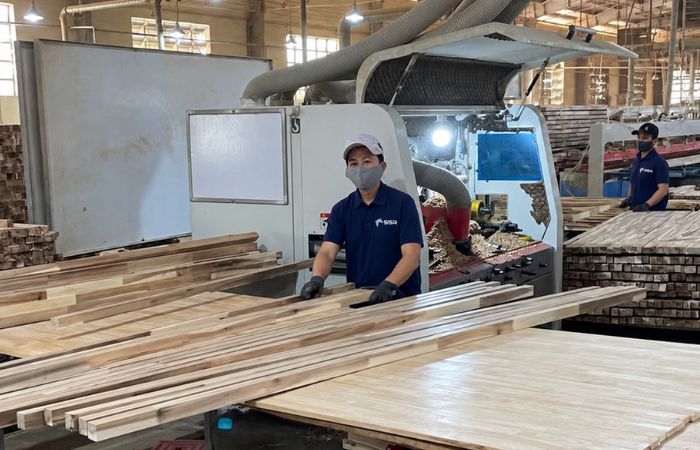
Dried timber is selected and processed into finger-jointed lamellas, then edge glued and pressed into solid wood panels. The panels are subsequently sanded and checked for dimensions, surface condition, and consistency.
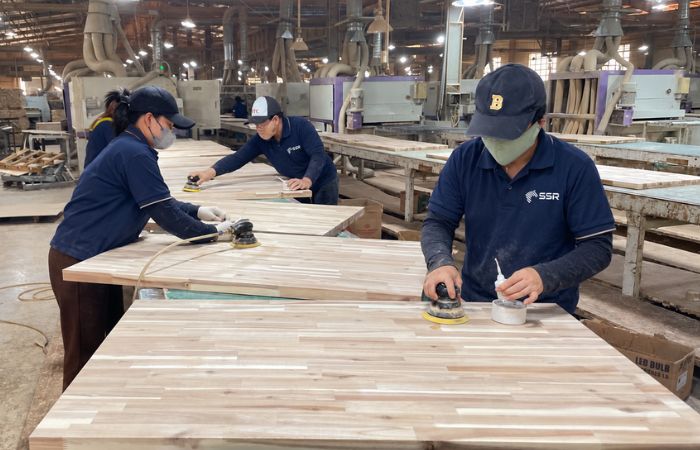
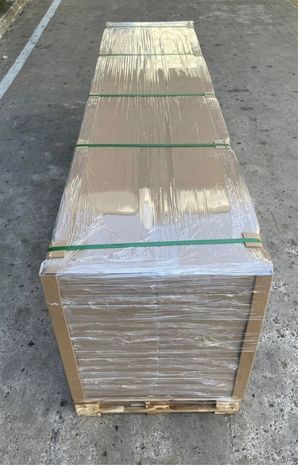
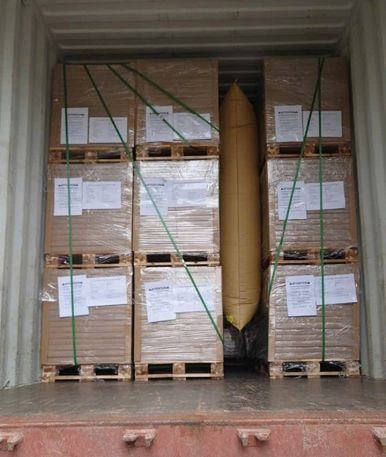
05. Finishing, Packing & Container Loading
Panels move through final sanding and inspection before packing. Once the required finish and specifications are confirmed, the products are prepared for distribution and loaded into containers for export.
We control key rubberwood and acacia sources across northern, central and southern Vietnam.
We trace the wood's exact roots and double-check every legal certification before making a single cut.
See Where Our Wood Begins