Common Product Platform
Shared materials and construction standards create a stable manufacturing base across the range. Market-specific options are introduced only where they improve commercial relevance.

Distributors commit working capital before final demand is fully known. SSR therefore develops global wood products for distributors around the commercial role of each SKU rather than the number of products a factory can offer.

A distributor may serve several regions while buying from one manufacturing base. The portfolio should preserve a common production platform while allowing commercially meaningful differences in dimensions, grades and finishes. SSR uses this structure to support global wood products for distributors without turning every market request into a completely separate supply program.
Shared materials and construction standards create a stable manufacturing base across the range. Market-specific options are introduced only where they improve commercial relevance.
Dimensions, finish expectations and packing formats are mapped to the destination market before quotation. This prevents local requirements from being addressed through late production changes.
New products enter the portfolio through a defined commercial role. Existing platforms can then support expansion without multiplying materials, components and reorder references unnecessarily.
A useful range does not require every dimension, finish and grade to sit in the warehouse. It gives the sales team a dependable core while preserving a controlled route for requirements that occur less often.

Core SKUs deserve inventory priority when they serve recurring customers and predictable applications. Their construction, dimensions, grade and finish are fixed as a reorder reference. This allows the sales team to quote an established product while purchasing and receiving evaluate every shipment against the same definition.

Lower-frequency sizes and finishes can remain commercially available without becoming standing inventory. SSR defines the minimum production quantity, specification and lead-time basis for these enquiries. The distributor can then respond to qualified demand without adding every possible variant to its stock profile.
An overseas order commits cash and warehouse capacity well before replenishment arrives. The planning decision must therefore connect the full lead time with real demand, container economics and the standard already sold to customers.
Production booking, manufacturing, ocean transit, customs and receiving all consume available stock. Reorder timing should reflect the complete cycle plus realistic demand variation. Using only average monthly sales can create a false sense of coverage.
Mixed containers improve range coverage only when low quantities and differing pack formats use the available cube efficiently. Product value, handling requirements and space consumption need to be assessed together before the mix is confirmed.
Minor changes in material appearance, machining or packing can disrupt quoting and claims decisions. A documented reorder reference gives purchasing, sales and receiving teams one agreed basis for judging specification continuity.
Occasional enquiries can gradually turn into stocked variants that move too slowly. Demand history should determine which products remain core. Regional and special-order routes can preserve sales coverage without placing equal inventory behind every option.
Range architecture, replenishment timing and container planning are treated as connected decisions. This turns a sequence of purchase orders into a supply model that can be reviewed and improved over time.

Sales history, customer type and price position separate core stock from regional and special-order lines. Grade A, Grade B and Grade C are used only when each definition represents a distinct segment that the sales team can quote and purchase can reorder consistently.

A forecast is useful when it identifies when capacity, material and order confirmation decisions must occur. SSR aligns the visibility window with production lead time and the distributor's stock position so replenishment action begins before availability becomes constrained.
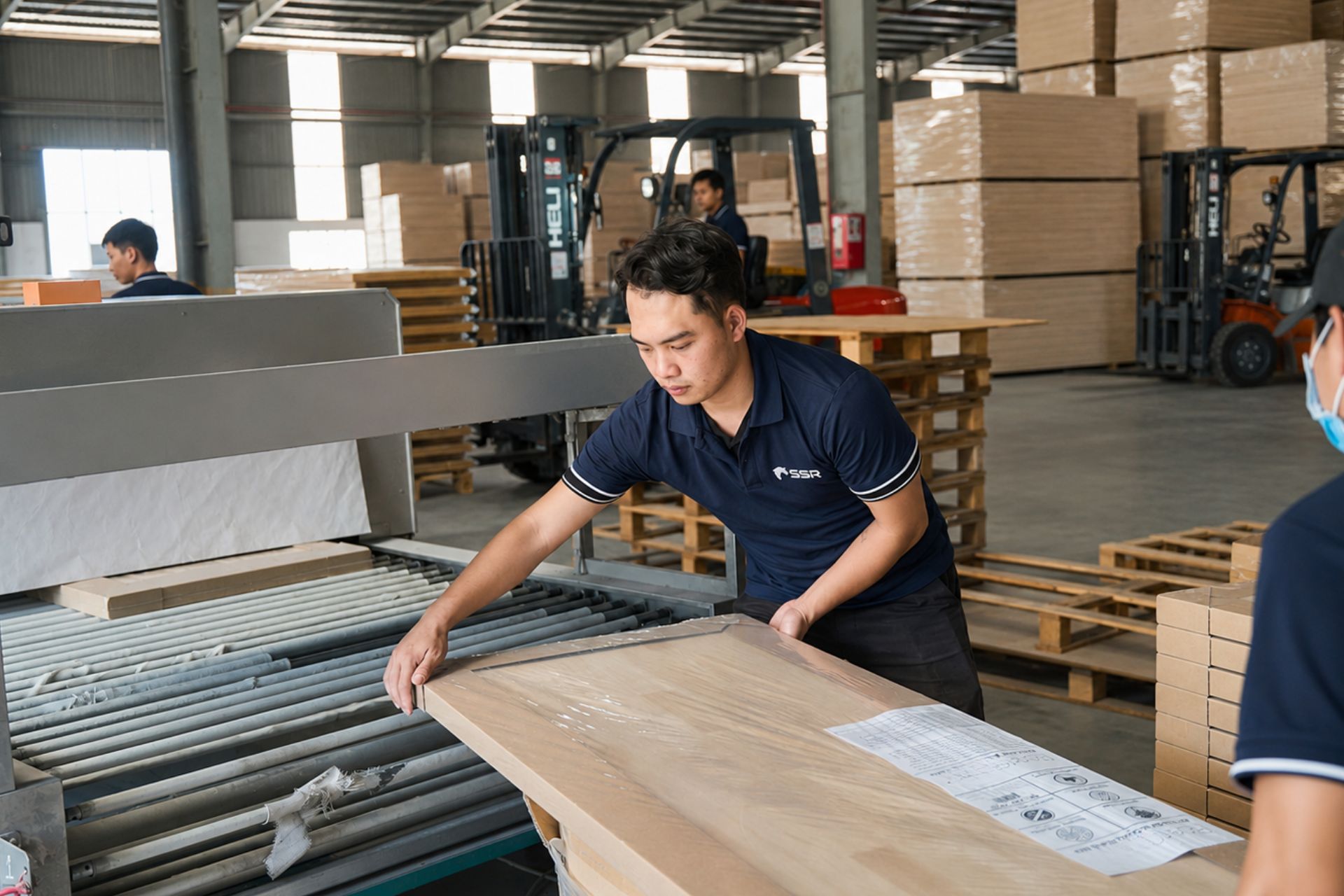
Product mix, carton dimensions, pallet requirements and unloading conditions are reviewed as one configuration. The objective is not simply to fill cubic capacity. It is to deliver useful stock coverage at a landed cost the distributor can support.
Reliable distribution depends on more than an approved sample. Sales, purchasing, quality and receiving teams need records that explain what was agreed and how each shipment should be assessed. For global wood products for distributors, this documentation becomes the operational link between the factory and the local warehouse.
Dimensions, construction, appearance limits and finish requirements establish the basis used for quotation, inspection and repeat ordering.
Carton configuration, pallet arrangement and container quantities help receiving teams plan handling while giving purchasing a comparable basis for future loads.
Material, machining or packaging revisions are reviewed against the approved reference before they enter a repeat order. This keeps commercial decisions deliberate and traceable.

The first discussion should explain the supply conditions behind the order. Active SKUs, sales regions, annual demand and normal order frequency provide a stronger starting point than a product list alone.
Share the active range, indicative volume, customer segments and products that require stronger availability.
SSR aligns specifications, production quantities, SKU roles and container options with the intended stock plan.
Confirmed product and packing requirements become the reference for production, receiving and future quotations.
Order completeness, timing, specification continuity and claims inform adjustments to the following supply cycle.
Share the range you currently distribute, the markets you serve and the constraints affecting availability or landed margin. SSR will review how global wood products for distributors, replenishment timing and container planning can operate as one repeatable program.
Discuss a Distribution Program