The relationship between Vietnam’s wood manufacturing industry and the U.S. market has become too large for international buyers to view Vietnam simply as an alternative sourcing location. During the first nine months of 2026, Vietnam exported nearly US$13.43 billion in wood and wood products, representing growth of 7.3% from the same period in 2025 (by Vietnamplus). The United States accounted for approximately 50.1% of that export value, remaining by far the largest destination for Vietnamese wood products.
For buyers looking for a Vietnam wood supplier, those figures reveal something more important than market size. Vietnam already operates inside a mature manufacturing and export relationship with U.S. importers, retailers and distributors. The sourcing question is therefore shifting from whether Vietnam can supply the market to which manufacturer can provide the right combination of product specification, production control and competitive factory pricing.
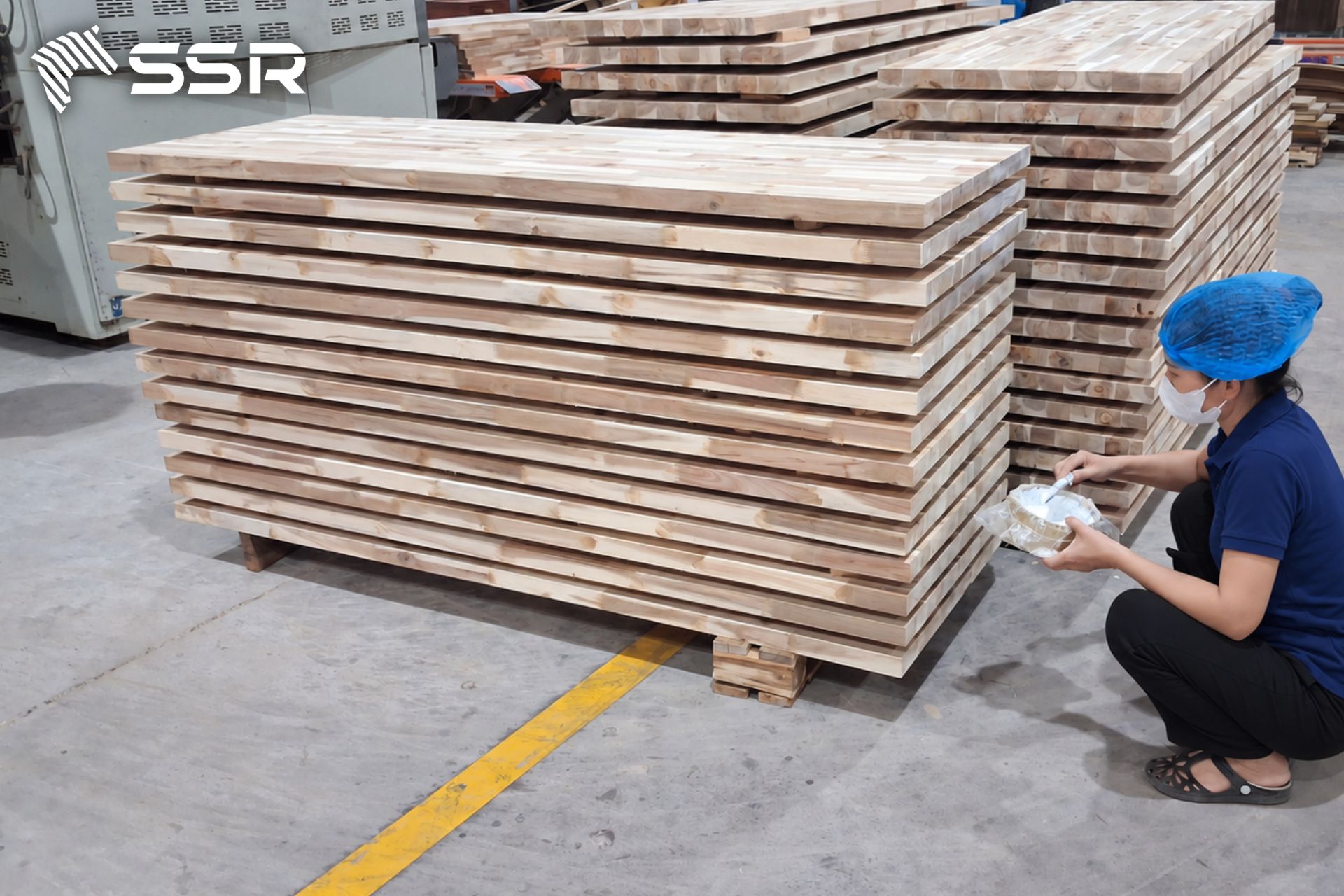
Vietnam has developed a mature wood manufacturing relationship with the U.S., its largest wood-product export market in 2026.
SSR operates within this environment as a wood manufacturer focused on solid and engineered wood products for international B2B programs. Its manufacturing categories include finger joint wood board, butcher block countertops, solid wood panels and outdoor wood products, supported by production operations and export coordination in Vietnam. The objective is to connect factory capability in Vietnam with product requirements defined by buyers in markets such as the United States.
Why U.S. Buyers Continue to Source Wood Products From Vietnam?
Vietnam has developed a significant position in the international wood-processing supply chain. Wood and wood products from the country are now exported to more than 140 countries and territories, while total industry exports reached approximately US$17.2 billion in 2025. The United States, Japan, China, the European Union and South Korea remain among the industry’s most important markets.
The U.S. relationship is especially significant. Vietnam exported approximately US$5.91 billion in wood and wood products to the United States during the first eight months of 2026, accounting for about half of the sector’s export turnover. Vietnamese manufacturers have consequently accumulated substantial experience working with U.S. product specifications, import requirements, retail programs and commercial expectations.
Price competitiveness remains part of that sourcing decision, but buyers increasingly evaluate cost in relation to specification and supply reliability. A lower purchase price has limited value if inconsistent dimensions, moisture problems or product claims create additional inspection and replacement costs after import. For this reason, buyers searching for a wood board manufacturer in Vietnam increasingly compare factory capability together with commercial pricing.
Factory-Direct Sourcing Changes the Cost Equation
One reason international buyers search for a Vietnam wood supplier is the opportunity to source closer to the manufacturing base. Factory-direct programs can reduce unnecessary layers between production and purchasing while giving buyers greater visibility into specifications, packaging and production schedules. This approach can be particularly relevant for distributors and wholesalers purchasing regular container quantities.
Competitive sourcing should not be interpreted as simply selecting the lowest quotation. Product yield, defect rates, packaging efficiency, container utilization and repeatability can all affect the eventual landed cost. A supplier capable of maintaining a stable specification may create better commercial value even when the initial unit price is not the lowest offer on the comparison sheet.
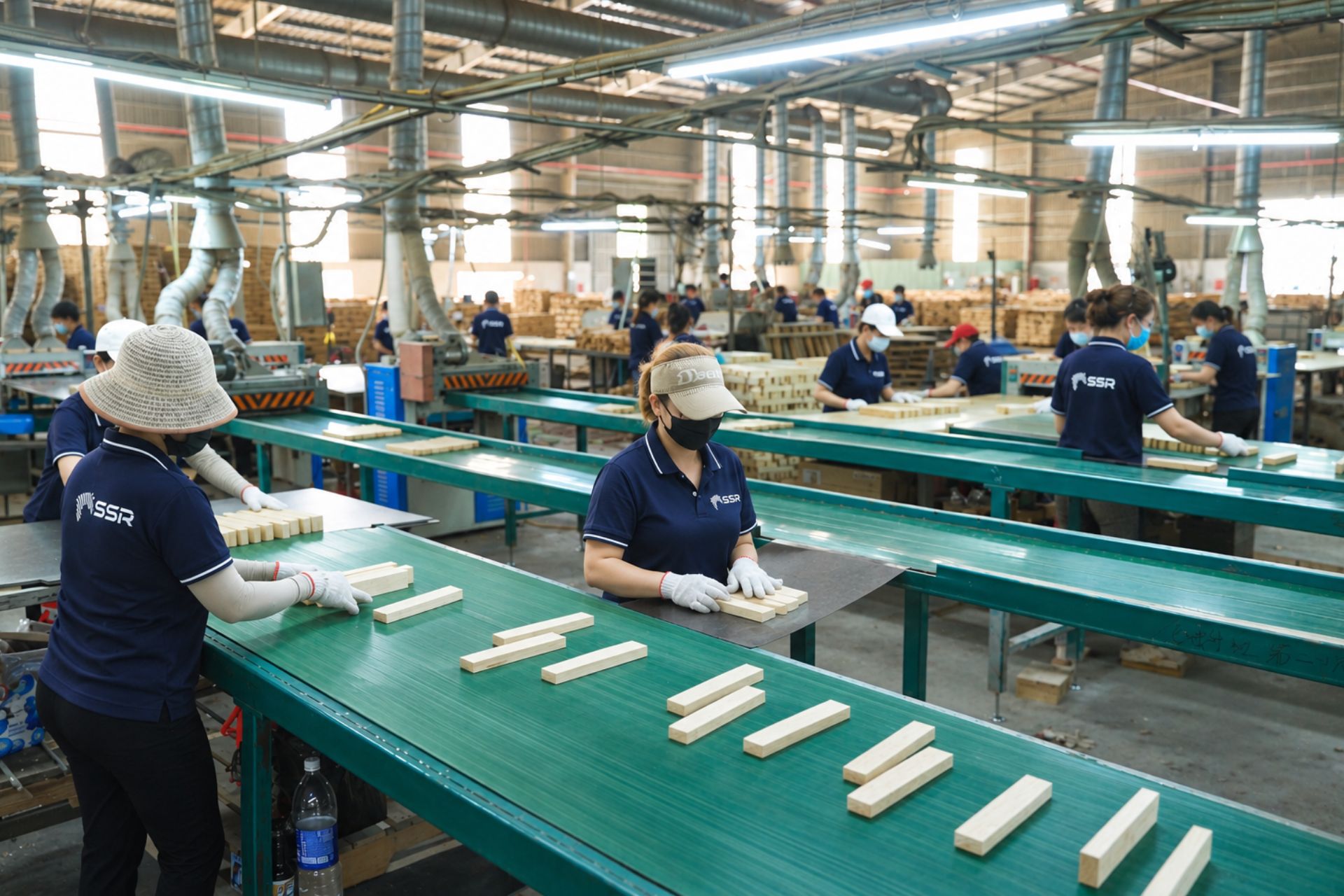
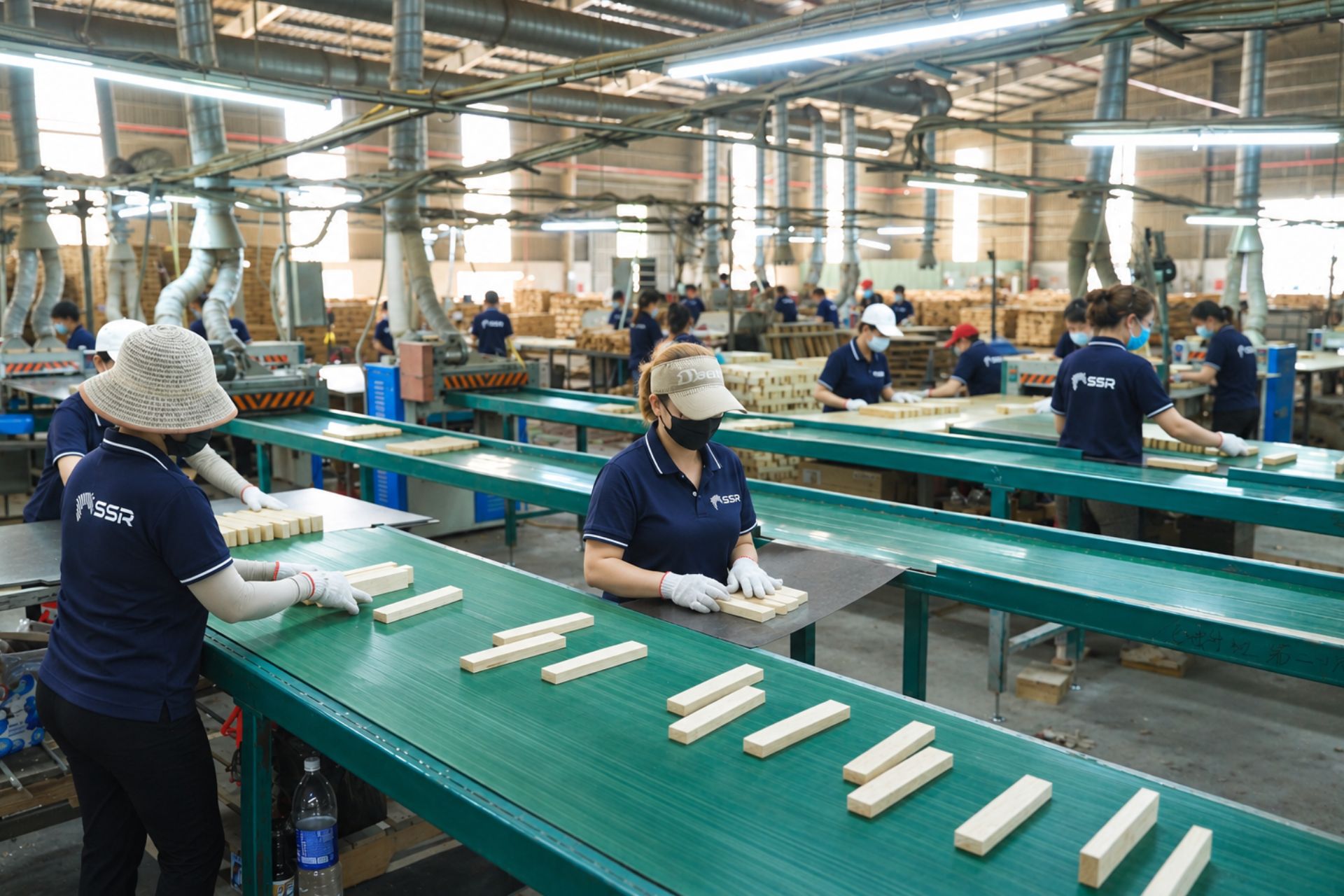
SSR’s manufacturing model is designed around B2B product programs rather than individual consumer orders. The broader SSR network supports production and supply programs for international markets, with manufacturing capabilities covering engineered wood boards and finished wood surfaces. SSR currently describes its manufacturing network as serving more than 60 markets, supported by production equipment for jointing, pressing, cutting and automatic sanding.
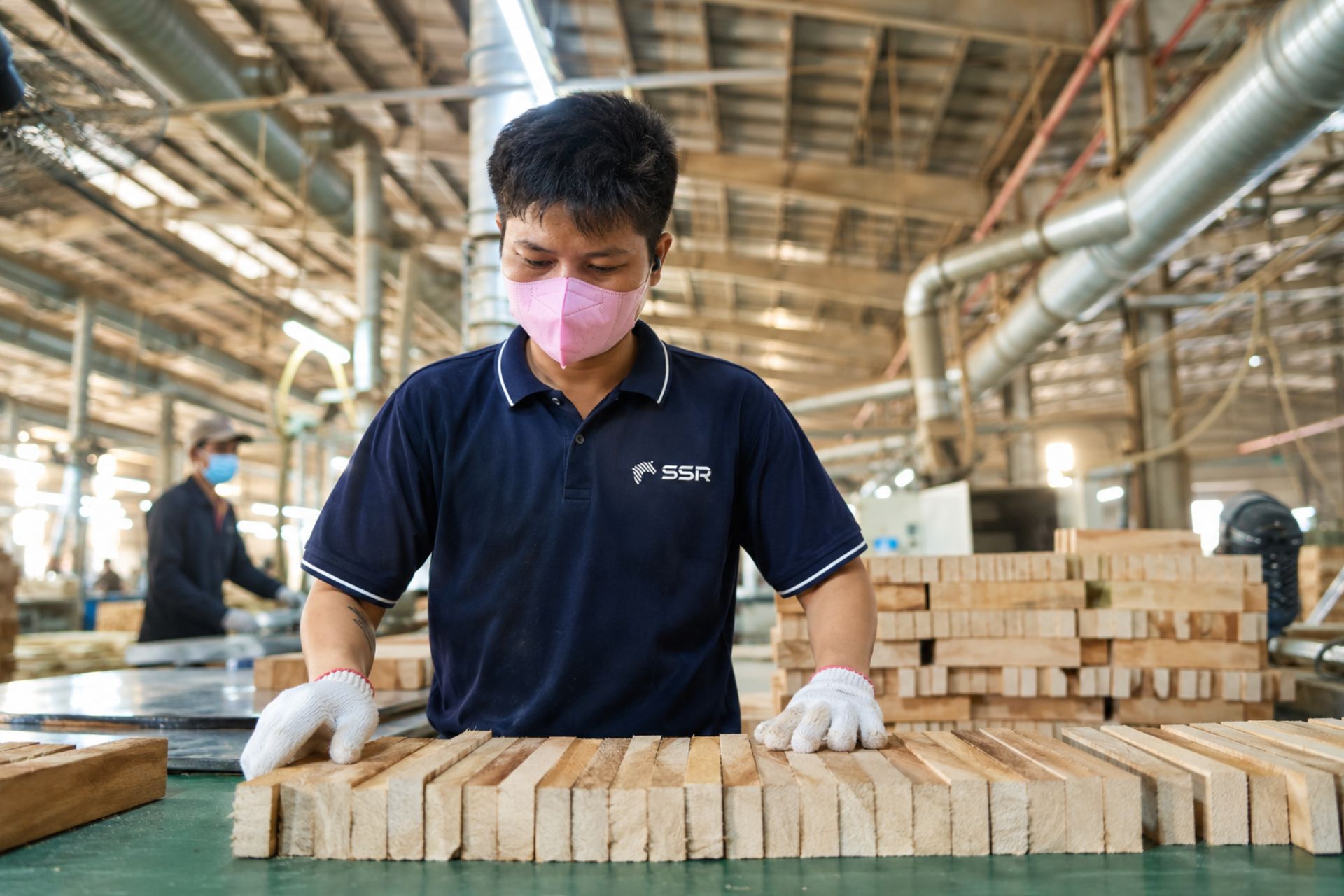
Wood board manufacturer in Vietnam processing solid wood panels at SSR factory
What Buyers Should Check in a Wood Board Manufacturer
A sample provides useful information about appearance, but it does not prove that a factory can reproduce the same result across multiple containers. Professional sourcing therefore requires closer attention to the production variables that influence board stability. Moisture content, grading, dimensions, adhesive performance and surface preparation are particularly important for solid wood products.
For many SSR wood-board programs, finished moisture is controlled at approximately 8–12%, depending on the species and application. Finger joint boards can be manufactured in standard 1220 × 2440 mm formats with several thickness options, while surface preparation may reach approximately 240–320 grit depending on the specification. These figures give buyers measurable criteria that can be incorporated into purchase specifications and quality inspections.
The same principle applies to appearance grading. Acacia can display greater natural color movement while Rubberwood may be selected for a more uniform visual program. A professional wood manufacturer in Vietnam needs to translate those commercial expectations into repeatable sorting and production procedures rather than relying on subjective descriptions at final inspection.
Finger Joint Wood Board for Furniture and Distribution Programs
Finger joint wood board is an important product category for buyers that require solid wood panels with controlled dimensions and efficient material utilization. Shorter timber sections are precision-machined with interlocking profiles before being bonded into longer components and assembled into panels. The process allows usable timber to be converted into standardized products for furniture, shelving, cabinets and interior manufacturing.
SSR produces finger joint wood board using species such as Rubberwood and Acacia, with specifications developed according to customer requirements. Moisture control and joint accuracy are especially important because variations at these stages can influence the stability of the finished board. D4 adhesive and market-specific compliance requirements can also be incorporated according to the agreed product program.
For importers evaluating a wood board supplier from Vietnam, these technical specifications should be discussed before pricing is finalized. Two quotations for a nominally similar panel may represent different grades, moisture requirements, adhesive systems or sanding standards. Comparing price without comparing specifications can therefore produce an inaccurate sourcing decision.
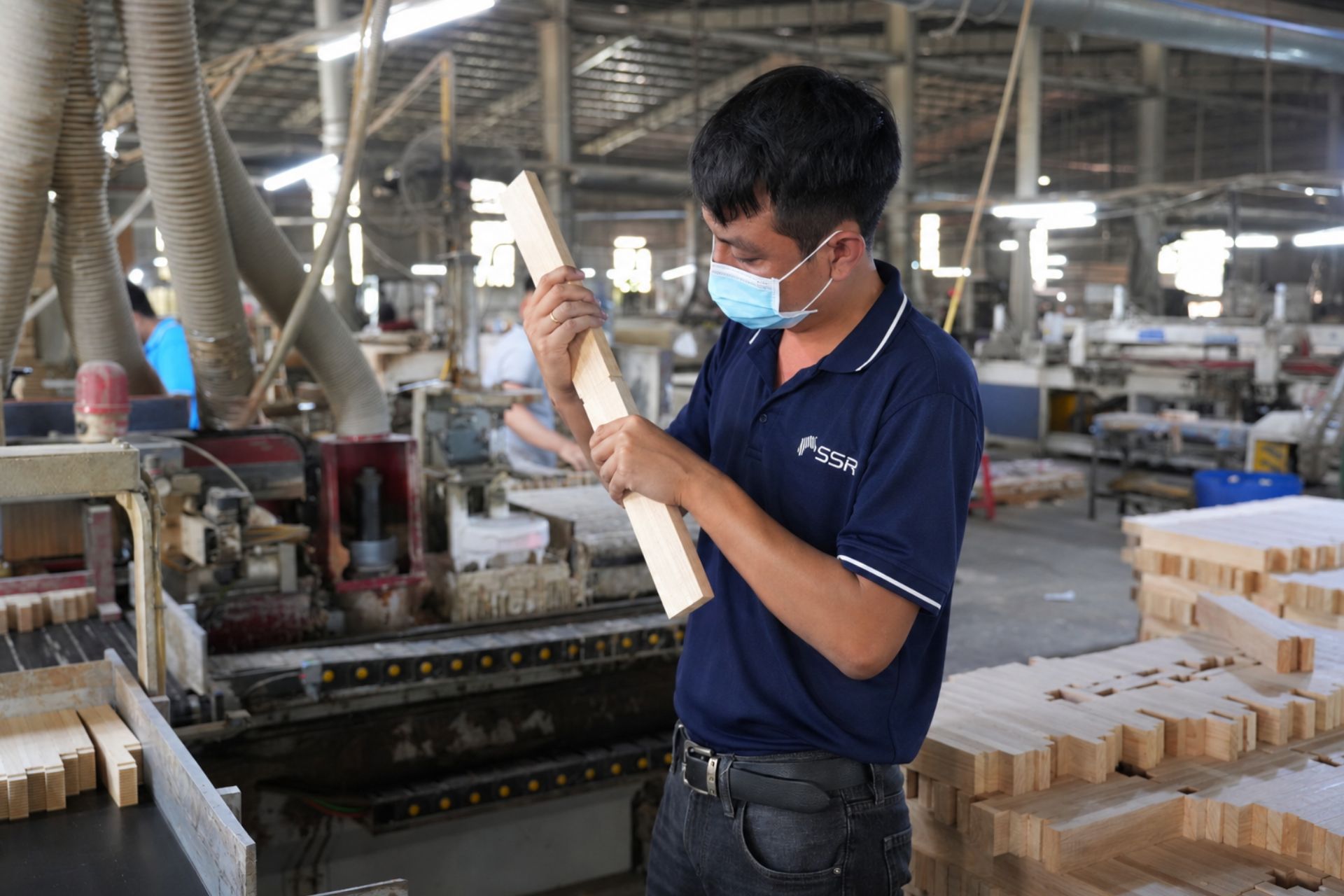
Finger jointing converts shorter timber sections into production-ready staves for standardized solid wood board manufacturer.
Butcher Block Countertops for the U.S. Market
The U.S. home improvement and interior market also creates substantial demand for solid wood work surfaces. Butcher block countertops are used for kitchen counters, islands, worktops, desks and other residential or commercial applications. Unlike industrial panels, these products require closer control over both structural performance and the visible surface.
SSR’s butcher block programs can include thicknesses from approximately 18 mm to 60 mm, widths up to around 650 mm and lengths reaching approximately 4000 mm, depending on species and specification. Product options can include unfinished sanding, pre-oiled surfaces or UV finishing, while species programs include Rubberwood, Acacia, Birch and other selected hardwoods.
For U.S. distributors and retailers, sourcing directly from a Vietnam wood supplier can also create opportunities for private-label programs and specification development. Dimensions, surface preparation, edge details and packaging can be aligned with the target sales channel before mass production begins. This makes the relationship between the manufacturer and buyer more important than simply purchasing an available stock item.
Vietnam and the U.S. Are Connected in Both Directions
The wood trade relationship between Vietnam and the United States is not entirely one-way. Vietnam is also a significant buyer of imported raw timber, including material from the United States, because domestic timber production does not satisfy every species and processing requirement of the country’s manufacturing industry. In 2024, Vietnam imported around US$2.81 billion in wood and wood products, with raw timber under HS Chapter 44 representing about 85.2% of that value.
This two-way material relationship strengthens Vietnam’s role as a processing center rather than simply a source of domestic timber. Vietnamese factories can combine local plantation resources with imported species when particular markets or product programs require them. The result is a manufacturing ecosystem that is increasingly connected to international raw-material and finished-product supply chains.
For U.S. buyers, that structure can expand sourcing possibilities beyond one wood species. A manufacturer may develop different programs around Rubberwood, Acacia or imported hardwoods according to the intended price position and product application. Product development can therefore begin with the market requirement rather than being limited to whichever material happens to be available locally.
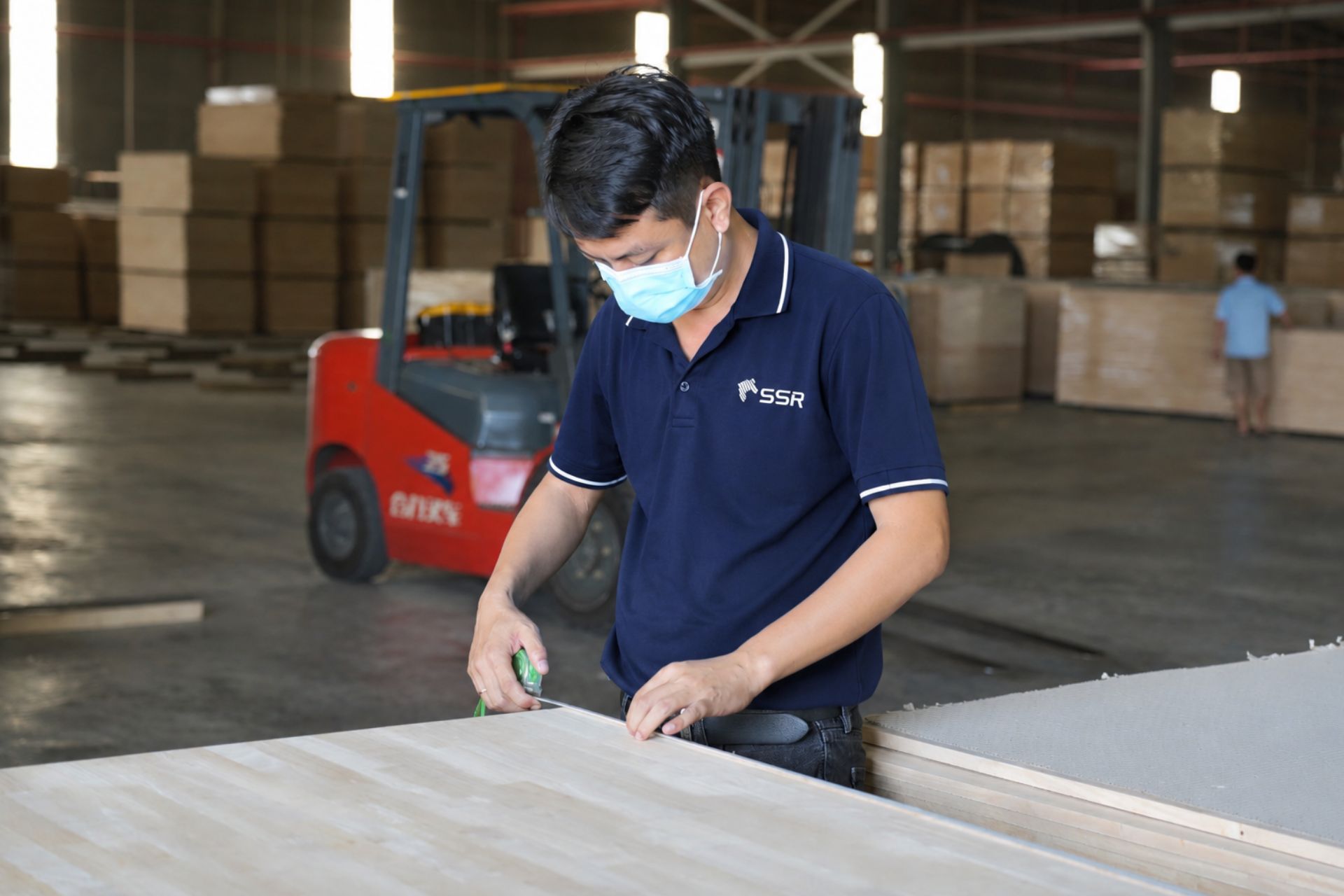
Butcher Block Countertop Manufacturer Vietnam – Quality Inspection
Competitive Pricing Still Requires Transparent Manufacturing
Cost remains one of the strongest motivations behind international sourcing, but the regulatory environment is becoming more demanding. Vietnam’s Trade Remedies Authority has advised exporters to strengthen material-origin controls, maintain traceability and retain transparent production-cost records as several categories of wood products face greater trade scrutiny in major markets.
This is particularly relevant for buyers who encounter unusually low quotations. A sustainable sourcing program requires confidence that the price originates from legitimate manufacturing efficiency rather than unclear product origin or specifications that have been reduced without disclosure. Documentation and traceability therefore form part of commercial risk management as well as regulatory compliance.
A reliable Vietnam wood supplier should be able to explain what is included in the quotation. Buyers should understand the species, grade, moisture requirement, dimensions, adhesive specification, finishing level, packaging and order quantity before comparing suppliers. That approach makes competitive pricing measurable rather than subjective.
From Vietnam Factory Floors to U.S. Buyers
Vietnam’s position in the U.S. wood market is now supported by both production scale and established commercial connections. Vietnamese companies continue to participate in major U.S. sourcing and furniture events where buyers evaluate manufacturing capability, pricing, order volume, technical standards and customization. Current industry promotion also places greater emphasis on sourcing transparency and manufacturing flexibility rather than price alone.
SSR follows the same manufacturing-to-market principle. Product development begins with the requirements of the target customer and is translated into specifications for factory production, quality control, packing and export coordination. Finger joint wood board, butcher block countertops and other solid wood programs can therefore be developed around the needs of retailers, distributors, importers or OEM customers.
For companies searching for a wood board manufacturer in Vietnam, the strongest sourcing decision may not be the factory offering the lowest initial number. The more meaningful comparison is the combination of competitive manufacturing cost, stable specifications, reliable production and the ability to repeat the same product when the next container is ordered.
That is where Vietnam’s manufacturing advantage becomes commercially useful.
For buyers evaluating a Vietnam wood supplier for the U.S. market, SSR provides a direct route from product specification to manufacturing and export coordination. Explore SSR’s manufacturing capabilities, review its solid wood programs or contact the team to discuss container quantities and product requirements.