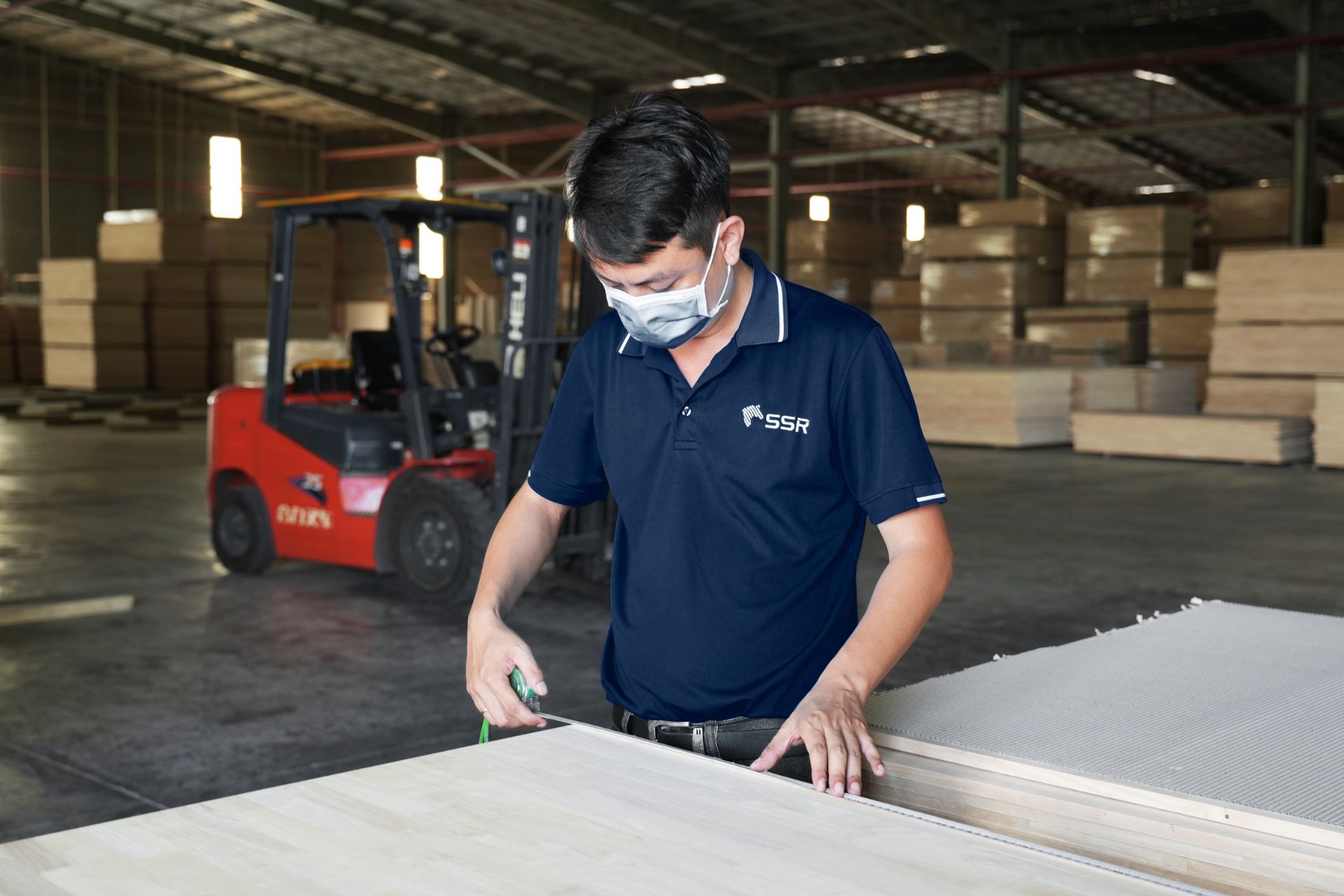
Shape the Assortment
Applications, visual character and price positions are organized so each SKU answers a recognizable customer need.


SSR develops wholesale wood products around the role each item must perform in the category. Product decisions begin with how customers compare value, where the item sits within the price architecture and whether its differences remain clear at the point of purchase.
 For Stores
In store, the product must communicate quickly. Customers compare grain, finish, dimensions and perceived value at close range. Clear carton identification helps them distinguish the options while also supporting shelf organization, receiving and replenishment.
Large surfaces and outdoor products often need a different presentation from conventional shelf items. Display samples can show material character while compact product information explains size, care and installation without overloading the package.
 For Ecommerce
Online customers buy from images, measurements and written expectations. Natural color and grain variation therefore need a defined range that can be represented honestly on the product page. When the delivered item reflects the listing more closely, the retailer has a stronger basis for protecting reviews and reducing expectation-driven returns.
Parcel fulfillment also exposes a product to handling conditions that differ from palletized store delivery. Long countertops, heavy panels and assembled outdoor products require protection designed around corner impact, surface abrasion and movement inside the carton.
A product may meet its factory specification yet create commercial friction after launch. These situations identify where channel expectations should be defined before production begins.
A retailer may approve attractive photography while leaving the acceptable color and grain range undefined. Production can still pass a general factory inspection yet generate returns because customers receive a natural variation they were not prepared to accept. The USDA Wood Handbook explains why variability is inherent in wood and should be considered when commercial acceptance criteria are established.
The commercial reference should connect approved appearance criteria with the images and language used online. This turns natural variation into a managed expectation rather than a post-sale dispute.
A carton can survive container transport and still fail after the distribution center. Individual units encounter drops, repeated transfers and unsupported handling that palletized freight may avoid.
Packaging review should follow the complete route to the end customer. Internal restraint, edge protection and carton strength then respond to actual handling risk rather than the ocean shipment alone.
More finishes and sizes can appear to strengthen a category. If customers cannot recognize why one option deserves a different price, the range becomes harder to navigate while similar SKUs compete for the same demand.
Each item should answer a distinct use case, price position or design preference. A smaller architecture with meaningful differences can create more clarity than a broad range built from minor variations.
Small changes in selection, sanding, tone or construction can accumulate across purchase orders. The new stock may then sit beside an earlier batch or reach customers through a listing built around the original product.
An approved sample supported by measurable criteria gives production and inspection a shared reference. Product changes remain visible instead of becoming an unintended shift between orders.
SSR connects category planning with channel requirements and production control. Each part of the program is developed around a different commercial decision.
Applications, visual character and price positions are organized so each SKU answers a recognizable customer need.

Product information and packaging protection are developed around store distribution or individual ecommerce fulfillment.

Approved appearance and measurable specifications provide one reference for inspection, replenishment and future revisions.

Share the market, channel, target price and expected volume. A benchmark or current product brief helps establish the intended position.
SSR translates the brief into a viable combination of material, construction, finish and packaging before preparing samples.
The approved sample and specification define what production must achieve and what inspection will verify.
Production, packing and shipment follow the confirmed reference. Market feedback can then guide controlled updates or replenishment.
Bring SSR your target market, intended sales channel and current product direction. Our team will help turn the opportunity into a commercially defined wood product program prepared for review and production.
Discuss a Retail Program