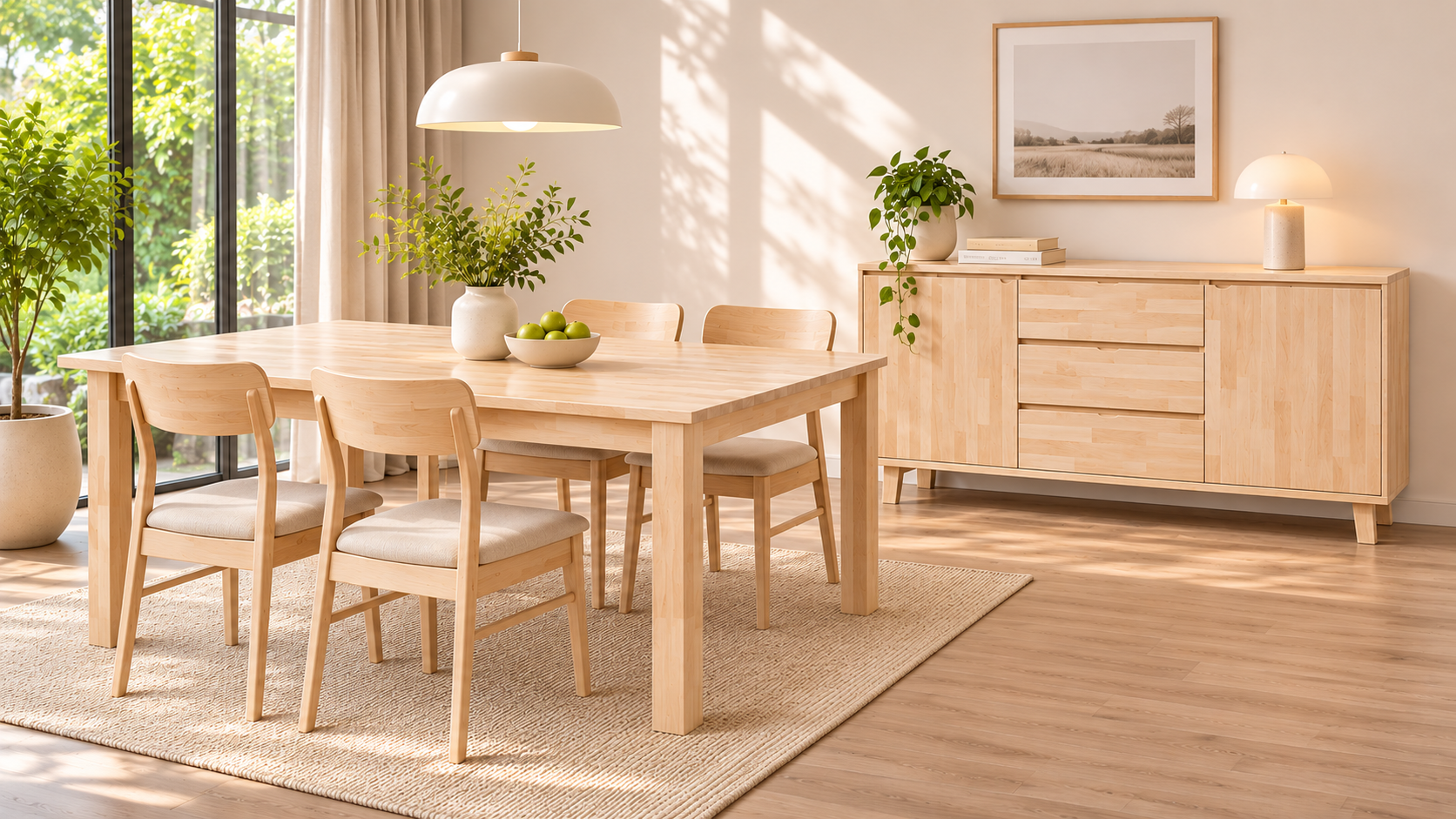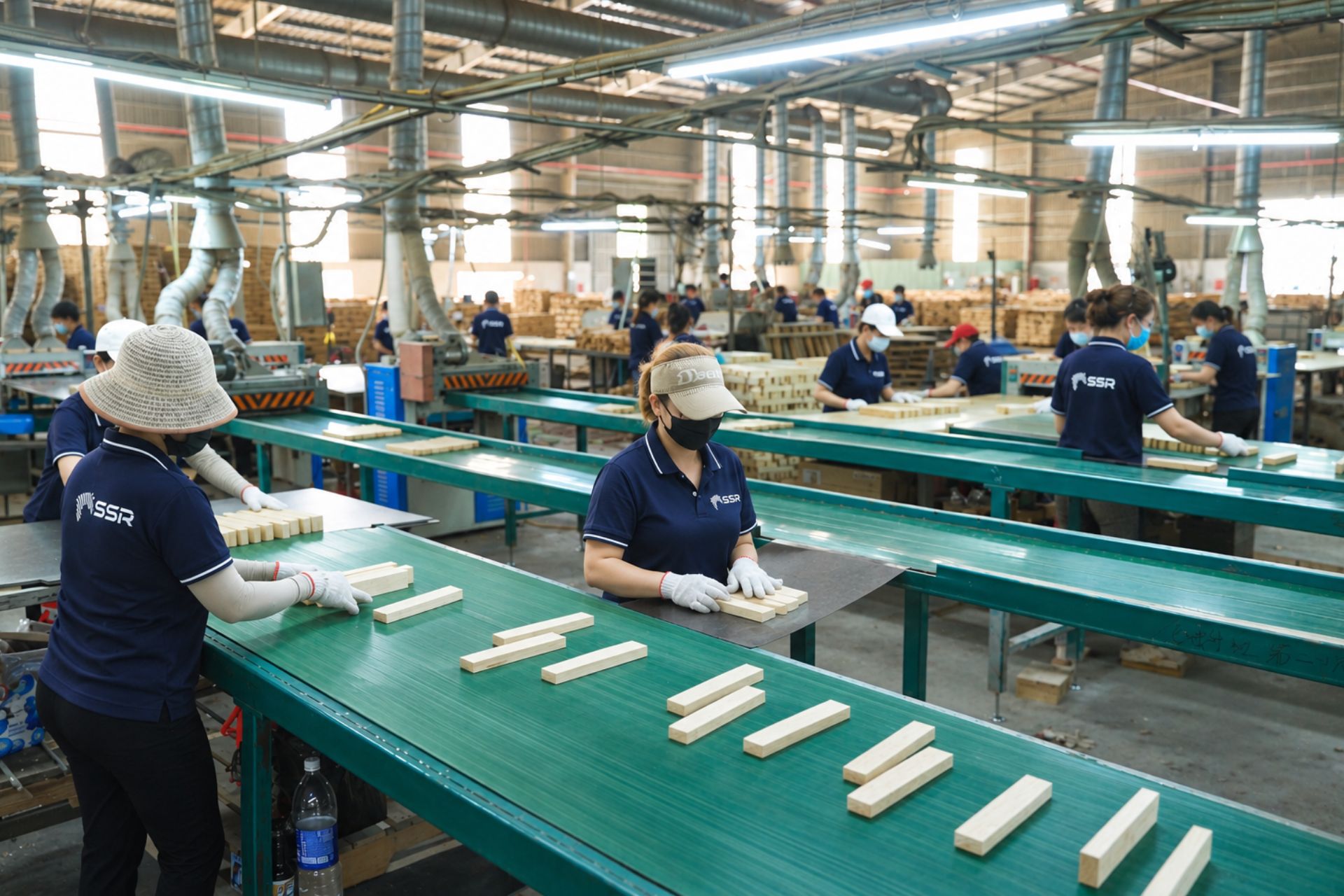
A Rubberwood Finger Joint Wood Board becomes more useful when it is considered as the starting material for a complete interior product rather than simply a rectangular wood panel. In a standard 1220 × 2440 mm format, the board provides a practical surface that can move into furniture production, cabinet systems, shelving, tables, desks, bedroom collections and other interior applications where efficient use of space and material matters.
Rubberwood, also known as Hevea, brings a relatively light and balanced natural appearance that works particularly well in interiors where furniture needs to feel warm without becoming visually heavy. Its color also gives manufacturers flexibility to keep the wood natural, apply a light finish or move toward deeper stained directions depending on the final collection.
Finger joint construction adds another advantage. Shorter solid wood sections are joined lengthwise through interlocking joints and then assembled into wider panels, creating usable board dimensions while maintaining the character of real wood.
The real value of a 1220 × 2440 Rubberwood Finger Joint Board therefore lies in what can be developed from it next.
Rubberwood Board Creates a Practical Starting Point for Product Development
The 1220 × 2440 mm format is familiar within panel-based manufacturing because it provides enough surface area to plan multiple components from one board while remaining compatible with common cutting, CNC and furniture-production workflows.
SSR’s current Finger Joint Wood Board program lists 1220 × 2440 mm as a standard panel format, with common thicknesses including 12, 15, 18, 24 and 30 mm depending on the application. The same program positions Rubberwood panels for furniture, cabinets, shelving, stair components and thicker wood-surface applications.
The importance of this format is not simply its size.
A furniture manufacturer may divide one panel into cabinet sides, shelves or table components. Another program may use the same board format for larger visible surfaces before secondary cutting and machining. In each case, the value comes from being able to plan production around a repeatable material platform.
That becomes especially relevant when a collection includes several related products rather than one isolated SKU.
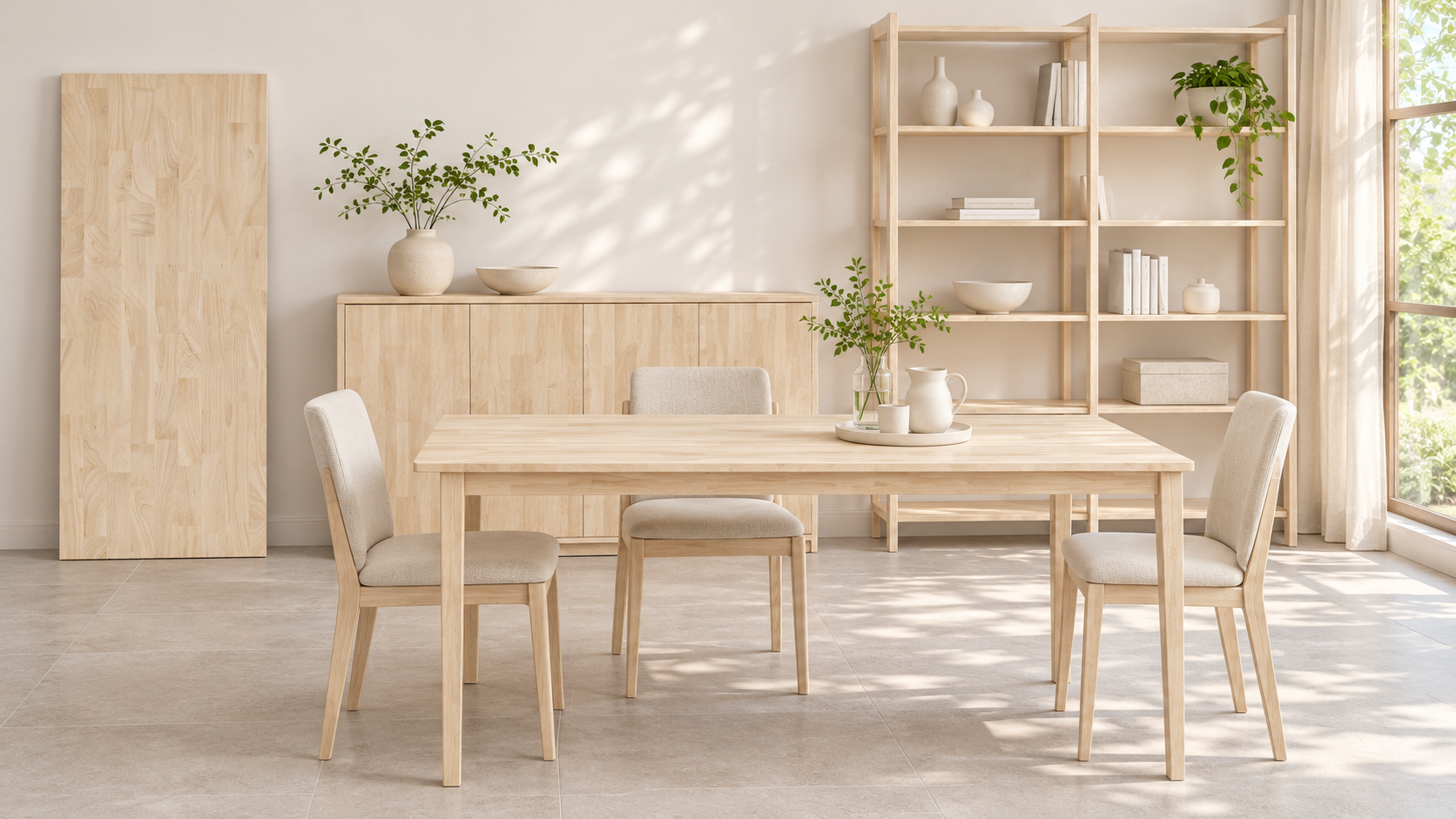
Rubberwood Finger Joint Wood Board for furniture applications
Light Wood Helps Furniture Work in Visually Compact Interiors
Furniture occupies more than floor area. It also occupies visual space.
Large dark pieces can make a compact room feel heavier, particularly when several storage units, tables and cabinets need to coexist within the same interior. A lighter wood direction can help natural furniture remain visible without dominating the room.
This is where Rubberwood Finger Joint Board has a useful aesthetic position.
SSR describes Hevea/Rubberwood panels as having a light tone suited to furniture, cabinet, shelving and indoor panel programs. The relatively balanced appearance allows the wood to work beside white, beige, grey, muted green and other neutral interior finishes while maintaining enough grain to feel naturally different from painted or laminated surfaces.
This makes Rubberwood particularly flexible for homes where one room may need to perform several functions. A dining area may connect directly to the living room. Storage furniture may remain visible from several spaces, while a desk can become part of the main living environment instead of being hidden inside a dedicated office.
When furniture shares a lighter material language, these different functions can coexist more comfortably.
Storage Furniture Turns One Board Into Many Useful Components
Storage is one of the clearest applications for a 1220 × 2440 Finger Joint Board because cabinets and shelving systems often depend on repeated rectangular components.
A single furniture program may require cabinet sides, internal shelves, drawer-related parts, doors, open storage and smaller connecting components. The board can move through cutting, drilling, routing and CNC machining before these pieces are assembled into the finished product.
The application can range from a large wardrobe to a compact side cabinet.
Entryway storage is another useful direction. Shoe cabinets, narrow consoles and closed storage help keep frequently used objects organized without requiring large furniture footprints. In bedrooms, the same material can become wardrobes, dressers or bedside cabinets. In living areas, it can move into television units, bookcases and wall-mounted storage.
The product changes, but the underlying requirement remains similar: a material that can be processed efficiently while retaining enough surface quality for visible furniture.
This is where finger joint board moves from being a raw panel into part of an organized furniture system.
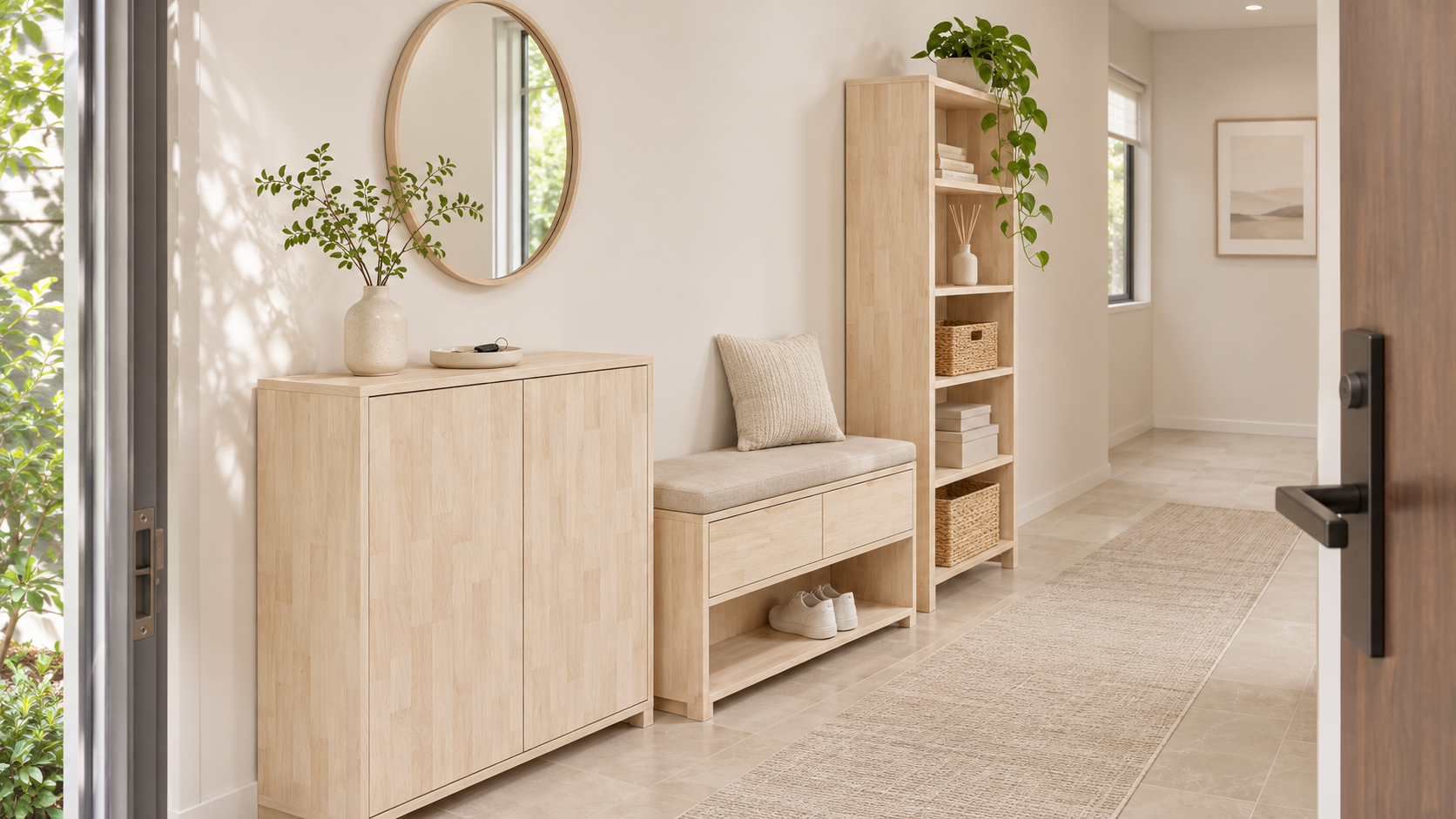
Rubberwood Finger Joint Board used for storage cabinets and shelving
Shelving Makes Better Use of Vertical Space
Floor space is limited much sooner than wall space in many interiors.
That makes shelving particularly valuable.
Floating shelves, bookcases, pantry shelves and wall-mounted storage can increase usable capacity without adding another large furniture footprint. Rubberwood Finger Joint Wood Board fits this application because the face and edge can remain visible, allowing the shelf itself to become part of the room rather than simply a hidden structural component.
The front edge is especially important.
A poorly prepared shelf may reveal rough machining, glue marks or inconsistent sanding immediately because the consumer often sees the edge directly at eye level. A cleanly machined and sanded Rubberwood board, by contrast, can create a simple but substantial-looking shelf without additional decorative treatment.
This makes shelving a good example of how a straightforward board format can gain value through careful processing rather than complicated construction.
Dining Furniture Keeps the Shared Space Warm and Practical
The dining table carries a different cultural role from many other furniture products.
It is not simply a surface for food. It often supports conversation, homework, tea, work, family gatherings and everyday activities that extend beyond mealtimes.
That means the material needs to work visually across many different moments.
A Rubberwood table top can create a warm natural center without making the room feel overly formal. The lighter wood appearance works particularly well when dining areas connect directly to kitchens or living spaces, because the table can feel visually related to other furniture without dominating the entire interior.
Finger joint construction can remain subtly visible across the surface, giving the table a recognizable real-wood character.
The same Rubberwood material can then continue into benches, dining chairs, sideboards or nearby shelving so that the dining area feels like one coordinated collection instead of several unrelated pieces.
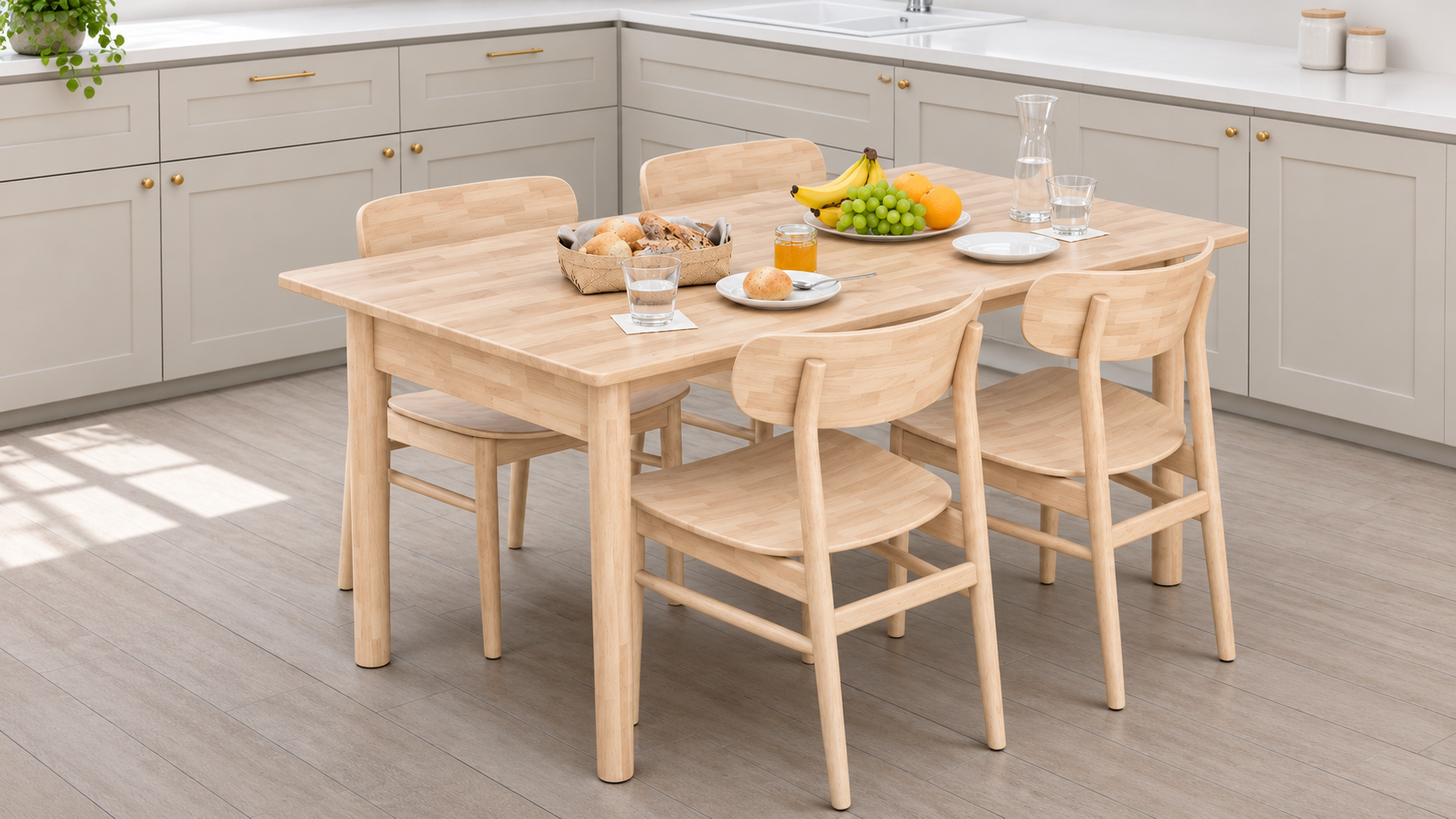
Rubberwood Finger Joint Wood Board used for a dining table
One Dining Table Can Serve More Than Mealtimes
When interior space needs to work harder, the dining table often becomes one of the most multifunctional pieces in the home.
It may function as a breakfast table in the morning, a study surface in the afternoon and a family dining area later in the day. This changes what consumers expect from the product.
A highly decorative table that works only as a visual centerpiece may be less useful than a clean, practical surface with enough area for several activities.
Rubberwood supports this type of furniture direction well because it can remain visually warm while still feeling relatively neutral.
The table does not need to communicate luxury through dramatic grain.
Its value can come from being comfortable to live with every day.
That distinction is important when developing Rubberwood furniture programs. The best product is not always the most visually complex one. Sometimes it is the product that fits naturally into more parts of daily life.
Desks Allow the Same Panel to Move Into Work and Study Spaces
Home workspaces do not always occupy separate rooms.
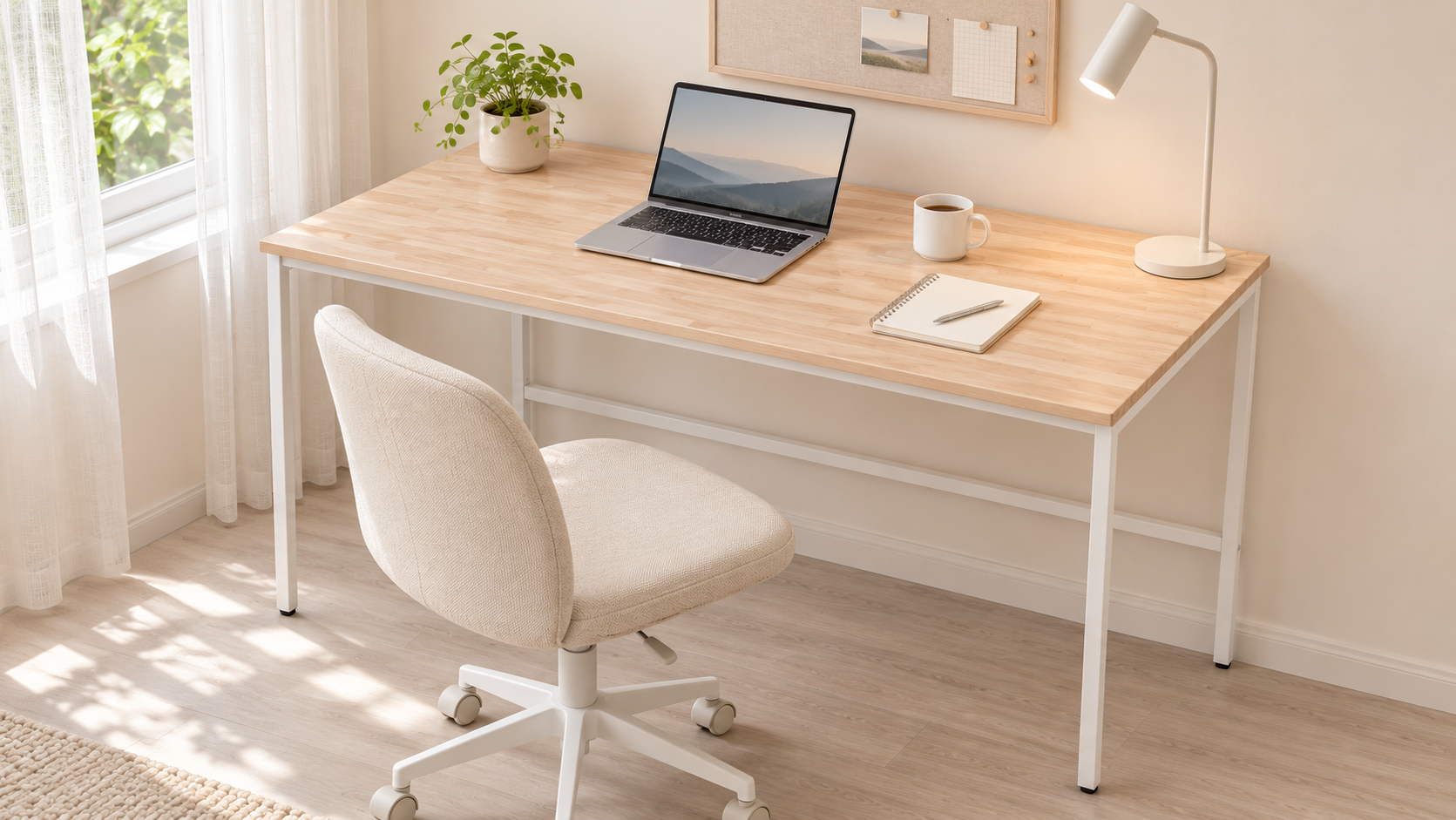
A desk may sit inside a bedroom, beside a living area or within a shared study space. Because it remains visible alongside the rest of the furniture, its material needs to work with the interior rather than look like a separate office system.
A Rubberwood Finger Joint Board can become a desktop that introduces natural texture without making the workspace visually heavy.
The broad panel format also allows the surface to be cut according to different desk concepts. A smaller top can serve a compact study desk, while a wider format can move into home-office or shared work applications.
Different base systems can be added underneath without changing the main material direction. The same Rubberwood surface can work with wooden legs, metal frames or adjustable standing-desk systems.
For OEM/ODM programs, this creates an efficient way to develop several desk models around one approved material.
Bedroom Collections Benefit From a Calm Material Direction
A bedroom usually contains several pieces of furniture within a relatively limited visual field.
The bed may sit beside bedside tables, a dresser, wardrobe, bench and additional storage. If every piece carries a strong or unrelated grain direction, the room can quickly feel visually busy.
Rubberwood offers another approach.
Its relatively light tone allows several furniture pieces to share a natural wood identity while maintaining a calmer overall appearance. A Rubberwood Furniture Board can therefore be developed into bed components, bedside cabinets, dressers, wardrobe parts and storage furniture within one coordinated material family.
The products do not need to use exactly the same grade.
A highly visible headboard may justify tighter appearance control, while internal wardrobe components may prioritize cost and machining performance differently.
What matters is that the finished collection feels related where the consumer actually sees it.
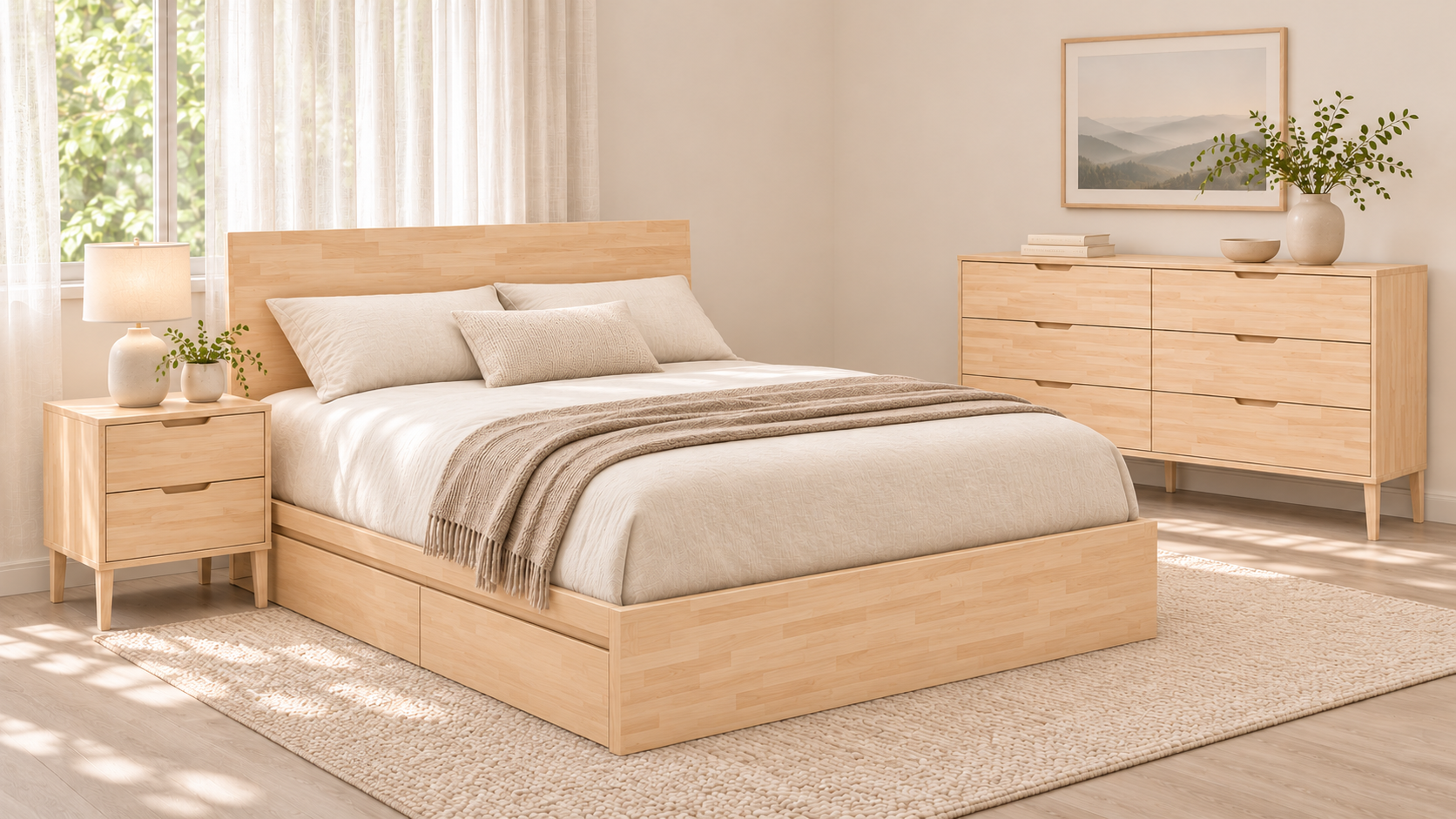
Rubberwood Finger Joint Wood Board for bedroom furniture
Cabinets Need to Balance Appearance With Everyday Organization
Kitchen and utility cabinets create another important application for Rubberwood panels.
Consumers may see the cabinet face first, but the usefulness of the product comes from the storage system behind it. Shelves, internal divisions, drawers and doors all need to work together within a relatively precise structure.
A standard 1220 × 2440 Rubberwood Wood Panel gives manufacturers a practical starting point for developing these components before cutting them to final dimensions.
The finish then determines how much of the natural board remains visible.
Clear or light finishes place greater attention on grading, joint appearance and surface preparation. Stained finishes need consistent sanding so that color develops more evenly. Painted furniture changes the priority again, because glue residue, machining marks or uneven preparation can become visible after coating.
Quality therefore should not be defined only by the board itself.
It should be defined by what the cabinet needs to look like when finished.
Rubberwood Can Move Easily Between Natural and Stained Furniture Directions
One reason Rubberwood has become established in furniture manufacturing is its finishing flexibility.
The FAO’s technical review of Rubberwood notes that the wood has a naturally light color, good machining qualities and takes stains and finishes well. The same review identifies furniture and wood-based panels among its major uses.
This creates useful design flexibility for a Rubberwood Finger Joint Wood Board.
A clear or lightly toned finish can preserve the pale natural surface for cleaner furniture collections. A medium stain can introduce more warmth, while darker stain directions allow the same material to move into a very different visual position without changing species.
This is valuable when a manufacturer wants to develop several collections from one material platform. The board remains consistent. The consumer-facing identity changes through grading, design and finish.
Finger Joint Construction Makes Better Use of the Wood
Rubberwood finger joint board uses shorter pieces of solid wood that are machined with interlocking profiles before being joined into longer elements and assembled into panels. SSR describes this construction as a way to improve material yield while producing panels suited to furniture, cabinet, shelving and other downstream applications.
This matters commercially because not every furniture component requires long, continuous lamellas.
The finger joint process allows usable shorter material to become part of a larger board instead of being excluded simply because of length.
For visible furniture, however, efficiency cannot be the only consideration.
The joints remain part of the final surface, which means machining accuracy, glue-line quality and the relationship between adjoining pieces influence how the board looks after sanding and finishing.
A successful panel therefore needs to make efficient use of the material without making the finished product feel visually uncontrolled.
Natural Variation Needs Enough Control to Feel Intentional
Rubberwood has a relatively calm appearance, but no natural wood surface is completely uniform.
Individual staves can still vary in tone, grain direction and subtle natural character. Once several pieces are joined into one Finger Joint Wood Board, these differences become visible across a much larger surface.
That is not necessarily a defect.
Natural variation is one reason consumers choose real wood instead of a printed surface.
The challenge is deciding how much variation is appropriate for each product.
A dining table or visible cabinet face may require tighter visual selection. Shelving can accept a slightly broader range, while hidden furniture components may need very little appearance control.
SSR’s current panel program addresses this through different face-quality levels, with cleaner grades intended for more visible furniture and surface applications and broader variation available for more value-focused programs.
This allows grade to follow the application instead of forcing every product into the highest visual standard.
Surface Preparation Matters More When the Furniture Stays Light
Light finishes expose details that darker opaque coatings can hide.
Small glue marks, uneven sanding, machining lines or poorly prepared joints may become more visible when a Rubberwood surface is finished naturally.
For this reason, a Rubberwood Furniture Board intended for a light collection needs surface preparation that supports the final design direction from the beginning.
SSR’s standard Finger Joint Wood Board program describes panels as sanded and finish-ready for coating, oiling, staining, CNC machining or other downstream finishing workflows.
The technical process therefore supports a very consumer-facing result.
The customer may never know the sanding sequence.
They simply see whether the finished cabinet, table or shelf looks clean.
Moisture Control Supports Furniture After It Leaves the Factory
Moisture content rarely appears in the consumer’s decision-making process, but it can become very noticeable later if it is not controlled correctly.
A cabinet door needs to remain aligned. A tabletop should stay reasonably stable. Shelves should continue to sit correctly within the furniture system.
Wood naturally responds to changes in humidity, which means moisture management needs to begin before the board reaches machining and assembly.
SSR’s Rubberwood Finger Joint Board specification lists moisture below 12%, while its broader panel guidance emphasizes aligning moisture targets with the application and destination requirements.
The FAO similarly notes that drying and moisture treatment are important for Rubberwood in furniture manufacturing to reduce problems such as bowing and twisting.
The consumer may never see this specification. They experience its result through the furniture.
A Standard Board Becomes More Valuable When Cutting Yield Is Planned Around the Product
The 1220 × 2440 mm format provides a useful manufacturing canvas, but the board creates the most value when component planning begins before cutting.
A cabinet program may prioritize repeated shelf and side-panel dimensions.
A desk program may aim to recover one or more broad tops while using remaining material for smaller components.
Bedroom furniture may combine larger visible panels with rails, supports and storage parts.
The best cutting plan therefore changes according to the finished product.
This is why one standard board dimension can serve many applications without requiring every program to use the material in exactly the same way.
For manufacturers, the opportunity is not merely buying a standardized panel.
It is designing the product around how efficiently that panel can be converted into sellable furniture.
The Same Board Can Support Different Price Positions
A furniture collection does not always need the same face quality across every component.
This creates an opportunity to use Rubberwood more intelligently.
Cleaner material can be directed toward visible faces, tabletops and cabinet fronts where appearance has a stronger influence on perceived value. Broader natural variation can move into components where consumers see less of the face or where a more natural character is acceptable.
SSR’s current Rubberwood panel program offers several face-quality directions specifically to align panel appearance with furniture and surface use.
That makes grading part of product strategy rather than simply a pass-or-fail inspection system.
A manufacturer can build a more refined visible surface without unnecessarily using the same visual grade throughout every hidden part of the product.
One Material Can Connect Dining, Storage, Work and Bedroom Furniture
The strongest reason to consider Rubberwood Finger Joint Wood Board as a program material is its ability to move across several everyday applications while maintaining a recognizable visual direction.
A dining table brings the material into a shared family space.
A desk extends it into work and study.
Shelves use the same wood to create vertical storage, while cabinets help organize kitchens, entryways and living areas.
Bedroom furniture carries the lighter wood language into more private spaces.
These products may have very different dimensions, machining requirements and quality priorities, but they can still feel connected when the species and finishing direction remain consistent.
For furniture manufacturers, retailers and OEM/ODM programs, this creates a stronger opportunity than developing each product around an unrelated material.
The board becomes a platform for the collection.
Rubberwood Works Best When the Product Begins With the Way People Live
A 1220 × 2440 Rubberwood Finger Joint Wood Board is ultimately only a manufacturing format.
Consumers do not buy the board because it measures 1220 by 2440 millimeters.
They buy the cabinet that keeps a compact entryway organized.
They buy the dining table that supports meals, work and family time.
They buy the shelf that creates more usable storage without occupying additional floor space.
They buy the desk that fits naturally into a bedroom or shared living area.
The most successful product development therefore begins with those uses and works backward toward the material specification.
The required grade, thickness, sanding, machining and packaging can then be aligned around what the board needs to become.
SSR’s Rubberwood Finger Joint Wood Board program combines the standard 1220 × 2440 mm panel format with application-based grading, surface preparation and production control for furniture, cabinets, shelving, wood surfaces and OEM programs.
One standard board can become many different products. The value begins with choosing the right application.
Frequently Asked Questions
What is the standard size of Rubberwood Finger Joint Wood Board?
A common SSR standard format is 1220 × 2440 mm, equivalent to approximately 48 × 96 inches. Common thicknesses can include 12, 15, 18, 24 and 30 mm depending on the product program.
What can a 1220 × 2440 Rubberwood Finger Joint Board be used for?
Applications can include furniture, cabinets, shelving, dining tables, desks, bedroom furniture, stair components and other interior wood products.
Is Rubberwood the same as Hevea?
Yes. Rubberwood comes from Hevea brasiliensis and is also commonly referred to as Hevea wood.
Why is Rubberwood suitable for furniture?
Rubberwood has a naturally light appearance and good woodworking properties. FAO references note that it machines well and accepts stains and finishes effectively, supporting its widespread use in furniture and wood-based products.
Can Rubberwood Finger Joint Board be used for cabinets?
Yes. Finger joint Rubberwood panels can be cut and machined into cabinet sides, shelving, doors and other furniture components, with face quality selected according to how visible the finished part will be.
Can the board be stained darker?
Yes. Rubberwood accepts stains well, allowing the naturally light surface to move into warmer or darker furniture directions depending on the finishing system.
Why are different face grades useful?
Different applications place different demands on appearance. Cleaner faces are more appropriate for visible tabletops or furniture, while broader natural variation may be acceptable for value-focused or less-visible components.
Why does moisture control matter?
Wood responds naturally to changes in humidity. Appropriate drying and moisture control help reduce dimensional problems such as bowing or twisting after the material has been processed into furniture.
Can one Rubberwood board program support several furniture collections?
Yes. One material platform can support dining, storage, bedroom and workspace products while using different dimensions, grades and finishes according to each application.