Outdoor Living is increasingly less about placing a table and a few chairs outside and more about creating a space that feels connected to the way people already live indoors. A balcony can become a breakfast corner, a terrace can turn into an outdoor dining area, and a patio can move between family meals, quiet afternoons and casual gatherings depending on how the flooring, furniture and surrounding details work together.
That shift changes the role of individual products. Wood deck tiles, patio sets and outdoor lounge furniture no longer need to compete as separate categories; when they share the same visual language and support different activities within the same space, they become part of a broader Outdoor Living program.
Recent outdoor-living research also shows that these spaces are being developed more like complete living areas, with seating, side tables, lighting and other elements working together to support longer periods of use. According to the Houzz Outdoor Trends Report, homeowners are increasingly treating outdoor areas as functional extensions of the home.
For product development, the opportunity therefore begins with a simple question: what does the consumer want this outdoor space to become?
The Floor Changes the Space Before the Furniture Does
Outdoor furniture usually attracts attention first, but the floor often determines whether the entire area feels finished.
A plain concrete balcony, aging terrace or hard patio surface may function perfectly well while still feeling disconnected from the rest of the home. Adding wood deck tiles changes that impression quickly by introducing natural color, texture and a more residential feeling underfoot.
Because interlocking deck tiles are modular, the visual transformation does not necessarily require rebuilding the entire outdoor area. The flooring can create a defined zone for dining, seating or relaxation while allowing the original space to remain structurally unchanged.
This is particularly useful where outdoor areas are relatively compact. Instead of treating limited floor area as a constraint, a carefully defined surface can make the space feel more intentional.
The deck tile therefore does more than cover the ground. It establishes the visual foundation for everything placed above it.
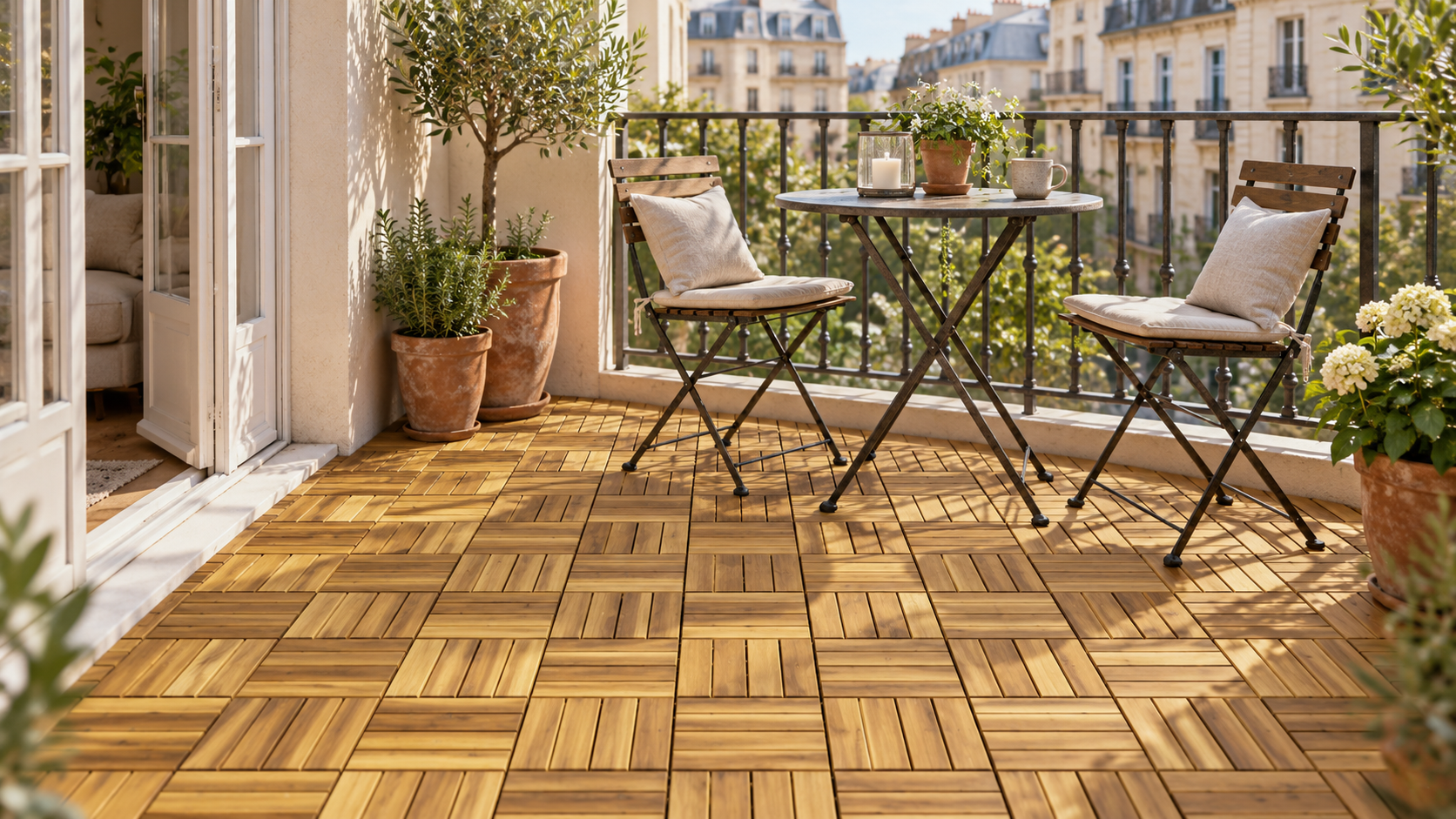
Outdoor Living space with wood deck tiles and patio furniture
Small Outdoor Spaces Still Need a Clear Purpose
A large garden is not required to create a meaningful outdoor experience.
Balconies, compact terraces and small courtyards can become some of the most frequently used spaces around a home when the products inside them are chosen around a specific activity. The Royal Horticultural Society has similarly highlighted the potential of smaller spaces through its “Small spaces, big impact” initiative, reflecting the wider interest in making useful outdoor environments even where space is limited.
In these settings, scale becomes more important than quantity.
A bulky dining arrangement may overwhelm a narrow balcony, while a compact patio set can create enough space for morning coffee, conversation or an informal meal without taking over the entire area. Folding tables and chairs can make the space even more flexible because they allow the layout to change when the furniture is not being used.
The consumer is not necessarily looking for more furniture.
They are looking for furniture that makes a small amount of outdoor space more useful.
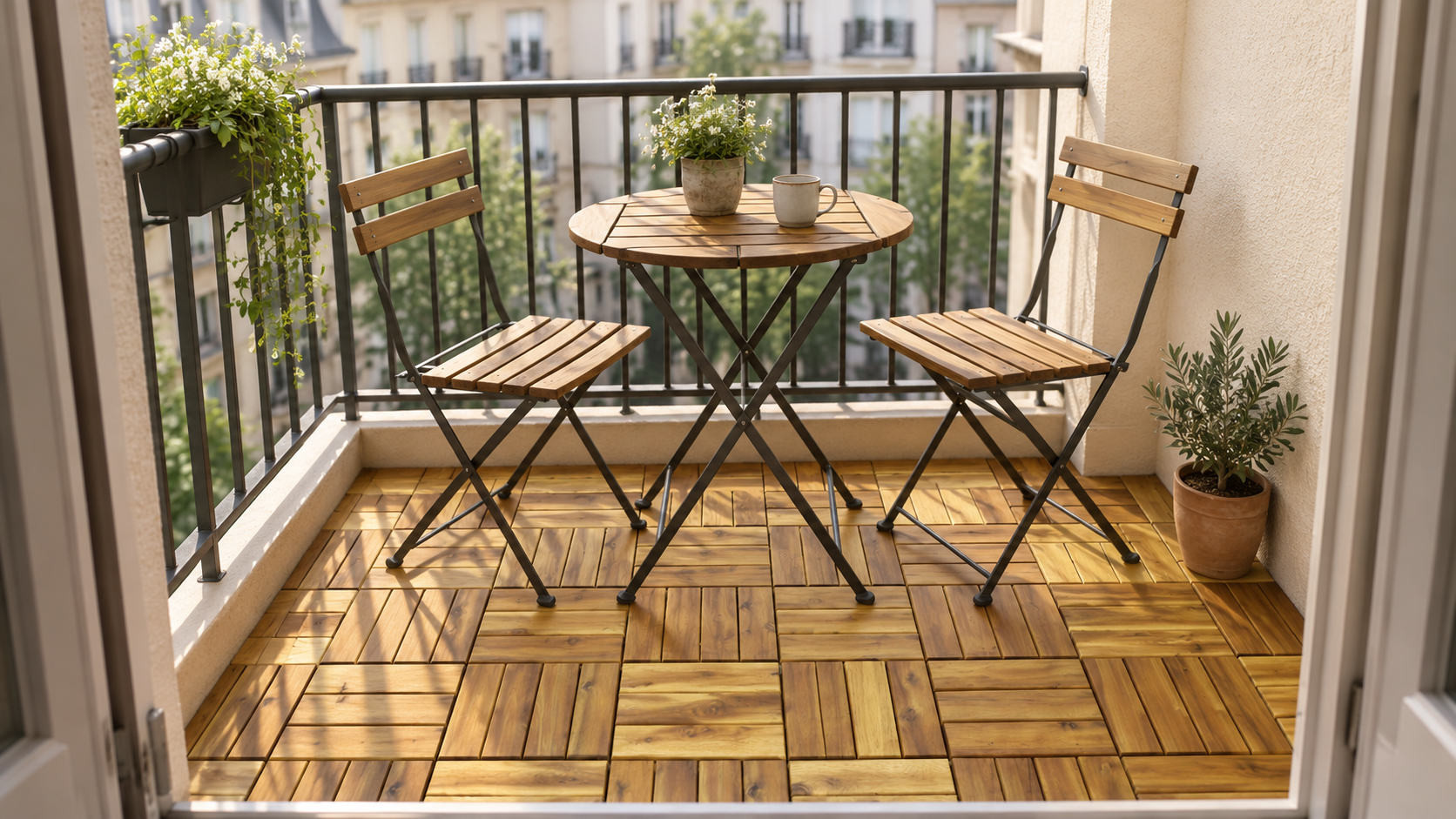
Small Outdoor Living balcony with deck tiles and folding patio set
A Patio Set Can Turn an Outdoor Area Into a Place to Stay
The difference between an outdoor area people pass through and one where they choose to spend time often comes down to how comfortably the space supports everyday activities.
A table and seating immediately give the space a purpose. Breakfast can move outside. Dinner can extend beyond the kitchen. Friends can gather around the same area rather than simply standing in the garden or on the terrace.
This is where an outdoor patio set becomes more than an individual furniture product.
Its size, seating capacity and proportions help define the activity around it. A two-seat bistro arrangement feels personal and compact, while a four- or six-seat dining set creates a more social environment and gives the terrace a stronger role in family meals and entertaining.
When the furniture is paired with wood flooring underneath, the result begins to feel much closer to an outdoor room than an empty hard-surface area with furniture placed on top.
Outdoor Dining Should Feel Connected to the Home
Consumers rarely experience outdoor furniture as an isolated object.
They see it through a doorway from the kitchen or living room. They see it beside the exterior wall, flooring, plants and other materials already around the home. This makes visual compatibility important even when the outdoor products are purchased separately from the interior.
Natural wood can help create that transition because the same material language already appears frequently in furniture, flooring, cabinetry and other residential surfaces.
A coordinated outdoor dining set and deck tile surface can therefore make the transition between indoor and outdoor areas feel more deliberate. They do not need to use exactly the same tone, but related wood colors and finishes can prevent the terrace from feeling like a completely separate environment.
For an Outdoor Living program, this creates an important design principle: individual products should be able to stand alone, but they should look even stronger when presented together.
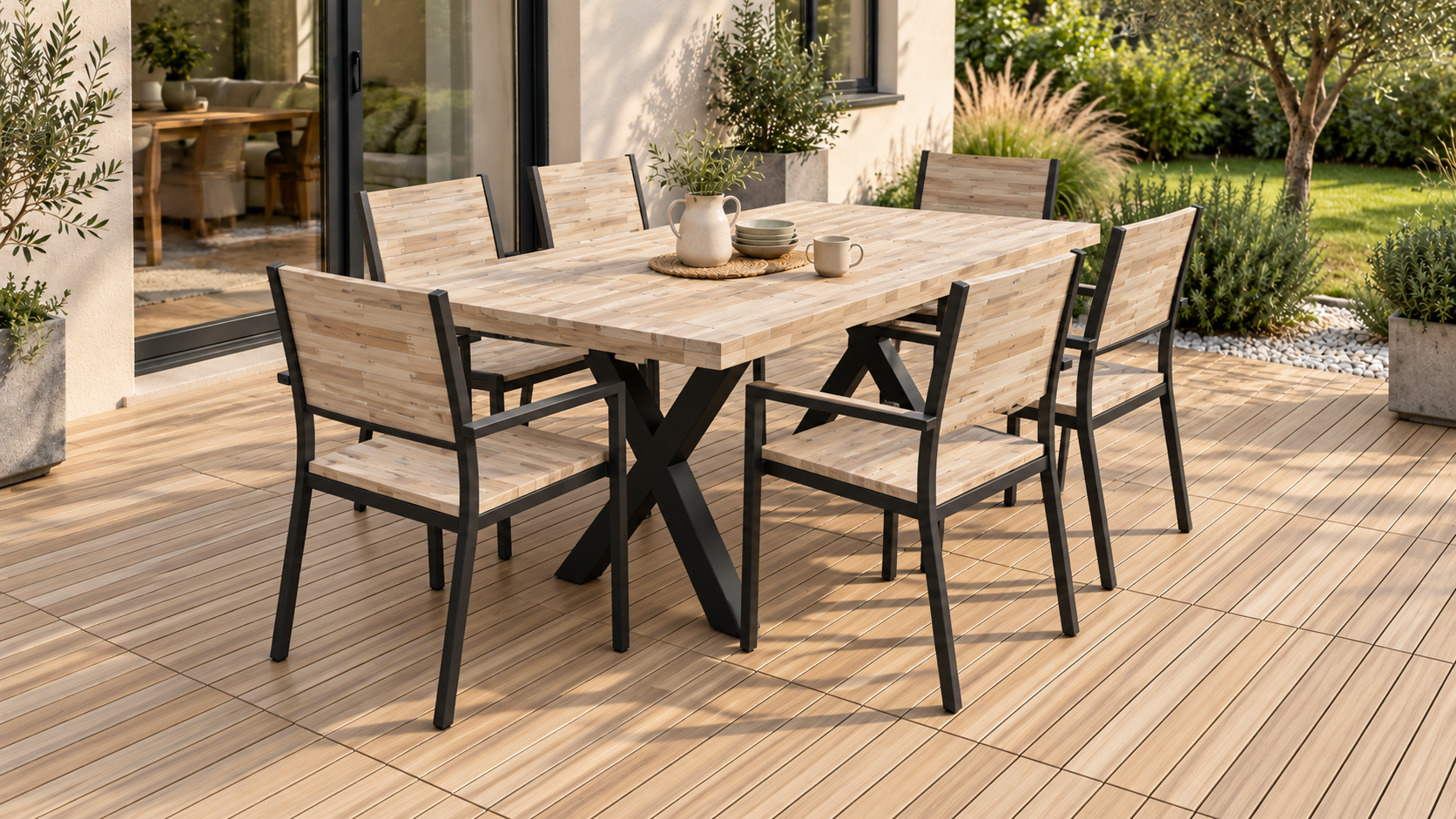
Wooden outdoor dining set with deck tiles for Outdoor Living
Relaxation Requires a Different Kind of Furniture
Not every outdoor space revolves around dining.
Some are designed around staying outside for longer periods, reading, sunbathing, talking or simply spending time away from indoor rooms. These settings place different demands on the furniture.
A dining chair supports a meal.
A lounge chair or sun lounger supports time.
That difference matters because comfort becomes a larger part of the consumer decision. Seat angle, proportions, arm support and the ability to reposition the furniture can matter more than how many people fit around a table.
The surrounding environment matters as well. Deck tiles can visually define a lounge area beside a garden, pool or terrace, while natural wood helps the furniture feel integrated with planting and other outdoor materials.
This allows the same Outdoor Living collection to support several behaviors without forcing every space into a dining layout.
One Outdoor Area Can Change Throughout the Day
Outdoor spaces rarely have only one use.
A terrace may start the morning as a quiet coffee spot, become a working area for part of the day and later turn into a place for dinner. A small patio may need open floor space at one moment and extra seating at another.
Products that can adapt to these changes are easier to integrate into everyday life.
Foldable furniture is particularly useful because it allows seating or tables to be stored or repositioned when the space needs to serve another purpose. Lightweight pieces can also be moved between sun and shade or rearranged when more people arrive.
Deck tiles provide the more permanent layer underneath this changing layout. Once the floor establishes the outdoor zone, different furniture configurations can be created above it without losing the visual identity of the space.
The value of the program therefore comes from the relationship between a stable foundation and flexible furniture.
Natural Materials Make Outdoor Spaces Feel Less Temporary
Outdoor products are often purchased seasonally, but consumers increasingly expect the finished space to feel like a genuine extension of the home rather than a temporary summer setup.
Natural materials help create that impression.
Wood brings visible grain, variation and texture into an environment already surrounded by plants, daylight and changing weather. Instead of competing with those elements, the material can become part of them.
Current home-design search behavior also points toward stronger interest in organic and tactile environments, with Houzz reporting growth in searches around modern organic design and natural materials.
For wood deck tiles and outdoor furniture, this gives natural appearance an important role. Consumers may still compare dimensions, price and functionality, but much of the emotional response happens before those specifications are considered.
They first imagine how the finished space will feel.
A Complete Program Needs a Consistent Visual Language
When multiple outdoor products are displayed together, inconsistency becomes easier to notice.
A deck tile may look attractive on its own and a patio set may work individually, yet the overall collection can still feel disconnected if the wood tones, surface finishes or design language move in very different directions.
An Outdoor Living Program works better when the products feel related without becoming identical.
A natural deck tile can establish the base tone.
A folding bistro set can carry that material into a compact seating application.
A dining set can extend it into larger entertaining spaces.
A sun lounger can take the same visual direction into relaxation and poolside use.
This creates a recognizable collection while still giving each product a clear purpose.
For consumers, the benefit is straightforward: it becomes easier to imagine several products working together before they have even created the space.
Outdoor Products Have to Look Good After Exposure, Not Only in the Showroom
Appearance at the moment of purchase is only the beginning.
Outdoor products are exposed to sunlight, changing temperatures, humidity and regular contact with water in ways indoor furniture is not. Consumers may not understand every material or production specification, but they quickly notice when a surface changes unexpectedly, hardware begins to fail or furniture becomes unstable.
This makes manufacturing quality part of the long-term Outdoor Living experience.
For deck tiles, the wood surface needs to work together with the supporting base so that the tiles remain practical under normal outdoor conditions. For patio furniture, joints, hardware, surface preparation and finishing need to support repeated use rather than simply create a clean appearance when the product is new.
Maintenance expectations also need to be realistic. Natural wood changes outdoors, and finishes may require care over time, but consumers are more likely to accept that behavior when the product clearly explains how the material should be maintained.
Good Outdoor Living products do not promise that nature will never affect them.
They are designed so that living outdoors remains practical.
The Best Assortment Covers Activities, Not Every Possible SKU
A broad outdoor range can easily become complicated.
Different table sizes, chair styles, colors, deck tile patterns and lounge products may create plenty of choice while making the overall collection harder to be understand.
A stronger program can instead be organized around recognizable ways people use outdoor space.
A compact setting needs a small table and flexible seating.
An outdoor dining area needs enough surface and seating for shared meals.
A lounge zone prioritizes comfort and longer stays.
The deck underneath can connect all three.
This application-led approach also improves merchandising because consumers can see the finished environment rather than having to mentally assemble it from unrelated product listings.
The goal is not to show everything a factory can manufacture.
It is to make the right combination of products easy to imagine.
Product Photography Should Show the Life Around the Product
A deck tile photographed against a white background communicates dimensions and construction.
It does not communicate why someone wants it.
The same is true of a folded chair or an isolated table.
For Outdoor Living products, application photography becomes particularly important because consumers are buying into a space they have not created yet. Showing deck tiles together with patio furniture, planting, doors, exterior walls and realistic human scale helps them understand how much space the products occupy and how the finished arrangement might feel.
Different environments can also reveal different reasons to buy.
A balcony demonstrates compact living.
A dining terrace demonstrates entertaining.
A poolside setting demonstrates relaxation.
A small garden corner demonstrates how an overlooked area can become useful.
The product stays the same, but the application changes the reason consumers want it.
Packaging Matters Because Outdoor Furniture Is Often Large Before It Is Even Used
The first physical experience with an Outdoor Living product often happens before assembly.
Furniture, deck tiles and larger wood components may travel through warehouses, distribution centers and delivery networks before reaching the consumer, which leaves visible surfaces, corners and hardware vulnerable along the way.
If the carton arrives damaged, pieces are missing or a visible wood surface is scratched, the outdoor experience begins with frustration rather than inspiration.
Packaging therefore needs to protect both product appearance and assembly readiness. Components should arrive organized, surfaces should remain protected and the consumer should be able to understand how the product goes together without unnecessary complexity.
This is particularly important for products sold online, where delivery condition becomes part of how the customer judges the entire brand.
From Deck Tiles to Furniture, the Space Should Tell One Story
A strong Outdoor Living collection is not defined by how many outdoor products it contains. Its value comes from how naturally those products work together to help people create a space they will actually use.
Wood deck tiles establish the foundation and immediately change the character of a balcony, terrace or patio. Compact patio sets turn smaller areas into places for coffee or conversation. Dining sets create a reason to gather outside, while lounge furniture extends the space into slower moments of rest and relaxation.
When the materials, proportions, finishes and applications feel connected, these products stop looking like separate categories and begin to function as one program.
That is the opportunity behind Outdoor Living: not simply furnishing the outdoors, but making outdoor space feel like part of everyday life.
For retailers, distributors and outdoor brands developing this category, SSR Corporation’s Outdoor Living program connects Deck Tiles and Outdoor Furniture around the way consumers actually use balconies, terraces, patios and other outdoor spaces.
Build the program around the space your customers want to create.
Frequently Asked Questions
What products can be included in an Outdoor Living Program?
An Outdoor Living Program can combine wood deck tiles with different types of outdoor furniture, including compact patio sets, outdoor dining sets, folding furniture and lounge products. The exact assortment should follow the size of the space and the activities consumers want to create there.
Why do deck tiles work well with outdoor furniture?
Deck tiles create a visual foundation beneath the furniture and can help define a balcony, patio or terrace as a separate living zone. Natural wood also provides a material connection between the flooring and wooden outdoor furniture placed above it.
Are wood deck tiles suitable for small balconies?
Interlocking deck tiles can work particularly well in smaller areas because their modular format allows the floor to be organized around the available space without requiring a complete reconstruction of the outdoor surface.
What outdoor furniture works best in compact spaces?
Smaller bistro or patio sets and foldable furniture are useful where floor area is limited because they provide seating and table space without permanently occupying the entire outdoor area.
Why are folding patio sets useful?
Folding furniture allows the layout to change when the space is used for different activities and also makes seasonal storage easier where storage space is limited.
Can one Outdoor Living collection serve both dining and lounge spaces?
Yes. A coordinated collection can use related materials and finishes across dining sets, deck tiles and lounge furniture while changing dimensions and construction according to each application.
What matters most when choosing wooden outdoor products?
Beyond appearance, consumers should consider how the product is designed for outdoor use, the quality of its construction and finish, maintenance requirements, comfort and how well its size fits the intended space.
How should Outdoor Living products be presented online?
Lifestyle photography should show products in realistic applications such as balconies, terraces, dining areas or lounge settings. This gives consumers a better understanding of scale, use and how different products can work together.