The latest industry figures reveal an increasingly uneven recovery. While hardware stores and home centers gain ground, other building material dealers face declining sales, leaving manufacturers and retailers to reconsider where growth will come from next.
The U.S. home improvement market entered the final quarter of 2026 with a striking contradiction. Americans are still spending on their homes, but the businesses supplying those projects are experiencing sharply different conditions. Some retail channels are recording strong sales growth, while others continue to lose ground.
The distinction matters well beyond the retail floor. It is reshaping purchasing decisions, inventory commitments, and sourcing strategies throughout the building materials supply chain.
According to the Home Improvement Research Institute (HIRI), the U.S. home improvement market is projected to expand 2.5% in 2026, slightly below the 2.6% forecast published in June. After adjusting for inflation, however, the market is expected to contract by 1.5%.
U.S. Home Improvement Market Q3 2026 – Retail Channel Trends
That difference between nominal growth and real demand offers a clearer picture of the industry’s position. The market is not moving toward a uniform recovery. Instead, its performance increasingly depends on which customers a business serves, where it operates, and which products it carries.
A $500 Billion Remodeling Industry Faces a More Selective Consumer
American homeowners have not abandoned renovation and repair projects. Yet the scale and timing of those investments are changing.
Research published by Harvard University’s Joint Center for Housing Studies in July projected that annual spending on home improvements and repairs would reach approximately $519 billion through mid-2027. Growth, however, is expected to slow to just 0.5% year over year by the second quarter of 2027.
The outlook reflects persistent pressure from housing affordability, limited existing-home sales, and economic uncertainty. Higher financing costs have made major renovations more difficult to justify, particularly when homeowners can postpone projects without compromising essential maintenance.
Smaller improvements tell a different story. Repairs, replacements, and manageable upgrades remain more accessible, allowing households to maintain their properties without committing to expensive, comprehensive renovations.
For the U.S. home improvement market, this shift creates a more selective purchasing environment. Retailers must distinguish between products that address immediate household needs and those dependent on discretionary remodeling budgets.
Hardware Stores Are Growing While Other Building Material Dealers Struggle
The most revealing development in HIRI’s Q3 2026 research is the widening performance gap between retail channels.
Hardware stores posted sales growth of 8.7% in the first quarter and 9.8% in the second quarter of 2026. Home centers also advanced, with estimated growth of 6.1% and 6.6%, respectively.
Other building material dealers experienced the opposite trend, recording estimated declines of 7.4% in Q1 and 6.2% in Q2.
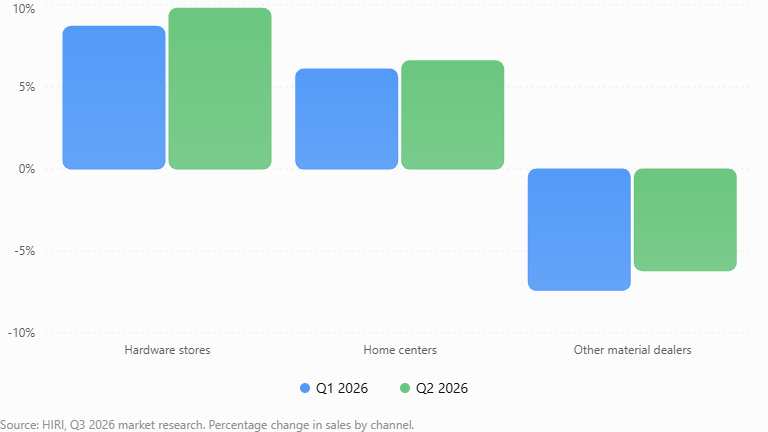
The figures suggest that retail formats closely connected to routine household projects have benefited from relatively resilient demand. Specialized building material channels, meanwhile, remain more exposed to slower construction activity and larger project commitments.
Nevertheless, these broad categories contain considerable variation. A distributor supplying remodeling contractors may face different conditions from a dealer primarily serving new residential construction.
The emerging lesson is that channel selection has become as important as overall market exposure.
Home Depot and Lowe’s Reveal Two Sides of the Same Market
The latest quarterly earnings from America’s two largest home improvement chains reinforce the uneven picture.
Home Depot reported second-quarter revenue of $47.9 billion, a 5.7% increase from the previous year. Comparable sales rose 1.7% companywide and 1.3% in the United States. Management pointed to continued engagement in smaller projects, even as the broader home improvement environment remained challenging.
Lowe’s reported $26.0 billion in quarterly revenue, compared with $24.0 billion a year earlier. Its comparable sales increased a modest 0.2%, supported by professional customers, home services, and a 15.7% increase in online sales. Discretionary DIY spending remained under pressure.
Neither earnings report suggests a broad return to the renovation boom of earlier years. Instead, both indicate that retail performance is increasingly shaped by customer mix and project size.
The distinction is particularly relevant to suppliers. Stronger total revenue does not necessarily mean stronger demand for every product category, especially when acquisitions, pricing, and changes in sales channels influence reported results.
Professional Demand and DIY Spending Are Following Different Paths
Another important change in the U.S. home improvement market concerns the relationship between consumer purchases and professional demand.
HIRI’s September forecast projects consumer-segment sales growth of 3.4% in 2026, revised down from 3.7% in June. Professional-segment growth was revised upward from 1.0% to 1.3%.
Although consumer sales are expected to grow faster in nominal terms, both segments face inflation-adjusted declines. HIRI estimates a 0.5% real contraction in the consumer segment and a 3.1% decline in the professional segment.
This creates an important distinction between improving business expectations and actual market volume.
Professional customers may offer retailers a more predictable purchasing relationship, but that does not automatically translate into higher overall demand. Contractors still face labor constraints, elevated material costs, and customers reluctant to approve large projects.
The National Association of Home Builders reported a Remodeling Market Index reading of 62 in Q3 2026, up one point from the previous quarter. A reading above 50 indicates that more remodelers consider conditions good than poor. The Future Indicators Index stood at 54, suggesting cautious optimism rather than a strong acceleration.
For manufacturers supplying the U.S. building materials market, these findings reinforce the need to evaluate retail and professional channels separately. Products suited to smaller consumer upgrades may require a different merchandising and inventory approach from components purchased by contractors for scheduled installations.
Regional Growth Is Creating New Opportunities Outside Traditional Markets
National figures also conceal significant geographical differences.
HIRI expects the East South Central region to lead U.S. home improvement market growth in 2026 at 4.1%, followed by the West South Central at 3.4% and the South Atlantic at 2.8%.
New England and the Middle Atlantic are projected to grow by just 1.4% and 1.7%, respectively.
Projected home improvement market growth by U.S. region, 2026
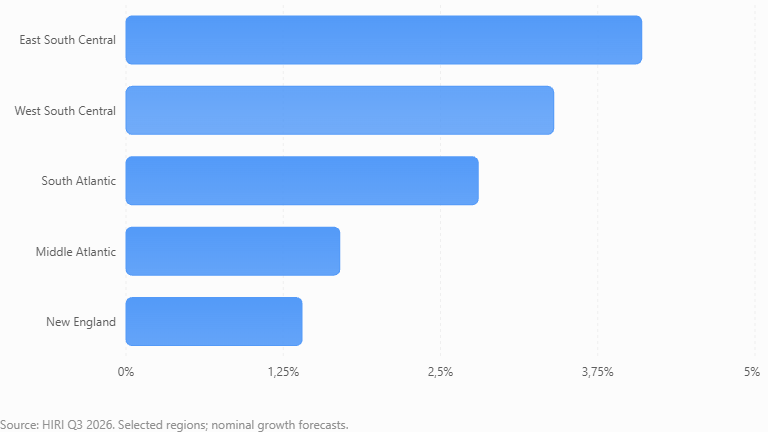
For distributors evaluating expansion opportunities, these regional differences warrant closer attention than the national average alone.
Demand conditions can vary according to housing stock, local construction activity, household finances, and the prevalence of remodeling projects. A product assortment that performs well in one region may require substantial adjustments elsewhere.
The figures also suggest an opportunity for manufacturers serving regional retail chains. Rather than approaching the United States as a single market, suppliers can work with customers to develop product specifications and purchasing programs suited to local demand.
What the Changing Market Means for Wood Product Suppliers
The latest U.S. home improvement market data has direct implications for the international wood products industry.
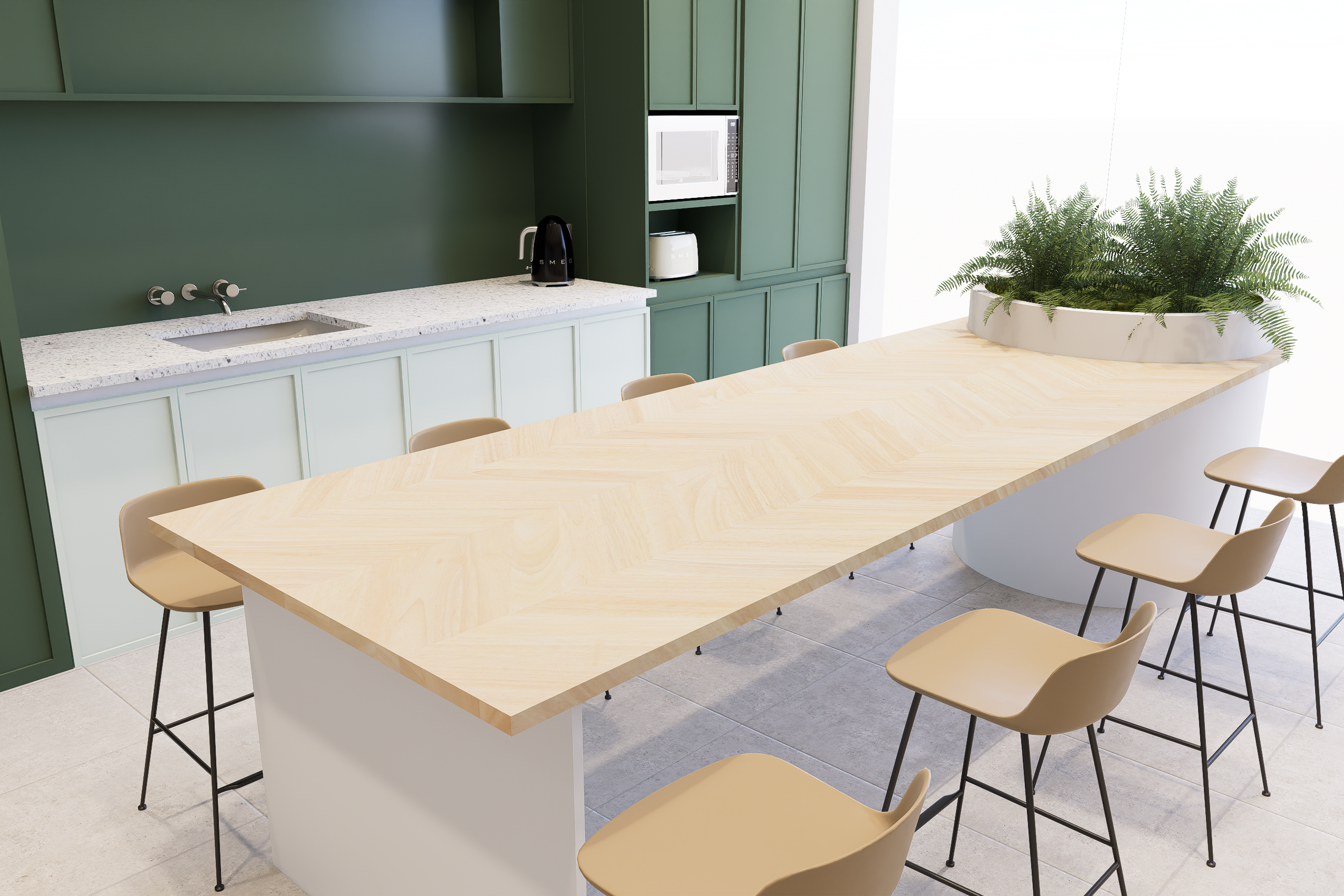
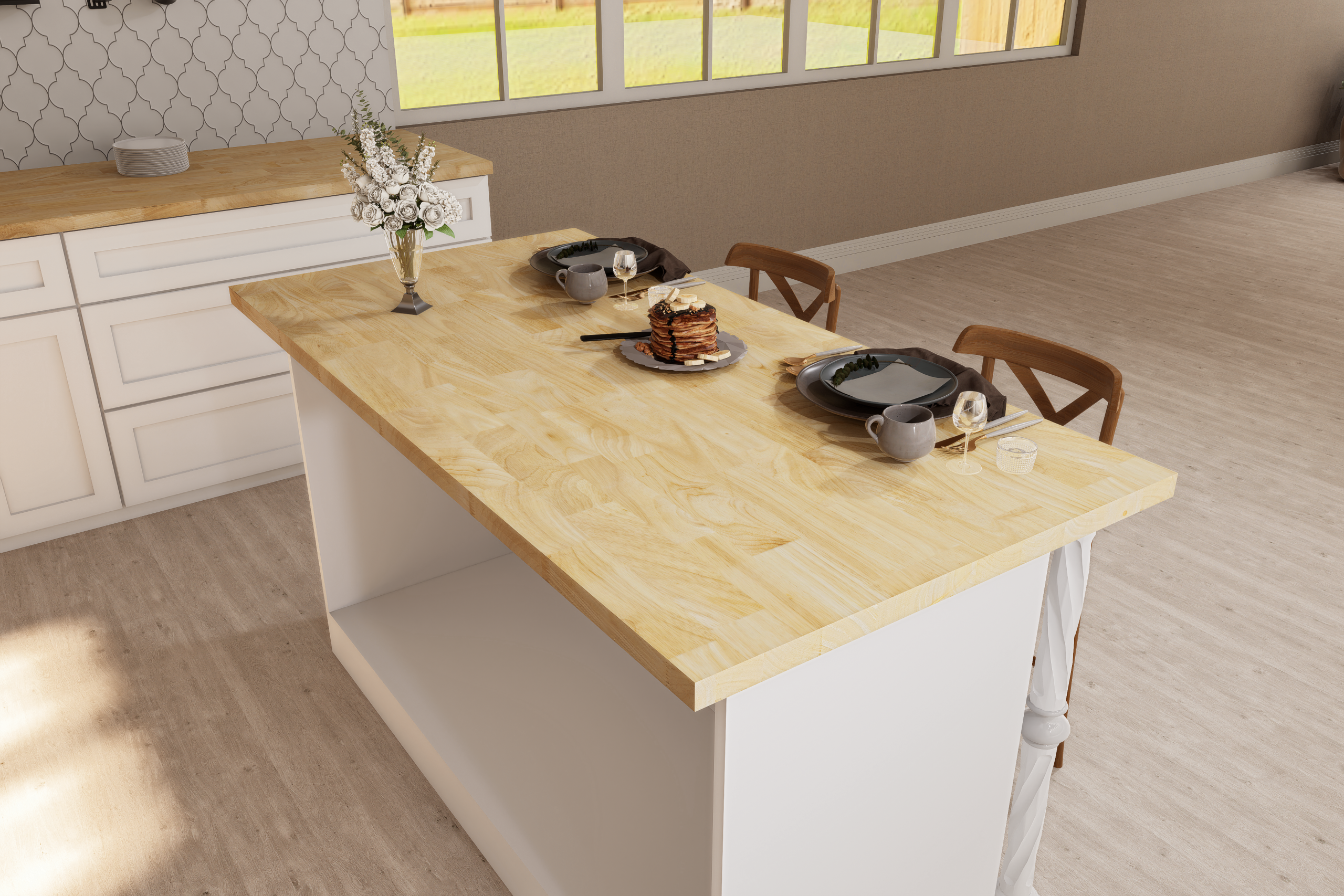
Wood countertops, shelving, solid wood boards, and other finished wood surfaces serve different segments of the renovation market. Their commercial performance depends not only on overall spending but also on how retailers position them and which projects customers are prepared to undertake.
For example, a homeowner postponing a full kitchen renovation may still consider replacing a countertop or adding shelving. A contractor working on a scheduled remodeling project may prioritize consistent dimensions and dependable material availability over a broad selection of decorative options.
These are potential demand patterns rather than confirmed category-level sales trends. Nevertheless, they illustrate why product versatility matters when discretionary spending becomes more selective.
Manufacturers must also consider the financial pressures facing their retail customers. Excess inventory can weaken margins, while inconsistent product quality can increase returns and disrupt replenishment schedules.
A reliable supply program therefore needs to address more than manufacturing capacity. Product consistency, packaging requirements, order planning, and delivery coordination all influence how successfully imported wood products move through U.S. distribution networks.
How SSR Is Responding to Changes in the U.S. Home Improvement Market
The divergence across U.S. retail channels reinforces the importance of a customer-focused manufacturing strategy.
SSR Corporation works with international customers to develop wood product programs supported by its manufacturing network in Vietnam and Thailand. Its product portfolio includes solid wood boards, finger joint wood boards, butcher block countertops, wood surfaces, and outdoor living products.
As the U.S. home improvement market becomes more selective, SSR’s approach centers on aligning production capabilities with customers’ sourcing and distribution requirements.
Product programs built around changing retail demand
Different retail channels require different product configurations.
A home improvement retailer introducing a wood countertop collection may prioritize consistent appearance and retail-ready packaging. A regional distributor supplying professional customers may place greater emphasis on dimensional accuracy and reliable replenishment.
SSR supports these requirements through product specification development and manufacturing coordination, helping customers establish programs appropriate for their target markets.
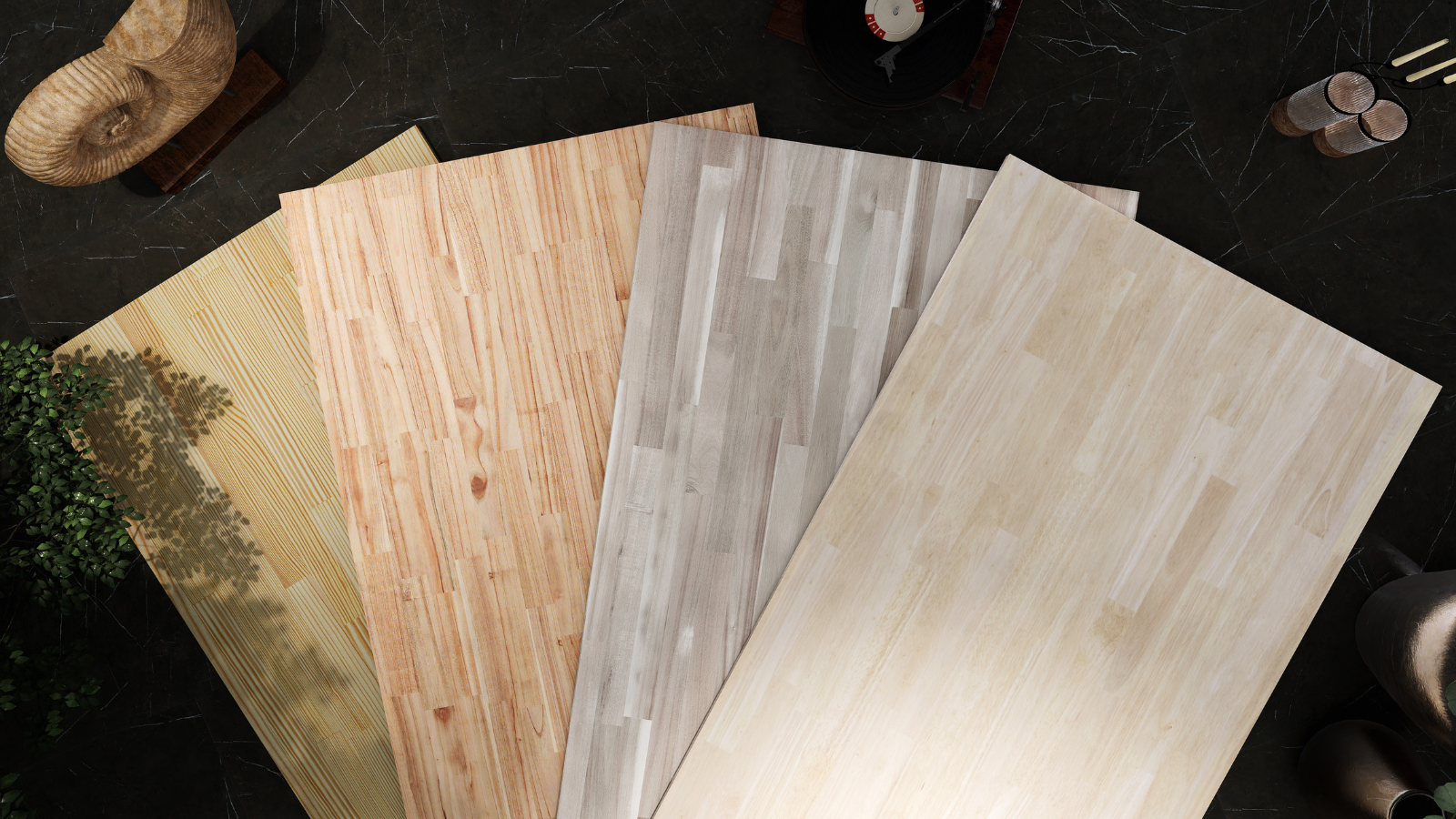
Its Wood Panel Program and wood surface offerings provide options for customers seeking solid wood products manufactured for downstream processing or finished applications.
Manufacturing consistency across large-volume orders
Changing market conditions have not reduced the importance of product quality. If anything, tighter inventory commitments make manufacturing consistency more consequential.
SSR’s manufacturing operations emphasize material selection, moisture control, production quality, and product specifications.
For wood surfaces intended for the U.S. market, consistent moisture content and surface quality are particularly important. These characteristics can affect downstream processing, installation, and the customer experience.
The objective is to support repeatable production across orders rather than treating each shipment as an isolated transaction.
Flexible cooperation for retailers and distributors
Retailers navigating uncertain demand may need to reconsider how they introduce products and replenish inventory.
SSR supports different cooperation models, including private-label programs, made-to-spec manufacturing, and mixed-container arrangements where production and loading requirements permit.
These options give customers a framework for discussing product assortments and purchasing volumes without relying on a single standardized sourcing model.
The company’s manufacturing network also supports international customers seeking to diversify their supply relationships and build longer-term product programs.
The Outlook for 2027: Growth Will Depend on Execution
The U.S. home improvement market is unlikely to return to uniform growth simply because the national forecast turns positive.
Harvard’s projection of slowing remodeling expenditure through mid-2027 suggests that the industry may continue to experience cautious purchasing behavior. HIRI’s inflation-adjusted figures reinforce the distinction between higher sales values and genuine volume growth.
For retailers, future performance may depend on how effectively they match inventory to customer demand. Distributors will need to monitor regional differences, while manufacturers must maintain the operational discipline necessary to serve increasingly selective customers.
The strongest opportunities may emerge where product relevance, dependable supply, and channel-specific merchandising come together.
The defining story of the U.S. home improvement market in Q3 2026 is not simply slower growth. It is the growing distance between the channels that are gaining momentum and those still waiting for demand to recover.
For international wood product manufacturers such as SSR, understanding that difference is essential to building supply programs that remain commercially relevant as the market evolves.
Frequently Asked Questions
Is the U.S. home improvement market growing in 2026?
Yes, in nominal terms. HIRI’s Q3 2026 forecast projects growth of 2.5% for the year. However, the market is expected to contract by approximately 1.5% after adjusting for inflation.
Which home improvement retail channels are performing best?
Hardware stores and home centers recorded strong growth in the first half of 2026. Other building material dealers experienced sales declines over the same period, according to HIRI’s Q3 research.
What is the outlook for U.S. home remodeling in 2027?
Harvard’s July 2026 outlook projected annual remodeling and repair spending of approximately $519 billion through mid-2027, with year-over-year growth slowing to 0.5% by the second quarter.
How are changing U.S. retail trends affecting wood product suppliers?
More selective spending can increase the importance of product positioning, inventory planning, and supply consistency. Retailers and distributors may need wood product programs tailored to particular applications and purchasing patterns rather than broad, undifferentiated assortments