Choosing a manufacturing partner usually begins with quotations, samples and technical specifications. None of them fully answers the question that matters most to a distributor, importer or OEM/ODM buyer: can the factory reproduce the approved product when the order moves from a sample batch to thousands of units?
A factory tour helps buyers answer that question inside the production environment. Instead of seeing only the finished product, customers can examine how specifications are controlled through manufacturing and how the factory responds when production moves outside the agreed standard.
Such visibility becomes particularly important in wood manufacturing. Natural variation in timber means consistency depends heavily on grading, moisture management and process control. Buyers evaluating a wood factory therefore need to understand the system behind the product, not judge capability from a polished sample.
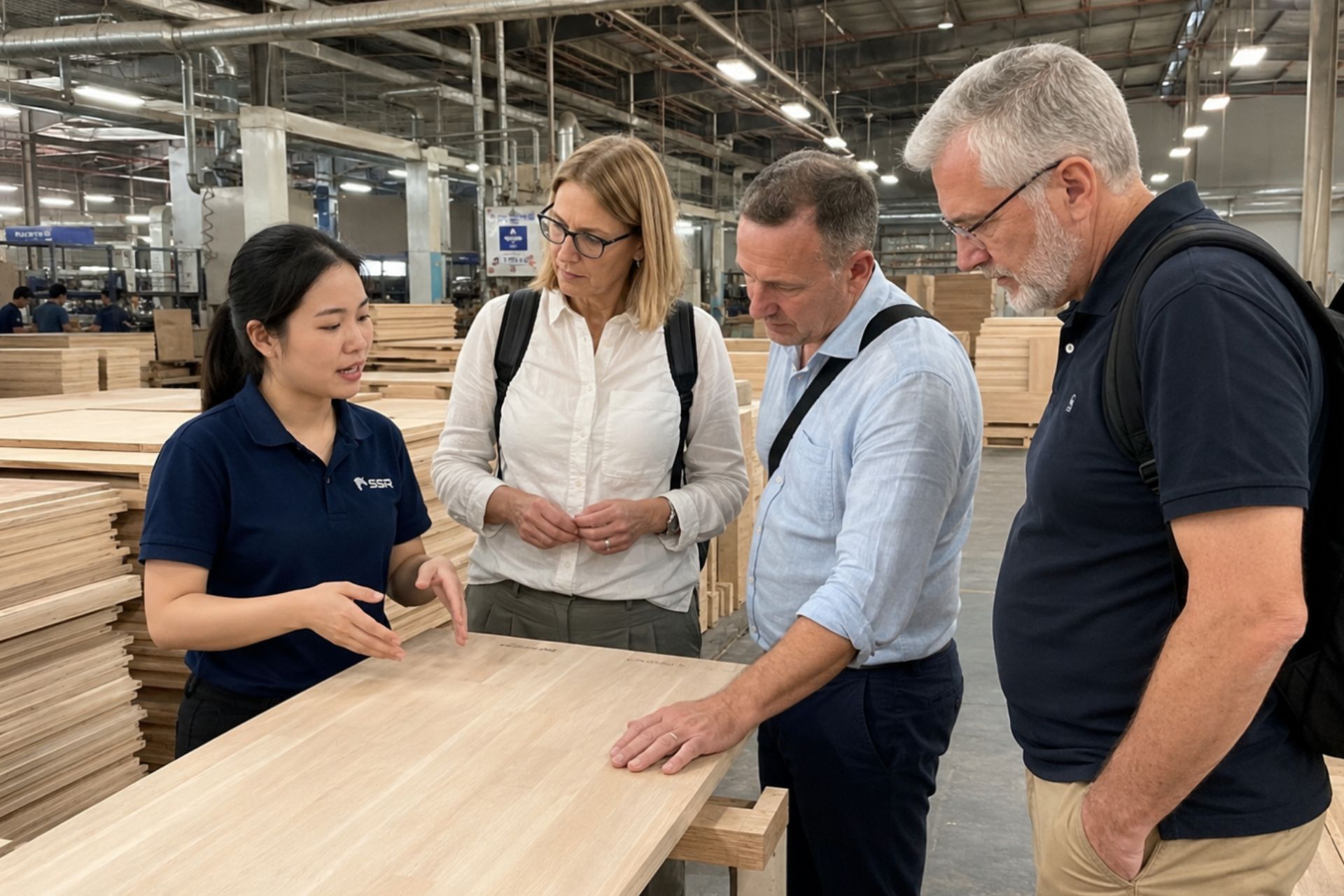
Buyers gain more useful information when a factory tour follows the actual product flow rather than a standard showroom route.
The Approved Sample Is Only the Starting Point
Sample approval confirms that a manufacturer can reach the required specification under controlled conditions. Commercial production introduces a different challenge because the same specification must be maintained across larger quantities and multiple production cycles.
Consider a retail program of 5,000 units. A 2% quality issue represents 100 affected products. When the same program grows to 50,000 units, the identical defect rate creates 1,000 potential claims, replacements or units requiring rework. Scale turns small process variation into a commercial issue very quickly.
During a factory tour, buyers should therefore compare sample development with mass production. The useful question is whether the characteristics approved on the sample have been converted into measurable production standards.
Surface appearance provides a good example. Wood naturally varies in tone and grain, so terms such as “Grade A” are not enough unless the factory has clear acceptance criteria. Buyers should understand how operators distinguish acceptable color variation from defects and whether reference boards or approved samples remain available on the production floor.
Such details show whether product consistency depends on a system or on the judgement of individual workers.
Moisture Control Needs More Than a Moisture Meter
Moisture content can directly influence dimensional stability after a wood product reaches another climate. Seeing an operator use a moisture meter during a factory visit tour therefore provides only part of the information.
USDA Forest Service guidance gives useful context. Its Wood Handbook notes that hardwood lumber intended for furniture, cabinets and millwork is commonly dried to around 6–8% moisture content. The appropriate level still depends on the final application and expected service environment.
Buyers should consequently ask where moisture is measured and how often measurements are recorded. More importantly, the production team should be able to explain what happens when material falls outside the target.
Imagine a shipment of butcher block countertops where most boards measure within specification but one batch is several percentage points higher. Simply averaging those readings can hide the risk. Batch identification allows the factory to isolate the material before it moves into lamination or finishing.
During a factory tour, moisture control should therefore be evaluated as a process rather than a single measurement.
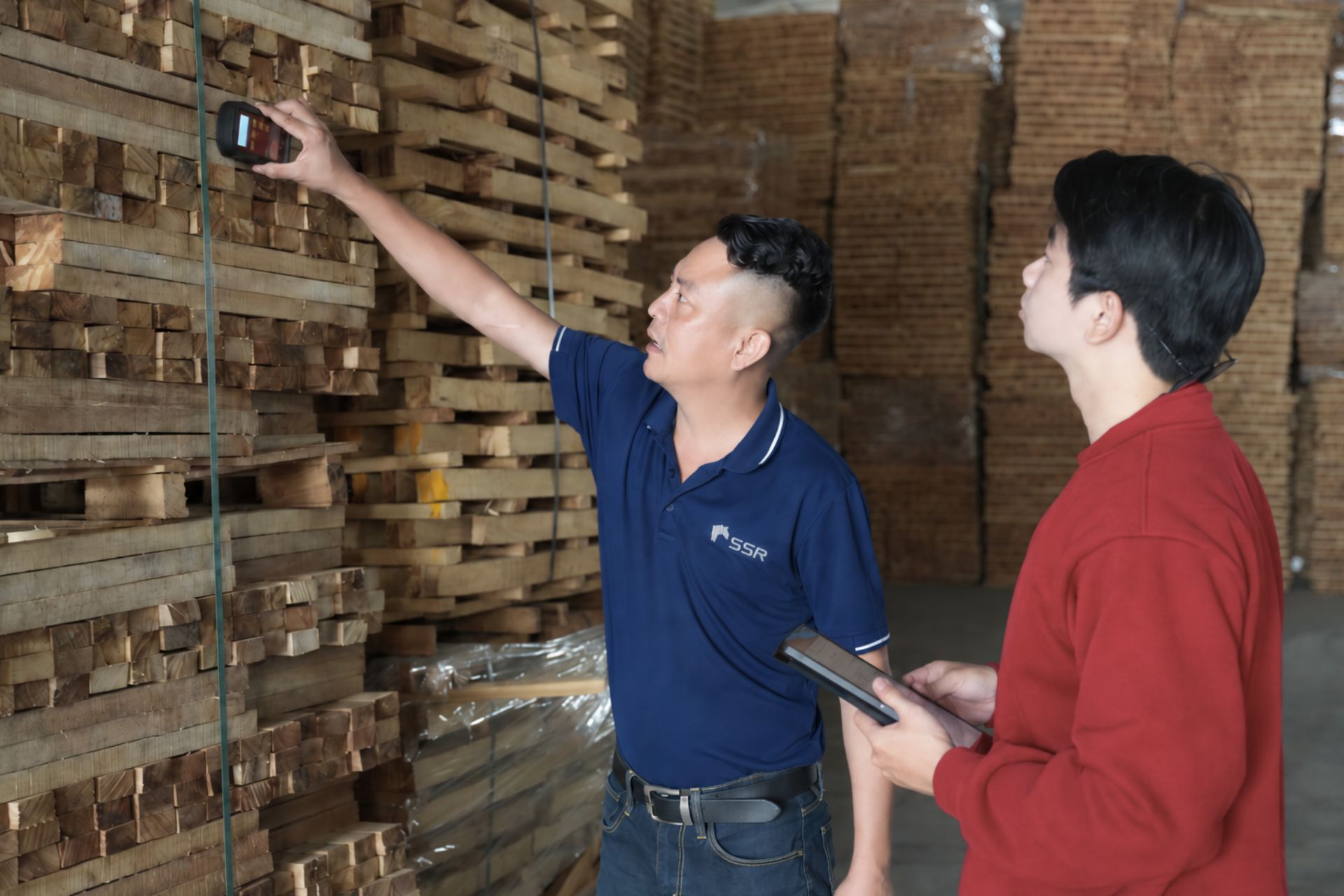
Moisture testing during a factory tour at a wood factory
Follow a Defect Instead of Following the Presentation
Quality departments often prepare inspection records for customer visits. Buyers can learn more by asking what happens to a product that fails inspection.
During a factory tour, the physical movement of rejected material can reveal how mature the quality system really is. Products outside specification should remain identifiable until a decision is made. Clear separation reduces the chance that rejected material accidentally returns to normal production.
Root-cause discussion provides another useful signal. When a surface defect appears repeatedly, the production team should be able to investigate where the variation originated instead of simply repairing the finished product.
Such capability matters because final inspection happens late in the manufacturing process. Preventing 100 defective components before lamination is usually far more efficient than discovering the same problem after sanding, finishing and packing have already added time and cost.
Buyers should therefore leave a factory tour understanding not only how the factory finds defects but how it prevents the same defect from repeating.
Capacity Should Be Measured at the Bottleneck
Factory profiles frequently present monthly output as the main measure of capacity. Buyers planning recurring programs need a deeper answer.
Suppose a wood factory can machine enough components for 12 containers per month while its finishing area can support only eight. The commercially useful capacity is closer to eight containers unless the bottleneck can be expanded or scheduled differently.
The same principle applies when a buyer increases an existing program. Moving from four containers per month to 12 means the volume of inspection and packing also triples. Machine capacity alone cannot guarantee the same lead time.
During a factory tour, buyers should follow work-in-progress between production stages. Accumulation in one area can indicate where output slows. Production managers should also be able to explain which processes become constrained when volumes increase.
Capacity then becomes more than a headline number. It becomes evidence of whether the manufacturer can support growth without allowing lead time or quality to deteriorate.
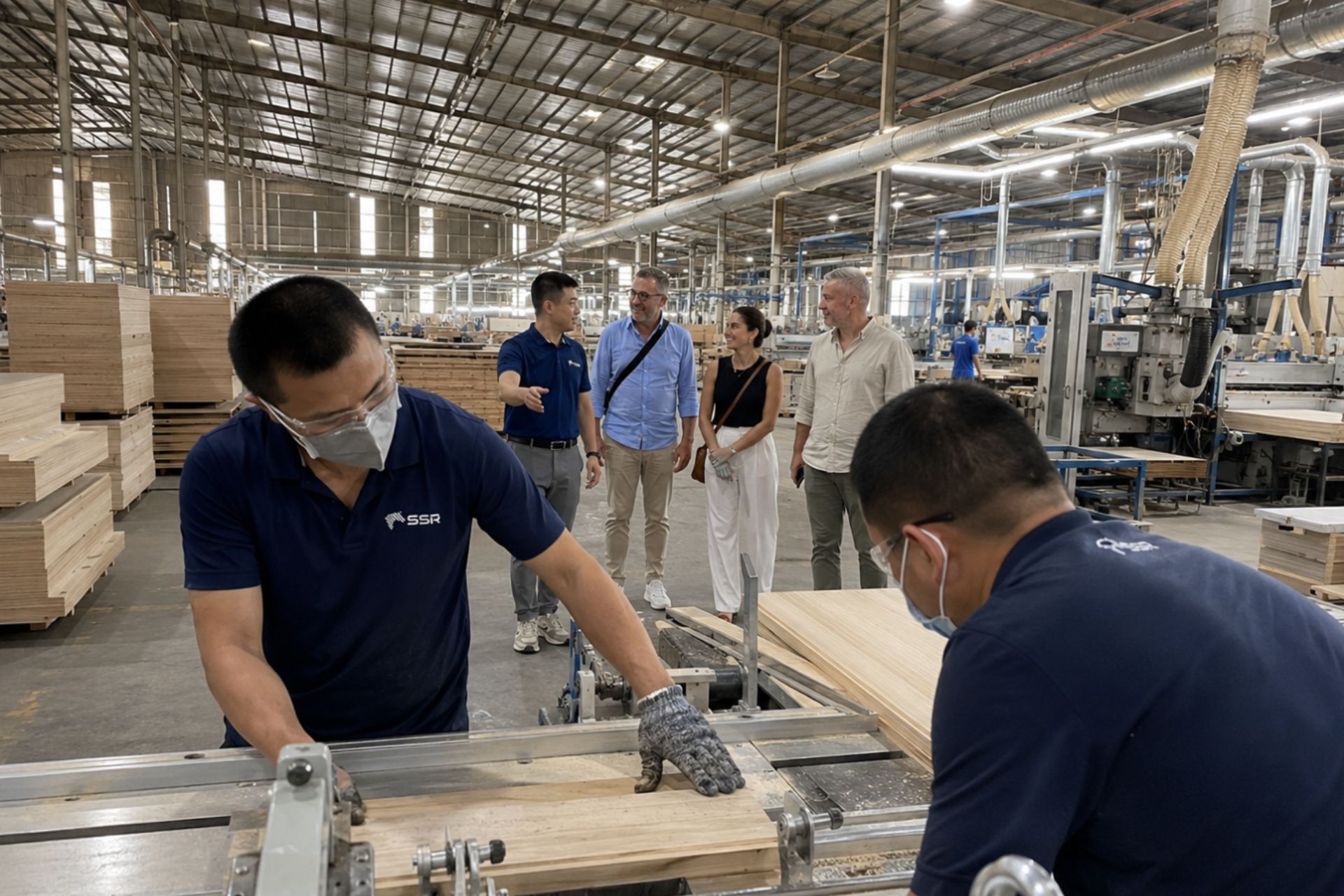
Factory tour reviewing production capacity at SSR Wood Factory
U.S. Importers Need Traceability That Can Be Retrieved
Traceability has become a practical part of supplier evaluation rather than a sustainability message alone.
USDA APHIS began implementing Phase VII of the Lacey Act declaration requirements on December 1, 2024. The expansion covered 250 additional Harmonized Tariff Schedule codes and brought a wider range of plant products under declaration requirements. Categories referenced by APHIS include furniture, plywood and laminated wood.
Importers may therefore need information such as the scientific name of the plant and the country where the material was harvested. USDA specifically advises companies to understand their supply chain and communicate with suppliers to obtain the required plant information.
The practical question during a factory tour is whether the manufacturer can connect those records to actual production.
Material labels inside the warehouse are useful, but buyers should go one step further. Selecting a production batch and asking the factory to retrieve its species and source documentation can reveal whether traceability works when information is actually needed.
OEM/ODM Buyers Should Trace One Specification Through Production
OEM/ODM capability is often promoted through statements about customization. Buyers should instead examine how a customized requirement reaches the production floor.
Imagine approving a particular edge radius during sample development. The key question is how that information reaches machining once production starts. Drawings may change several times during development, which creates another risk if older versions remain in circulation.
During a factory visit tour, selecting one critical specification and following it through production can expose how technical information is controlled. The buyer can check whether the latest drawing is available where the operation occurs and whether inspection criteria reference the same revision.
Similar checks can be made with color standards or packaging construction. Strong OEM/ODM capability depends on maintaining control over these details after development moves into commercial volume.
Seeing expensive machinery tells buyers what the factory owns. Following a specification through a factory tour shows how effectively the factory uses its systems.
Packaging Should Be Connected to Real Claims
Product quality does not stop at final inspection. International distribution adds several stages of handling before the product reaches the customer.
Packaging therefore deserves more attention during a factory tour than simply checking whether cartons look neat.
Buyers should ask the factory about previous transportation damage and what changed afterward. When corner damage appeared on heavy countertops, did the protection design change? When hardware moved inside an outdoor furniture carton, was the internal packaging revised?
Numbers can make such discussions much more useful. If 40 damaged units were reported from a shipment of 2,000 pieces, the claim rate is 2%. After a packaging revision, buyers should be interested in whether the rate dropped on subsequent shipments.
Such evidence tells a buyer whether the factory uses claim information to improve the next production cycle.
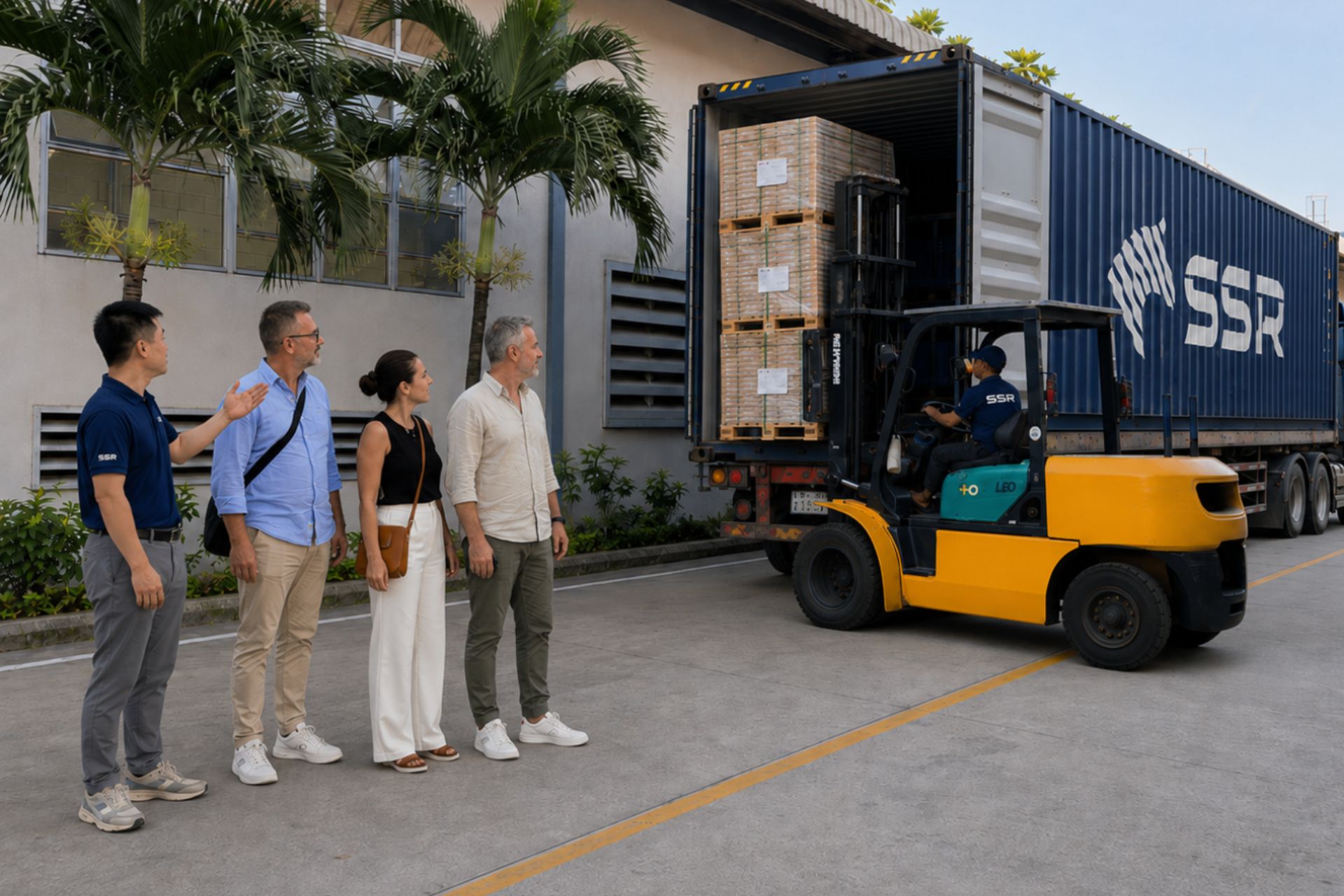
Reviewing actual claim history can turn packaging and exporting discussions into measurable product improvement.
The Most Useful Factory Tour Looks for Weak Points
Perfect production floors are less informative than factories that understand where their risks are.
Buyers should leave a factory tour knowing which process controls the production rate, how out-of-specification material is isolated and how technical changes reach operators. They should also know whether traceability data can be retrieved when an importer requests it.
One weak point does not automatically make a manufacturer unsuitable. Lack of visibility is often the greater concern. Experienced production teams normally know where constraints exist and can explain how they manage them.
That distinction matters when programs grow. Volume can double, new SKUs can enter the assortment and retail packaging can change. Manufacturing systems need to absorb those changes without losing control of products already in production.
Build the Factory Tour Around the Product Program
Generic factory visits often follow the same route regardless of what the customer intends to purchase. Buyer-focused visits should work differently.
Customers evaluating butcher block countertops may need deeper discussion around moisture management and surface grading. Outdoor buyers may spend more time understanding finishing durability and packing. OEM/ODM programs usually require greater attention to technical drawings and change control.
Sharing expected volume before the factory tour also improves the discussion. Production managers can show how the proposed program would fit into existing capacity rather than answering only with total factory output.
Such preparation turns the visit into a supplier evaluation rather than a guided walk through a Vietnam wood factory.
Factory Tours at SSR
SSR welcomes distributors, wholesalers, importers and OEM/ODM partners who want to evaluate manufacturing capability beyond samples and quotations.
Each factory tour can be organized around the customer’s product program and target market. Instead of spending most of the visit on general company information, discussions can focus on the production stages that influence repeatability, moisture control, technical specifications, quality performance and scalability.
Buyers can also bring an existing specification or product sample into the discussion. Comparing those requirements directly with the manufacturing process makes the visit more useful for both teams.
When supplier evaluation reaches the point where documentation is no longer enough, a factory tour provides the operational evidence needed for the next purchasing decision.
Schedule a Factory Tour with SSR to review how your product requirements can move from an approved specification into repeatable commercial production.