Outdoor living in Europe does not always mean a large garden.
It can be a compact apartment balcony in Germany, a terrace in France, a small urban patio in the Netherlands or a garden dining area in Southern Europe. Across these different settings, consumers increasingly want outdoor areas to feel like a natural extension of the home.
That creates a clear role for wood deck tiles.
Their modular format can change the appearance of an outdoor space without requiring consumers to approach it like a major construction project. Natural wood also connects easily with outdoor furniture, plants and the softer interior-inspired styling increasingly seen in European outdoor living.
For retailers, distributors and importers, however, good design is only the beginning. A successful wood deck tiles program also needs the right assortment, accessible price positioning, reliable product consistency, efficient packing and the documentation required for the European market.
SSR develops its outdoor range around both sides of that equation: what European consumers want to live with and what B2B buyers need to manage a seasonal program.
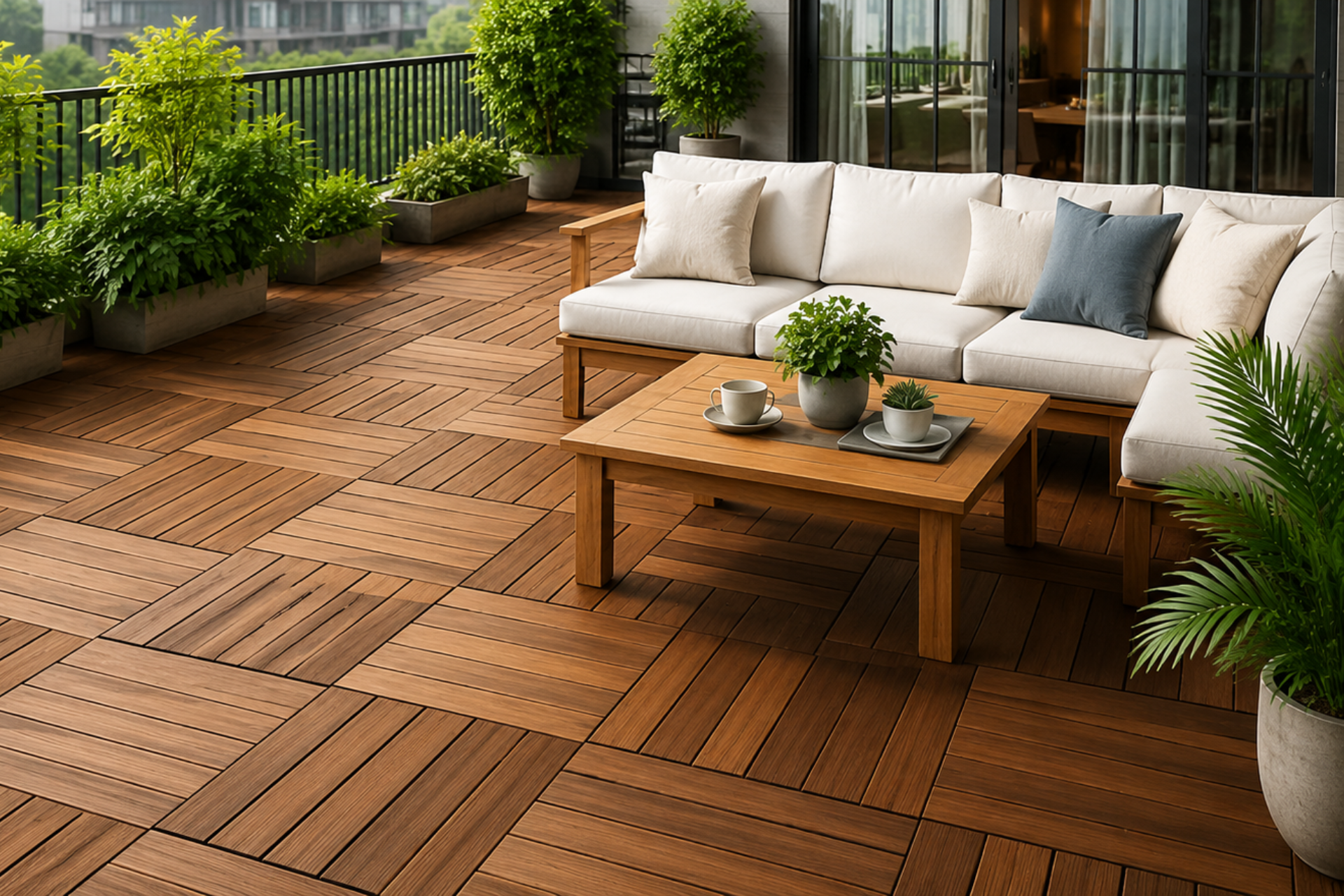
Wood deck tiles bring natural warmth to balconies and terraces while working within the smaller outdoor spaces common across European cities.
Outdoor Living Is Moving Closer to the Home
European outdoor living is increasingly influenced by the way consumers use the home itself. Balconies, terraces and gardens are becoming more connected to indoor living, with greater attention to comfort, natural materials and spaces that can support dining, relaxing and everyday activities.
According to CBI’s research on the European garden furniture market, the boundary between indoor and outdoor living continues to fade, while smaller urban outdoor spaces are becoming increasingly relevant.
This shift creates more opportunities for products such as wood deck tiles, which can help consumers transform a relatively limited balcony or terrace without requiring a major renovation.
Small Outdoor Spaces Need Products That Do More
European urban living puts additional pressure on product design.
A balcony may need to function as a breakfast area, a place for plants and an evening seating space within only a few square metres. Consumers therefore tend to notice whether individual products make the space feel more comfortable without making it feel crowded.
Balcony deck tiles suit this type of application because the same basic system can adapt to different layouts.
The modular concept makes it possible to refresh a compact floor area while maintaining flexibility around furniture, doors, corners and planting zones. Interlocking construction also creates a product story that is relatively easy for retailers to demonstrate visually.
SSR develops deck tiles for balconies, terraces, patios, gardens, rental properties and other compact outdoor areas. The current range includes Acacia wood options alongside WPC and artificial grass formats, giving buyers different possibilities within the broader outdoor flooring category.
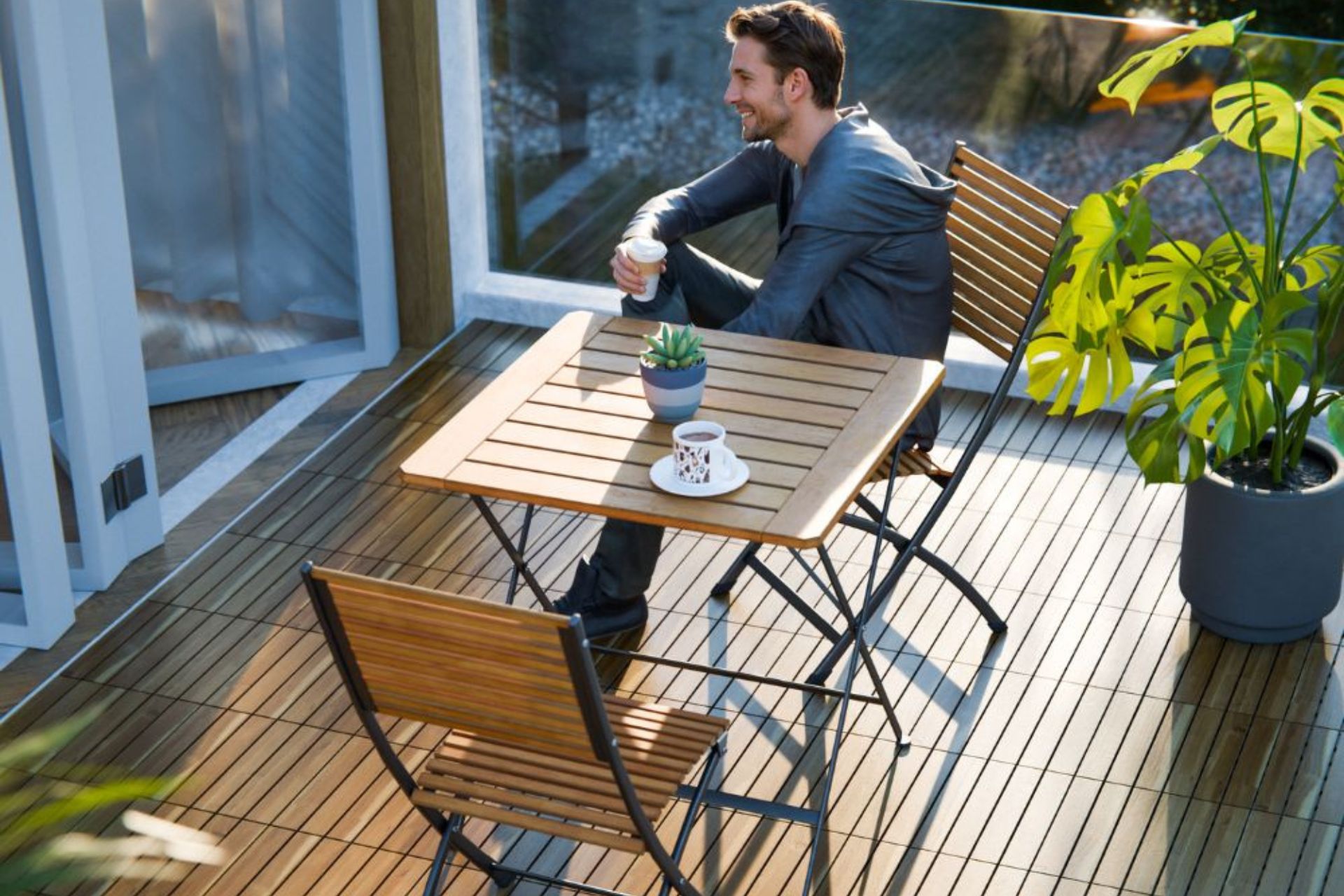
Compact outdoor areas benefit from flooring that adds warmth without requiring more visual or physical space.
Natural Materials Still Need a Contemporary Look
Natural wood alone is not enough to create a strong retail product.
European mid-market consumers typically expect functionality and design to work together. CBI notes that contemporary styling and current interior trends influence purchasing in this segment, while sustainability is becoming increasingly relevant.
This makes the finish and pattern of acacia wood deck tiles particularly important.
SSR’s Acacia range is available across several slat configurations and colour directions, including Natural, Brown, Teak and Golden Teak. The tiles use a modular 300 × 300 mm format with an outdoor-oriented surface treatment and PP base.
The commercial value lies in how those options can be used.
Natural finishes work well in lighter Scandinavian-inspired settings with neutral furniture and greenery. Warmer teak directions can support Mediterranean terraces and classic garden collections. Cleaner linear patterns suit contemporary spaces, while alternative slat layouts provide enough visual differentiation for retailers looking to build a wider assortment.
The range therefore does not need to depend on one decorative style.
It can move between different European outdoor aesthetics while retaining the same core product platform.
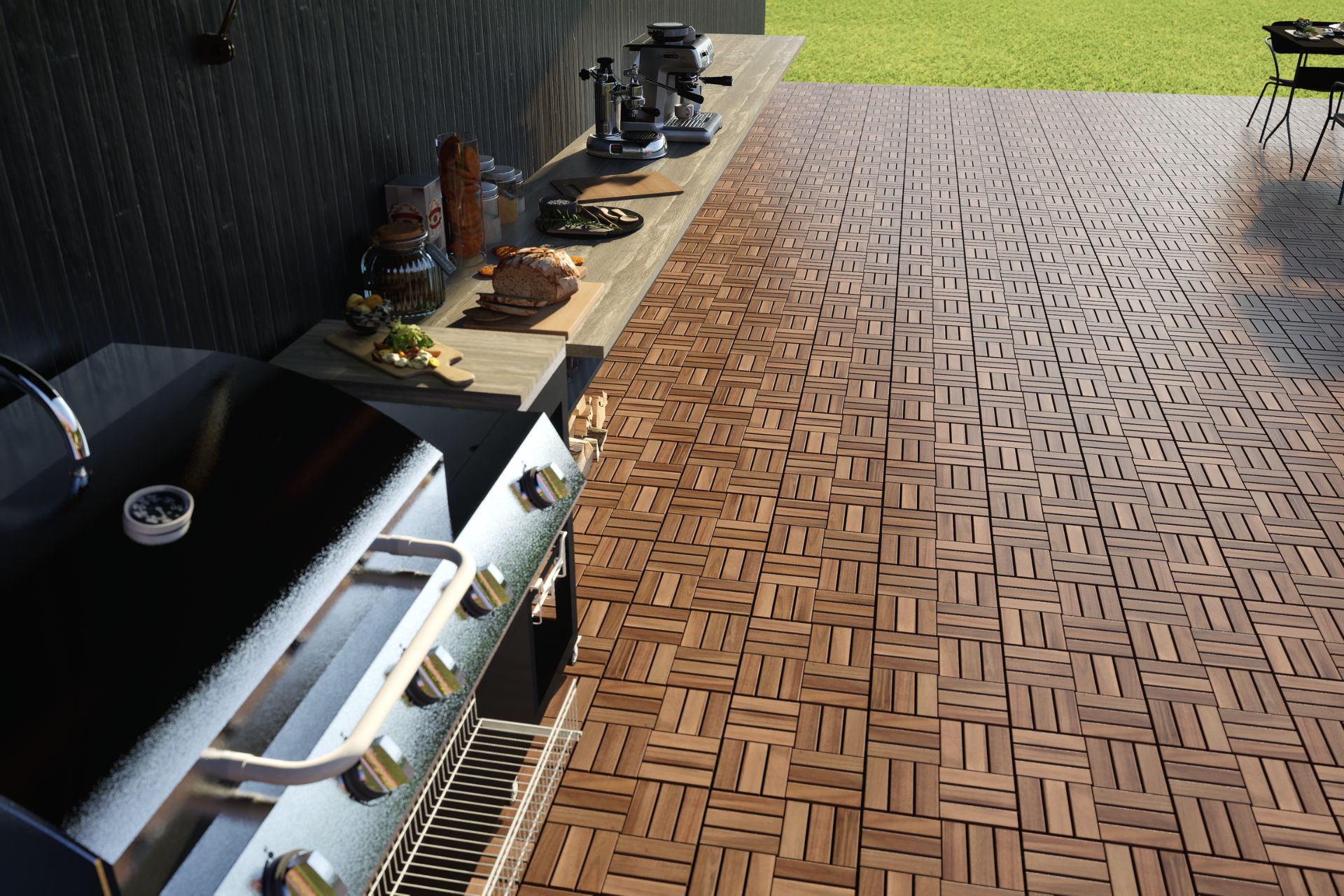
Pattern and finish variations help retailers build a more differentiated outdoor flooring range around one core product category.
The Right Retail Program Needs Enough Choice, Not Too Much Choice
Seasonal categories create a particular challenge for buyers.
More SKUs can make a collection look broader, but excessive variation also divides stock, complicates replenishment and increases the chance of carrying slow-moving inventory after the main outdoor season.
A stronger wood deck tiles assortment usually has a clear structure.
One or two accessible formats can serve as the volume base of the range. A different slat pattern or finish can provide visual differentiation. A more distinctive configuration can then create an upgrade option without turning the category into dozens of similar SKUs.
This matters even more when European consumer spending is under pressure. Current CBI research notes that higher prices and lower consumer confidence continue to affect the broader European home category, making clear value and market positioning especially important.
Retail buyers therefore need to balance design with commercial simplicity.
SSR supports different slat configurations, finishes, grades, packaging and private-label requirements so buyers can develop the assortment around their own channel rather than accepting one fixed collection.
Seasonal Outdoor Products Have to Work Before Spring Arrives
An outdoor collection earns most of its value during a limited selling period.
That means the B2B discussion begins months before consumers start thinking about their balconies or gardens.
Retailers and importers need to decide which designs will lead the season, how products will be packaged, how many SKUs will be carried, when containers need to arrive and how replenishment will be managed if a particular design performs faster than expected.
For wood deck tiles, carton configuration and container planning matter because relatively small changes can affect the economics of a high-volume retail program.
SSR supports buyers with carton planning, labels, private-label requirements, product documentation and container loading preparation for repeat deck tile orders.
Product decisions can therefore be made together with logistics decisions rather than treating packaging and loading as an afterthought.
That is especially relevant for European importers and distributors serving more than one market from the same inventory base.
Sustainability Has Moved from Marketing Message to Buyer Requirement
European outdoor buyers increasingly need to know more than what a product looks like.
Where the wood comes from, how materials are documented and whether the manufacturer can support the compliance process have become part of product evaluation.
The direction is becoming even more significant as the EU prepares for implementation of the European Union Deforestation Regulation. Under the current timetable, EUDR begins applying from 30 December 2026 for large and medium-sized operators, with later timing applying to certain micro and small operators.
This means traceability and documentation are no longer issues that should be discussed only after a product has already been selected.
They increasingly influence whether a supplier can support the program in the first place.
SSR maintains certification, traceability and compliance systems designed to support international and European buyer requirements. Its outdoor program includes certified material options and export documentation support, while the company continues to develop its traceability and compliance framework for European trade.
Rather than listing every certificate within a product article, buyers can review SSR’s current certification, compliance and manufacturing information directly on the SSR website.
This gives purchasing and compliance teams a clearer route to evaluate the documentation behind the product program.
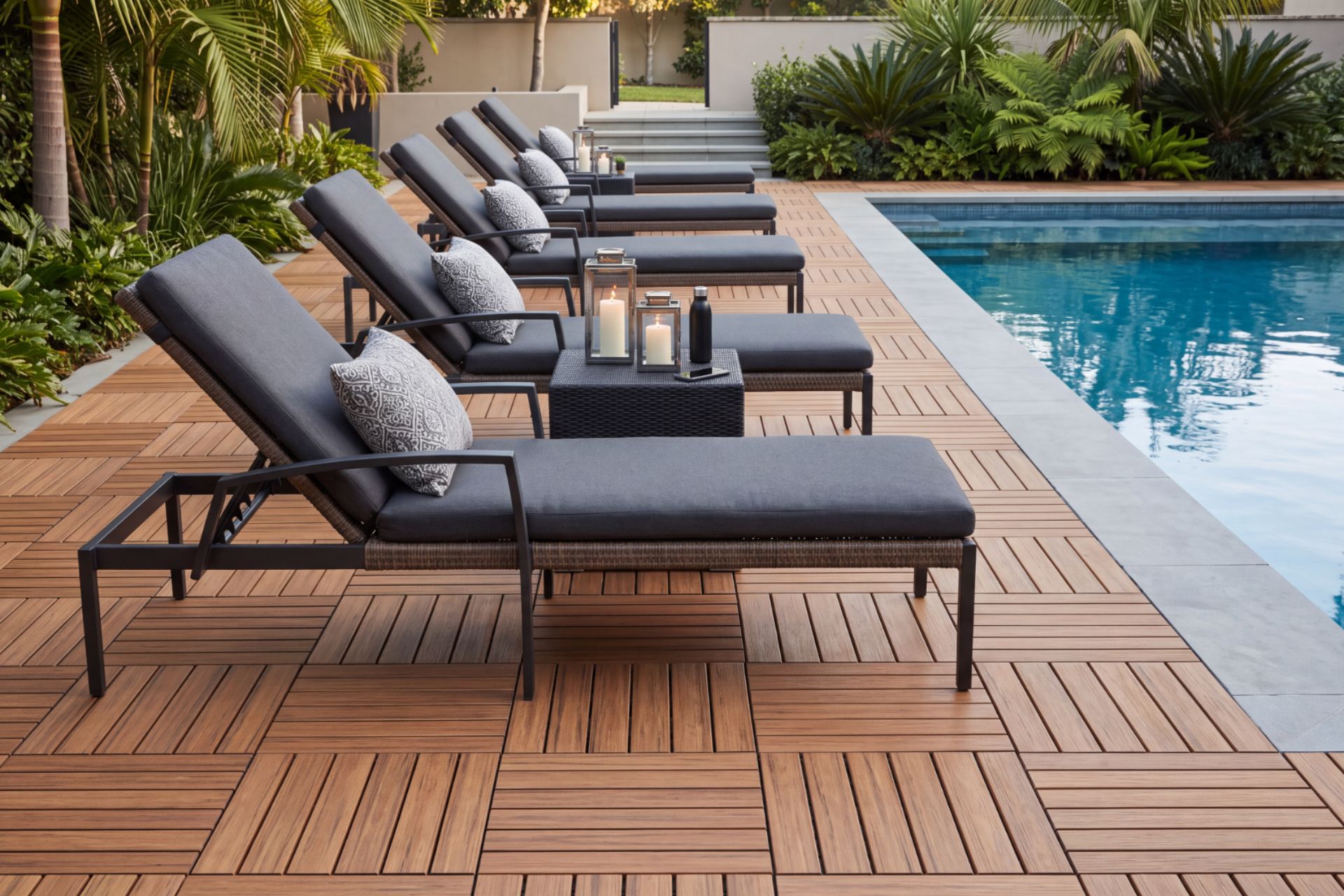
Product consistency, material traceability and documentation are becoming increasingly important within European outdoor programs.
Wood Deck Tiles Can Be the Starting Point of a Wider Outdoor Collection
Consumers rarely design outdoor spaces around flooring alone.
Once the surface is established, furniture determines how that space is actually used.
A small balcony may need a folding bistro set. A medium terrace can support four-person dining. Larger gardens may move toward six-seat tables, lounge furniture or sun loungers.
This creates an opportunity to merchandise wood deck tiles and patio furniture as parts of the same lifestyle rather than unrelated categories.
SSR’s outdoor furniture program includes Acacia patio and garden furniture for balcony, dining, lounge and other outdoor applications. Products can be developed according to material, finish, hardware, packing and market requirements.
The combination is particularly relevant to European retail because coherent outdoor looks allow consumers to make several purchasing decisions around one setting.
A retailer can show a small balcony story built around deck tiles and a folding set, then use the same material language for a larger terrace or garden dining presentation.
The product range expands, but the lifestyle remains recognisable.
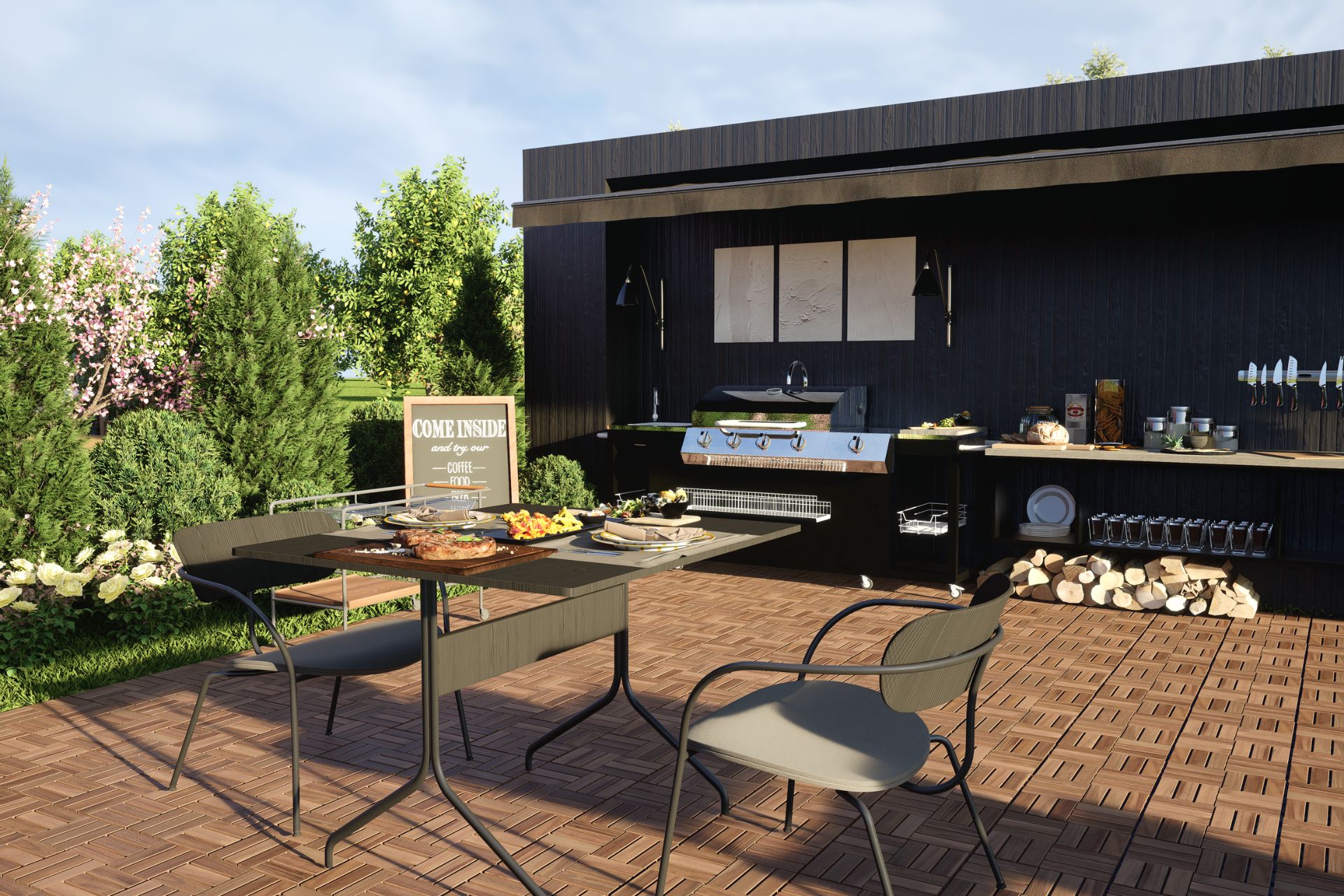
Coordinating flooring and furniture allows retailers to develop a more complete outdoor living story across different space sizes.
One Product Category Can Support Different European Markets
Europe should not be treated as one uniform consumer market.
Germany, France, the Netherlands, Belgium, Spain and Italy have different climates, housing formats, retail structures and design preferences. Even within each country, value, mid-market and premium consumers behave differently.
For suppliers, this means simply creating a generic “European collection” is often less useful than understanding the segment the buyer wants to serve.
CBI makes a similar point in its analysis of the European home and garden market: importers often redistribute products across national borders, making market segment and positioning particularly important.
The same wood deck tiles platform can therefore be approached differently.
An urban retailer may emphasise compact balconies and easy space transformation. A garden centre can place more weight on natural materials and coordinated furniture. A DIY chain may require clearer installation communication and accessible pricing. An ecommerce program may need strong lifestyle photography, product dimensions, packaging information and easy comparison between finishes.
The manufacturing platform remains consistent while the retail story changes around the buyer and consumer.
Building a Better Wood Deck Tiles Program for Europe
The strongest outdoor programs connect consumer expectations with operational reality.
European consumers want outdoor spaces that feel considered, comfortable and connected to the home. Natural materials continue to fit that direction, particularly when they are presented through contemporary design rather than a purely traditional garden look.
Retailers and importers need the other half of the equation: a manageable assortment, seasonal planning, repeatable quality, efficient packing and increasingly robust compliance support.
Wood deck tiles bring those requirements together in a category that can work across balconies, terraces, patios and gardens.
SSR supports B2B buyers with Acacia wood deck tiles, alternative outdoor tile materials and patio furniture that can be developed around different retail channels, market positions and private-label programs.
Buyers planning upcoming European outdoor collections can review the full SSR Outdoor Living range, current product options and compliance information at SSR Corporations