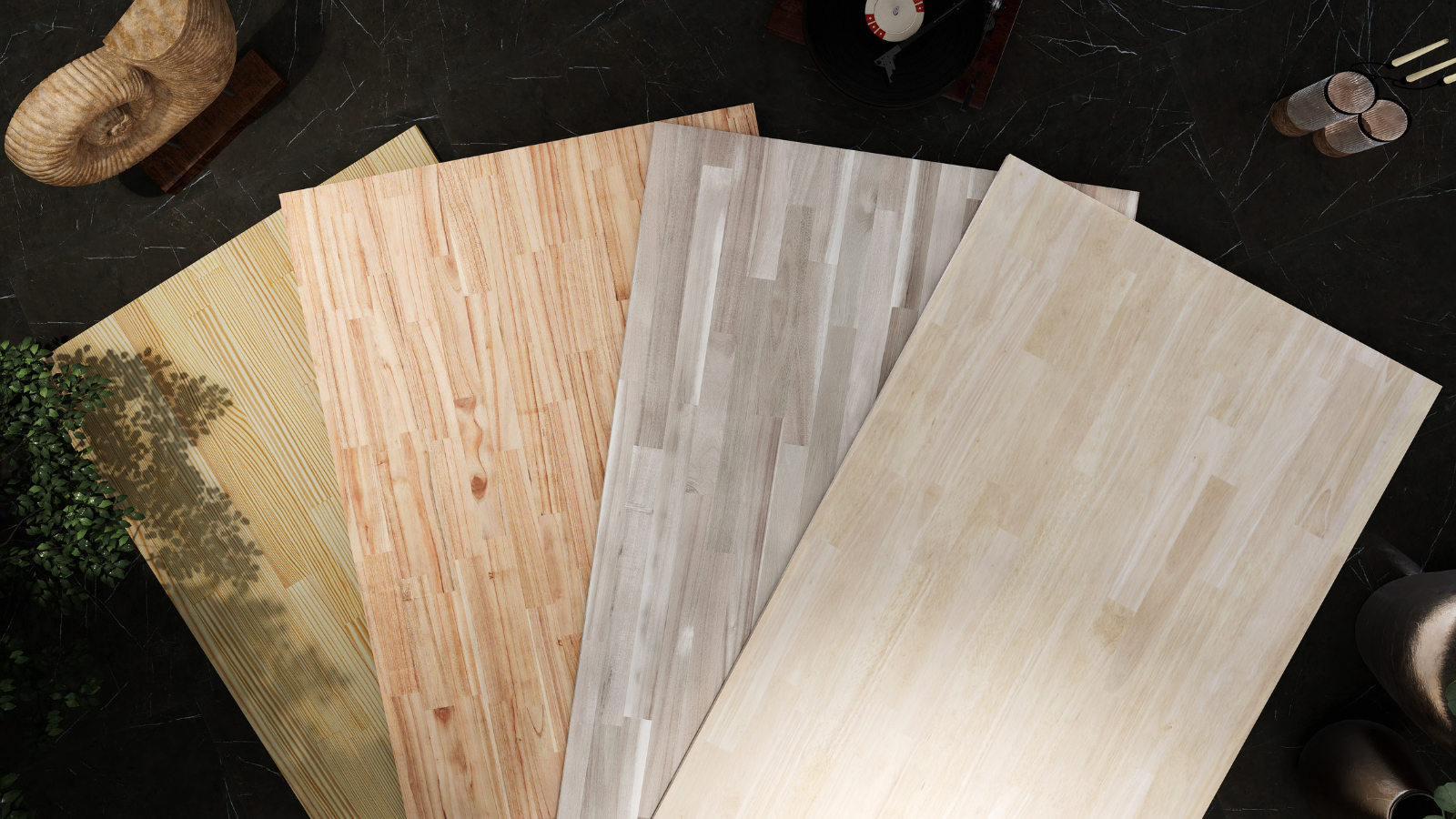
Global Market
Large-volume wood production creates a different challenge from making a good sample. A sample may involve a few carefully selected pieces. A commercial order can involve thousands of components moving through drying, cutting, jointing, gluing, sanding, finishing, inspection, packing, and container loading.
That is where the manufacturing system behind the product begins to matter.
As a wood manufacturer serving international markets, SSR approaches consistency as something that must be controlled throughout production rather than checked only when finished goods reach final inspection. Material conditions, machining parameters, moisture, dimensions, surface quality, packaging, and production records all contribute to whether the first pieces and the final cartons of an order meet the same requirements.
For importers, distributors, retailers, and OEM partners, this becomes increasingly important as a product moves from sampling into container-scale production.
Consistency Starts Before Production Begins
Wood is a natural material. Grain, color, density, knots, and moisture behavior can vary even within the same species.
A reliable wood manufacturer therefore cannot treat raw wood as if every board entering production were identical. Material needs to be sorted and prepared according to the specifications of the finished product.
SSR works with wood species including rubberwood and acacia across its manufacturing network. Before mass production moves forward, material is reviewed against requirements such as grade, dimensions, moisture condition, visible characteristics, and the intended application.
This early control helps establish a more stable starting point for products such as wood panels, butcher block countertops, table tops, shelves, furniture components, stair components, and outdoor products.
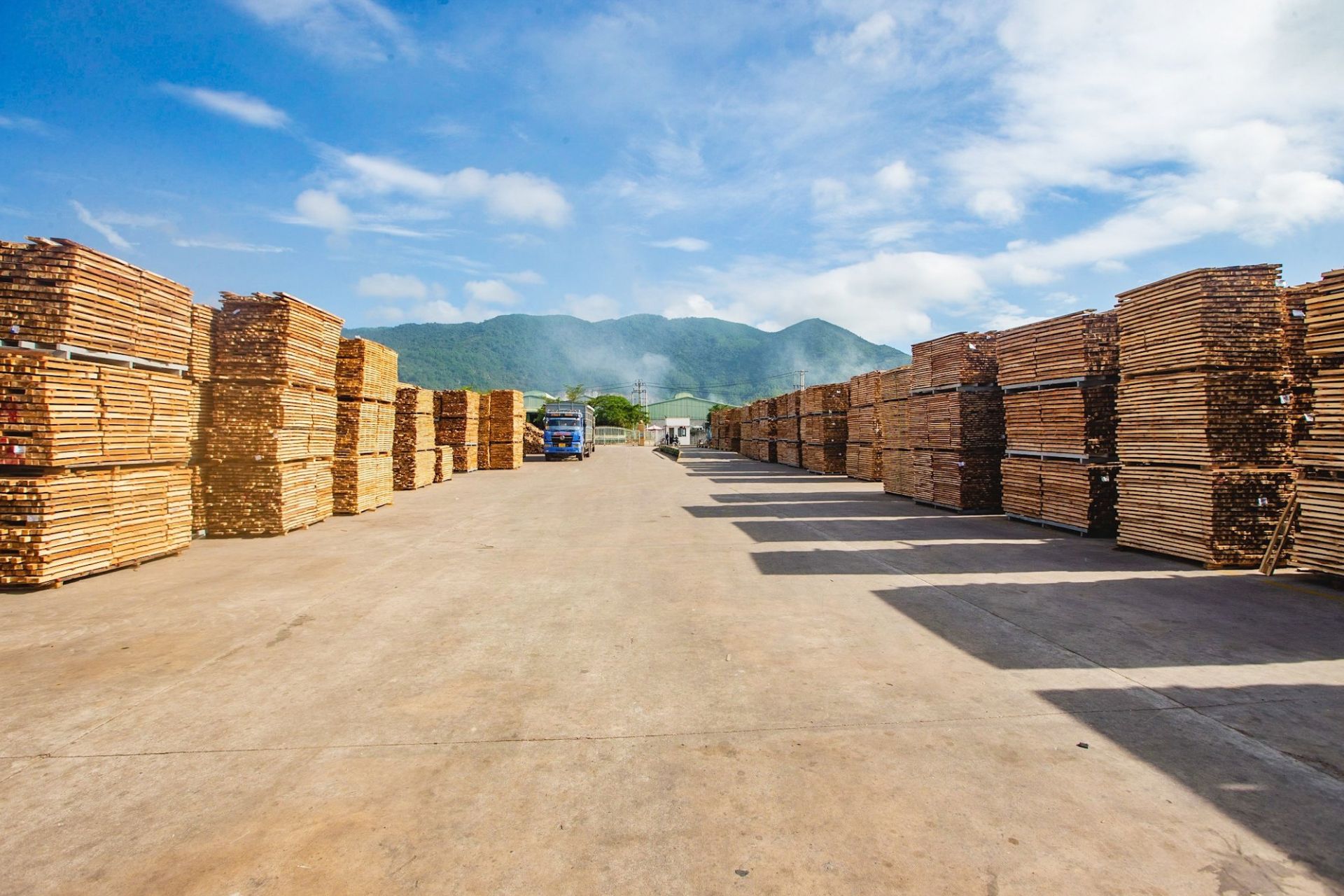
Stacks of sorted rubberwood and acacia lumber inside an SSR wood factory, organized by production batch before machining
Moisture Control Is Part of Dimensional Control
Moisture deserves particular attention in any wood manufacturing process because wood continues to interact with the surrounding environment.
The USDA Forest Products Laboratory explains that correct drying, handling, and storage can minimize undesirable moisture changes and related dimensional movement in service.
That makes moisture control more than a drying-stage issue.
SSR monitors moisture as material moves toward production specifications. Target levels can vary depending on the product, wood species, application, and destination market. Material that falls outside the required range can be separated before it creates problems further down the production line.
Controlling moisture at this stage helps a wood manufacturer reduce risks related to movement, warping, joint performance, machining accuracy, and dimensional variation.
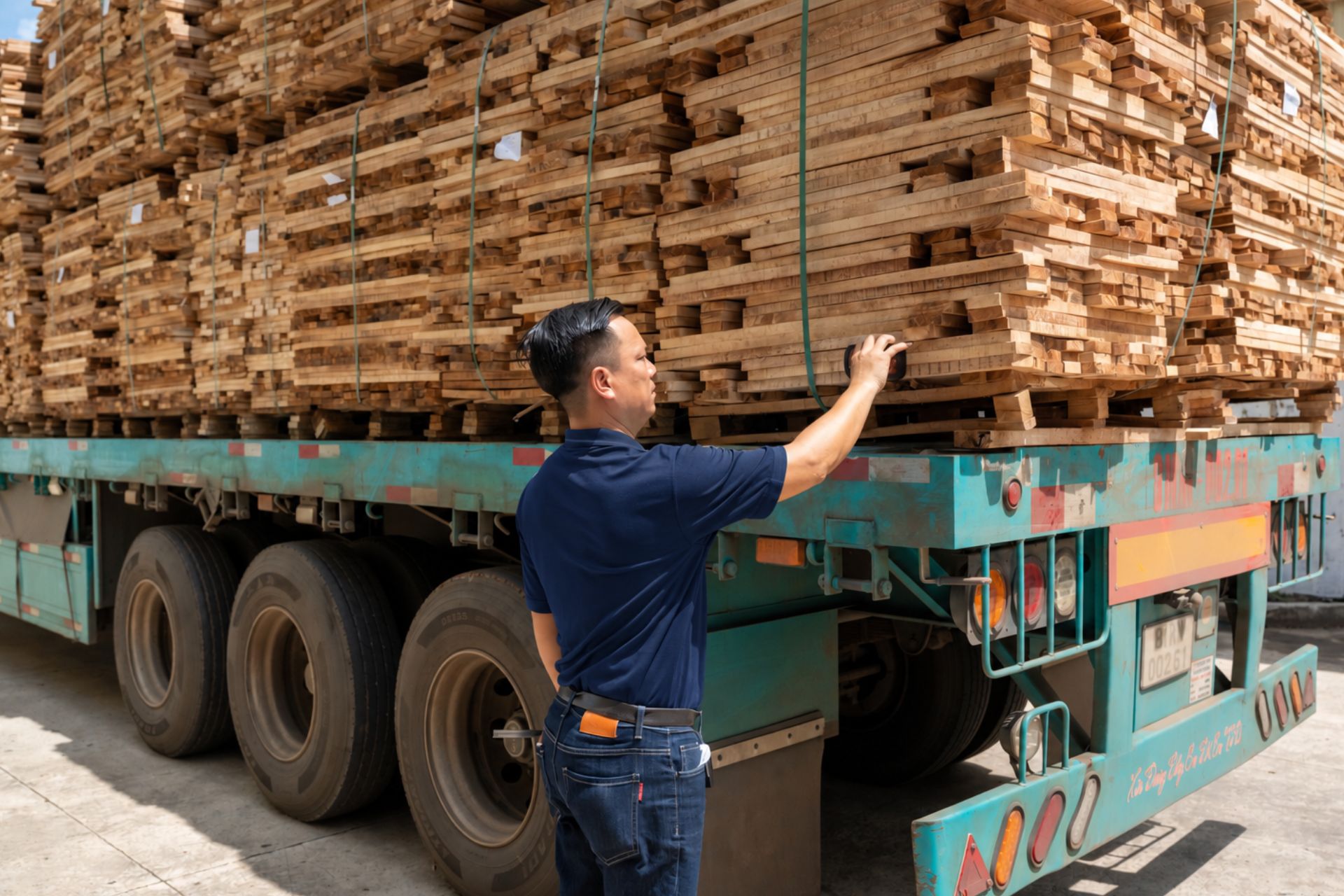
SSR QC employee using a calibrated moisture meter on prepared wood pieces before machining.
Inside the Wood Production Process
Consistency becomes easier to understand when production is viewed as a connected system. Each stage creates the conditions for the next one.
1. Raw Material Inspection and Sorting
Production begins with material identification and inspection.
Wood is checked and sorted according to the requirements established for the order. Species, grade, moisture, dimensions, color range, and visible defects may all affect how material is allocated.
Batch organization also matters. When a wood manufacturer is preparing container-scale orders, controlled material flow helps prevent unsuitable pieces from moving into later production stages.
Traceability is another part of responsible material management. FSC Chain of Custody, for example, provides a framework for identifying and tracking FSC-certified forest-based materials through manufacturing and distribution.
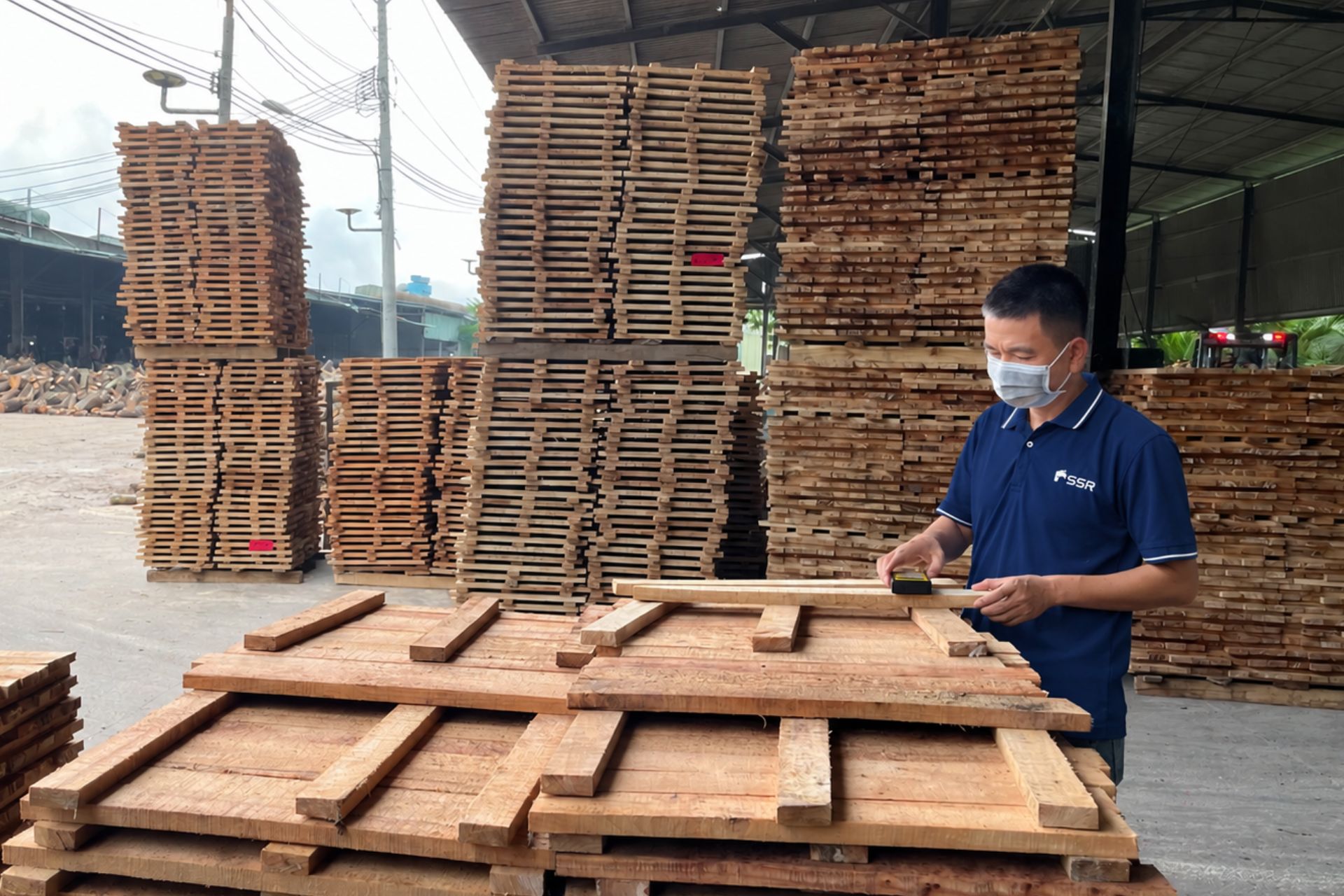
Vietnam wood manufacturer raw material sorting process
2. Kiln Drying and Moisture Verification
Prepared wood moves through drying according to the material and production requirements.
Moisture readings are checked before wood proceeds into precision processing. Pieces outside the required condition can be held, reconditioned, or separated instead of being allowed to introduce unnecessary variation downstream.
This step is particularly important for a wood panel manufacturer, where multiple wood pieces eventually become part of one larger surface.
Stable input material creates better conditions for stable machining and assembly.
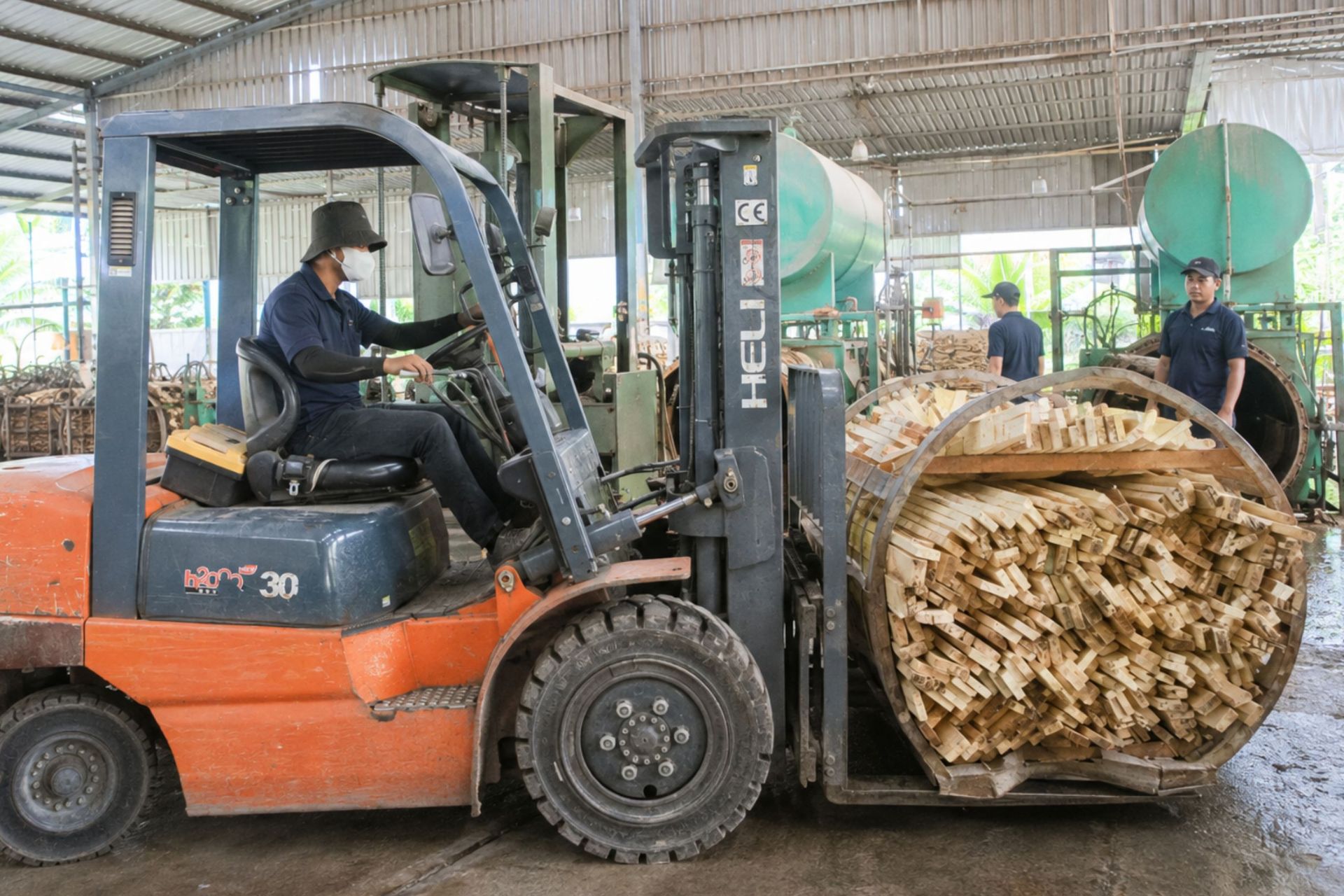
Kiln drying area followed by moisture measurement.
3. Cutting and Material Preparation
Once the material reaches the required condition, wood is processed into controlled dimensions.
Cutting removes unsuitable sections and prepares pieces for the product structure that follows. Dimensions are checked against production specifications so variation can be detected before components reach assembly.
This matters at scale.
A small dimensional difference repeated across thousands of pieces can become a production problem later. Controlling dimensions earlier gives the wood manufacturer a more predictable base for jointing, gluing, sanding, assembly, and final machining.
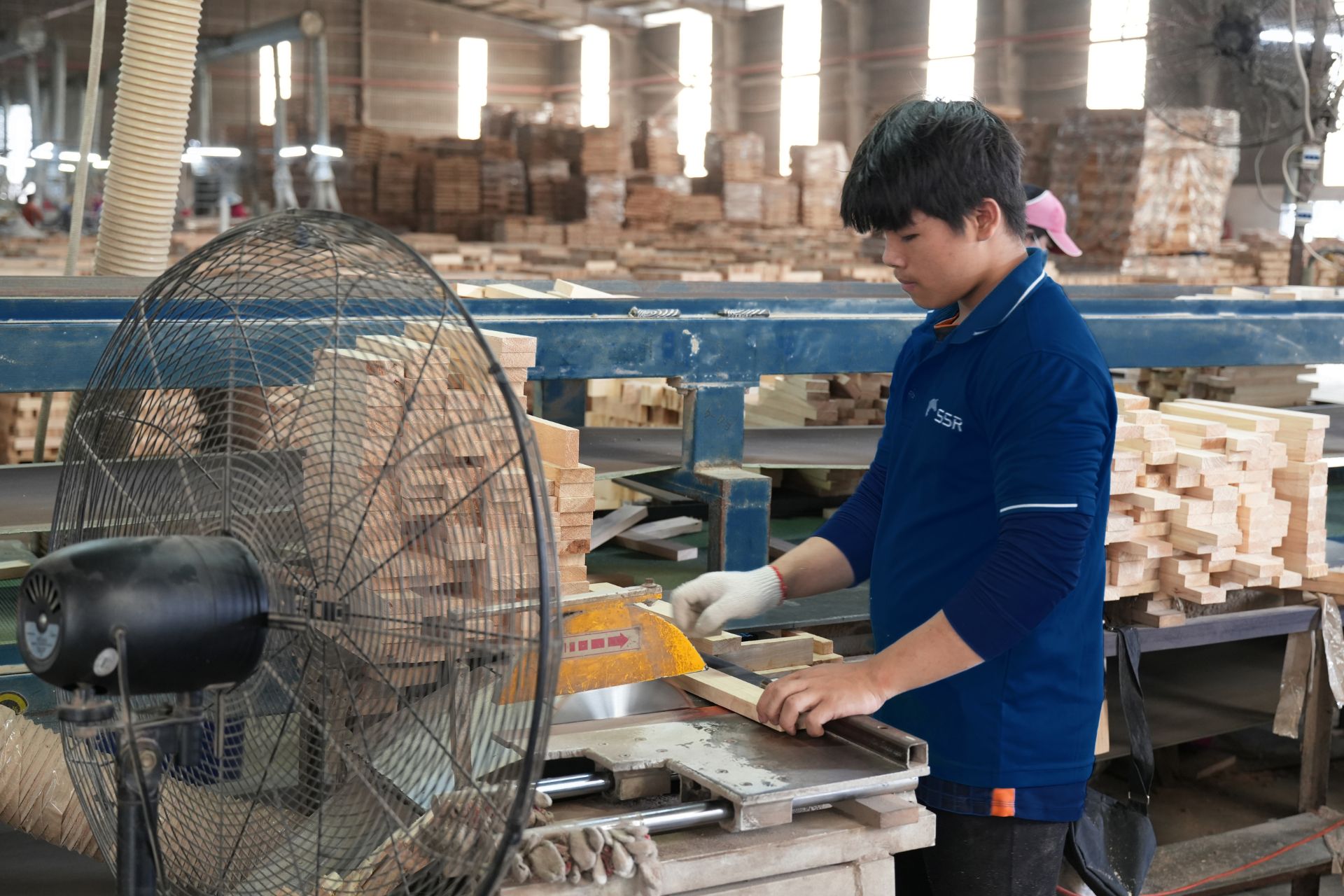
Precision cutting process in large-scale wood manufacturing
4. Finger Jointing for Longer Components
Selected product programs use finger joint construction to turn shorter wood sections into longer, production-ready pieces.
The process begins by machining matching finger profiles at the ends of individual pieces. Adhesive is applied to the joint area before the pieces are aligned and pressed together into longer staves.
Those staves can then be processed further depending on the required product.
For finger joint wood panels and butcher block programs, joint accuracy, adhesive application, pressure, and alignment all influence the quality of the resulting component.
The objective is not simply to connect pieces. A wood manufacturer needs the jointing process to remain repeatable across continuous production.
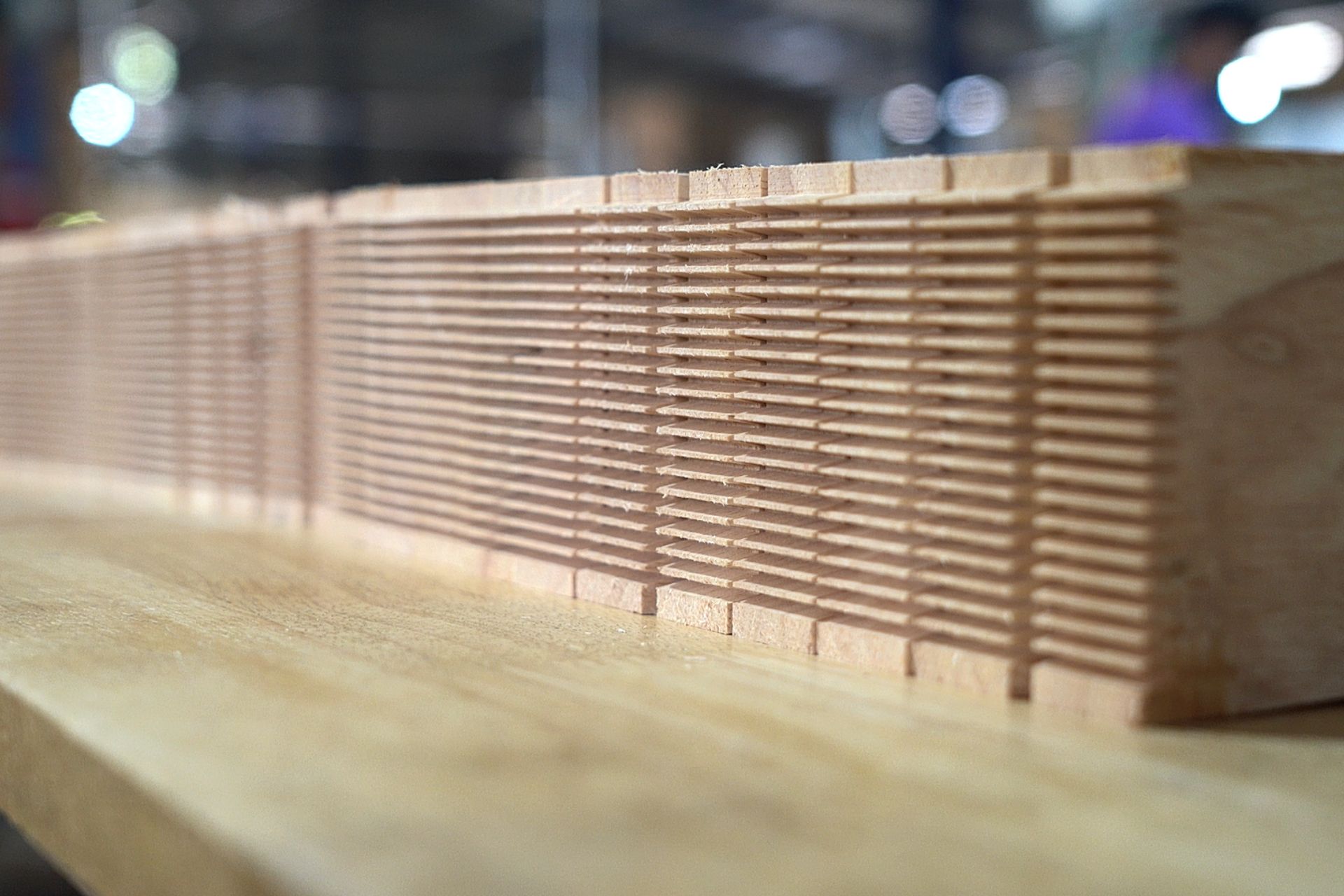
Finger joint production process at a wood panel manufacturer
5. Edge Gluing and Panel Formation
Long prepared staves are arranged side by side to form the required panel width.
Glue application and pressing conditions are controlled according to the production specification. Alignment during this stage also affects how much correction will be required during later sanding and calibration.
After pressing, the panel becomes a single production unit ready for further machining.
This stage is central to the production of finger joint boards, butcher block countertops, workbench tops, table tops, shelves, and other solid wood surfaces.
When production reaches hundreds or thousands of panels, repeatable setup becomes more important than correcting individual panels after the fact.
That distinction separates controlled mass production from one-off woodworking.
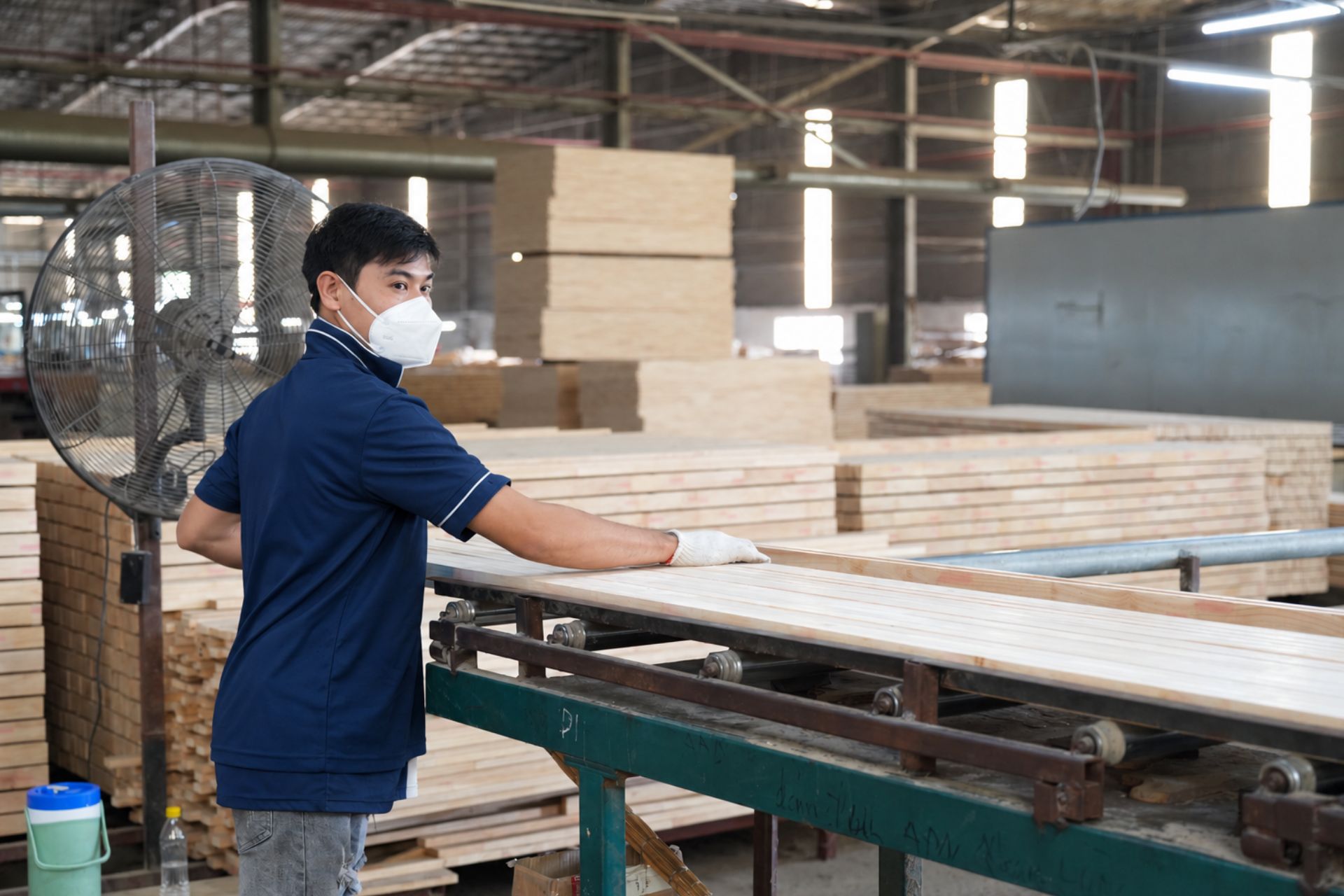
6. Calibration, Sanding and Surface Preparation
A panel may already have its final basic structure after pressing, but its surface still needs to meet the agreed specification.
Calibration brings the panel toward the required thickness. Sanding then prepares the surface through controlled abrasive stages.
SSR wood panel programs can use sanding levels such as 240 or 320 grit depending on the product specification.
QC checks focus on details including surface uniformity, thickness, visible defects, glue lines, joint condition, and overall appearance.
This is where process control becomes visible to the customer. A wood manufacturer producing at container scale needs surface quality to remain consistent not only across one panel, but throughout the production batch.
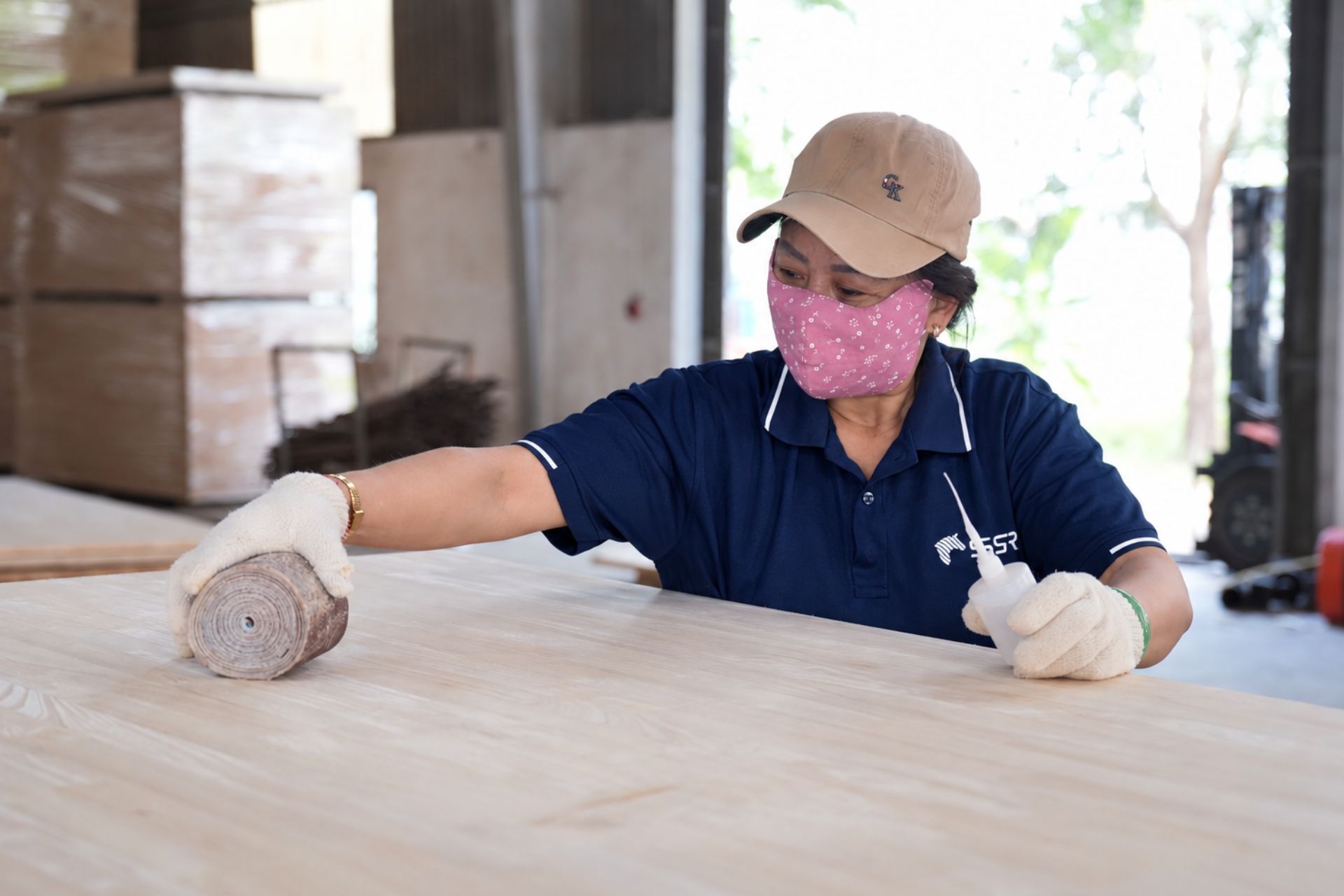
Wood panel sanding and surface quality control
Quality Control Should Follow the Product, Not Wait at the End
Final inspection remains important, but it cannot replace control during production.
A stronger manufacturing system places checkpoints throughout the process.
Raw material can be checked before machining. Moisture can be verified before components are processed. Dimensions can be monitored after cutting. Joint quality can be reviewed after finger jointing and pressing. Surface conditions can be inspected after sanding. Finished dimensions and appearance can then be checked before packing.
This approach allows a wood manufacturer to identify variation earlier instead of discovering it after an entire order has been completed.
Typical Control Points Across Production
Material → Moisture → Cutting → Jointing → Gluing → Calibration → Sanding → Machining → Final QC → Packaging → Container Loading
Each checkpoint protects the next stage.
The result is a production flow built around prevention and correction rather than depending on final sorting alone.
From an Approved Sample to Thousands of Pieces
Sample approval establishes the reference. Mass production tests whether the factory can reproduce it.
Before a larger production run, specifications need to be translated into measurable manufacturing requirements. Dimensions, tolerances, moisture, wood grade, surface preparation, edge details, finish, packaging, labeling, and other agreed requirements become part of the production reference.
Teams can then compare output against the same standard as the order moves through manufacturing.
This is especially important for a global wood manufacturer working across different product categories and destination markets. A countertop program for the United States may not follow exactly the same specifications as a panel program for Europe or a furniture program developed for another market.
Consistency does not mean every product is manufactured the same way.
It means the agreed specification is carried consistently through the relevant production process.
Packaging Is Still Part of Manufacturing
Production does not effectively end when the wood product passes its final surface inspection.
Export products still need to travel through warehouses, ports, containers, and distribution networks before reaching the customer.
Packaging therefore needs to match the product and shipping conditions.
Corner protection, cartons, internal protection, labeling, pallet configuration, and other packaging details can be defined according to the program. Finished packages are checked before loading so visible damage or packing issues can be identified before shipment.
A wood manufacturer supplying international programs needs to consider the condition in which products arrive, not simply the condition in which they leave the production line.
Container Loading Is the Final Production Checkpoint
Container loading brings manufacturing and logistics together.
Quantities, carton markings, package condition, SKU arrangement, and loading plans can be checked before the container is closed.
Proper organization also makes better use of container space while helping protect finished goods during transportation.
For distributors and importers receiving container-scale orders, this final step affects inventory planning and warehouse handling after arrival.
A capable wood manufacturer therefore treats loading as part of the order execution process rather than a simple handoff to transportation.
Scaling Wood Production Without Losing the Standard
Large-volume production is ultimately a repeatability challenge.
More machines or more workers can increase output, but capacity alone does not guarantee consistency. Material control, documented specifications, stable production settings, in-line inspection, communication between production stages, and final shipment controls need to work together.
SSR’s manufacturing and supply network spans 2.96M+ sq ft, supported by 11,000+ skilled workers, with capacity exceeding 950 containers per month across the network and products serving 60+ export markets.
That scale creates room for larger programs, but the operating principle remains straightforward: each approved requirement needs to survive the transition from sample to production line and from production line to container.
This is how SSR approaches its role as a wood manufacturer for global customers.
Not by treating consistency as one final QC step, but by building control into the entire manufacturing flow.
Built for the Next Container, Not Just the First Sample
Long-term wood programs depend on what happens after the first order.
Retail assortments expand. Distribution volumes change. New SKUs are introduced. Packaging gets updated. Markets develop new requirements. Successful products move from trial quantities into recurring containers.
Manufacturing systems need to support that transition.
SSR combines material control, manufacturing capacity, product development, quality management, packaging, and export support to help global partners move wood products from specification into repeatable commercial production.
Explore SSR’s wood manufacturing capabilities and discuss your next product program with SSR Corporation.
Website: ssr.vn
Email: [email protected]