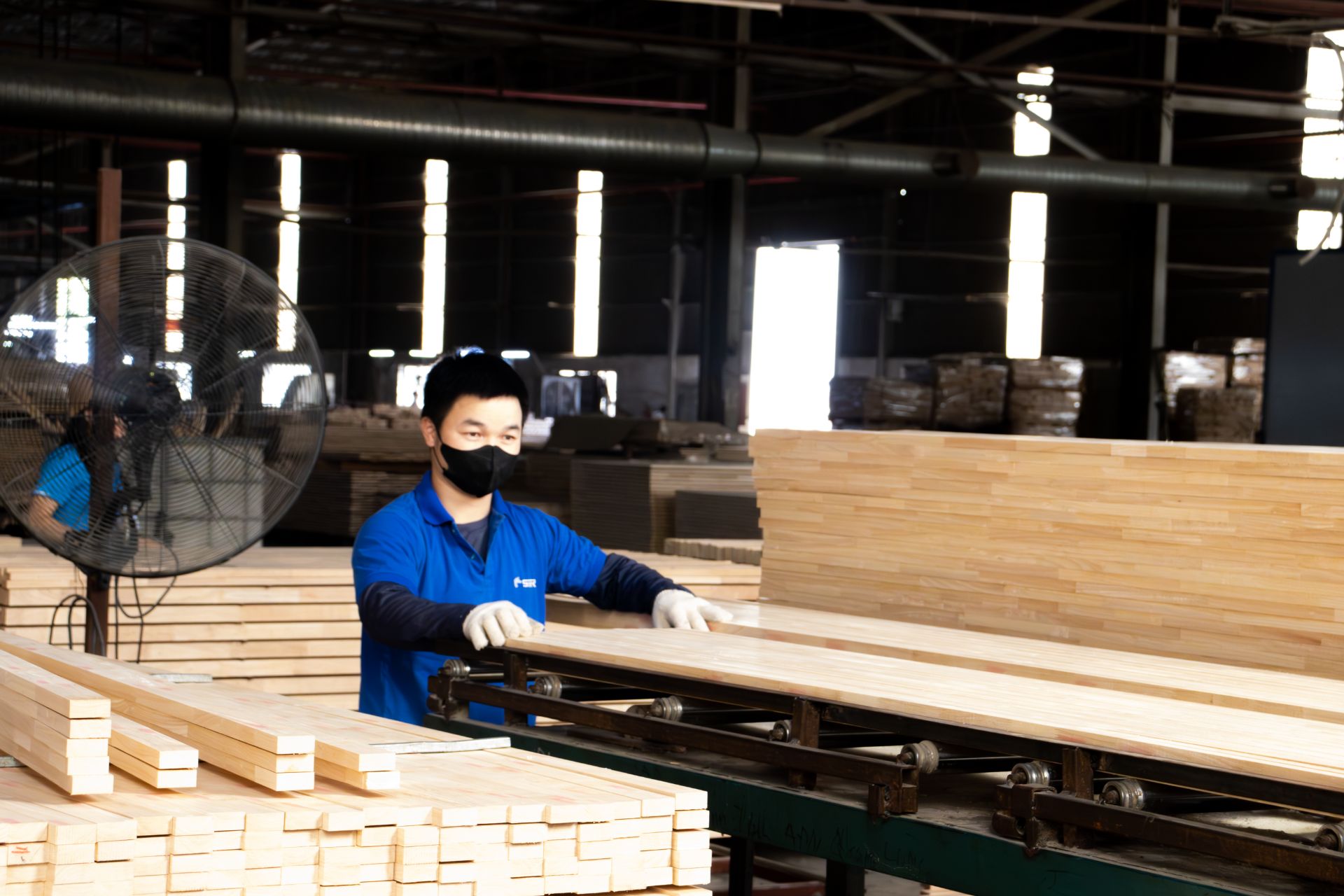
Finger Joint Board is rarely valuable simply because it is a panel. Its real value appears in what manufacturers, furniture brands, distributors and retailers can turn it into.
The same solid wood construction can become a dining table, bed frame, cabinet, floating shelf, desk, workbench or stair component. Change the wood species, grade, dimensions and finish, and the commercial direction of the product can change with it.
That flexibility is particularly useful for companies building broader solid wood collections. A manufacturer can use related panel construction across several furniture groups. A distributor can serve different downstream applications from one material category. A retailer can bring natural wood into different parts of the home without every product needing an entirely separate material story.
The important question is therefore not simply what sizes a Finger Joint Board can be made in.
It is what the board needs to become next.
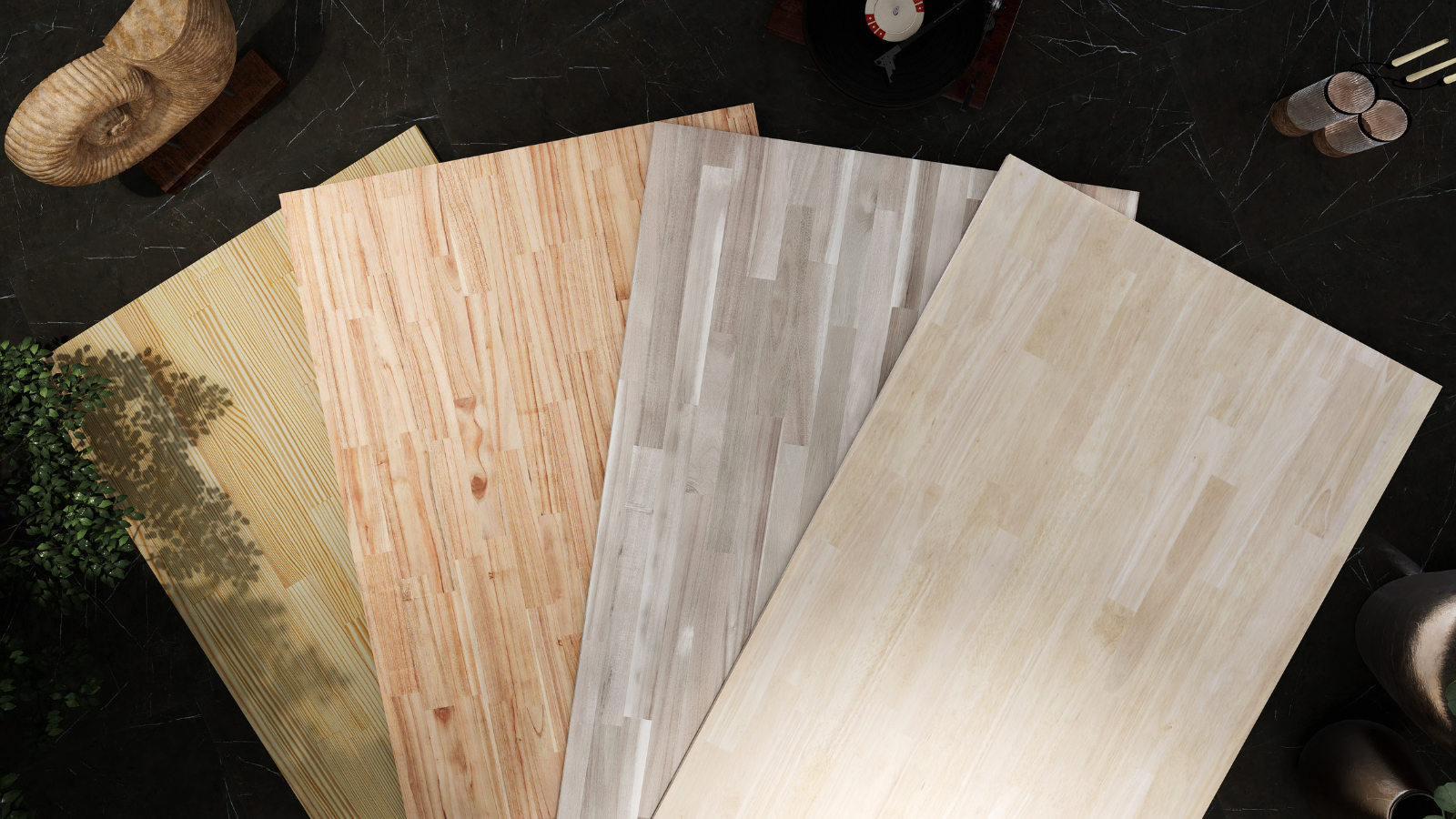
Finger Joint Board applications for furniture and interior wood products
Why One Solid Wood Panel Can Serve So Many Product Lines
A Finger Joint Wood Board is produced by connecting shorter pieces of solid wood lengthwise through interlocking finger joints before assembling them into a wider panel.
The result retains the character of real wood while providing a practical panel format that can move through common woodworking processes.
It can be cut, drilled, routed, CNC-machined, profiled, sanded and finished according to the product being developed. That makes the board useful as an intermediate material rather than a finished product with only one purpose.
A furniture manufacturer can cut one panel into multiple components. A stair producer may work with longer boards. A shelving program may place more emphasis on exposed surfaces and edges. Cabinet manufacturing may use the same general construction but require a completely different finishing standard.
The construction stays familiar. The product direction changes around it. That is what makes Solid Wood Finger Joint Board useful across several manufacturing programs.
From Raw Panel to Finished Furniture
Furniture is one of the clearest examples of how versatile the material can be.
A single Finger Joint Board for furniture can move into dining, bedroom, storage or workspace collections depending on how it is machined and finished.
Typical applications include dining tables, coffee tables, benches, desks, bed components, cabinets, bookcases and storage furniture.
This creates an advantage for product development because the raw material can remain relatively consistent while the finished forms change.
A furniture collection does not necessarily need a different wood platform for every SKU.
The same species and finish direction can connect a table to a bench, a desk to a shelf or a bed to a bedside cabinet, giving the final assortment a more coherent material identity.
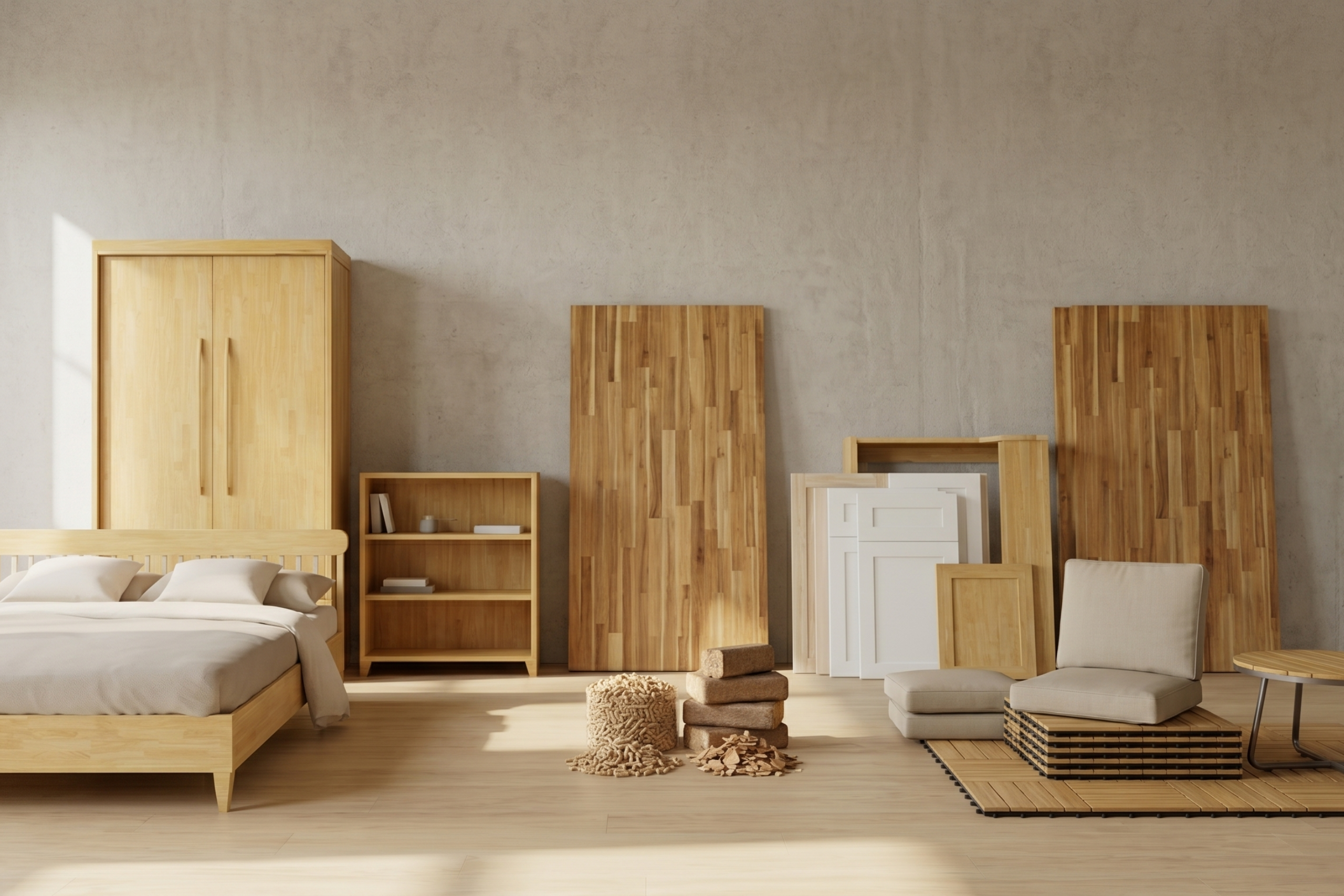
Finger Joint Wood Board used in a coordinated furniture collection
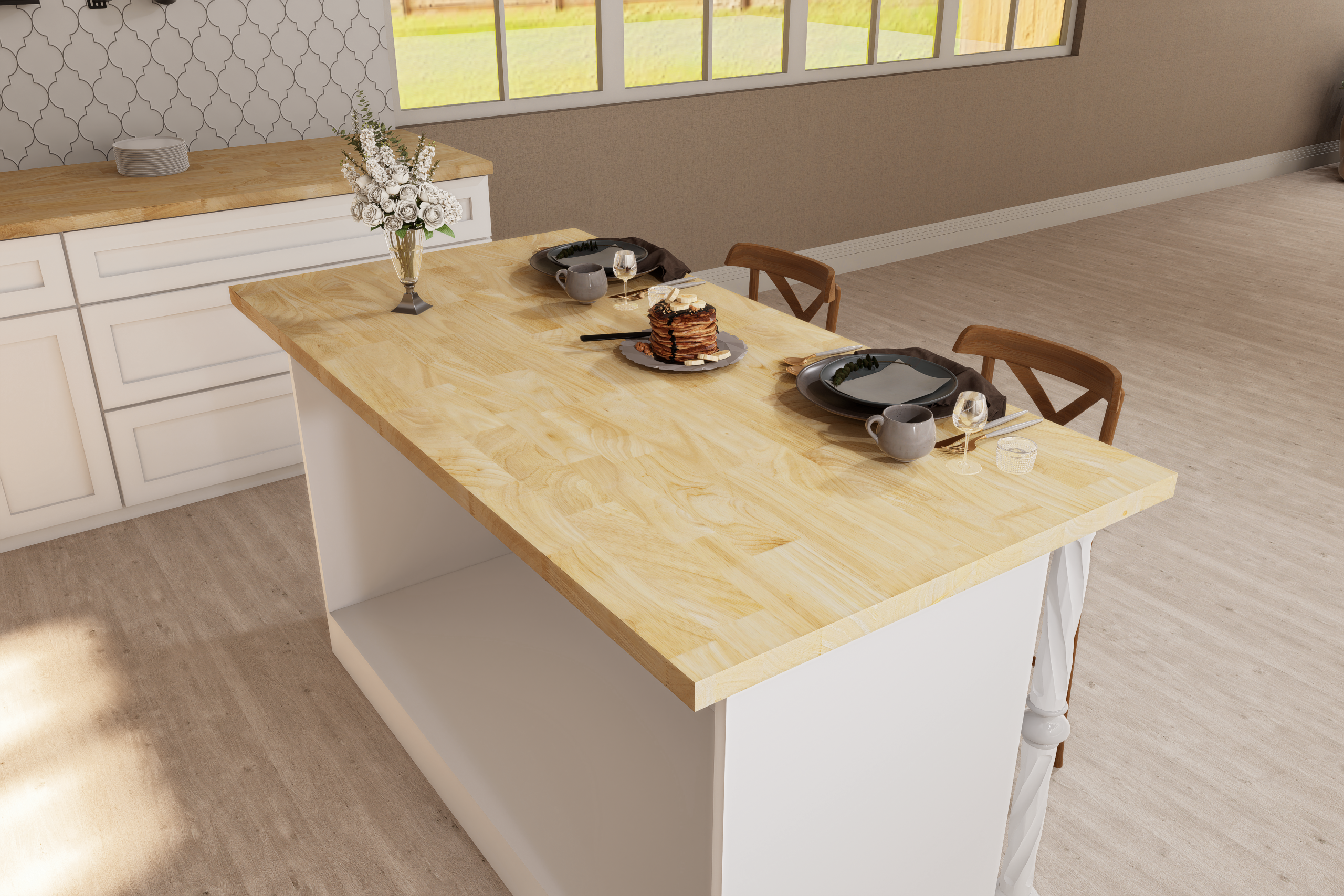
Table Tops Put the Wood Surface on Display
A table top places more pressure on the appearance of the material because very little is hidden.
- Consumers see the grain.
- They see color variation.
- They see the finger-jointed pattern.
- They touch the surface.
- They notice how cleanly the edge has been processed and whether the finish feels smooth.
For this reason, a board intended for a natural table top needs to be evaluated differently from one that will eventually disappear beneath an opaque coating.
Visual grade becomes more important. Sanding needs to support the intended finish. Color variation has to remain within a range that makes sense across the full surface. Species also changes the design direction significantly.
A Rubberwood Finger Joint Board can create a lighter and calmer table surface, while Acacia can make grain and tonal variation a stronger part of the furniture design. Neither is automatically better. They answer different consumer preferences.
Bedroom Collections Need More Than a Bed Frame
Bedroom furniture shows another advantage of working from a common solid wood panel platform.
A bed is rarely purchased in isolation when a brand is building a complete collection. The same product family may include a headboard, bedside cabinet, dresser, bench or small storage piece.
Using a related material and finish across these products helps the collection feel intentional.
Finger Joint Board can be processed into headboards, footboards, structural bed components, bedside furniture and storage pieces depending on the design.
The visual relationship becomes especially important when several pieces are placed within the same room.
A dramatic difference in tone between a bed and bedside cabinet may be technically acceptable as natural wood variation, yet still feel disconnected to the consumer.
That makes controlled appearance an important part of product development, particularly for natural or lightly finished collections.
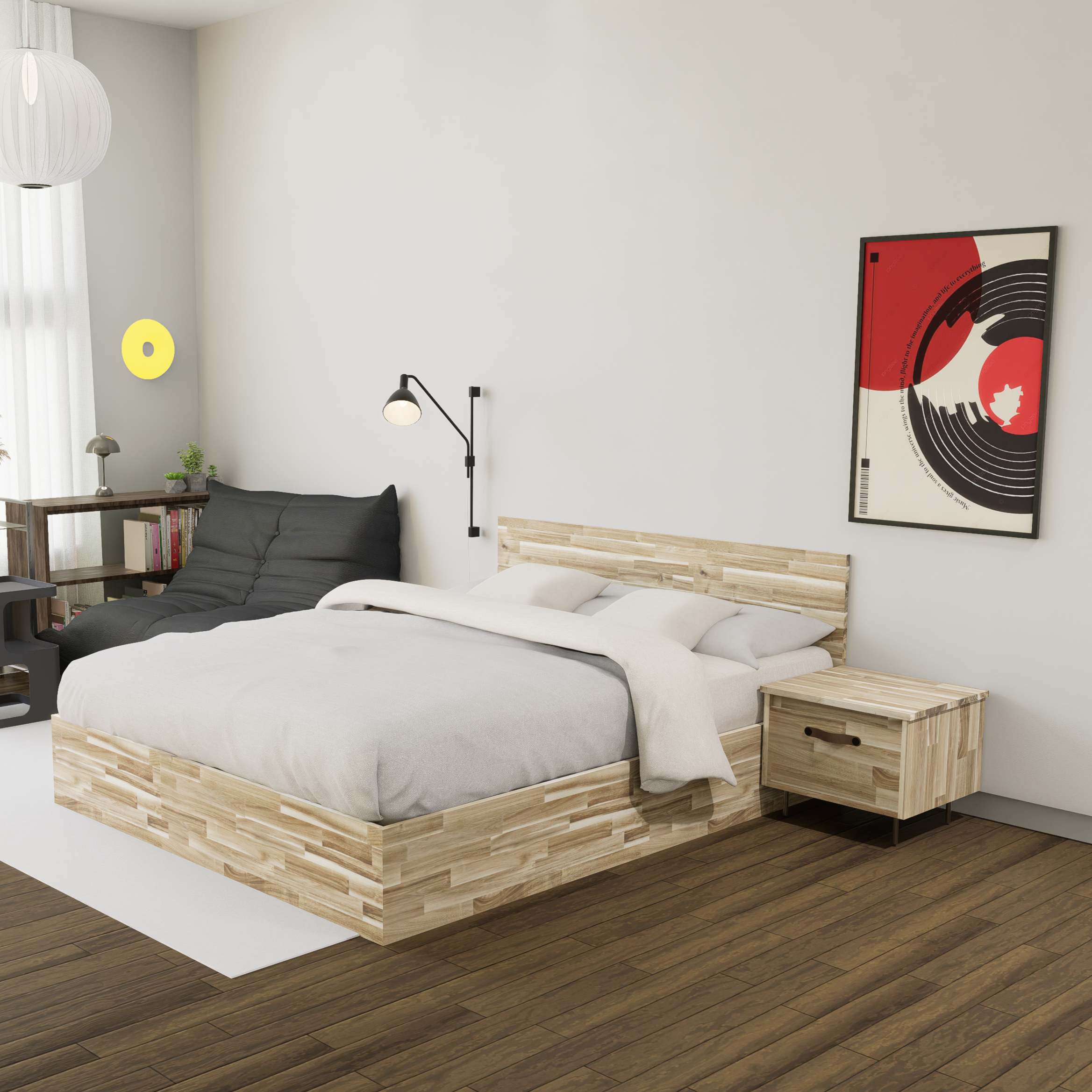
Finger Joint Board used for bed frames and bedroom furniture
Cabinets Turn Surface Quality Into a Visible Detail
Cabinetry changes the quality priorities again.
A board may become a door, side panel, shelf or other furniture component, and each application exposes the material differently.
Natural-finish cabinets show the wood directly, so grain, repairs, jointing and color matter.
Painted cabinets shift the concern toward surface preparation. Small glue residues, uneven sanding or defects that appear insignificant on an unfinished panel may become much more noticeable after coating.
Stained finishes create another challenge because different areas of the surface may absorb color differently if sanding and glue-line preparation are inconsistent.
This is why quality cannot be separated from application.
A Finger Joint Board for cabinets should be prepared for the finish it will actually receive rather than graded only according to a generic idea of “premium” wood.
Shelving Makes Natural Wood Easy to Bring Into the Home
Shelving is one of the simpler applications, but commercially it can be very effective.
Consumers immediately understand what a natural wood shelf does.
The same panel construction can become floating shelves, bookcase shelves, pantry storage, wardrobe components or open display systems.
Here, both the face and front edge are highly visible. A clean edge, balanced grain and smooth surface contribute strongly to the perceived quality of the product.
Shelving is also a good example of where natural wood can sit between furniture and DIY.
A manufacturer may supply a fully finished floating shelf, while another program may offer a simpler board product that consumers or contractors can cut and install themselves.
The material is similar. The route to the consumer is different.
Workspaces Give Solid Wood a More Functional Role
Desks and work surfaces shift attention from decorative furniture toward everyday functionality.
A Finger Joint Wood Panel can become a desk top, standing-desk surface, craft table or workbench with relatively little additional construction.
In these applications, consumers often interact directly with a large part of the board throughout the day.
Flatness matters. Surface smoothness matters. Edge finishing matters.
The board also needs enough visual consistency that a large horizontal surface does not look unintentionally patchy.
Rubberwood or Hevea can work particularly well for cleaner, lighter workspaces. Acacia can create a warmer, more expressive desk where the wood itself becomes a stronger visual feature.
For an OEM/ODM program, the same panel may be paired with different bases, frames or storage systems to produce several product versions from one material platform.
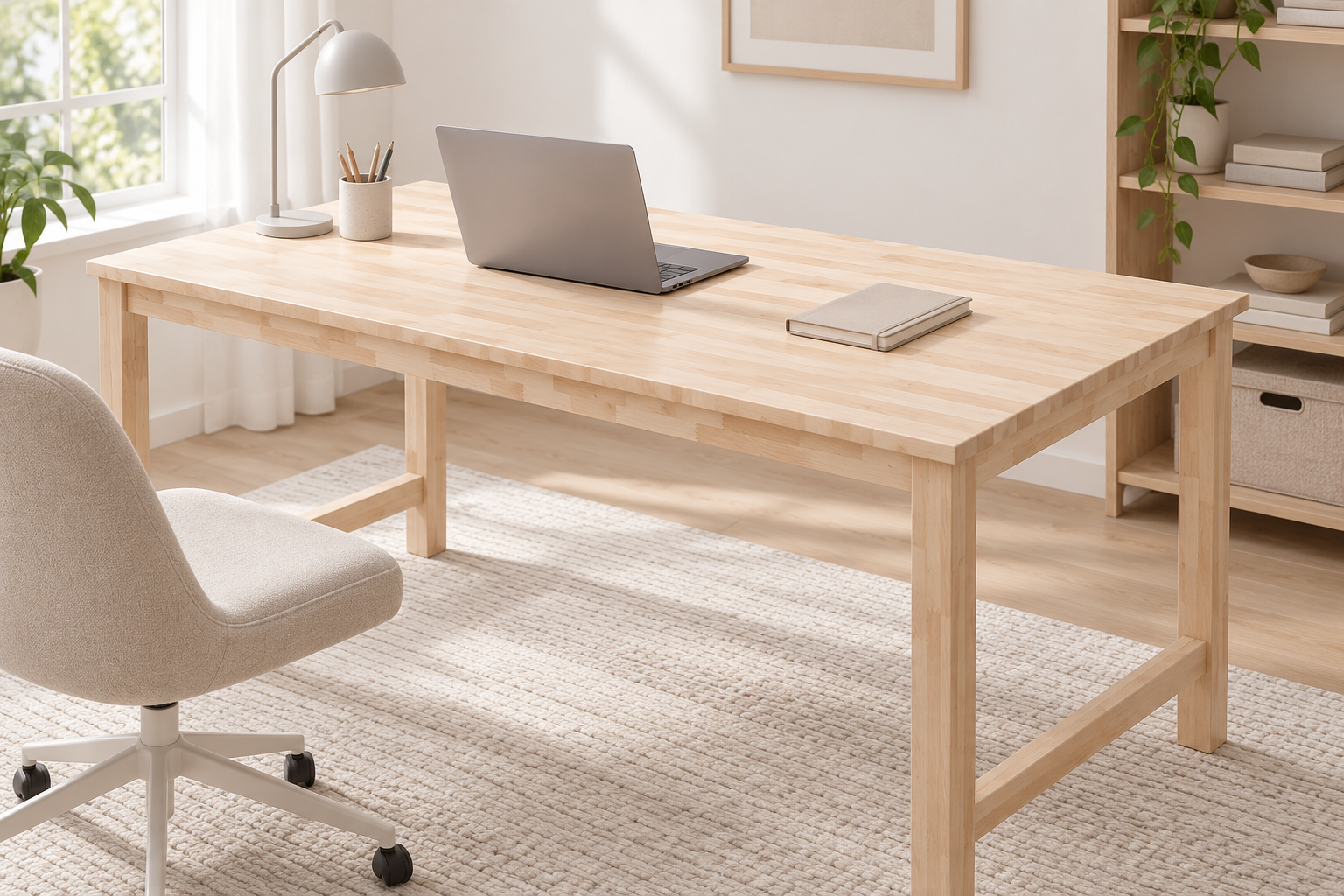
Finger Joint Wood Panel used as a natural wood desk top
Staircases Demand a Different Kind of Consistency
Stair components introduce requirements that are less obvious in smaller furniture products.
A single table top is viewed as one object. A staircase is viewed as a sequence.
Multiple treads, risers, landings and related components appear together, which means differences in color, grain and finish become easier to notice.
Longer boards also place greater emphasis on straightness and dimensional control.
For this reason, Finger Joint Board for stair components may need a different quality direction from shorter furniture panels.
The material can be processed into applications such as stair treads, landing components, risers and other solid wood stair parts, depending on the design and construction requirements.
The consumer ultimately sees the whole staircase. That means the pieces need to work together visually rather than only pass inspection individually.
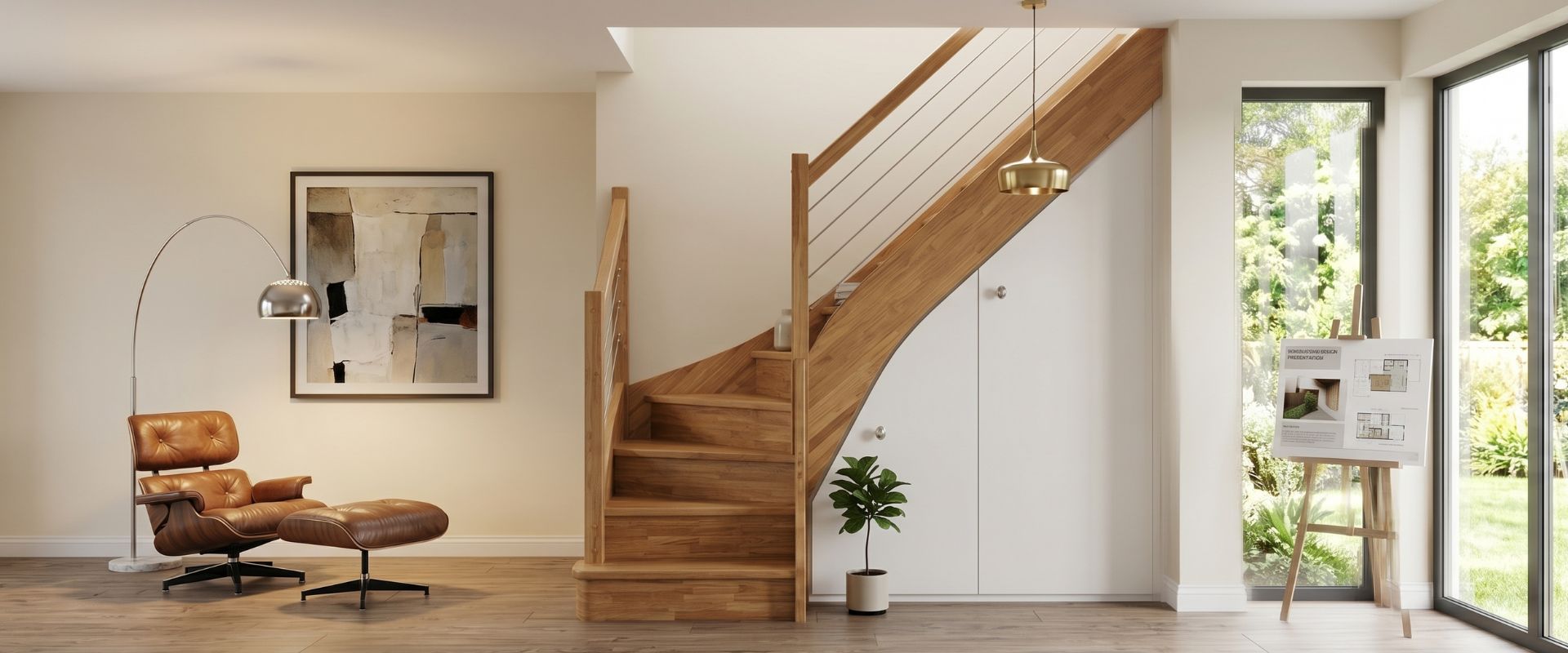
Finger Joint Board used for stair treads and staircase components
More Interior Products Can Start From the Same Panel
Furniture and staircases are not the only directions. The same construction can move into vanity components, pantry shelving, laundry surfaces, utility furniture, wall-mounted storage and other interior wood products.
This is useful for companies building collections around natural wood rather than individual product categories.
A panel introduced as a desk surface in one program may become a utility top in another. A furniture manufacturer may convert the same material into smaller structural components.
A retailer may position related surfaces differently depending on the room and consumer use case. The commercial strength of Finger Joint Board lies partly in that flexibility. It does not force the material into one finished product.
Rubberwood for a Lighter, Cleaner Look
Rubberwood Finger Joint Board, also commonly referred to as Hevea Finger Joint Board, generally offers a lighter and more balanced natural appearance.
That makes it useful for furniture and interior products where consumers want visible wood without very strong tonal contrast.
Common applications include bedroom furniture, desks, cabinets, shelving, table tops and stair components.
The lighter base also provides flexibility in finishing.
A natural or lightly oiled surface can retain a brighter look, while staining can move the same material toward warmer or deeper tones.
For manufacturers building larger collections, this flexibility can help one species work across several design directions.
Acacia When Natural Character Should Stand Out
Acacia Finger Joint Board moves in a different visual direction. Its natural variation is usually more pronounced, giving finished surfaces stronger grain movement and a broader range of warm tones.
This can be particularly effective in table tops, desks, shelving, furniture and other products where visible wood character is part of the design.
Acacia does not need to look perfectly uniform to be attractive. The challenge is controlling the range of variation so that several products still look as though they belong to the same collection.
For retailers and furniture brands, this becomes especially important when consumers first see the product online. Natural variation should feel authentic rather than unpredictable.
Other Species Open More Design Directions
Finger-jointed panels can also be developed using other suitable species depending on the product program. Melia, Sapele, Eucalyptus and other selected woods can provide different grain structures, colors and finishing directions.
For a manufacturer or product developer, the objective should not be to use as many species as possible. It should be to choose a species that creates a meaningful difference in the finished product.
Quality Should Follow What the Board Will Become
There is no useful universal definition of a “high-quality Finger Joint Board” without knowing what the panel is intended to become.
A clear-finished table requires strong visual control.
A painted cabinet needs excellent surface preparation.
A long stair component places more emphasis on dimensional stability.
A desk top needs flatness and a smooth tactile surface.
The application determines which quality factors deserve the most attention.
A Clear Finish Exposes Every Surface Detail
Natural oils, clear coatings and light stains allow the wood itself to remain visible.
That means joints, sanding, repairs, grain and color are all part of the final product.
A defect that might disappear under opaque paint can remain obvious under a clear finish.
Surface preparation therefore becomes part of product design, not merely factory finishing.
Moisture Control Supports Stability After Processing
Wood continues to respond to environmental humidity after production.
Moisture variation can influence machining, assembly and dimensional behavior, especially when the board moves between different climates.
The correct target depends on species, final application and destination conditions, but consistency across production is just as important as the stated number.
A stable input helps manufacturers create a more predictable finished product.
Dimensional Consistency Protects Yield
Thickness and flatness directly influence what happens when boards enter CNC machines, saws, moulders and sanding equipment.
Small variations can mean additional calibration or processing.
Across larger production volumes, those adjustments influence usable yield and manufacturing efficiency.
For distributors and retailers selling panels directly, dimensions also need to remain aligned with what is published to customers.
Joint Quality Has to Work and Look Right
The finger joint is both a construction feature and, in many finished products, part of the visible surface.
The USDA Forest Products Laboratory has long emphasized that consistent finger-jointed products require quality control across the operation, including visual inspection, measurement of process variables and testing of selected samples rather than judging quality only from the best finished pieces.
That principle remains relevant for nonstructural product programs as well: repeatability comes from controlling the process behind the board.
When the Wood Stays Visible, Appearance Becomes Part of the Product
One reason manufacturers choose Solid Wood Finger Joint Board is that the final product can still look and feel like natural wood.
But visible wood creates its own expectations.
Consumers notice grain. They notice differences in tone. They notice knots and repairs. They notice the finger-joint pattern. They notice how multiple pieces look when placed beside one another.
The objective is not to eliminate natural variation. Doing so would remove part of the character people expect from solid wood. The objective is to manage that variation within a commercial range.
A dining set should feel connected. A staircase should look coordinated across multiple treads. A bed and bedside cabinet from the same collection should not appear to come from completely different material families. This is why visual grading becomes especially important once Finger Joint Board moves from industrial input to visible consumer product.
One Material Platform Can Build an Entire Collection
This is where the panel becomes strategically useful.
Imagine one material platform moving through a collection: Dining table → bench → shelving → desk → cabinet → bed
The products have different functions, but the species, wood character and finish can connect them.
- For a manufacturer, this can simplify material sourcing and product development.
- For OEM/ODM programs, it creates room to develop multiple items around one approved material direction.
- For distributors, the same panel category can serve several downstream manufacturing segments.
- For retailers, related finished products can share a recognizable natural wood identity.
The point is not to make every product from exactly the same board specification. It is to build related applications around a material system that is already understood.
Good Packaging Protects the Product Before Production Even Starts
When Finger Joint Board is shipped as an intermediate material, it may still need cutting, machining or finishing after arrival.That does not make surface protection less important.
A scratched visible face can reduce yield. A damaged edge may force additional trimming. Moisture exposure can affect later processing. Poorly stabilized pallets can create handling problems in warehouses and factories. Packaging therefore needs to protect what the board is expected to become. Visible-grade panels require surface protection. Long boards need stable support. Different species, grades or dimensions need clear identification so warehouses and production teams can manage stock efficiently.
For retail-ready programs, packaging may also need to protect individual units through a longer distribution journey. The packaging requirement changes with the business model, just like the board itself.
Certified Material Can Matter to the Finished Product Program
Some product programs also require certified sourcing or specific traceability.
FSC Chain of Custody certification is designed to track eligible FSC-certified forest-based materials through manufacturing and distribution, allowing qualifying finished products to carry appropriate FSC claims when the chain-of-custody requirements are met.
For a furniture manufacturer, importer or brand, this means certification is not simply a logo attached to the raw panel.
The material and documentation need to remain traceable through the relevant stages of the supply chain.
Where certified material is part of the product proposition, it is better to define those requirements when the program begins rather than after production has already started.
The Real Value Is What the Panel Can Become
The strongest way to understand Finger Joint Board is not as a finished product, but as a starting point.
- It can become a dining table where the grain is the visual focus.
- It can become a bed and matching bedroom collection.
- It can move into cabinets and shelving.
- It can form a desk or workbench.
Longer formats can move into stair components.
Different species allow each of those applications to take on a different visual character, from lighter Rubberwood or Hevea to more expressive Acacia and other selected woods.
Quality then follows the application. Appearance matters where consumers see the surface. Moisture and dimensions matter where manufacturers need predictable processing. Joint quality supports repeatability. Packaging protects the usable material before it becomes the finished product.
SSR develops Finger Joint Board programs in wood species including Rubberwood/Hevea, Acacia, Melia, Sapele, Pine and Eucalyptus for furniture, cabinetry, wood surfaces, stair components and related solid wood applications. The opportunity is not simply to source another panel. It is to choose the right material platform for the product collection that comes next.
Developing furniture, cabinets, stair components or other solid wood products? Discuss your Finger Joint Board application with SSR Corporation.
Frequently Asked Questions
What products can be made from Finger Joint Board?
Finger Joint Board can be processed into dining tables, desks, beds, cabinets, shelving, workbench tops, staircase components and many other furniture and interior wood products.
Is Finger Joint Board suitable for furniture manufacturing?
Yes. Its solid wood construction allows it to be cut, machined, sanded and finished for a wide range of furniture components and visible surfaces.
Which wood species are commonly used for Finger Joint Board?
Common options include Rubberwood/Hevea, Acacia and Pine, while other suitable species can be selected depending on the desired appearance, finish and application.
What is Rubberwood Finger Joint Board commonly used for?
Rubberwood or Hevea works well for furniture, bedroom collections, cabinets, desks, shelving and stair applications where a lighter and relatively balanced wood appearance is preferred.
What products suit Acacia Finger Joint Board?
Acacia works particularly well for table tops, desks, shelving and furniture products where stronger natural grain and tonal variation are intended to remain visible.
Can Finger Joint Board be used for staircases?
Yes. Depending on the construction and specification, Finger Joint Board can be developed for stair treads, landings, risers and other staircase components.
Can Finger Joint Board be painted or stained?
Yes. Finishing can include natural, stained, painted or other coating directions. Surface preparation and grade should be selected according to the intended finish.
What quality factors matter most?
The answer depends on the application, but surface quality, moisture control, dimensional consistency, joint quality and visual grading are among the main factors affecting downstream manufacturing and the finished product.