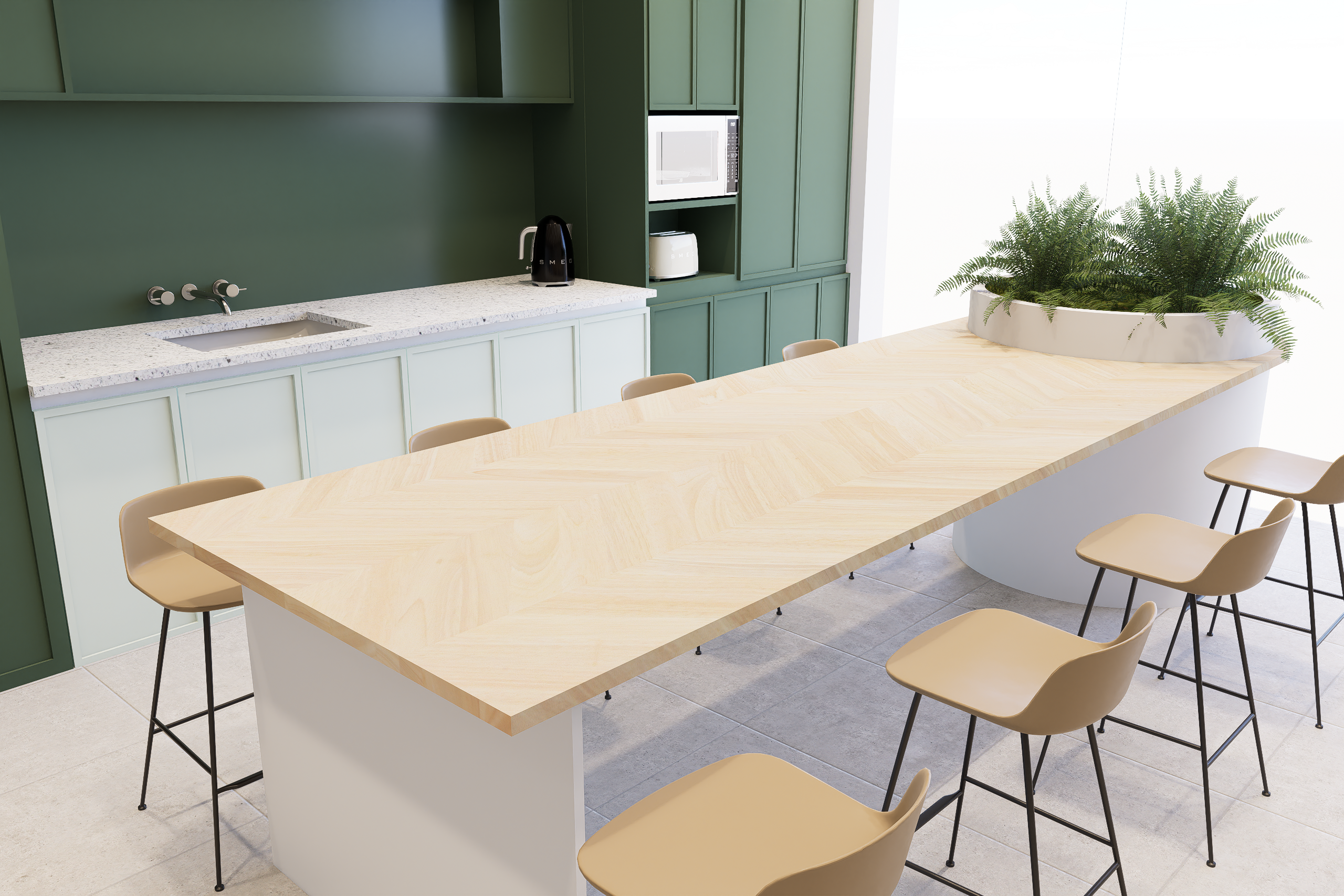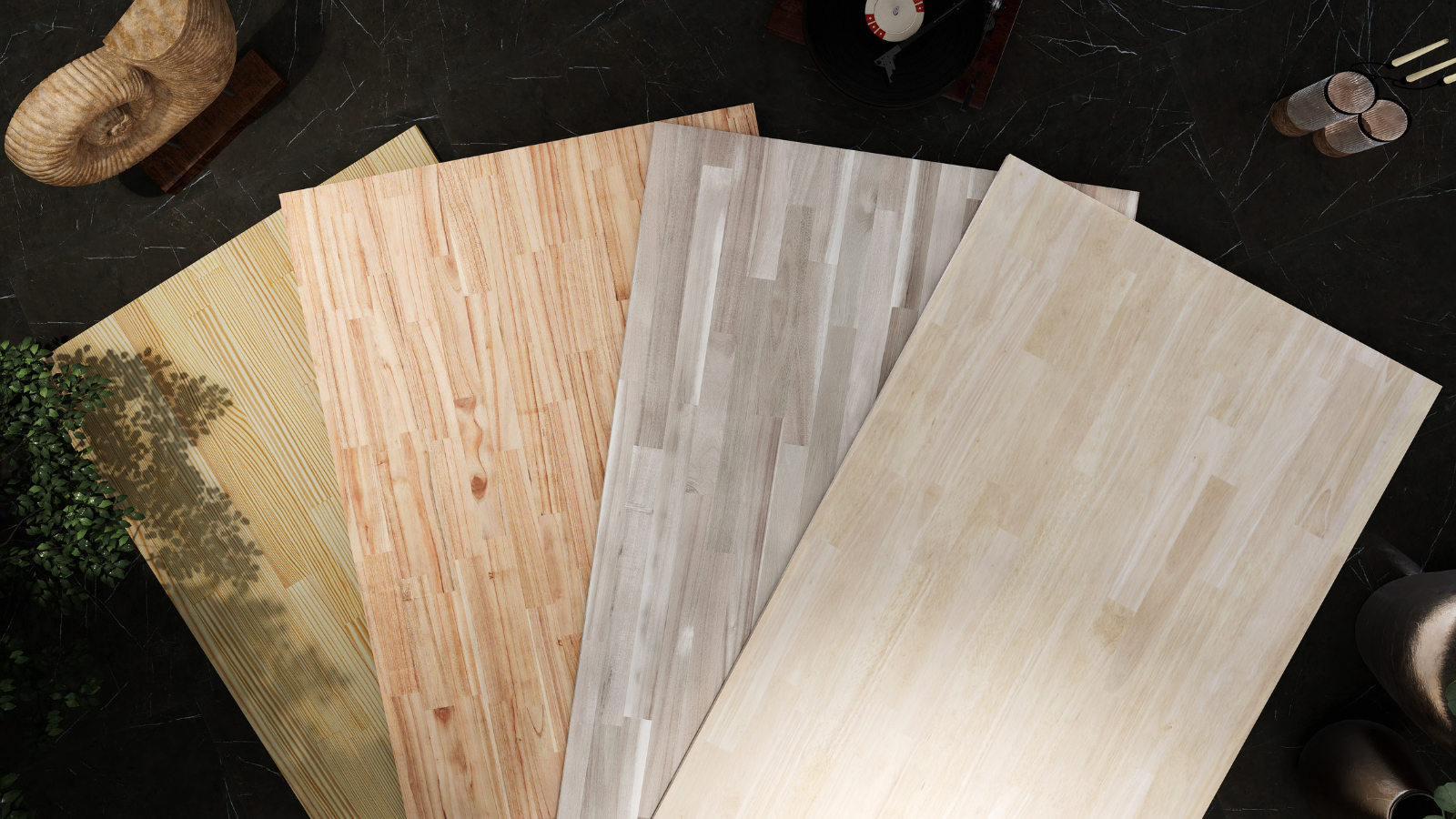
A kitchen countertop is more than a work surface. It is where meals are prepared, groceries are unpacked, conversations happen and family members often gather throughout the day.
That everyday connection is one reason a wood butcher block countertop can feel different from many other elements in the kitchen. Natural grain, visible wood variation and a warmer surface appearance allow the countertop to feel almost like a piece of furniture built into the room.
Wood is also becoming increasingly visible in contemporary U.S. kitchen design. In Houzz’s 2026 U.S. Kitchen Trends research, butcher block or wood slabs represented 44% of contrasting island countertop selections, up 13 percentage points from the previous year.
That does not mean every kitchen needs the same butcher block.
Species, grain, color, size, finish and how the countertop will actually be used all influence which wood butcher block countertop makes sense for the home.
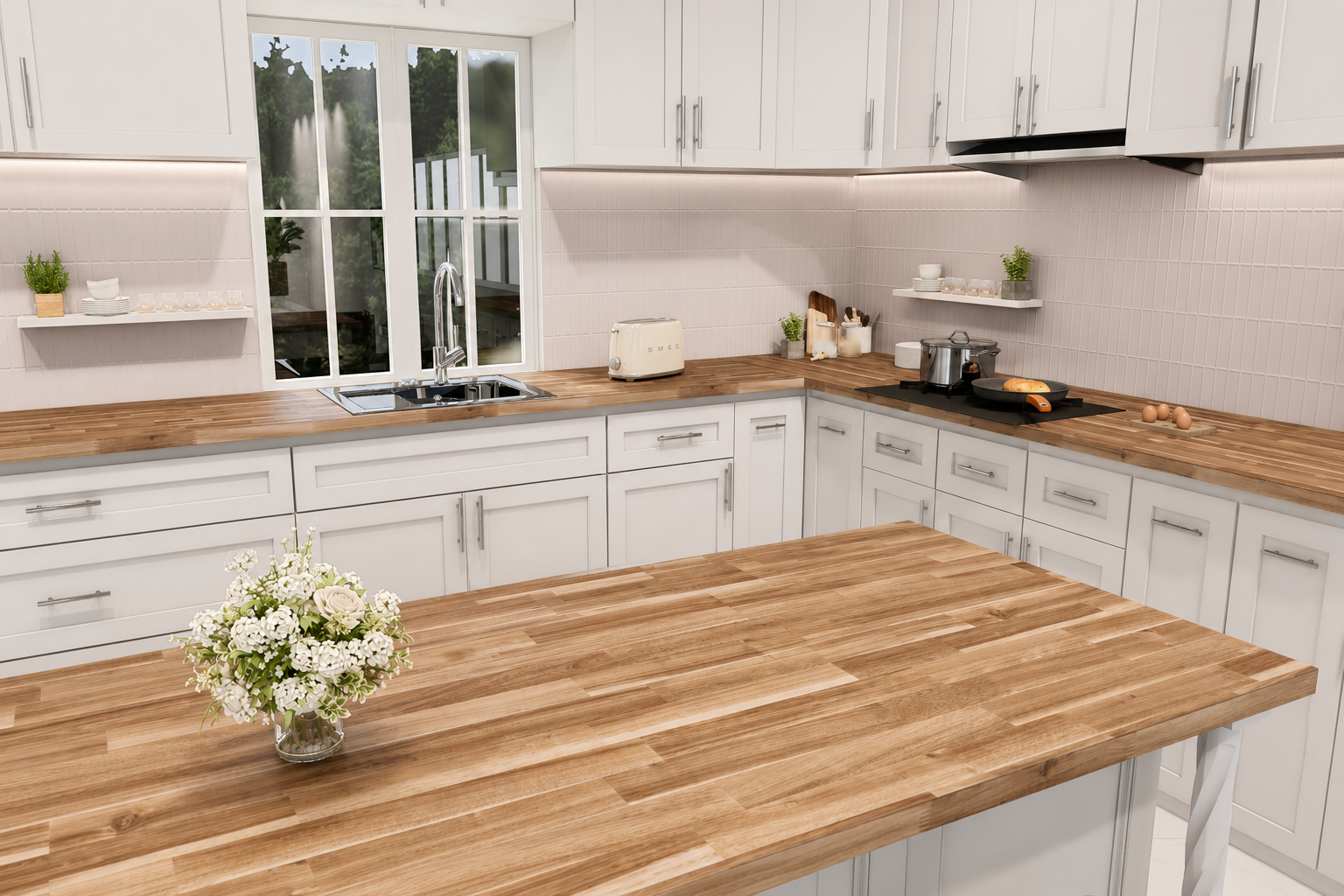
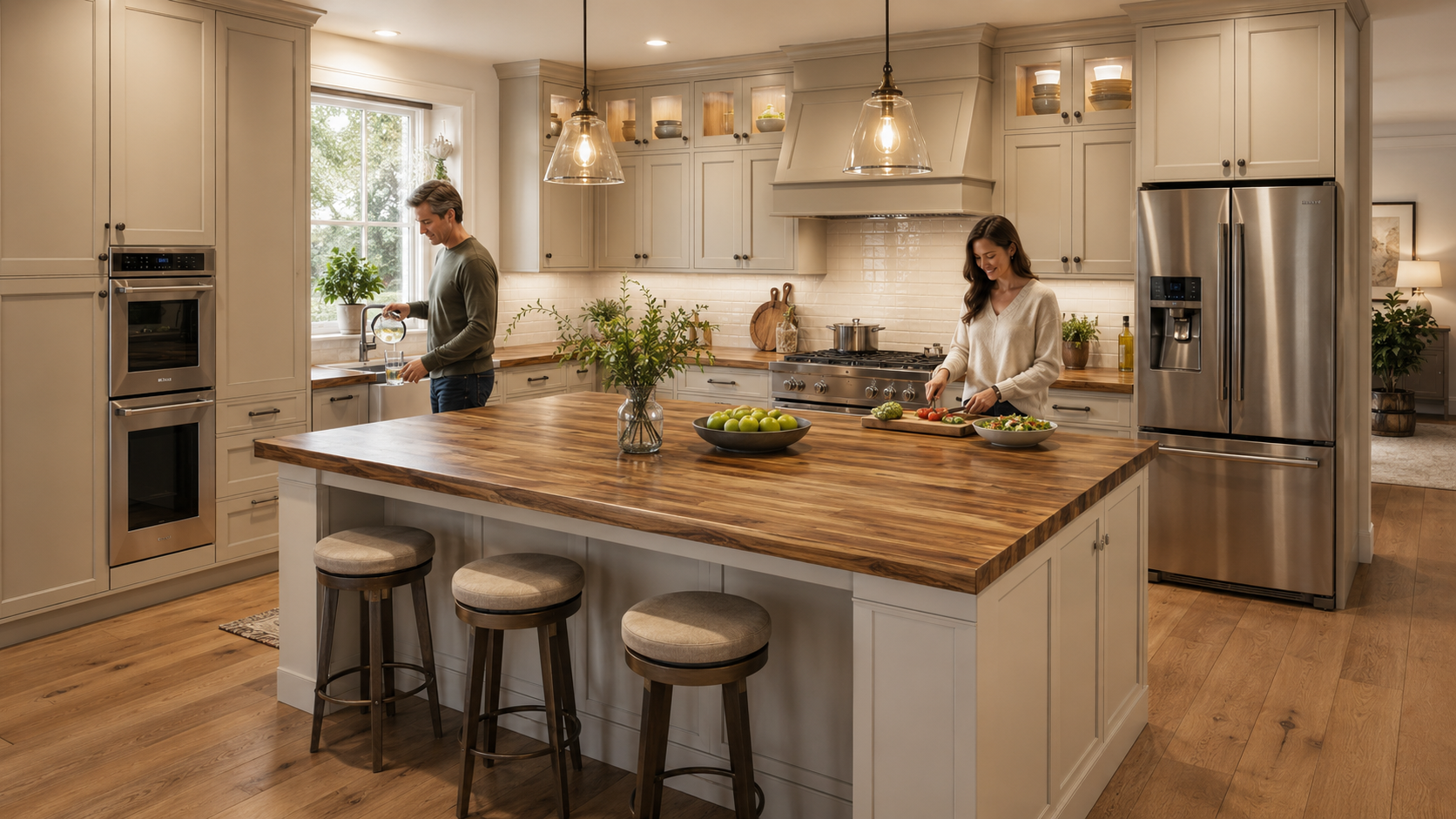
A wood butcher block countertop brings natural grain and warmth into one of the most frequently used areas of the home.
Why Wood Butcher Block Countertops Feel at Home in Modern Kitchens
Modern American kitchens are becoming more connected to the rest of the home.
NKBA’s 2026 Kitchen Trends Report describes kitchens as increasingly personalized and multifunctional spaces designed around gathering, storage and everyday lifestyle. Organic and natural design is also expected to remain important, with 58% of surveyed industry professionals identifying it as a popular direction over the next three years.
A wood butcher block countertop fits naturally into that environment because wood can visually soften a large kitchen.
It introduces natural variation without requiring decorative detailing. Even in a kitchen with simple cabinetry and minimal hardware, the grain of the countertop adds enough movement to keep the room from feeling flat.
Wood also works across several interior styles.
A lighter countertop can support Scandinavian-inspired or contemporary kitchens. Medium wood tones work easily within transitional interiors, while more expressive Acacia grain can become a stronger visual feature on an island.
The result does not need to look rustic.
Today’s butcher block can feel clean, architectural and contemporary when the species, finish and surrounding materials are selected carefully.
The Kitchen Island Is Becoming a Natural Place for Butcher Block
The island has become one of the most social surfaces in the American kitchen.
It may serve as a preparation area in the morning, a place for children to eat breakfast, additional workspace during the afternoon and a gathering point when friends come over.
That makes material choice particularly noticeable.
Houzz’s 2026 research shows that butcher block and wood slabs are now the leading material among homeowners selecting a contrasting surface for their kitchen islands.
A butcher block island works well in this role because wood changes the visual character of the center of the room.
Instead of treating every countertop surface exactly the same, the island can become warmer and more furniture-like. The natural grain also creates a strong focal point without relying on dramatic colors or decorative details.
Larger island tops give the wood more space to be seen.
Long grain movement, individual stave colors and natural variation become part of the room rather than a small material sample.
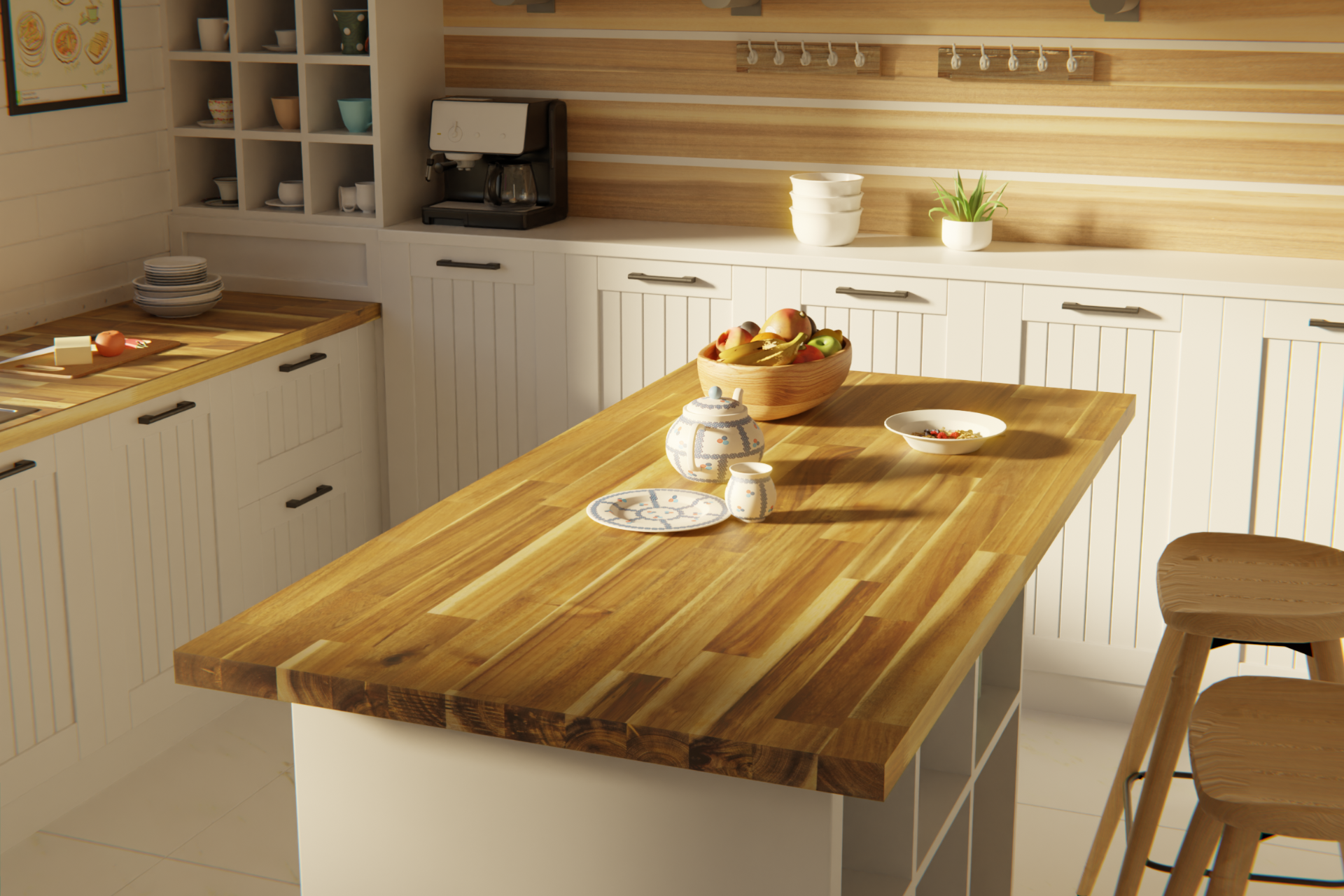
Kitchen islands give natural wood enough visual space for the grain, tone and character of the butcher block to become part of the overall design.
Choosing the Wood Species Changes the Entire Look
Not every butcher block has the same visual character.
The wood species affects color, grain variation and how strongly the countertop stands out within the room.
Acacia
An Acacia butcher block countertop typically brings stronger natural variation into the kitchen.
Its mix of warm brown, honey and deeper tones can produce noticeable contrast between individual staves. That makes Acacia particularly suitable when the countertop is intended to become one of the main visual elements in the space.
Acacia can work especially well on larger islands because the wider surface allows its grain and color variation to read clearly from across the room.
Rubberwood / Hevea
Rubberwood provides a lighter and generally more restrained appearance.
The softer color direction makes it easier to combine with a wide range of cabinet finishes, which is one reason it works well for volume countertop programs and kitchens where the surface is intended to support rather than dominate the design.
Teak, Senna and Saman
These species allow the countertop to move toward warmer, richer or more decorative appearances.
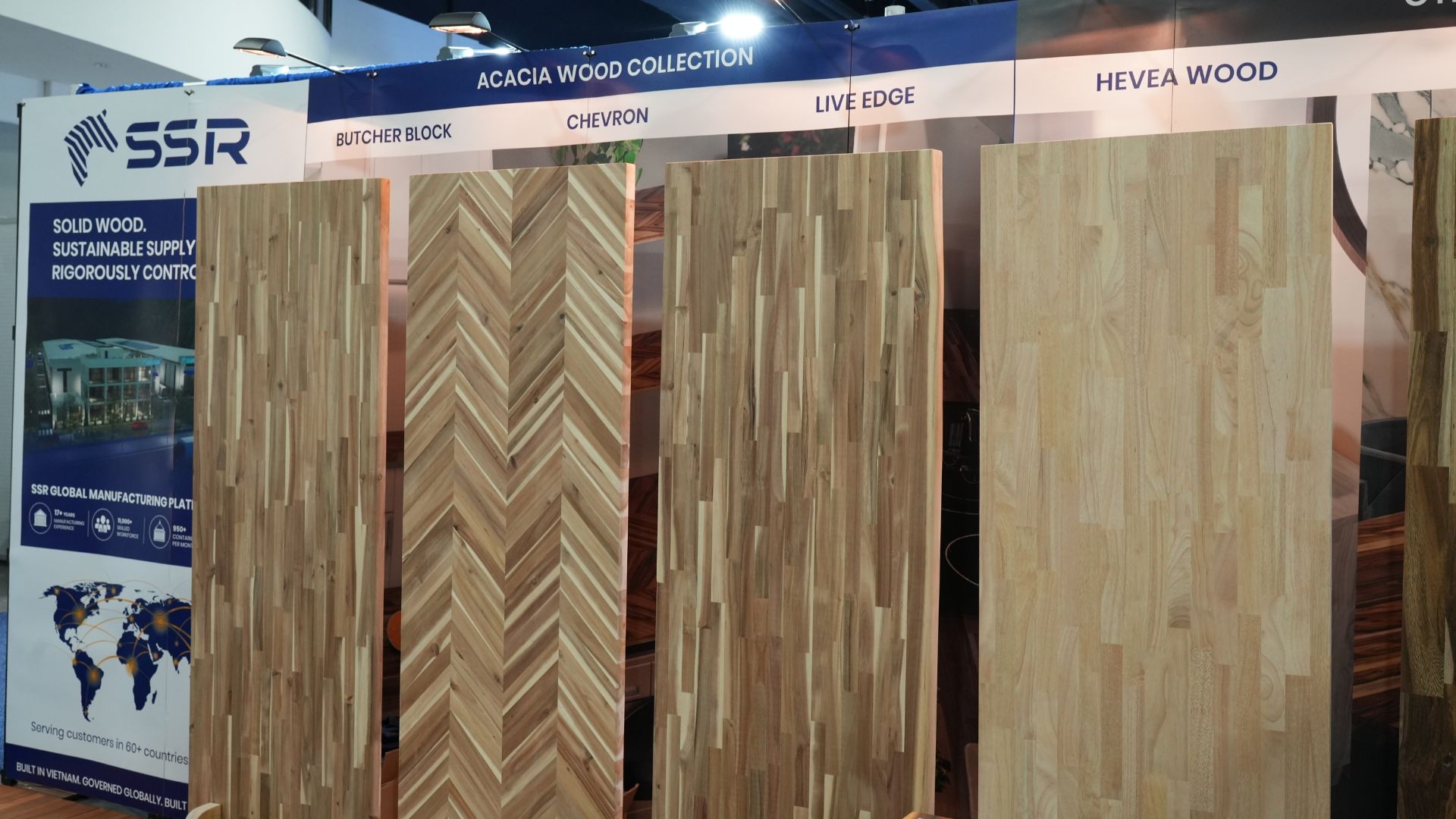
SSR’s current butcher block program includes Rubberwood, Acacia, Teak, Senna, Saman with additional material options available according to the product program.
Wood species influences the color, grain and visual character of a butcher block countertop before any other design decision is made.
Natural Variation Is Part of the Surface
Wood does not behave visually like a printed material.
Two staves cut from the same species can have different grain direction, tone and natural markings. Across a full wood butcher block countertop, those individual pieces combine to create the character of the finished surface.
That variation should be considered during product selection.
Some homeowners prefer a relatively uniform appearance where the grain remains subtle. Others want visible contrast and movement, particularly when the countertop is being used as a statement island.
Acacia often works well for the second direction.
Rubberwood or Birch can support a calmer visual result, while Oak provides recognizable natural grain without necessarily creating the same level of color contrast.
Consumers should therefore look at a full-size countertop or a large representative sample whenever possible.
A small sample may show the color of the wood, but it cannot fully communicate how the surface will look across six, eight or ten feet.
Size Should Follow the Kitchen Layout
A good butcher block selection is not only about species.
The dimensions need to correspond to the way the countertop will actually be installed.
Common North American countertop formats in SSR’s current range include approximately:
- 4 ft: 50 × 25 × 1.5 in
- 6 ft: 72 × 25 × 1.5 in
- 8 ft: 98 × 25 × 1.5 in
- 10 ft: 120 × 25 × 1.5 in
SSR also supports wider island applications in the 36–42 in range, allowing the surface to work beyond standard countertop-depth installations.
These different formats address different kitchen layouts.
A compact section can serve a smaller countertop run, utility area or work surface. Six- and eight-foot lengths fit many residential kitchen applications, while longer countertops can reduce unnecessary joints across larger installations.
Island width changes the visual effect even more.
A wider wood butcher block countertop allows more of the stave pattern to remain visible around sinks, seating or other functional areas.
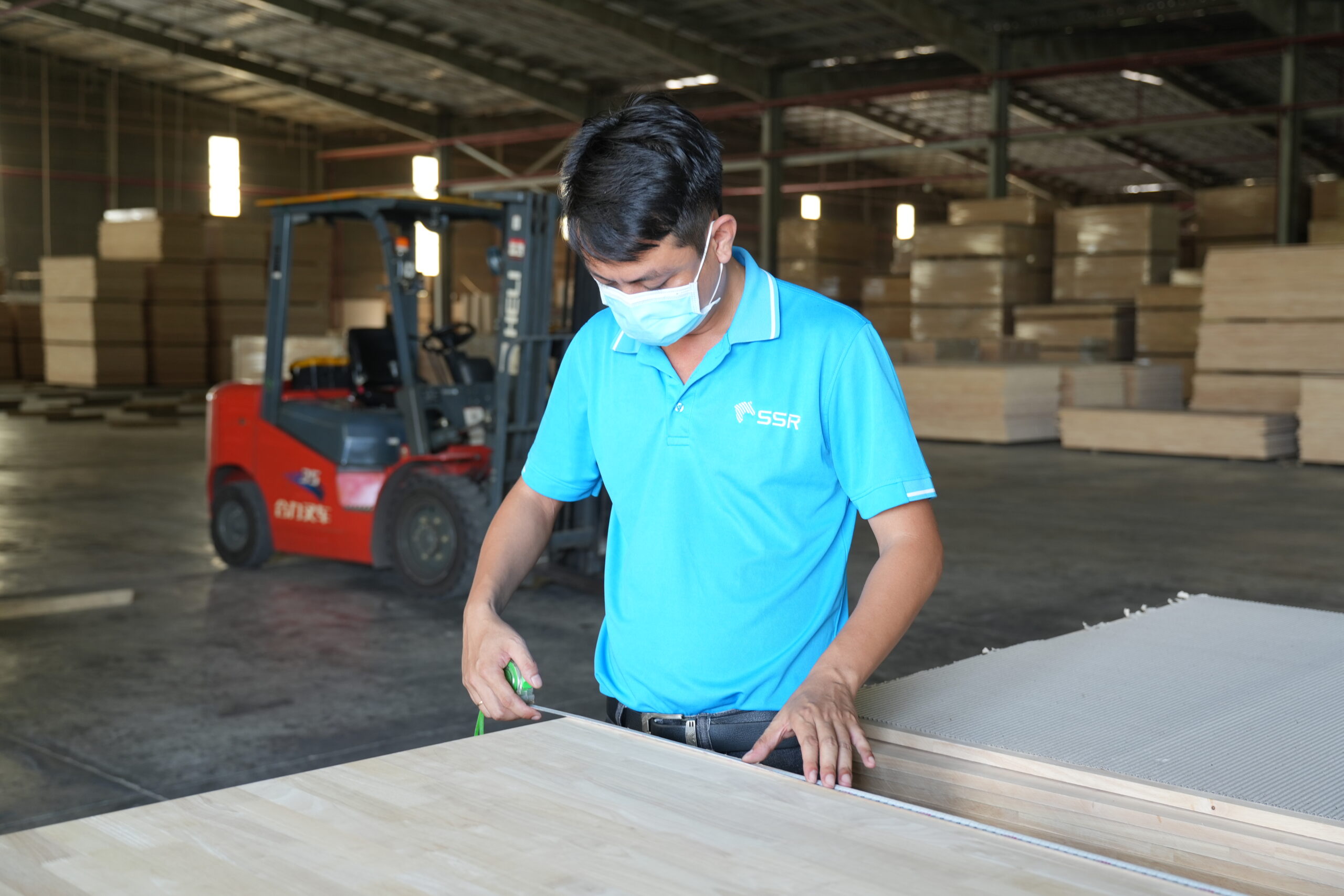
Length, width and thickness should be selected around the kitchen layout rather than treated as secondary product specifications.
Thickness Changes How Substantial the Countertop Feels
Thickness influences both appearance and proportion.
A common 1.5-inch butcher block countertop has enough visual weight to work comfortably with standard American cabinetry without feeling excessively heavy.
Thicker surfaces can create a more substantial furniture-like appearance, particularly on large islands or freestanding worktops.
Slimmer options may suit other interior applications where a lighter visual profile is preferred.
The important point is that countertop thickness should be considered together with cabinet scale, overhang and overall room proportions.
A very large island with an extremely thin-looking surface can feel visually unbalanced, while an unnecessarily heavy countertop may overpower a smaller kitchen.
Finish Determines How the Wood Is Experienced Every Day
Wood species establishes the character of the material.
Finish determines how that material feels and performs once it becomes part of the kitchen.
An unfinished or sanded countertop gives fabricators and customers more freedom to apply their preferred finishing system after purchase.
Oil finishes tend to preserve a natural wood appearance and tactile feel, although they normally involve ongoing maintenance.
Sealed or coated surfaces can provide a different level of protection and a more finished retail-ready appearance.
The appropriate choice depends on where the countertop will be installed and how it will be used.
SSR supports butcher block programs across sanded, oiled, UV-finished and unfinished directions, allowing the countertop to be developed around different retail, fabrication and project requirements.
Finish should therefore be considered at the beginning of the project rather than after the countertop has already been selected.
The finishing system influences both the appearance of the wood and how the countertop is maintained after installation.
A Wood Countertop Needs a Realistic Maintenance Routine
Natural wood is an active material.
It responds to moisture, temperature and the environment around it, which means a wood butcher block countertop should be installed and maintained with the characteristics of wood in mind.
Standing water should not remain on the surface for extended periods.
Areas around sinks, joints and cutouts deserve particular attention because repeated moisture exposure can become more significant there than on an open section of countertop.
The correct cleaning and maintenance routine also depends on the finish.
An oiled surface may require periodic re-oiling, while a sealed or UV-finished countertop should be maintained according to the coating system used.
None of this means wood is unsuitable for a working kitchen.
It means consumers should understand the relationship between natural material and maintenance before choosing the surface.
That expectation is especially important because butcher block is often selected precisely for the natural appearance that synthetic uniformity cannot provide.
Edge Details Should Support the Overall Kitchen Style
The edge is particularly visible on a wood countertop.
Unlike surfaces where the edge is mainly a finishing detail, butcher block shows the construction and wood character through its thickness.
A square edge creates a simple contemporary profile.
A small roundover can soften the surface visually and physically, while bevels and other custom edge treatments can support different kitchen styles.
SSR’s butcher block program can support square, roundover, bevel and custom edge directions depending on product requirements.
For a modern American kitchen, a restrained edge profile usually allows the grain to remain the main visual feature.
Think About the Countertop as Part of Daily Life
A showroom photograph can make almost any surface look attractive.
The more useful question is how the countertop will feel after it becomes part of the family’s routine.
Will people regularly sit at the island?
Will the surface be used heavily for meal preparation?
Is natural variation desirable or would a quieter grain work better?
How comfortable is the household with maintaining real wood?
Does the kitchen need a compact countertop or a wider island surface?
These questions lead to a better wood butcher block countertop choice than selecting purely by color.
They also explain why the category can support different wood species and finishes rather than one universal solution.
Wood Butcher Block Countertops Are Finding a Stronger Place in U.S. Kitchens
Current kitchen trends are moving in a direction that works naturally with butcher block.
NKBA’s 2026 research highlights organic and natural aesthetics, whole-home continuity and kitchens designed as social, multifunctional spaces. Houzz’s latest U.S. renovation data adds another important signal: butcher block and wood slabs now account for 44% of contrasting island countertop selections in its study.
This does not make butcher block a temporary decorative trend.
Its value comes from something more fundamental: natural wood brings warmth, grain and physical character into a surface people interact with every day.
For retailers, distributors and kitchen companies, that creates room to develop countertop assortments around different consumer expectations.
Acacia can deliver stronger visual impact. Rubberwood can support accessible volume programs. Oak and Birch provide additional natural directions, while different finishes, dimensions and edge treatments allow the same material category to serve different kitchen applications.
Choosing a Wood Butcher Block Countertop That Fits Your Home
The right countertop starts with the kitchen rather than the product specification.
Consider how large the surface needs to be, how often it will be used, where water will be present and how much natural grain you want to see. Then choose the wood species, finish, thickness and edge direction around those requirements.
A wood butcher block countertop can become a quiet natural surface or the visual center of a kitchen island.
What matters is that the material fits the way the space is designed to be used.
SSR Corporation develops butcher block countertops in Acacia, Rubberwood, Oak, Birch, Teak, Senna, Saman and additional wood options, with common North American countertop sizes, island applications and multiple finish directions available for B2B programs.
Explore with SSR Corporation how a Wood Butcher Block Countertop program can be developed around the way U.S. consumers cook, gather and live at home.