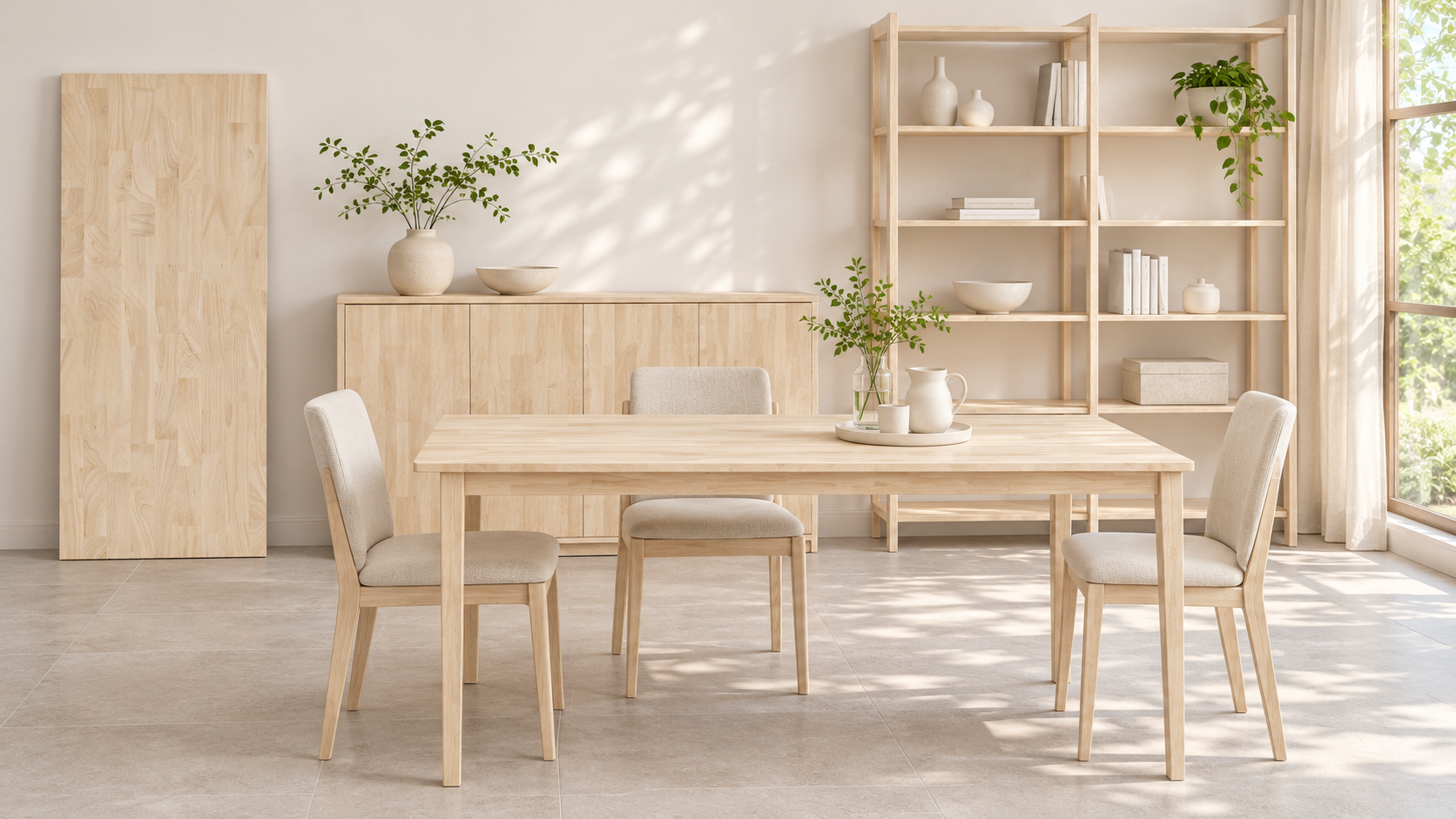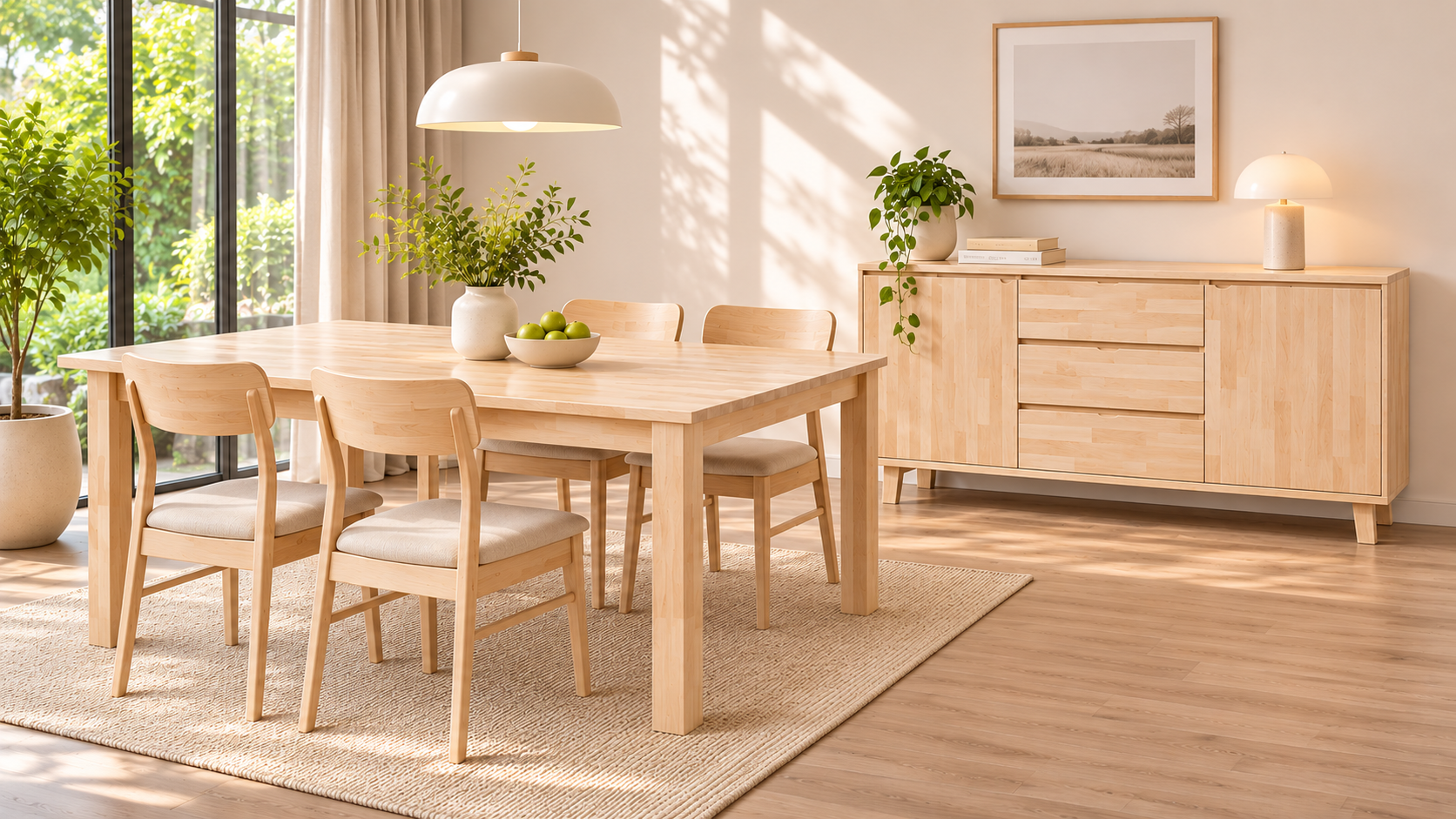
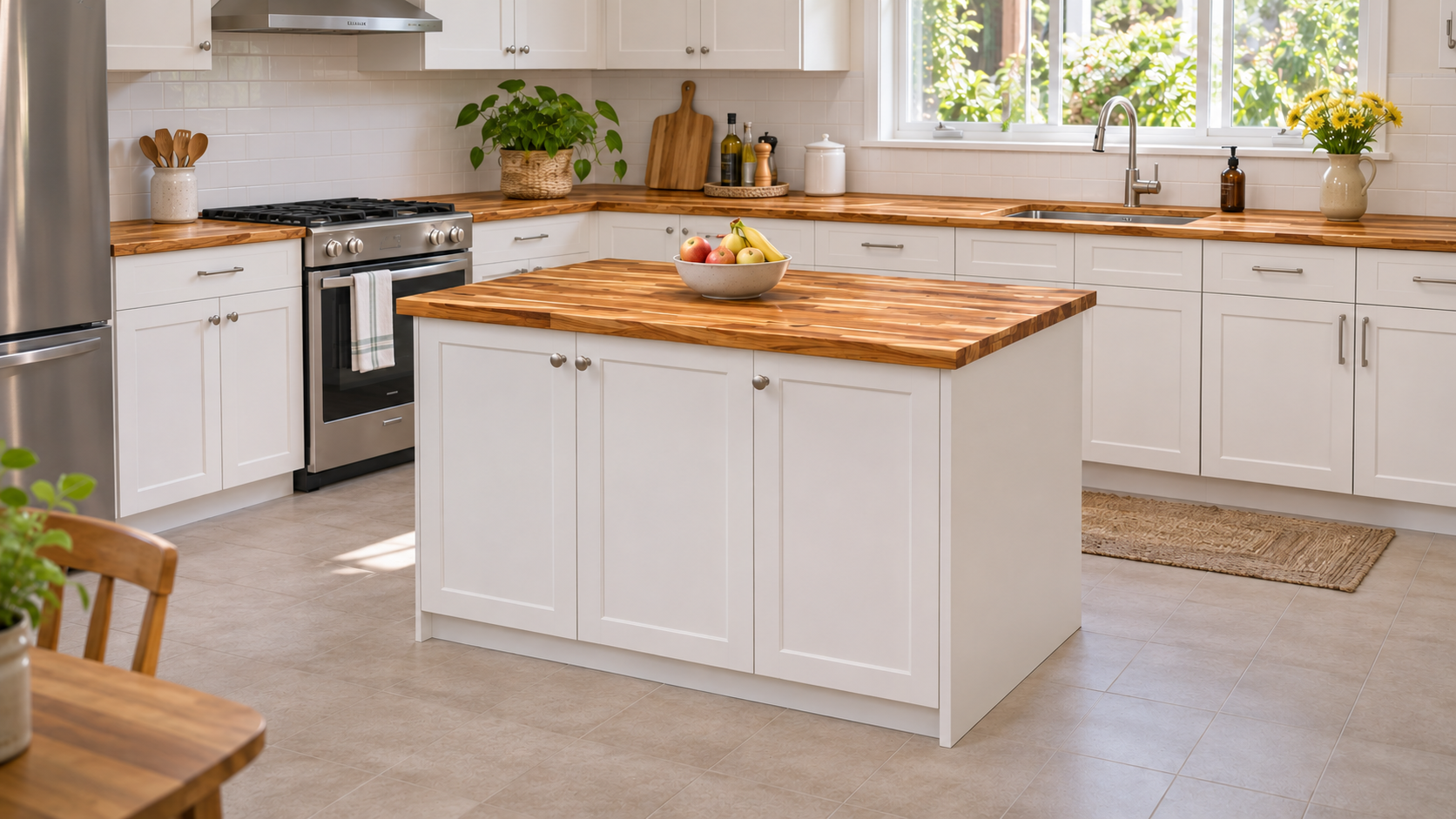
A Teak Butcher Block Countertop brings something different to the kitchen from a perfectly uniform stone or engineered surface. Its natural grain, warmer color and tactile character can make a large countertop feel more like part of the furniture collection, while still providing the broad functional surface expected from a kitchen worktop.
That relationship becomes particularly interesting around the kitchen island. The island is no longer simply extra counter space; it can support food preparation, casual meals, conversation, homework, drinks with friends and many of the activities that happen between the kitchen and the rest of the home. Because it is visible from multiple directions, the material used on top often becomes one of the strongest visual elements in the entire room.
Teak fits naturally into this role. Compared with lighter wood directions, it brings a richer and more premium visual character without requiring the entire kitchen to use wood. A Teak Island Top can stand on its own as the warmer center of the space while stone, quartz or another material remains around the perimeter.
The Kitchen Island Is Becoming Its Own Design Zone
One of the clearest shifts in kitchen design is the move away from treating every countertop surface exactly the same. Homeowners increasingly use the island as an opportunity to introduce a different material, color or finish, allowing it to function as a focal point rather than simply an extension of the surrounding cabinetry.
Recent Houzz kitchen remodeling research supports this direction. Among homeowners selecting countertops, 21% chose a different material for the island than for the main countertop, and butcher block or wood slabs represented 44% of contrasting island surfaces among that group. This suggests that natural wood is finding a particularly relevant role when consumers want the center of the kitchen to feel warmer and more distinctive.
For a Teak Butcher Block Island, this mixed-material approach creates a strong application. Light quartz can remain around cooking and washing zones while Teak introduces natural warmth at the center of the room, or a neutral kitchen can use the island top to create contrast without introducing another painted color. The island becomes visually different for a reason, while still belonging to the overall kitchen.
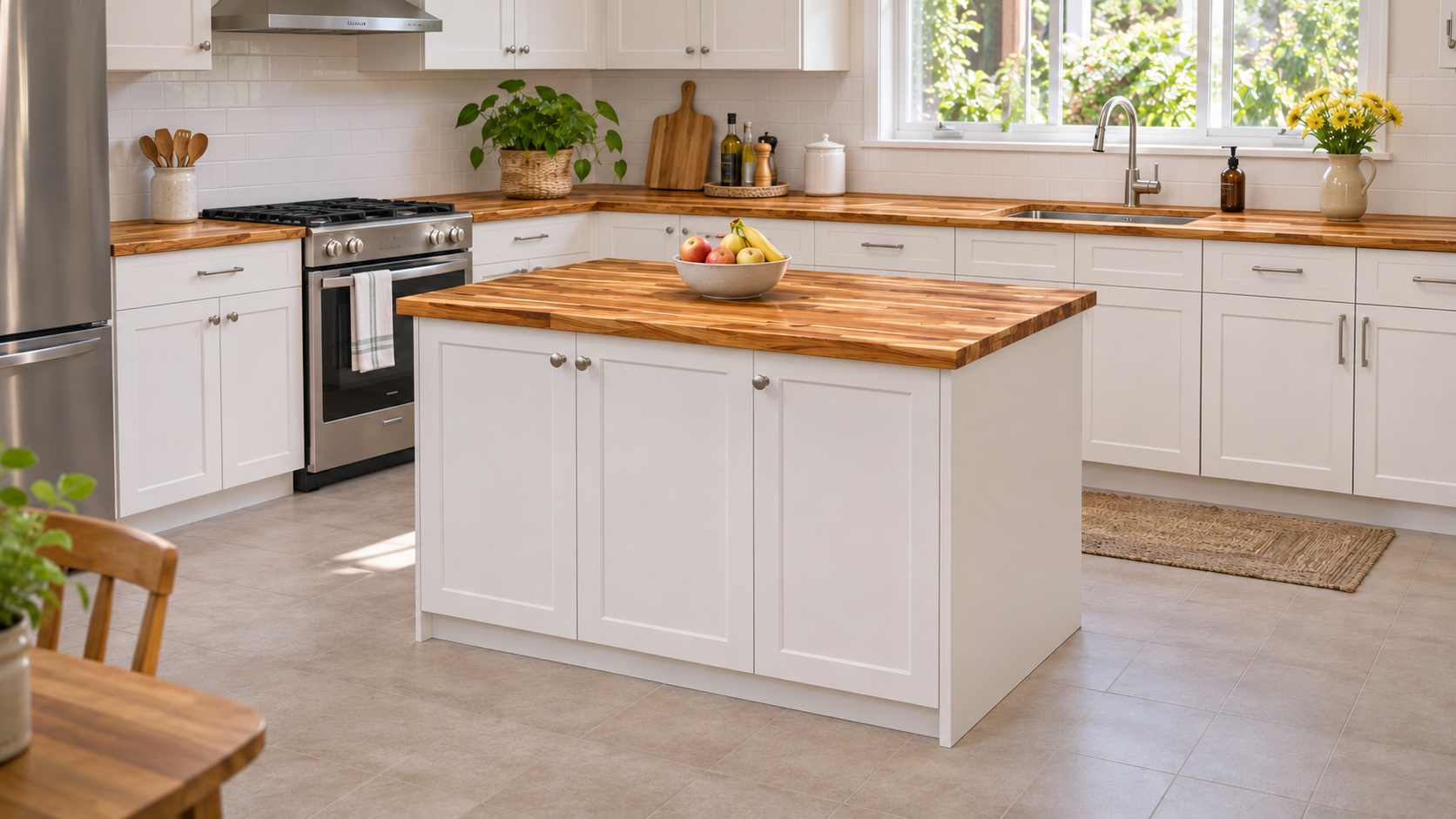
eak Butcher Block Countertop used as a warm natural kitchen island top
Natural Wood Softens a Kitchen Built Around Hard Surfaces
Contemporary kitchens often combine painted cabinetry, stainless steel appliances, tile, glass and large stone surfaces. These materials create a clean and controlled environment, but when every surface is smooth and uniform, the room can also begin to feel visually hard. Natural wood introduces grain, tonal movement and texture that make the same space feel warmer and more lived in.
This broader preference for natural materials is also visible in kitchen design research. NKBA’s recent Kitchen Trends research identifies organic and natural design among the directions expected to continue growing, while wood grain is gaining visibility across cabinetry and other interior elements. The important insight is not simply that people want “more wood,” but that they are looking for ways to balance clean contemporary interiors with materials that feel warmer and more tactile.
A Teak Wood Countertop can answer that need without pushing the kitchen toward a rustic style. When paired with simple cabinetry, restrained hardware and a clean edge profile, the surface can feel contemporary while allowing the natural grain to remain visible. Teak adds character through the material itself rather than through additional decorative details.
Teak Gives the Island Enough Character to Stand Apart
The island occupies a unique position because it can be viewed from several sides and often sits directly between the kitchen, dining and living areas. It therefore needs to work as part of the cabinetry while also feeling visually strong enough to hold the center of an open room.
A Teak Island Top can create that distinction through material rather than color alone. The warmer natural tone separates the island from painted or stone surfaces, while visible grain gives the countertop enough movement to make a large horizontal plane feel less flat. This is particularly effective in neutral kitchens where white, cream, beige, grey or muted cabinetry provides a quieter backdrop.
Teak also gives designers flexibility in how strongly they want the island to stand out. A natural or lightly finished surface can retain a more organic appearance, while a deeper finish can create stronger contrast against light cabinetry. In both cases, the wood allows the island to feel intentionally different without looking disconnected from the rest of the home.
The Best Island Surface Has to Support More Than Cooking
A kitchen island often performs several functions within the same day. It may begin as a breakfast surface, become a preparation area before dinner and later turn into a place where family members or guests sit together. In open-plan homes, it may also serve as an informal workspace or a transition point between the kitchen and living area.
That multifunctional role means the countertop needs to be considered together with the dimensions and layout of the island. A wider solid wood island top may allow seating along one side, while a longer surface can separate food preparation from dining or social use. The countertop is therefore part of how the island functions, not simply a decorative layer added after the cabinetry has been designed.
Teak works especially well when the goal is to make these activities feel connected. The warmth of real wood can make a seating area feel closer to a dining table than a technical kitchen work surface, helping the island transition naturally between food preparation and everyday gathering.
Teak Works Naturally With Neutral and Mixed-Material Interiors
Neutral colors remain a strong foundation in kitchen design because they are easy to coordinate with changing furniture, lighting and accessories over time. White, off-white, cream and other restrained cabinet colors also create an ideal background for materials with stronger natural texture.
A Teak Butcher Block Countertop can introduce this contrast without making the kitchen feel overly busy. The warm wood tone creates separation from light cabinetry, while the natural grain prevents a large island from appearing too uniform. In kitchens with darker cabinets, Teak can provide a softer transition than another dark material and help maintain a warmer overall atmosphere.
The same principle works with mixed countertop materials. Stone or quartz can remain around the perimeter while Teak becomes the more tactile surface at the island, allowing the kitchen to combine different material advantages instead of forcing one countertop choice across every application.
Teak Has More Than Visual Appeal
Teak has developed a premium reputation not only because of its appearance, but also because of its material characteristics. The USDA Forest Products Laboratory describes Teak heartwood as having excellent dimensional stability and a very high degree of natural durability, characteristics that help explain its long-established use across furniture, flooring, decorative products and demanding wood applications.
These qualities provide a strong material foundation for a Teak Butcher Block Countertop, but they should not be interpreted as meaning that a kitchen surface requires no finishing or maintenance. Countertops are exposed to water, food, cleaning products, temperature changes and repeated daily contact, so the manufacturing and finishing system still needs to match the intended application.
Teak’s natural oil content also requires appropriate production control. Surface preparation, bonding and finishing need to be handled carefully so that the completed butcher block performs consistently and the finish develops as intended. A premium species creates the opportunity for a premium surface, but the final quality still depends on how the material is processed.
Finish Changes Both the Appearance and the Ownership Experience
Consumers do not all want the same relationship with a natural wood countertop. Some prefer an unfinished surface because they want greater control over the final color and protective treatment, while others prefer a factory-finished product that arrives closer to installation-ready condition.
An unfinished Teak Butcher Block offers flexibility for projects where the surface needs to coordinate with cabinetry, flooring or existing furniture. A pre-oiled or factory-finished direction provides greater visual predictability and can reduce the number of finishing decisions after purchase. Neither approach is universally better; they simply serve different expectations.
What matters most is clarity. The customer should understand what treatment has already been applied, whether additional finishing is required before use and how the countertop should be maintained afterward. Natural wood feels much easier to own when care instructions are part of the product story rather than something consumers discover only after installation.
Wider Island Tops Make Visual Selection More Important
A small wood sample can show the color of Teak, but it cannot fully communicate how the material will look across a large kitchen island. Once the surface becomes wider and longer, differences between individual wood pieces, grain direction and natural tonal variation become much more noticeable.
For a Teak Island Top, the goal should not be complete uniformity. Natural variation is part of the reason consumers choose real wood in the first place. The challenge is making sure that the variation feels intentional across the full surface rather than appearing random or poorly coordinated.
This makes material selection and grading particularly important for wider tops. The individual pieces need enough relationship in tone and character to allow the countertop to read as one finished product, while still preserving the natural identity of Teak. Larger visible surfaces therefore require stronger visual planning than smaller countertop components.
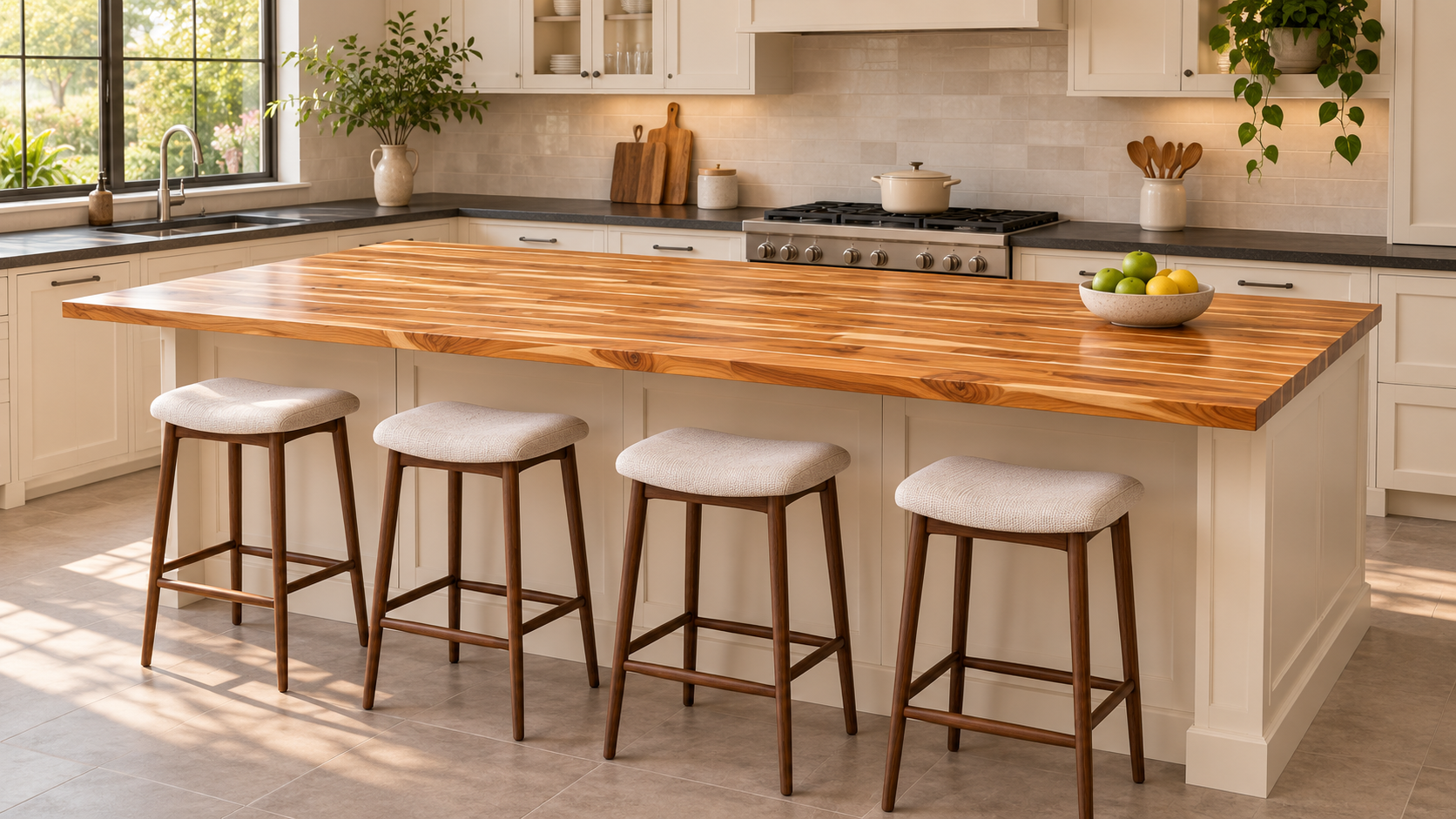
Wide Teak Island Top for a large kitchen island
Edge Profiles Affect Both Design and Everyday Comfort
The edge of a butcher block countertop plays a more important role on an island than it may first appear because this is one of the areas people interact with most closely throughout the day. Unlike a perimeter countertop, which is often viewed mainly from one side, an island exposes several edges directly to the room, where people sit, rest their hands, lean against the surface and move around it from different directions.
This makes the edge profile both a design detail and part of the everyday experience of using the island. A square edge creates a cleaner, more architectural appearance, while a subtle roundover can soften the surface and make it more comfortable in a family-oriented kitchen. A bevel offers another way to introduce definition without turning the countertop into an overly decorative element.
SSR’s Wood Surface program supports square, roundover, bevel and customized edge directions, allowing the profile to follow the intended kitchen design rather than being treated as an isolated manufacturing option.
A Wood Island Can Connect the Kitchen With the Rest of the Home
In an open layout, the kitchen is constantly seen together with dining and living furniture. The island therefore needs to make sense not only beside the cabinets, but also beside tables, shelving, seating and other materials elsewhere in the room.
This is one reason a Teak Butcher Block Island can feel particularly natural in open interiors. The wood gives the island a furniture-like character, creating a visual relationship with dining tables, sideboards or other natural wood elements beyond the kitchen. Instead of functioning as a separate technical zone, the kitchen becomes more closely integrated with the surrounding living space.
This connection does not require every wood surface to match exactly. Related warmth, grain and material character can be enough to make the spaces feel intentional while still allowing each piece of furniture to maintain its own identity.
Real Wood Should Look Premium Without Feeling Too Precious to Use
A kitchen island is meant to participate in everyday life. People place bags on it, prepare meals, serve drinks, sit beside it and use the surface in ways that are not always perfectly controlled. A premium countertop therefore needs to feel valuable without creating the impression that every mark will ruin it.
Natural wood offers a different ownership experience because the surface can change gradually over time. Small signs of use, subtle changes in tone and other normal characteristics can become part of the material’s character rather than automatically making the countertop look worn out.
Depending on the finish and condition, wood may also be maintained, lightly sanded or refinished instead of being immediately replaced when the surface eventually shows wear. For Teak, this long-term relationship with the material can become part of the product story, as long as it is communicated together with realistic maintenance expectations.
Online Photography Creates a Strong Expectation of Color and Grain
Natural wood presents a particular challenge in e-commerce because every piece contains variation while online photography shows the consumer one fixed version of the product. The image establishes an expectation around tone, grain balance and overall character before the customer ever sees the physical countertop.
Teak can naturally range from warmer golden tones to deeper brown areas, and that variation can be one of the qualities that makes the surface attractive. However, if the delivered top looks dramatically different from the product images, natural variation may be interpreted as inconsistency rather than authenticity.
Retailers and brands therefore need photography that represents the realistic visual range of the product rather than an unusually perfect sample that cannot be repeated. At the same time, production grading and material selection need to keep delivered countertops within an appearance range that consumers can recognize. Visual consistency is not about making natural wood identical; it is about ensuring that the product received still feels connected to the product that was advertised.
Consumers Notice Surface Quality Long Before They Notice Manufacturing Specifications
Most consumers will never know the sanding sequence used to produce a countertop, how each Teak piece was selected or exactly how the butcher block was pressed. They will, however, notice whether the surface feels smooth, whether the glue lines look clean, whether the edge is properly finished and whether the overall color balance feels intentional.
These details influence the perceived value of a Teak Butcher Block Countertop because the island is experienced both visually and physically. A premium species can still feel inexpensive when surface preparation is poor, while clean machining and consistent finishing allow the natural character of Teak to become the focus.
Manufacturing quality therefore needs to translate into an experience that the consumer can immediately understand. Moisture control, bonding, sanding and inspection may happen in the factory, but their real value appears later in the smoothness, stability and overall finish of the countertop installed in the home.
Moisture Control Supports the Surface After Installation
Moisture content is rarely part of the initial consumer conversation, yet it has a direct relationship with what happens after the countertop becomes part of the kitchen. Consumers simply expect the surface to remain reasonably stable and continue fitting correctly with the cabinetry around it.
Wood naturally responds to humidity, so appropriate drying and moisture management are important before lamination and finishing. If the material moves excessively after installation, technical production variables quickly become visible as dimensional problems or customer complaints.
For Teak butcher block programs, this means moisture control should be treated as part of the long-term product experience rather than merely a factory specification. SSR’s Teak countertop specifications target controlled moisture appropriate to interior wood-surface applications, supporting more predictable behavior after machining and installation.
Packaging Has to Protect the Parts Consumers Actually See
A large Teak countertop can pass through factory handling, container shipment, warehouse storage, distribution and final delivery before it reaches the kitchen. During that journey, the face, corners and edges remain especially vulnerable because they are also the parts that will remain visible after installation.
From the consumer’s perspective, the supply chain is invisible. They open the package and expect a new premium surface, so a scratched face, crushed corner or damaged edge can immediately reduce confidence in the product regardless of where that damage occurred.
Packaging therefore needs to protect more than the basic dimensions of the top. The visible surface, finished edges and corners require appropriate protection so that the Teak arrives in a condition that matches its premium positioning, particularly when the product uses a natural or transparent finish that cannot easily hide shipping damage.
Teak Should Have a Clear Position Within a Butcher Block Collection
A strong butcher block assortment does not need every species to tell the same story. Different woods can serve different design directions, price positions and consumer preferences, giving each material a clearer reason to exist within the category.
Rubberwood can support a lighter and more accessible natural surface direction, while Acacia can provide stronger variation and visual character. Birch offers another light and clean wood option, whereas Teak can occupy a warmer and more premium position where the species itself contributes significantly to the perceived value of the product.
This distinction is important because consumers rarely need another countertop simply because it uses a different wood name. They need to understand what the material changes about the finished kitchen. For Teak, that story is about richer natural warmth, visible grain, furniture-like character and the ability to make a kitchen island feel like a deliberate centerpiece rather than just another work surface.
A Teak Island Top Works Best When the Product Story Matches Real Life
The strongest Teak Butcher Block Countertop program is not built around the longest possible list of specifications. It begins with how people actually use their kitchens and why they choose natural wood in the first place.
The island is becoming more social and multifunctional, while mixed-material kitchens give wood more room to become a focal point. Neutral interiors create demand for warmer natural texture, and open layouts make the island part of the wider furniture story of the home. Teak fits these behaviors particularly well because it combines a strong natural identity with the ability to make a large surface feel warmer and more substantial.
The technical details still matter. Material selection, bonding, moisture control, sanding, finishing and packaging determine whether the countertop delivers the experience promised by the design. But those manufacturing controls work best when they support a clear consumer-facing purpose.
SSR develops Teak Butcher Block Countertop and Island Top programs within its broader Wood Surface platform, including standard countertop formats, wider island applications, multiple finishing directions and customized dimensions for different kitchen and retail programs.
The goal is not simply to put Teak in the kitchen. It is to create a natural surface people want to gather around.
Frequently Asked Questions
What is a Teak Butcher Block Countertop?
A Teak Butcher Block Countertop is a solid wood work surface made by joining Teak wood pieces into a larger panel suitable for countertops, islands and other broad wood-surface applications.
Is Teak suitable for a kitchen island?
Yes. Teak works particularly well where the island is intended to become a warm natural focal point, especially when it is paired with painted cabinetry, stone or quartz perimeter countertops.
Why use Teak only on the island instead of every countertop?
Using wood selectively allows the island to create material contrast while other countertop materials remain around cooking, washing or preparation zones. This can make the center of the kitchen feel warmer and more furniture-like without requiring a full wood countertop installation.
Is Teak naturally durable?
Teak heartwood is recognized for strong natural durability and dimensional stability. Appropriate finishing, installation and care are still important when the material is used as a kitchen work surface.
Does a Teak Butcher Block Countertop need finishing?
The required treatment depends on how the countertop is supplied and how it will be used. Unfinished tops provide more flexibility for project-specific finishing, while pre-finished options offer a more predictable appearance and reduce preparation before installation.
Can Teak be used for a wide kitchen island?
Yes. Teak butcher block can be developed in wider formats for island applications, with dimensions selected according to cabinetry, seating, circulation and the intended use of the island.
Which edge profiles work well for Teak Island Tops?
Square edges create a cleaner architectural appearance, while roundover and bevel profiles provide softer alternatives. The appropriate profile should follow both the kitchen design and how people interact with the island.
Why is visual grading important for Teak?
Teak naturally varies in tone and grain. Visual grading helps preserve this natural character while ensuring that the individual wood pieces still form a balanced surface across a large countertop or island.
Can Teak Butcher Block be refinished?
Depending on the original finish and condition of the countertop, real wood surfaces can often be maintained, lightly sanded or refinished to refresh their appearance over time.
What matters when developing Teak Butcher Block for retail programs?
Beyond species and dimensions, surface consistency, moisture control, bonding quality, sanding, finishing, realistic product photography and protective packaging all influence the customer experience.