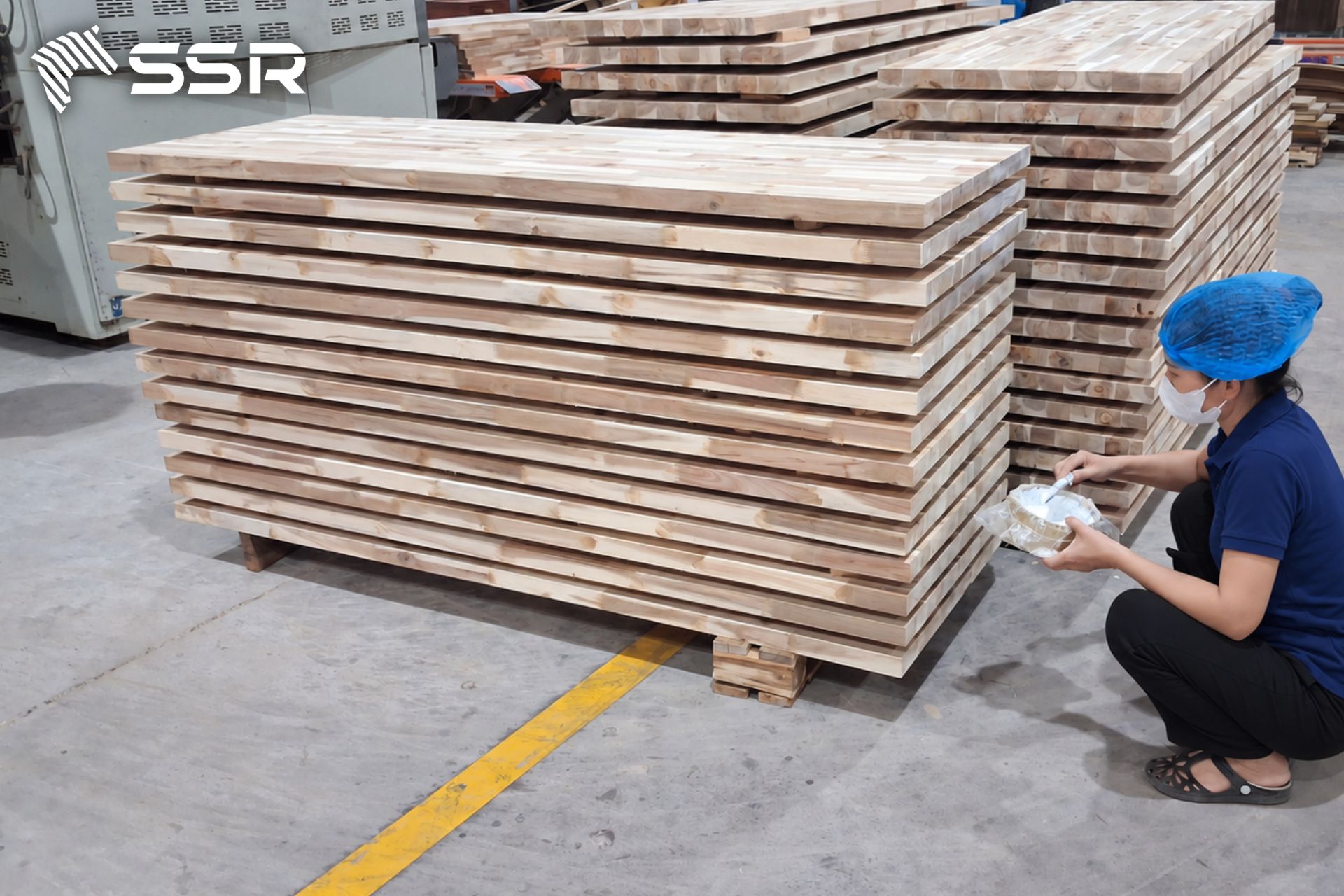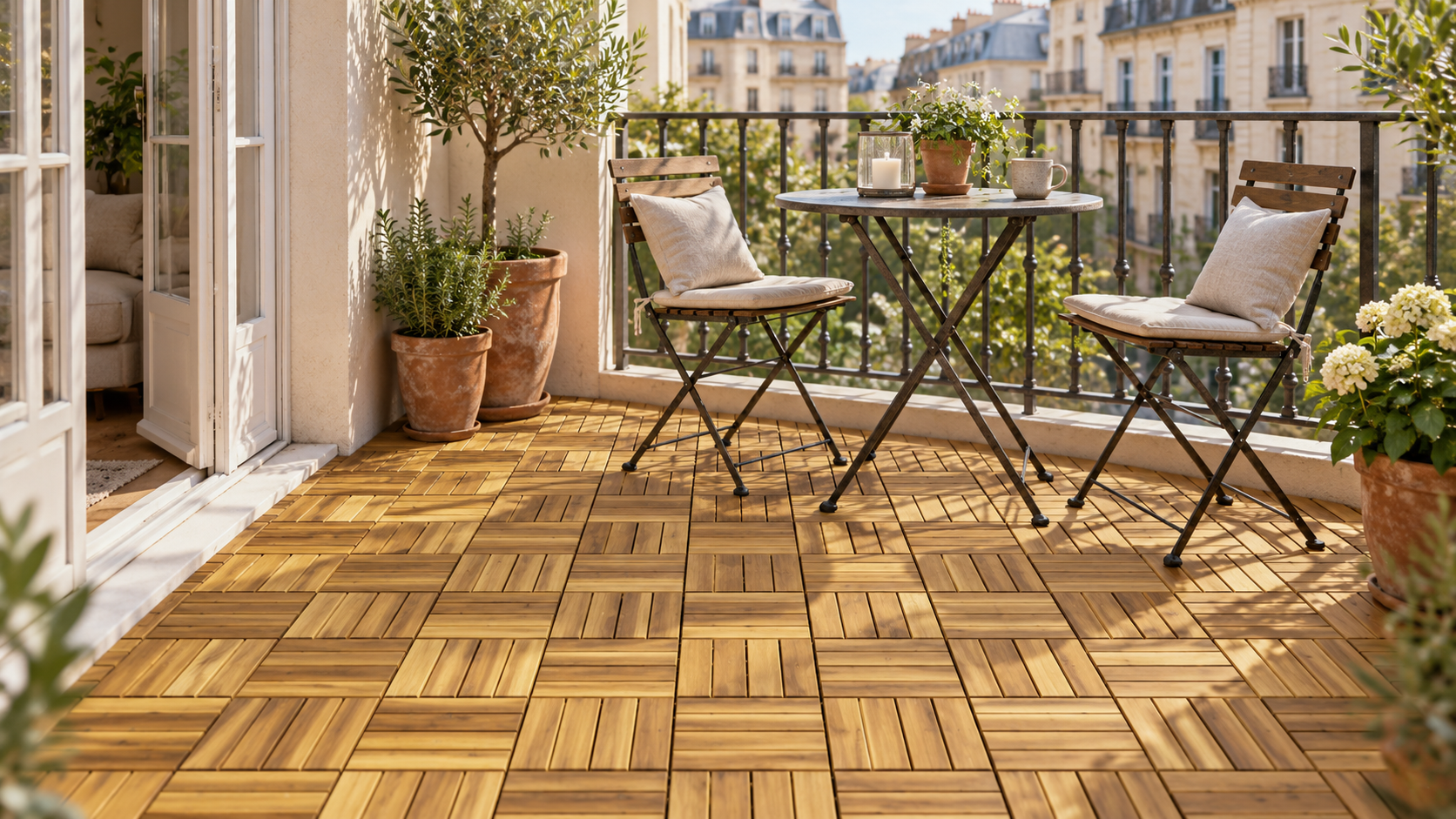
A Saman Butcher Block Countertop does not have to stay in the kitchen. The same solid wood surface can become a dining table where the grain becomes part of the room, a desktop designed for everyday work, or a workbench top where a large usable wood surface matters more than decorative styling. What connects these applications is the ability of Saman, also commonly known as Monkey Pod, to bring a noticeably natural wood character into products with large visible surfaces.
Monkey Pod has long been valued for furniture applications, and this helps explain why the material works naturally beyond the traditional countertop category. Its appeal is not limited to the name of the species. Consumers experience the wood through the visible grain, variation in tone and the way a finished surface changes the character of a room or piece of furniture.
This makes Monkey Pod Butcher Block particularly interesting as a broader wood-surface program. Instead of developing one panel for one application, the material can support several products built around how people cook, eat, work and use their homes.
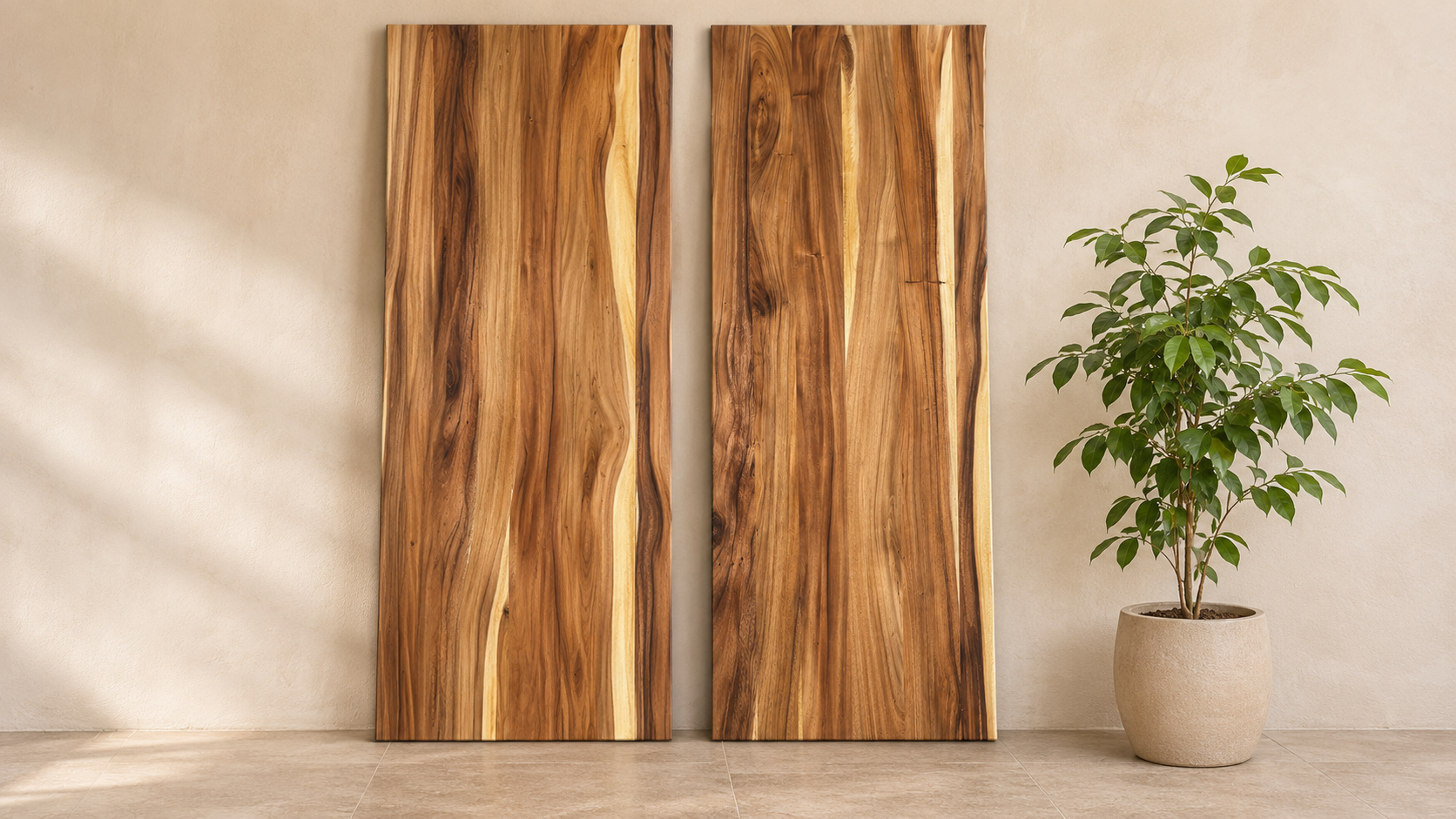
Saman Butcher Block for every surfaces
A Wood Surface Becomes More Valuable When It Can Serve More Than One Space
Large solid wood surfaces are increasingly used according to the activity they support rather than one fixed product definition. A panel that begins as a countertop format can move into a kitchen island, dining table, workbench or desk when the dimensions, grading and finishing are adjusted for the final application.
That flexibility changes the way Saman Butcher Block Countertop can be developed and presented. A kitchen surface needs to work beside cabinetry and appliances, while a dining table becomes a piece of furniture in its own right. A desktop is judged through daily visual and tactile contact, whereas a workbench puts more emphasis on usable surface area and the ability to handle repeated use.
The wood remains the common material, but the reason for choosing it changes with the application.
This is why Saman should not be communicated simply as another wood species available for butcher block. Its stronger opportunity lies in becoming a recognizable natural surface that can move through different parts of the home and into different product categories.
Kitchen Countertops Bring Natural Character Into a Functional Space
The kitchen remains one of the clearest applications for a Saman Wood Countertop because it places a large natural surface directly beside materials that are often more uniform, such as painted cabinetry, metal appliances, tile or engineered stone.
Wood changes that balance.
Instead of creating another perfectly consistent surface, Saman introduces visible grain and natural variation that can make the kitchen feel warmer and less visually flat. The countertop becomes both a functional work surface and part of the overall interior design.
Recent kitchen-renovation research also shows growing interest in wood as a visible surface. Houzz reported that butcher block or wood slabs accounted for 44% of contrasting island countertop materials among homeowners who selected a different surface for the island, a substantial increase from the previous year.
For Saman, this creates a particularly natural application because its grain can become a deliberate visual feature rather than something that needs to disappear into the background.
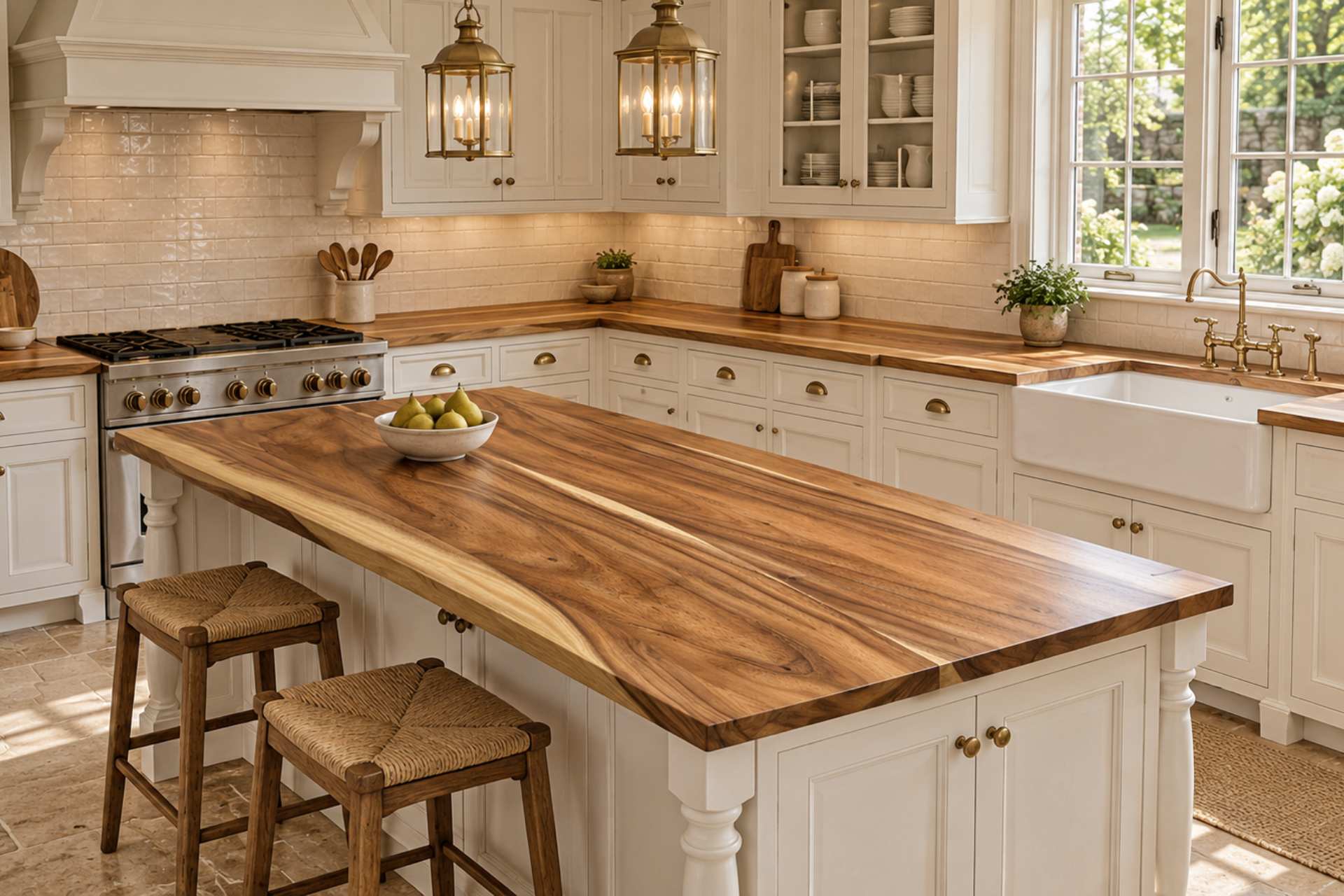
Saman Butcher Block Countertop in a modern kitchen
The Kitchen Island Gives Monkey Pod More Room to Be Seen
An island changes the role of a wood surface because it is often more exposed than the perimeter countertop. People see it from several directions, gather around it and interact with the edge as well as the face of the material.
This makes a Monkey Pod Butcher Block Countertop especially suitable when natural grain is intended to become part of the visual identity of the kitchen.
Instead of covering every work surface with wood, an island can also allow consumers to introduce Saman selectively. Stone or another material may remain around the perimeter while Monkey Pod becomes the warmer central feature of the room.
That mixed-material approach gives the wood more visual impact without requiring the entire kitchen to follow one material direction. The island can function as a preparation surface, breakfast area or gathering point while the natural wood helps distinguish it from the surrounding cabinetry.
For product presentation, this means Saman should not only be photographed as an isolated slab. Showing the surface as part of a finished island helps consumers understand the scale, grain and visual effect much more clearly.
Dining Tables Put the Grain at the Center of the Product
A dining table changes the relationship between the consumer and the wood.
With a countertop, the surface is part of a larger kitchen. With a Saman tabletop, the wood itself becomes one of the most visible parts of the furniture.
Consumers see the grain every time they enter the dining area. They sit directly beside the edge and experience the texture, finish and tonal changes at close range. Because of this, visual character becomes more important than it might be in a less prominent application.
Saman and Monkey Pod fit naturally into this role because the wood has historically been valued for furniture, while its visible character allows the finished table to feel distinctive without relying on complex decorative elements.
A simple table base paired with a strong natural wood surface can already create a complete product.
For manufacturers and furniture programs, this also creates room to develop different directions from the same material. A cleaner rectangular top can support a contemporary dining collection, while more expressive grain selection can create a table where the wood itself carries more of the design.
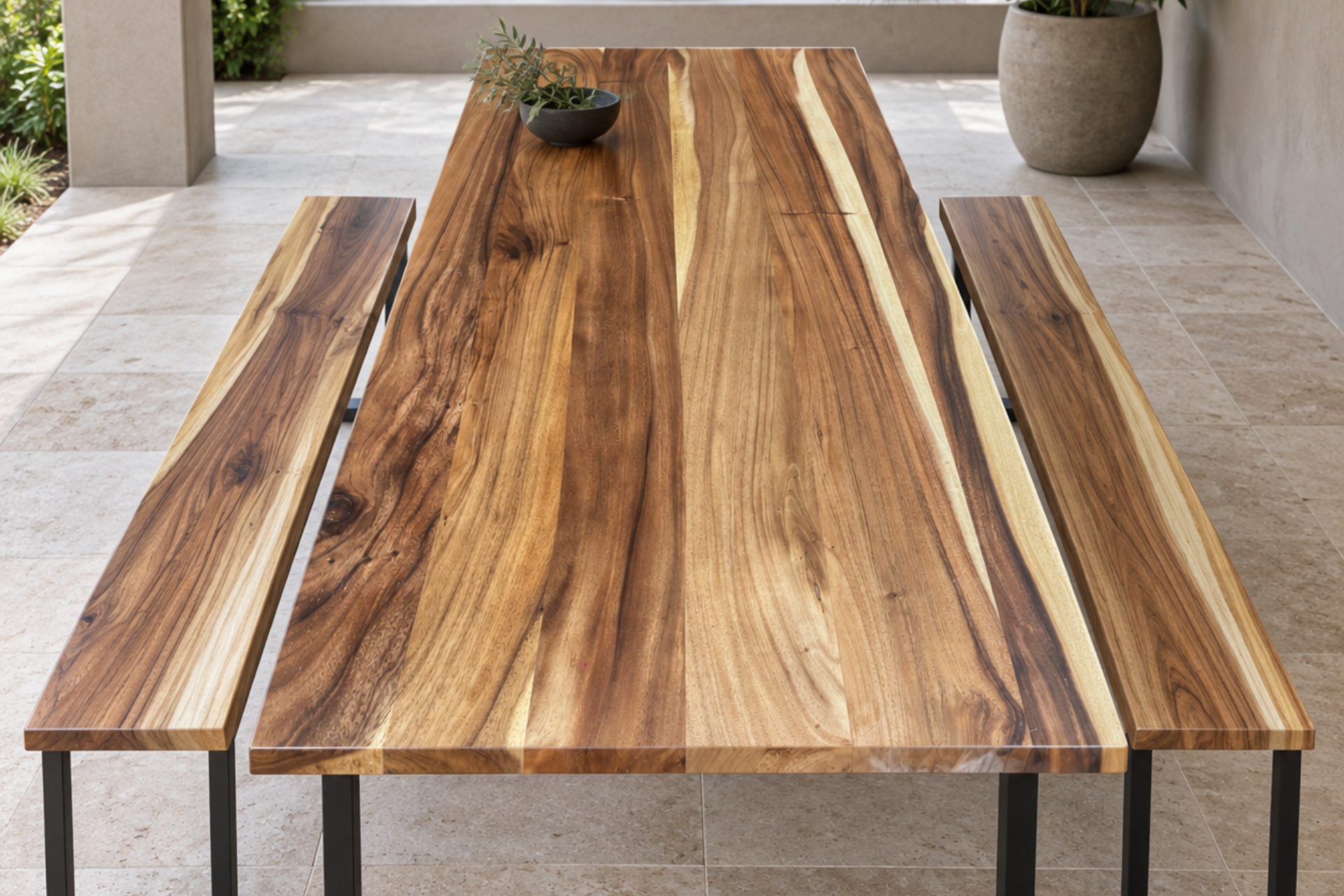
Saman wood dining table made from solid butcher block
A Dining Surface Needs to Look Consistent Without Looking Artificial
Natural variation is part of the reason consumers choose wood, but that does not mean every level of variation produces the same result.
When several staves or pieces form one large Monkey Pod dining table, the color transitions and grain relationship across the surface influence how intentional the finished product feels. If adjacent areas differ too sharply without a clear visual balance, the natural variation may feel random rather than expressive.
The goal is therefore not to remove the personality of Saman.
It is to manage it.
Material selection and grading should allow the wood to retain the variation consumers expect from a natural surface while ensuring that the overall tabletop still reads as one finished product. This becomes especially important in online retail, where photography establishes a visual expectation before the customer sees the actual table.
A realistic product image should therefore show the natural range of Saman rather than an unusually uniform sample that cannot be repeated consistently.
A Desktop Turns the Same Wood Into an Everyday Workspace
The visual qualities that make Saman suitable for dining furniture can also work well in a home office.
A Saman desktop introduces a large natural surface into a space that often contains metal desk frames, monitors, storage units and other technically oriented objects. Wood can soften that environment without compromising the simple geometry expected from a modern workstation.
The priorities also change compared with a kitchen countertop. There is no sink or backsplash to coordinate with, while surface area, flatness, tactile comfort and compatibility with the desk frame become more important.
A smooth Monkey Pod surface can work with fixed desk bases or adjustable standing-desk frames, allowing the wood to become the main visible component while the supporting structure remains relatively simple.
Recent home-office design activity also continues to emphasize spaces that combine practical work areas with natural light, warmer palettes and more personal interiors rather than purely functional office environments.
This gives Monkey Pod wood countertops another route beyond the kitchen: the same broad surface format can become a product for people building a workspace around real wood.
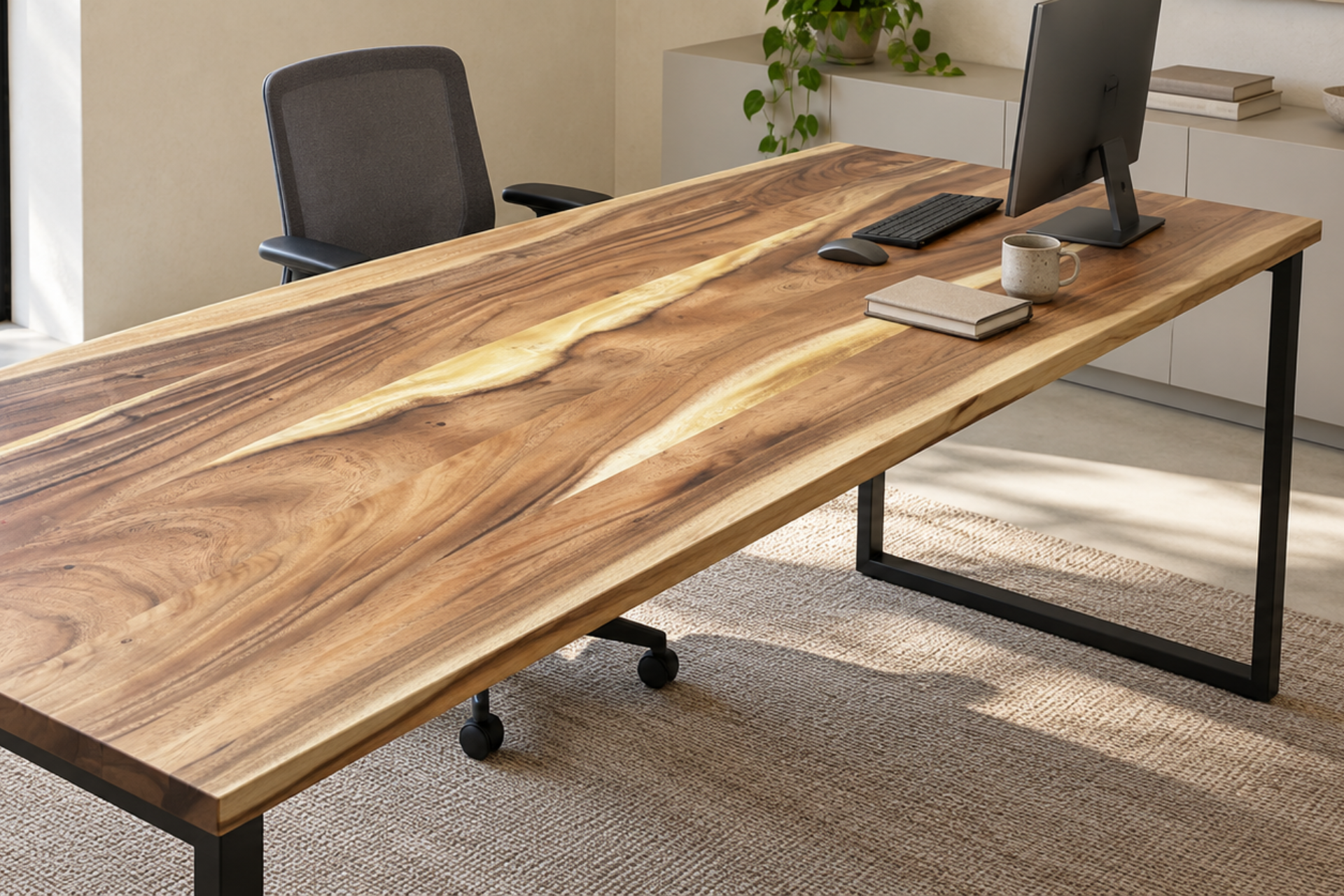
Saman solid wood desktop in a bright home office.
Workbench Tops Shift the Focus From Styling to Everyday Use
A workbench is another application where a large solid wood surface makes sense, but consumers evaluate it differently.
Here, the surface may be used for assembly, DIY work, tools or repeated everyday projects, so the visual appearance still matters but does not need to carry the entire product story. The emphasis moves toward a usable work area, solid construction and the possibility of maintaining or refreshing the surface when signs of use begin to appear.
A Saman workbench top can bring the practicality of a substantial wood surface into workshops, garages or utility rooms while maintaining a warmer appearance than many synthetic alternatives.
Natural wood also has an important ownership characteristic in this setting. Depending on the finish and condition, marks or worn areas can often be sanded and refinished rather than making the entire surface feel permanently damaged.
For a workbench, signs of use may even become part of the character of the product.
This demonstrates why Saman should not be positioned only through decorative kitchen photography. The same material can shift between a highly visible furniture surface and a more functional working surface depending on how it is graded, finished and marketed.
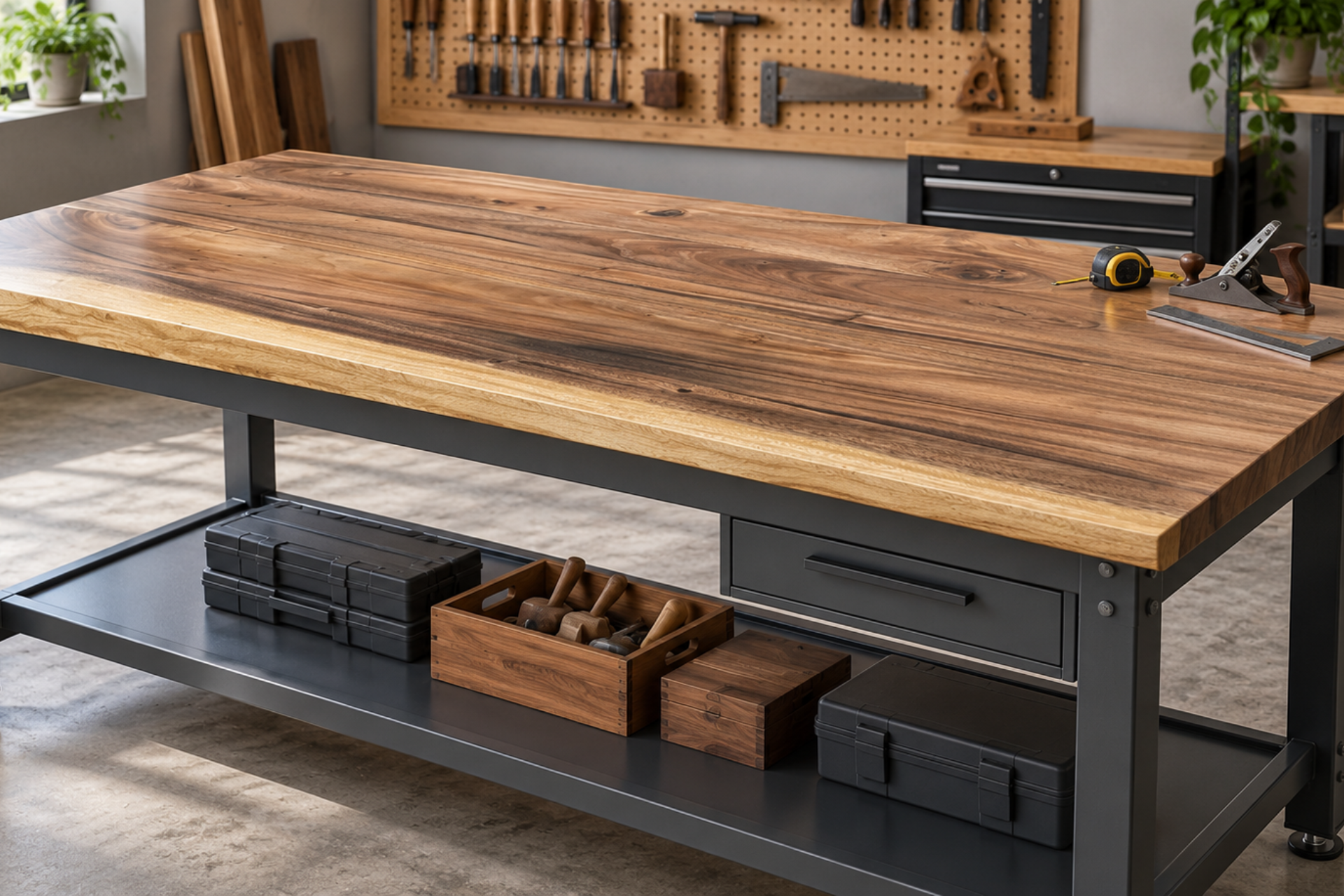
Substantial Saman wood workbench top
The Finish Changes How Saman Fits Into an Interior
The same Saman surface can feel very different depending on how it is finished.
A clear or natural finish allows more of the original wood tone and grain variation to remain visible, which works well when the goal is to make the wood itself a design feature. A warmer finish can deepen the surface and give dining furniture or countertops a richer visual presence, while other finishing directions can help the material coordinate with cabinetry, flooring or existing furniture.
This flexibility becomes useful because consumers rarely purchase a countertop, table or desktop in isolation. The product needs to exist beside other materials already present in the room.
For a Saman Butcher Block Countertop, finishing therefore does more than protect the surface. It influences whether the finished application feels light and contemporary, warmer and more traditional, or more expressive and furniture-like.
Unfinished options can serve consumers or manufacturers who want greater control over the final appearance, while factory-finished surfaces can reduce the number of decisions required before installation or use.
Neither approach is universally better.
They answer different expectations.
Surface Quality Becomes More Important as the Wood Becomes More Visible
Most consumers will never know the exact sanding sequence used to produce a countertop or tabletop, but they immediately notice the result.
They feel whether the surface is smooth. They see whether joints look clean, whether the edge has been finished carefully and whether glue marks or sanding defects interrupt the natural grain.
This is particularly important for Monkey Pod Butcher Block because the material is often selected precisely for its visible wood character. When the grain is intended to remain exposed, poor surface preparation becomes much harder to hide.
A panel may meet basic dimensional requirements and still feel inexpensive if the visible details are not controlled well. Conversely, a carefully prepared Saman surface allows the grain and natural variation to become the focus of the product instead of production imperfections.
Manufacturing quality therefore needs to translate into what consumers can actually see and touch.
Dimensional Stability Matters Even When Consumers Never Ask About It
Moisture content and production control rarely appear at the beginning of a consumer’s shopping journey, yet they influence what happens after installation.
A kitchen countertop is expected to remain reasonably stable beside cabinetry. A dining table needs to stay usable without excessive movement affecting the overall form. A desktop needs to sit correctly on its frame, while a workbench needs to provide a reliable working surface.
Consumers may never ask what moisture target was used during manufacturing, but they will notice the consequences if the wood moves excessively or develops dimensional problems.
For this reason, moisture control, flatness, grading and sanding should be treated as supporting elements behind each application rather than isolated factory specifications.
The technical requirement matters because of what the product is expected to become.
One Wood Surface Can Build Several Product Categories
The strongest opportunity for Saman Butcher Block Countertop is not necessarily one bestseller.
It is the ability to develop several recognizable products from the same material direction.
A kitchen surface places Saman inside the most functional part of the home. An island gives the grain more visual prominence. A dining table turns the surface into furniture. A desktop moves it into the workspace, while a workbench shifts the same material toward more practical everyday use.
These products do not need identical specifications to feel connected.
What links them is the natural character of the wood and the idea that a broad solid surface can adapt to different parts of everyday life.
For retailers, distributors, furniture manufacturers and OEM/ODM programs, that creates a broader product story than simply adding another countertop species. Saman can become the material foundation for a collection of wood surfaces serving different applications while maintaining a recognizable visual identity.
Saman Is More Than a Different Name for a Butcher Block
Saman, Monkey Pod and Raintree are names associated with the same broader wood identity, but the commercial opportunity is easier to understand through the products the material can become. USDA Forest Service references identify monkey-pod or samán as a wood valued for furniture, supporting its natural connection with broader interior applications rather than countertops alone.
A Saman Butcher Block Countertop can bring visible natural grain into a kitchen. The same surface direction can become a dining table where the wood takes center stage, a desktop that warms a modern workspace or a workbench built around everyday utility.
That versatility is what makes the material interesting as a wood-surface program.
Instead of asking only where a Saman countertop can be installed, the better question is:
What can the surface become next?
For businesses developing Saman or Monkey Pod wood surfaces across kitchens, furniture and workspaces, SSR Corporation can support the conversation from application concept through product development.
Explore a Saman Butcher Block program built around the applications your customers actually want to use.
Frequently Asked Questions
What can Saman Butcher Block be used for?
Saman butcher block can be developed for kitchen countertops, islands, dining tables, desktops, workbench tops and other furniture or interior wood-surface applications when the construction and finish are appropriate for the intended use.
Is Monkey Pod suitable for dining tables?
Monkey Pod has historically been valued for furniture applications, making dining tables a natural use for the material. Its visible grain also allows the surface itself to become an important part of the furniture design.
Can Saman Butcher Block be used as a desktop?
Yes. A broad solid wood surface can be developed as a desktop when flatness, dimensions, surface preparation and compatibility with the desk base are considered during product development.
Can Monkey Pod be used for a workbench top?
Yes. A Monkey Pod or Saman wood surface can be used for workbench applications where a substantial natural wood working surface is desired, although construction and finishing should follow the intended level of use.
Why use Saman for a kitchen island?
A kitchen island gives the broad natural grain of Saman more visual exposure than many perimeter applications. It can also provide a warm wood contrast when the surrounding countertops use stone or another material.
Should Saman countertops be finished or unfinished?
Both options can serve different applications. Unfinished surfaces offer greater control over the final color and protective treatment, while factory-finished products provide a more predictable appearance and reduce the amount of preparation required after purchase.