Vietnam has developed into one of Asia’s most important wood-processing centers, supported by a large manufacturing base, plantation resources and extensive export infrastructure. In 2025, Vietnam exported approximately US$17.2 billion in wood and wood products, an increase of about 5.7% from the previous year. The United States alone accounted for roughly US$9.46 billion, or close to 55% of total industry exports, showing the importance of overseas demand to Vietnam’s wood manufacturing sector.
Within this manufacturing environment, SSR operates as a wood manufacturer and Vietnam wood supplier serving international importers, distributors, retailers and OEM customers. Its manufacturing structure focuses on engineered and solid wood products rather than finished furniture alone. Core categories include finger joint wood board, butcher block countertops and deck tiles, which are supplied for furniture, interior, retail and construction applications.
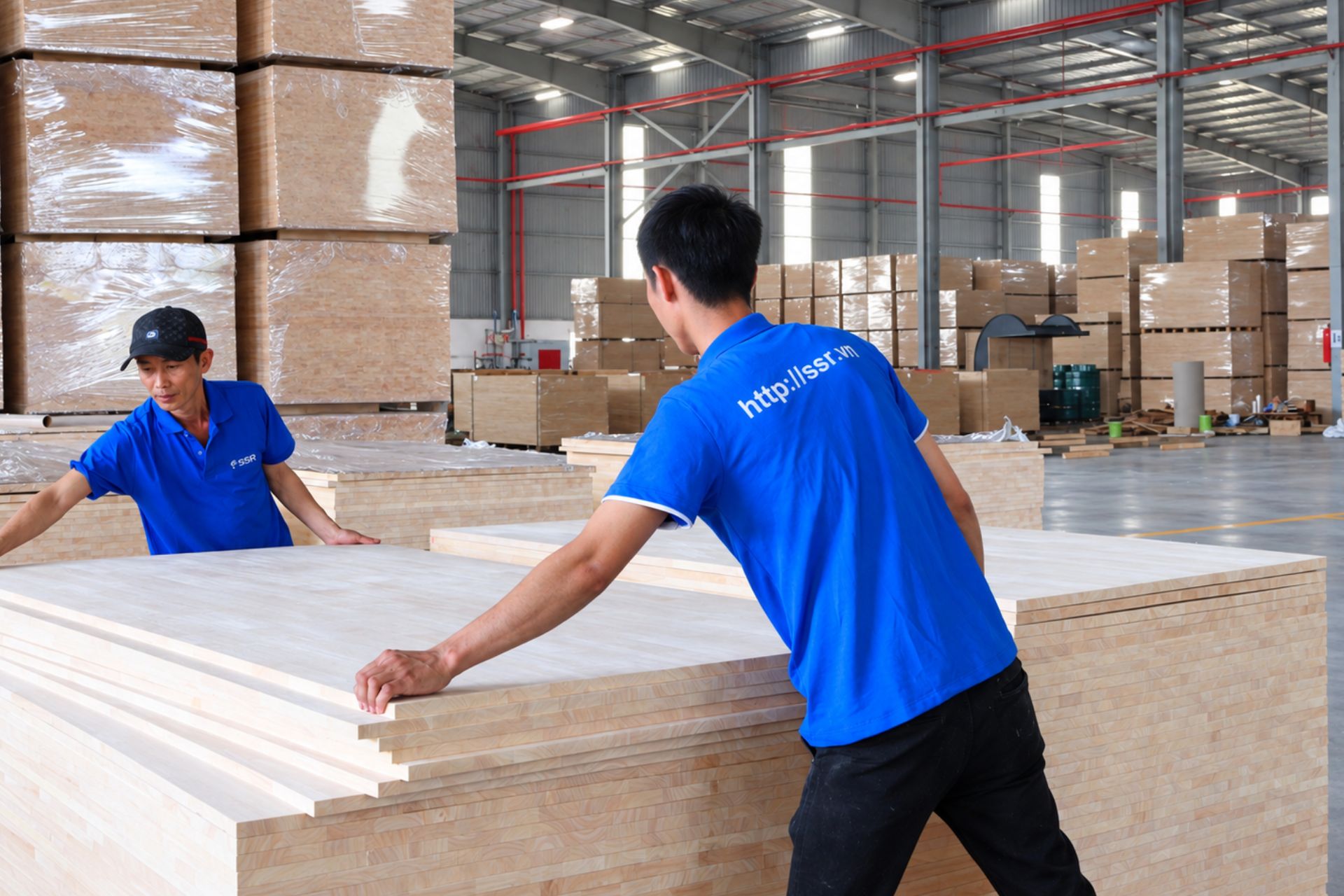
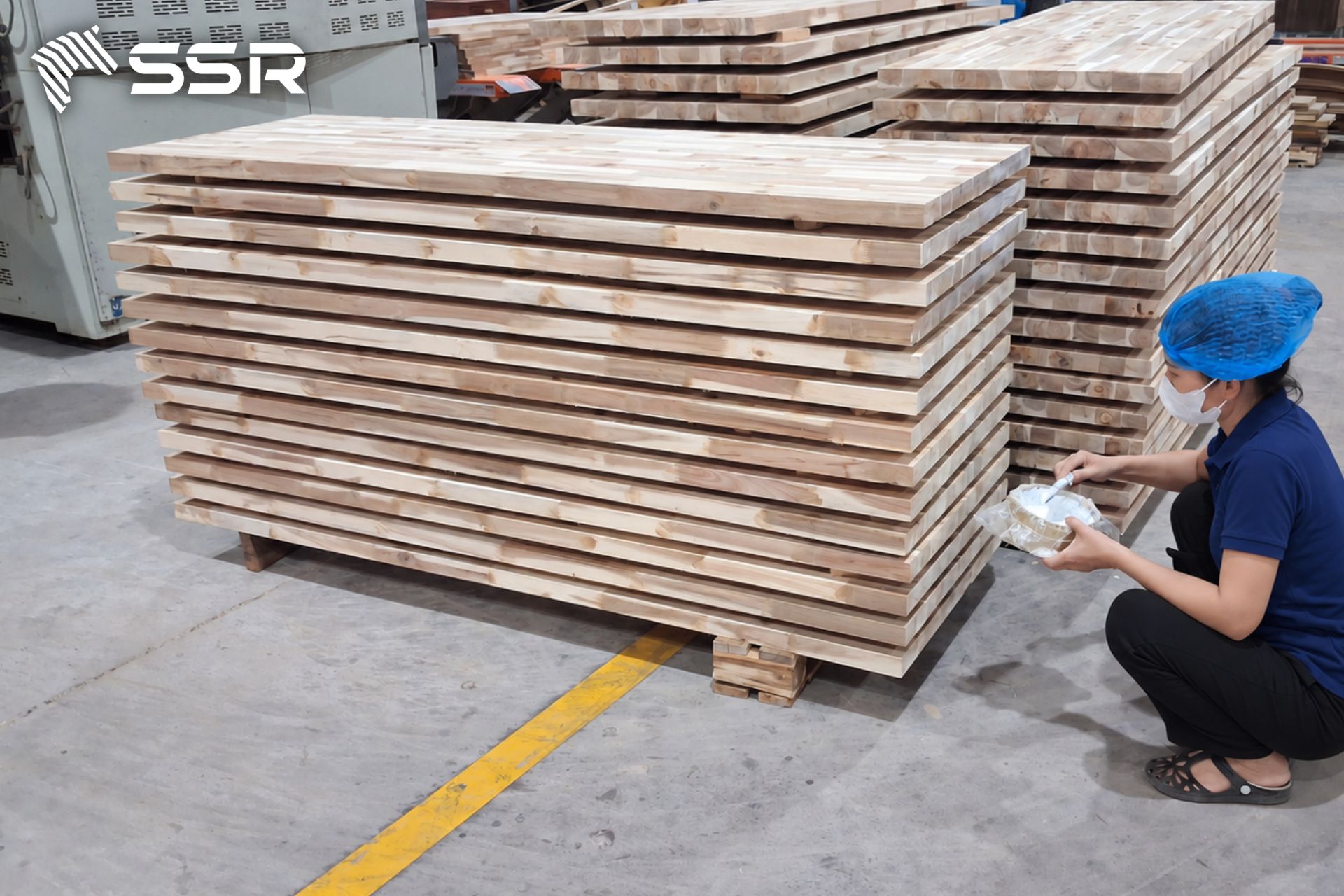
SSR wood factory in Vietnam producing solid wood boards for global markets
For international buyers, the value of a wood manufacturer increasingly depends on more than production volume. Material quality, dimensional consistency, moisture control and export specifications all influence whether a product can be repeated across multiple shipments. This makes the production system behind the product as important as the product itself.
Vietnam’s Role in Global Wood Manufacturing
Vietnam’s wood industry has expanded beyond traditional furniture production into a broader range of processed wood products. According to industry data, sawn timber, boards and flooring generated more than US$2 billion in export value during 2025, while furniture remained the largest category. This diversification gives overseas buyers more sourcing options for semi-finished and component-based products.
The sector has also maintained growth into 2026. During the first six months of the year, Vietnam exported approximately US$8.6 billion in wood and wood products, representing year-on-year growth of about 4.9%. These figures indicate that demand for Vietnamese wood manufacturing remains relatively stable despite changes in construction, furniture and home improvement markets.
This scale has created opportunities for international buyers looking for a Vietnam wood supplier capable of producing components and semi-finished products for downstream manufacturing, retail and construction.
However, sourcing decisions are becoming more technical. Major markets increasingly require traceable materials, stable product specifications and better documentation. These requirements place greater emphasis on the production system behind the product rather than price alone.
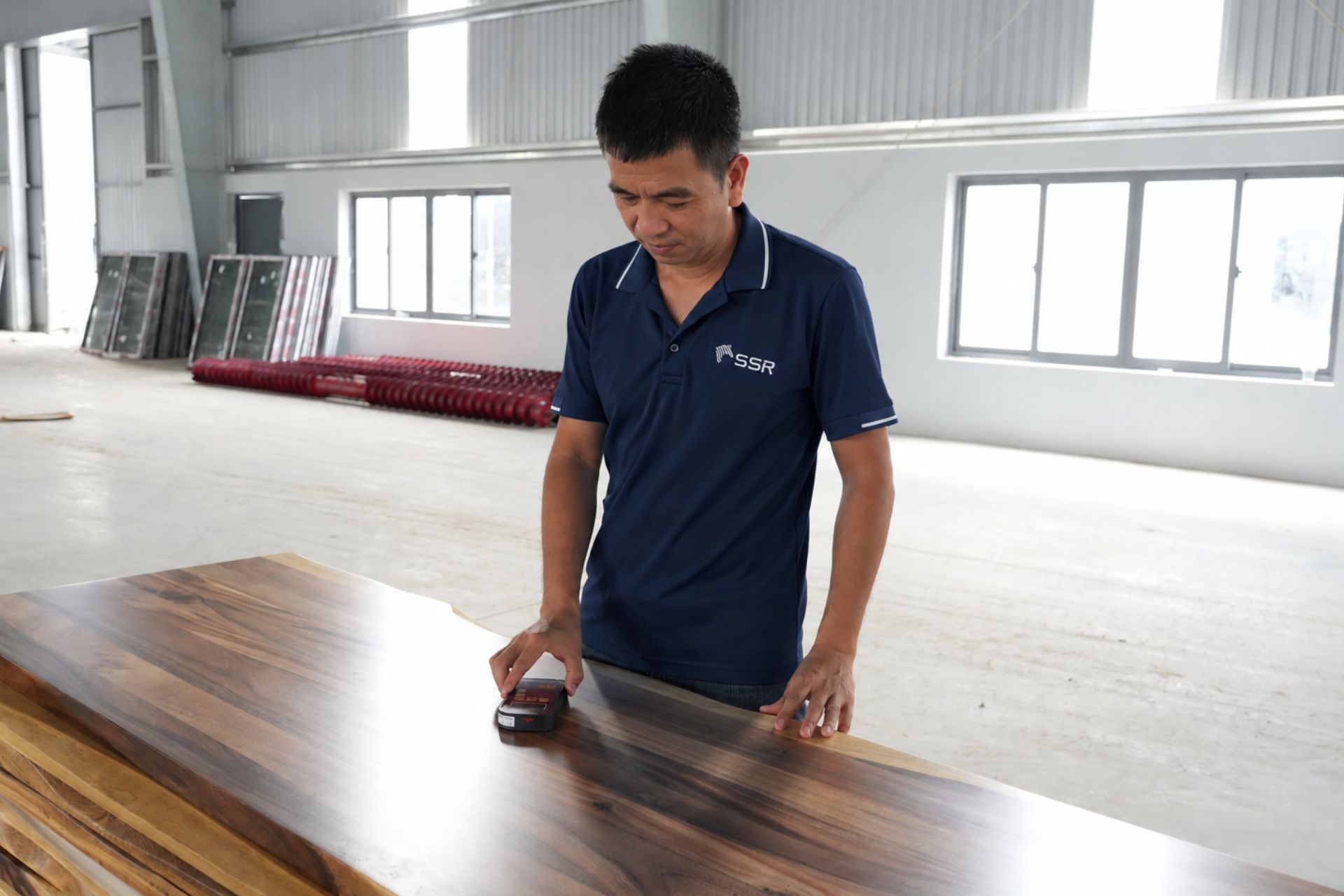
Quality inspection of solid wood boards at SSR wood manufacturer in Vietnam
SSR as a Wood Manufacturer for more than 60 countries around the world
SSR’s manufacturing network connects production locations in Vietnam and Thailand with international sales and logistics operations.
The wider network covers approximately 2.96 million square feet of manufacturing and supply space and supports export programs reaching more than 60 markets. Production equipment includes finger joint presses, jointing machines, automatic sanding systems and cutting machinery designed for repeat wood panel production.
Unlike a trading-only model, a wood manufacturer must manage the characteristics of natural timber throughout the manufacturing process. Moisture content, dimensional tolerances, adhesive performance and surface grading all influence the quality of the final board. SSR therefore organizes production around defined product specifications rather than treating wood boards as a general commodity.
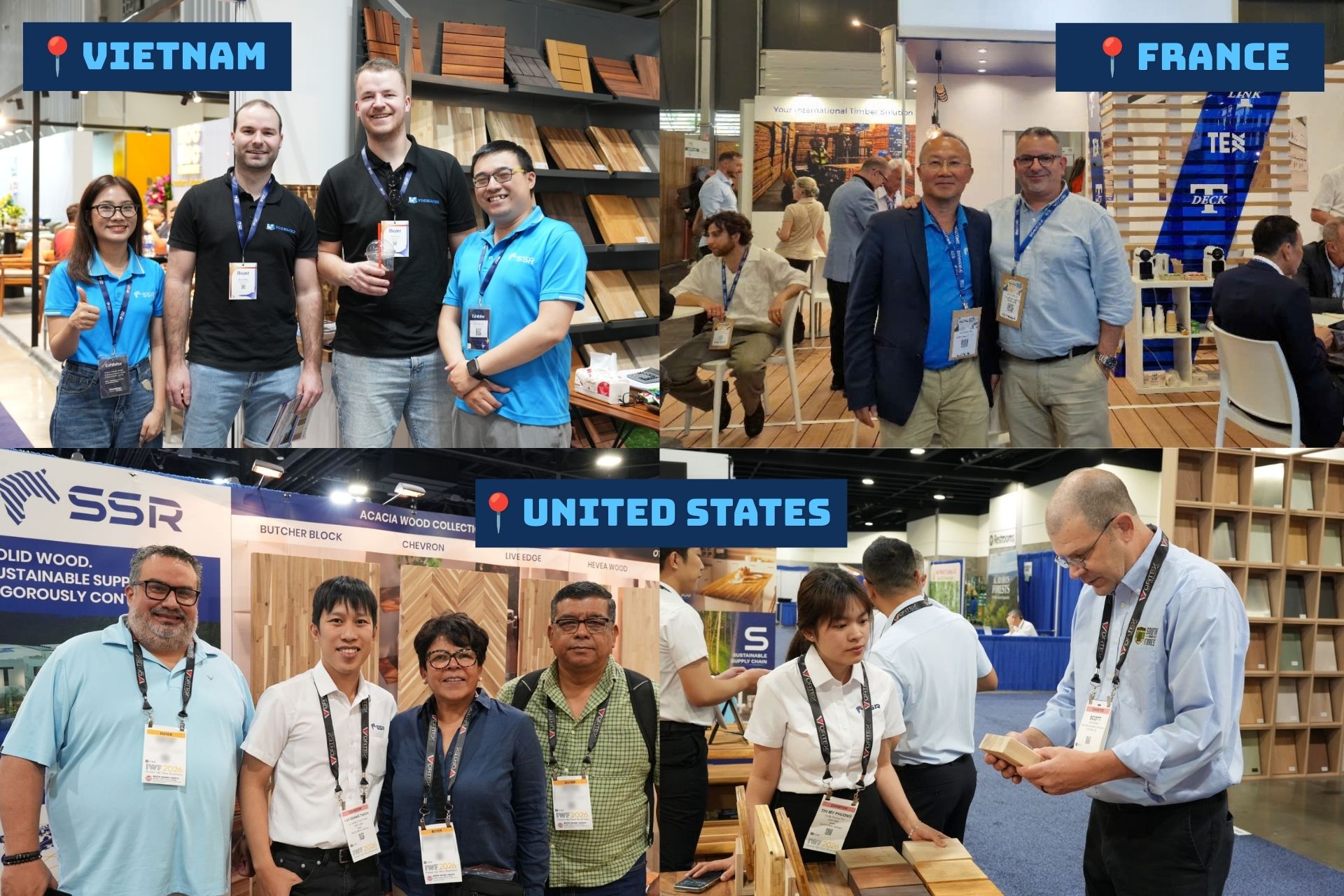
SSR is present in 60 countries around the world as a Vietnam Solid Wood Board Manufacturer and Supplier
Buyers can explore the broader manufacturing system through the SSR Manufacturing Network.
Finger Joint Wood Board Manufacturing
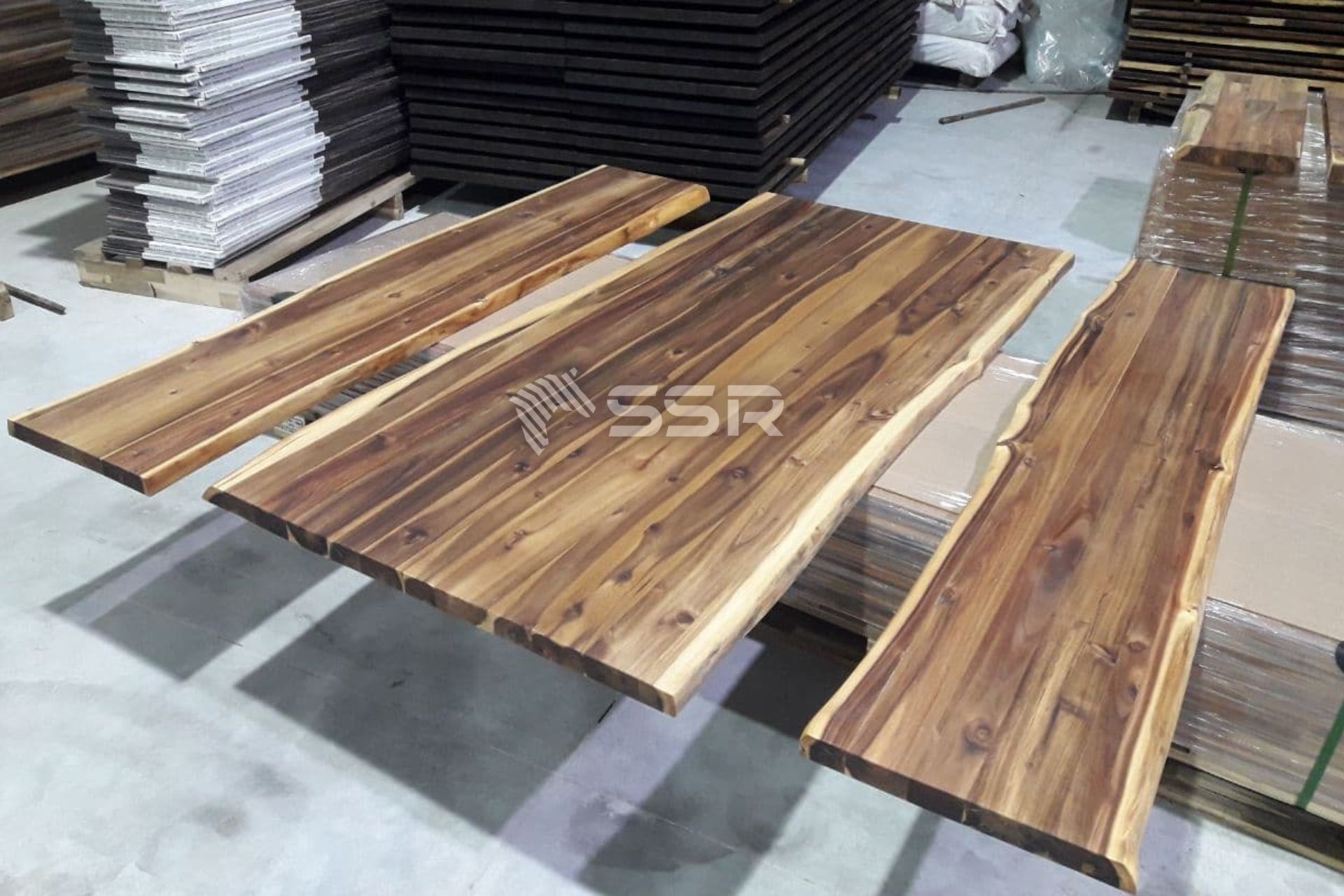
The finger joint wood board is one of SSR’s core engineered wood products. Finger jointing connects shorter timber sections through precisely machined interlocking profiles. The process increases usable material recovery while producing longer and more consistent components for panel manufacturing.
SSR manufactures finger joint boards from species including Rubberwood, Acacia and Melia. Standard board formats commonly include 1220 × 2440 mm, while thickness options can include 12, 15, 18, 24 and 30 mm depending on the program. Moisture content is typically controlled below 12%, while surface sanding can reach approximately 240–320 grit. D4 adhesive can also be used according to the required specification.
Vietnam Finger Joint Wood Board Supplier – Reliable Hardwood Manufacturer from Vietnam
These characteristics make finger joint boards suitable for furniture, cabinet production and other interior applications. If you’re looking for Rubberwood/ Hevea, Acacia, Birch, Teak, Monkey Pod, Oak, Melia Solid Wood Board or Wood Slab, view more details at SSR Finger Joint Wood Board page.
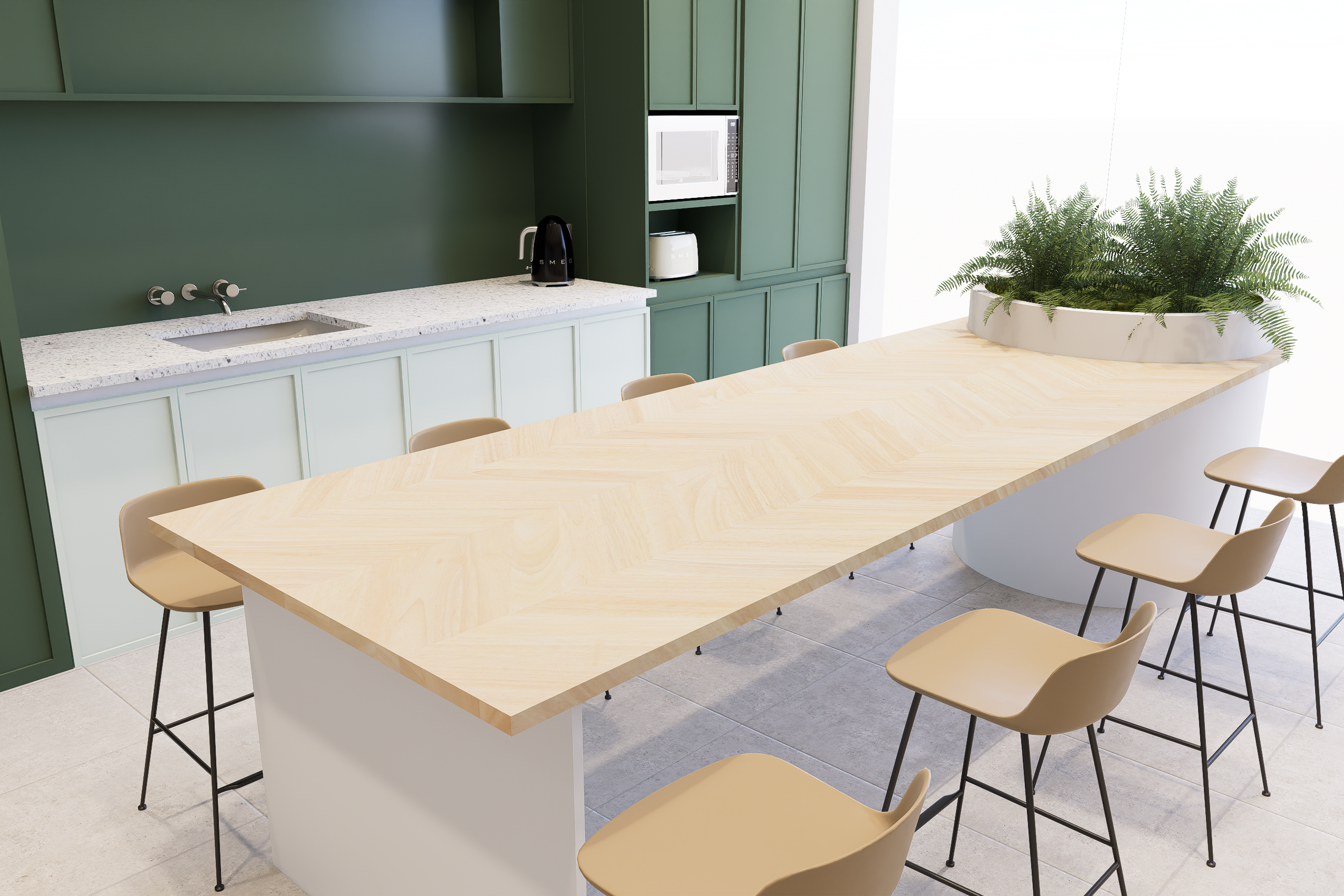
Butcher Block for Retail and Interior Applications
Butcher block countertops represent a more finished product category because both technical performance and surface appearance are important.
SSR manufactures butcher block products using several hardwood species, including Rubberwood, Acacia, Birch and other selected materials.
Typical programs can be produced in thicknesses ranging from approximately 18 mm to 60 mm, with lengths reaching up to 4000 mm and widths up to around 650 mm, depending on the wood species and specification. Surface options may include unfinished sanding, oil coating or UV finishing.
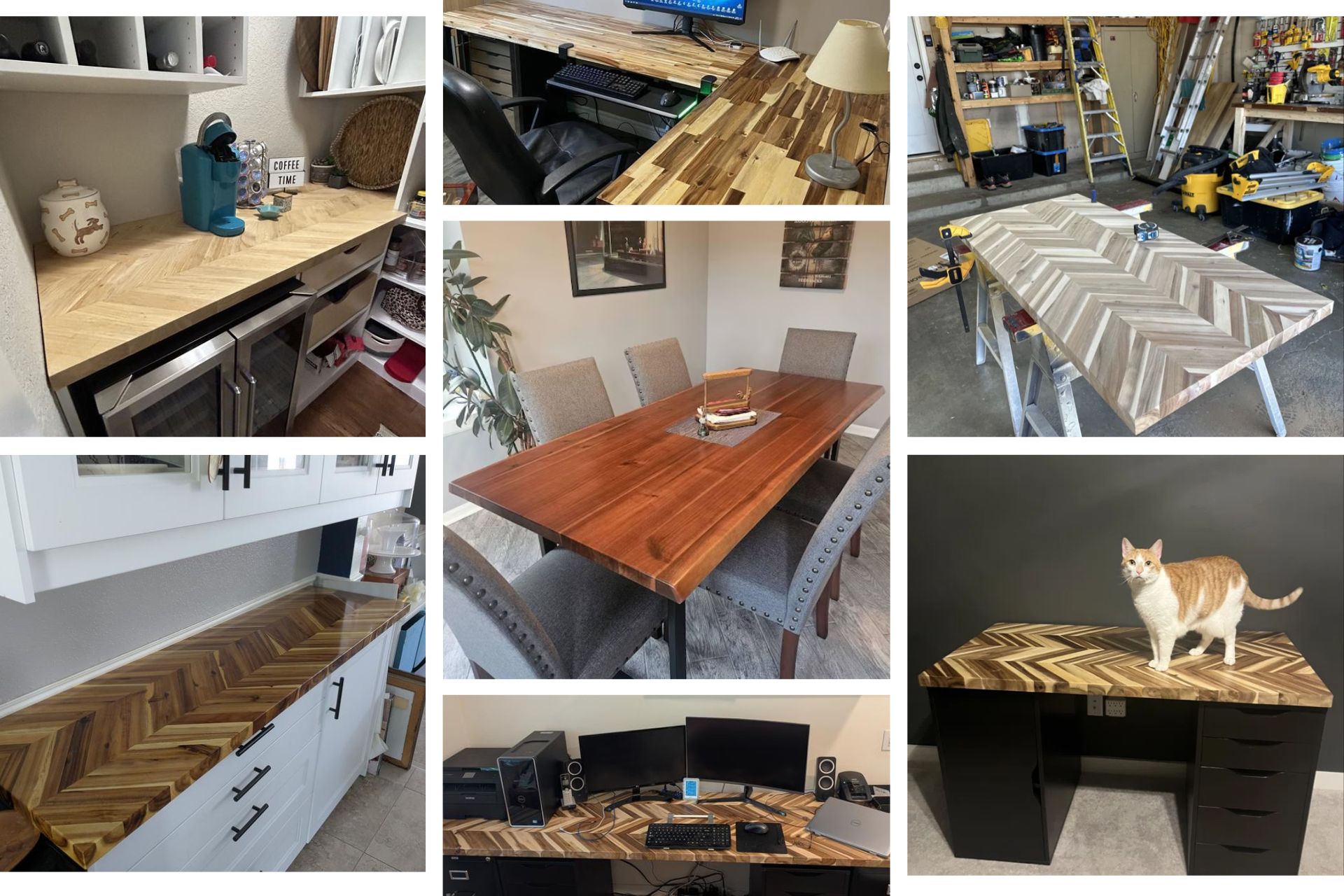
Wood Butcher Block Application around the world
For retailers and distributors, these manufacturing details influence how the product is positioned in the market. A countertop sold directly to consumers requires greater visual consistency and packaging control than an unfinished panel supplied to another manufacturer.
SSR’s dedicated Butcher Block Countertops program provides additional information about production capacity and available product configurations.
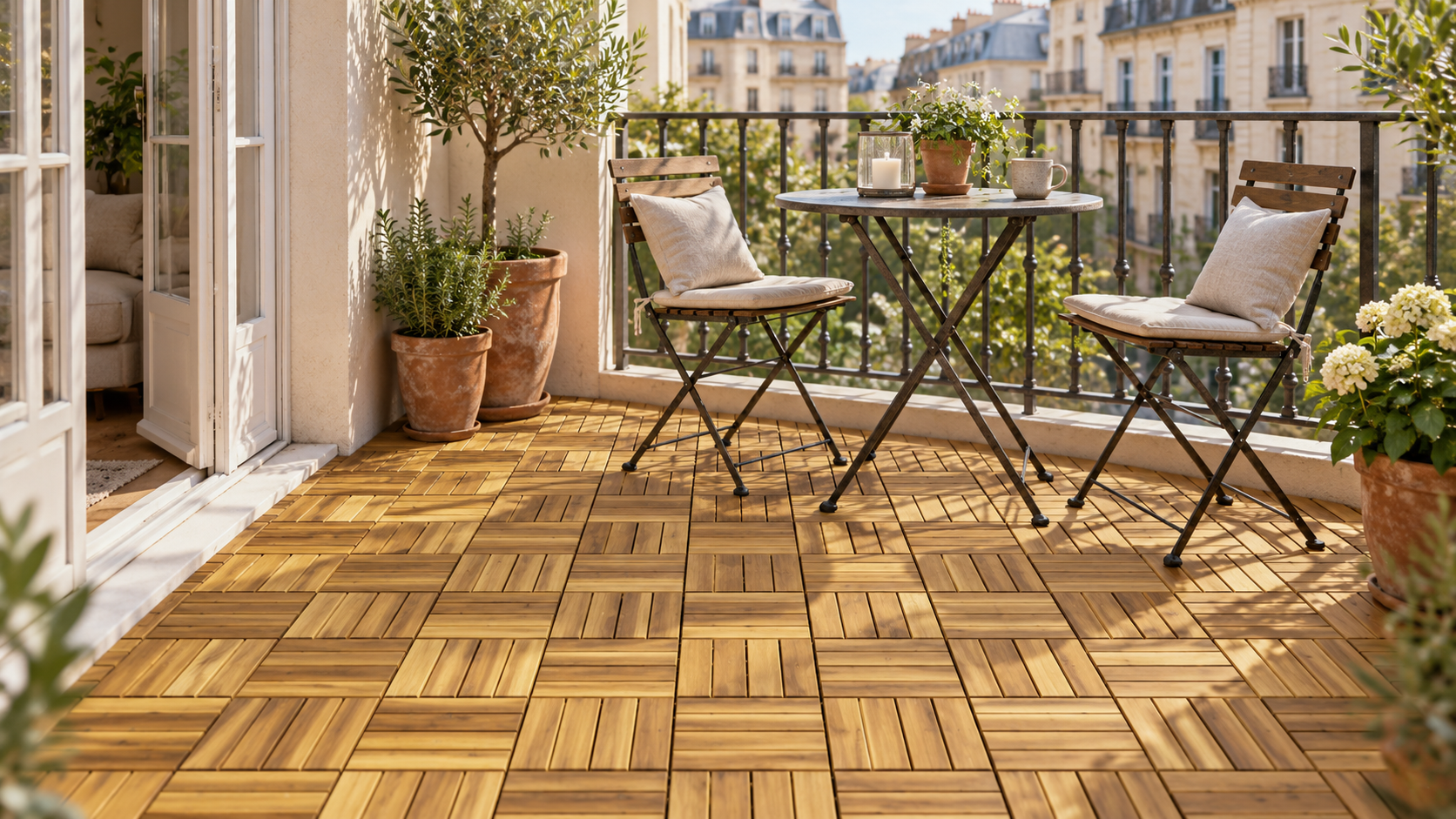
Deck Tiles Extend Wood Manufacturing Into Outdoor Applications
Outdoor deck tiles require a different manufacturing approach.
While finger joint wood board and butcher block products are primarily designed for indoor applications, deck tiles need to perform under changing moisture conditions and outdoor exposure.
Acacia is commonly used because its natural density and grain characteristics make it suitable for outdoor applications when correctly processed and finished.
SSR produces Acacia deck tiles in different layouts and slat configurations for balconies, patios and garden spaces. The product category also includes composite options for customers seeking alternative outdoor materials.
The ability to manufacture both interior wood products and outdoor products demonstrates why product specialization matters when selecting a Vietnam wood supplier.
SSR’s complete product range can be found through the SSR Products page, which includes finger joint wood boards, butcher block products and deck tiles.
Manufacturing Control Begins With Moisture and Material Selection
Wood manufacturing remains strongly influenced by the physical properties of timber.
Moisture content is particularly important because wood expands and contracts as environmental humidity changes. For many SSR board programs, finished moisture is maintained at approximately 8–12%.
Material must also be graded before panel assembly. Natural differences in color and grain can be acceptable within one product specification but rejected under another. A natural-grade Acacia butcher block, for example, may intentionally show stronger tonal variation, while a Rubberwood board for furniture manufacturing may require a more uniform appearance.
A professional wood manufacturer must therefore convert commercial grading requirements into measurable factory procedures.
This control becomes even more important when the same specification needs to be reproduced across multiple container shipments.
Factory Scale Is Important, but Repeatability Matters More
Manufacturing capacity gives buyers an indication of potential volume, but production consistency is usually more important for long-term supply relationships.
SSR’s manufacturing sites support different material and product programs. The Gia Lai location, for example, covers approximately 120,000 m² and has reported production capacity of around 5,000 m³ per month, while the Phu Tho manufacturing base covers about 70,000 m² with capacity of approximately 4,500 m³ per month.
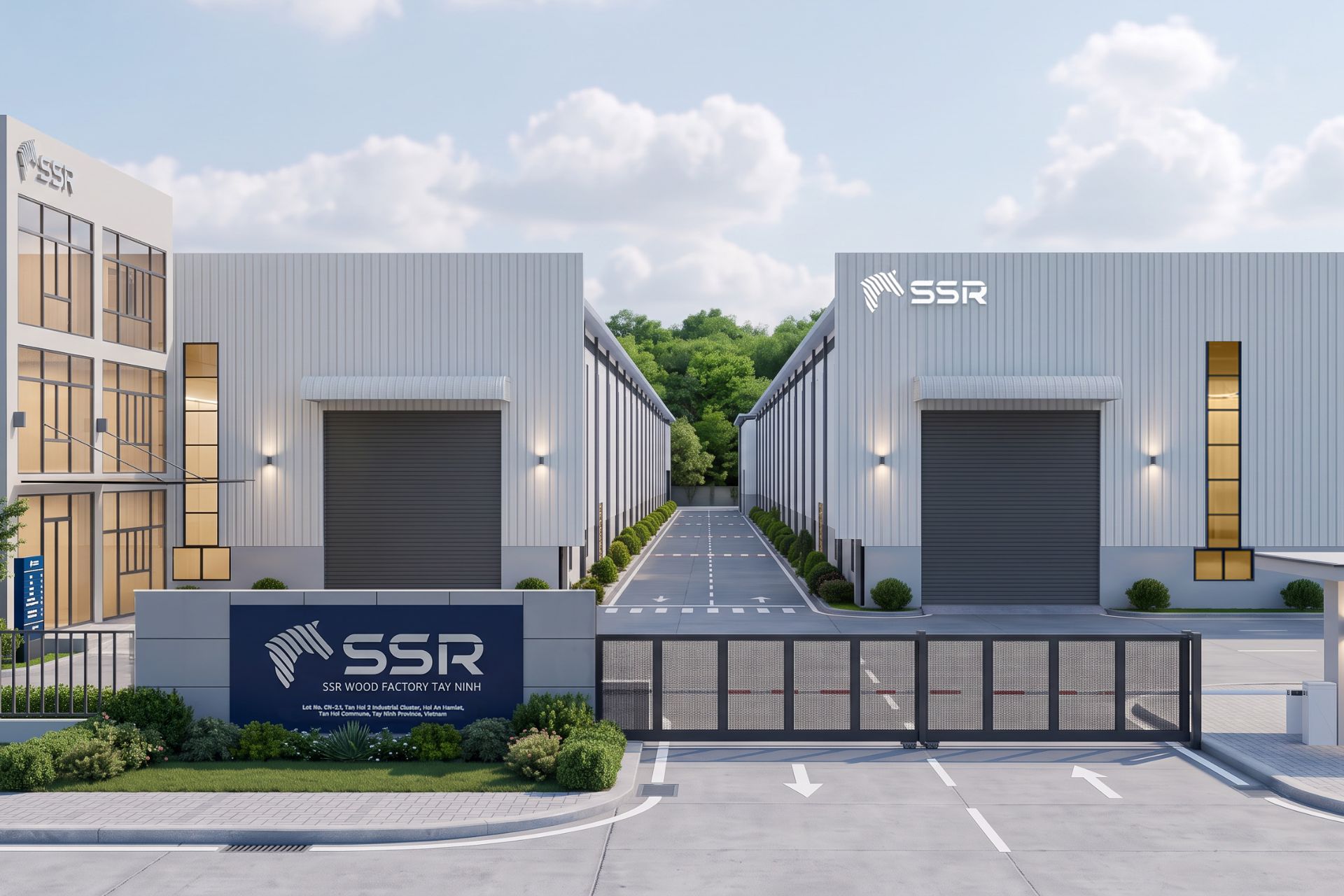
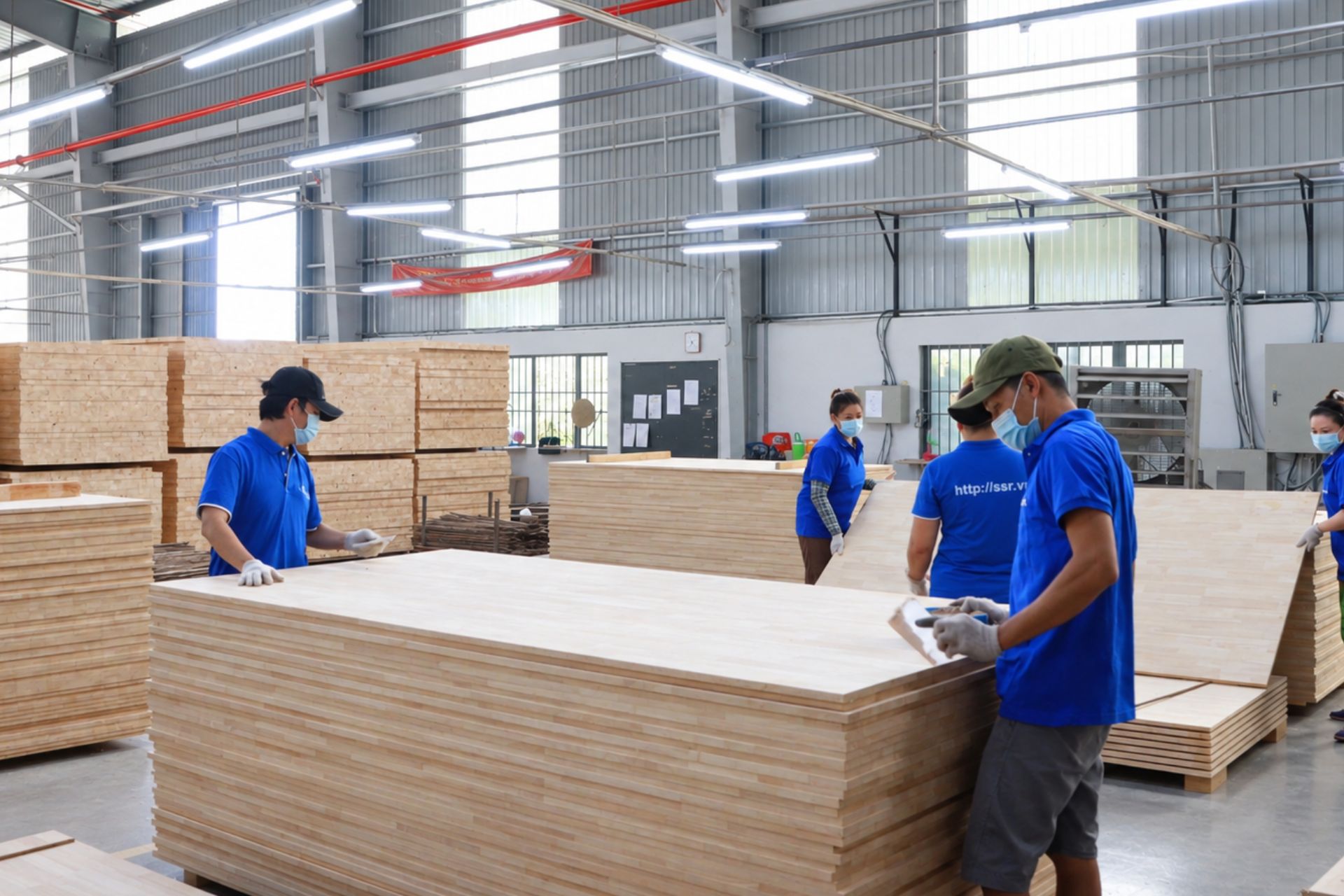
SSR Wood Factory – Main Vietnam Wood Manufacturing for Wood Distributors, Retailers and Importers Worldwide
These numbers provide an indication of scale, but a buyer evaluating a factory should also examine how the manufacturer controls moisture, dimensional tolerance, surface quality and packing.
A large factory without consistent process control can still create problems for distributors.
The better indicator is whether the factory can reproduce the same approved specification over time.
Why International Buyers Look to Vietnam Wood Suppliers
Vietnam’s wood manufacturing sector combines a substantial export base with access to plantation species such as Rubberwood and Acacia.
Domestic forestry production also remains significant. Vietnam harvested approximately 25.6 million m³ of timber in 2025, an increase of 6.9% compared with the previous year. This material base supports a large processing industry, although international buyers are increasingly concerned with certified sourcing and traceability.
Vietnamese manufacturers are therefore moving toward greater documentation, material control and compliance as major markets strengthen sustainability requirements.
For SSR, this means the role of a Vietnam wood supplier extends beyond supplying boards. Manufacturing needs to connect material sourcing, production, quality control, packaging and export documentation.
From Factory Production to Global Supply
The competitive position of a wood manufacturer is increasingly determined by its ability to connect factory production with the buyer’s commercial requirements.
A distributor may need stable dimensions and repeat inventory.
A retailer may require finished surfaces and retail-ready packaging.
A furniture manufacturer may prioritize machining accuracy and predictable material behavior.
These applications require different specifications even when they originate from the same raw material.
SSR’s approach is to develop wood programs around those downstream requirements, whether the product is finger joint wood board, butcher block, deck tiles or another solid wood component.
For buyers, this reduces the gap between production capability and actual market use.
A Wood Manufacturer for Repeat B2B Programs
Vietnam’s wood industry now operates at a scale that places it among the world’s major wood-product exporters. Yet scale alone does not determine which supplier is suitable for a specific program.
The more relevant question is whether a wood manufacturer can maintain the agreed product specification from one shipment to the next.
SSR combines manufacturing capacity with a broader supply network designed for international B2B programs. Its core product categories include finger joint wood board, butcher block countertops, deck tiles and other solid wood components manufactured for furniture, interior and outdoor applications.
For companies evaluating a Vietnam wood supplier, the factory should therefore be considered as part of a larger system involving material control, production capability, quality management and international delivery.
Explore SSR Manufacturing or contact SSR to discuss product specifications and container-scale sourcing programs.
Follow Us:
Facebook: https://www.facebook.com/ssrcorps/
Tiktok: https://www.tiktok.com/@ssr.corporation
Instagram: https://www.instagram.com/ssr_corporation/