Woodworking is no longer defined only by the process of cutting, drying, machining, and finishing wood. The industry has become increasingly connected, with material suppliers, component manufacturers, machinery companies, furniture manufacturers, contractors, distributors, and retailers all influencing one another.
This was one of the clearest impressions from IWF 2026. Technology may attract attention on the show floor, but the larger change is happening across the entire production chain.
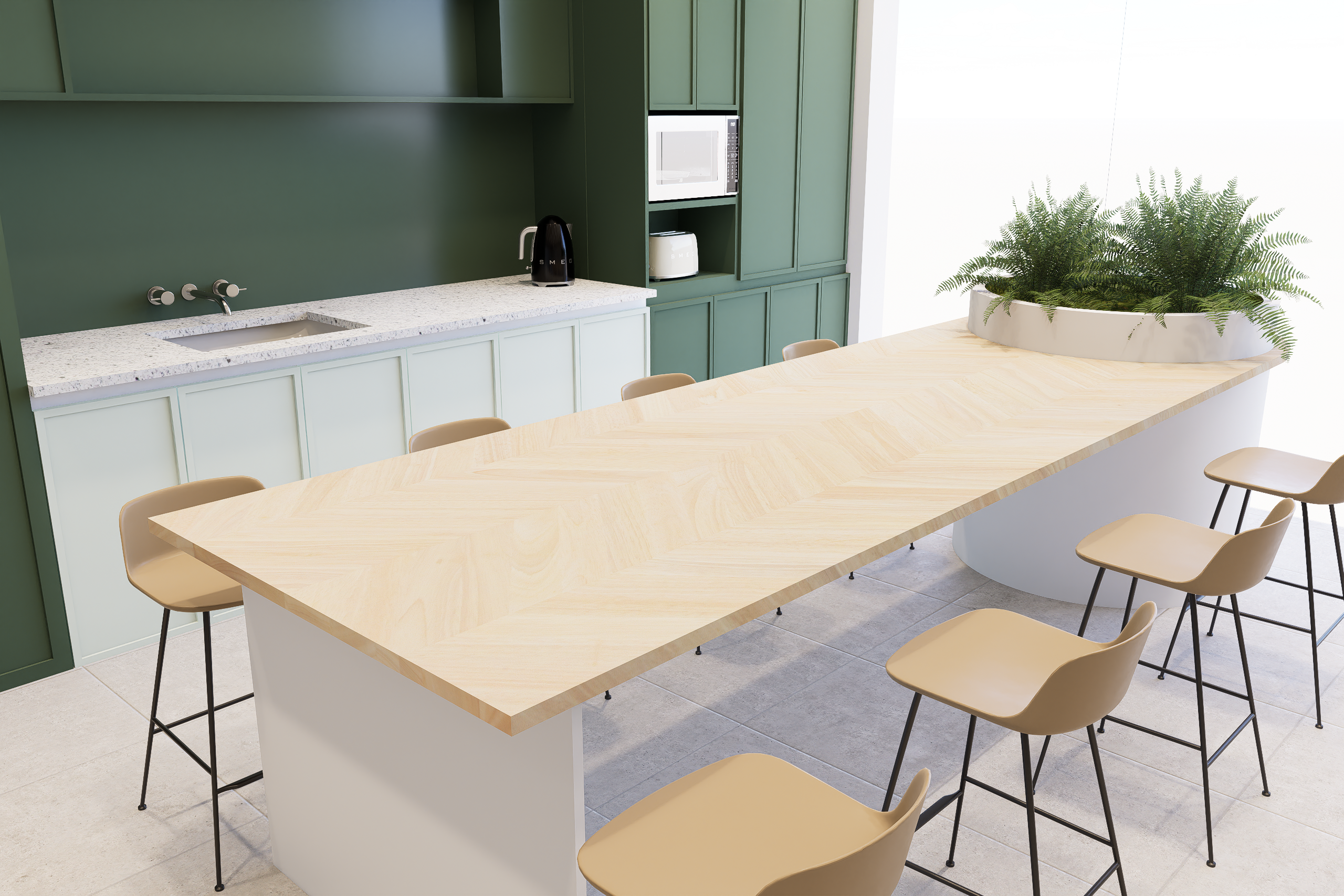
For SSR Corporation, this broader view is particularly relevant. As a wood manufacturer supplying global markets, SSR works between raw material preparation and the needs of downstream manufacturers and distributors. Products such as Finger Joint Board, Butcher Block Countertops, Decking Tiles, and Stair Parts are not isolated products. They are materials and components that need to fit into larger manufacturing and construction processes.
That means changes in the woodworking industry directly affect how SSR approaches product specifications, production processes, quality control, and product development.

SSR at IWF 2026 in Atlanta, connecting wood manufacturing with the wider woodworking industry.
Woodworking Is Becoming More Connected
One important shift across the industry is the growing connection between different stages of manufacturing.
A furniture manufacturer may be looking at automation, but automation also changes what is expected from the material entering the production line. A distributor may want a wider product range, which can influence how manufacturers develop sizes, grades, and packaging. A contractor may require consistent dimensions and moisture performance because even small variations can affect installation.
This creates a more integrated manufacturing environment.
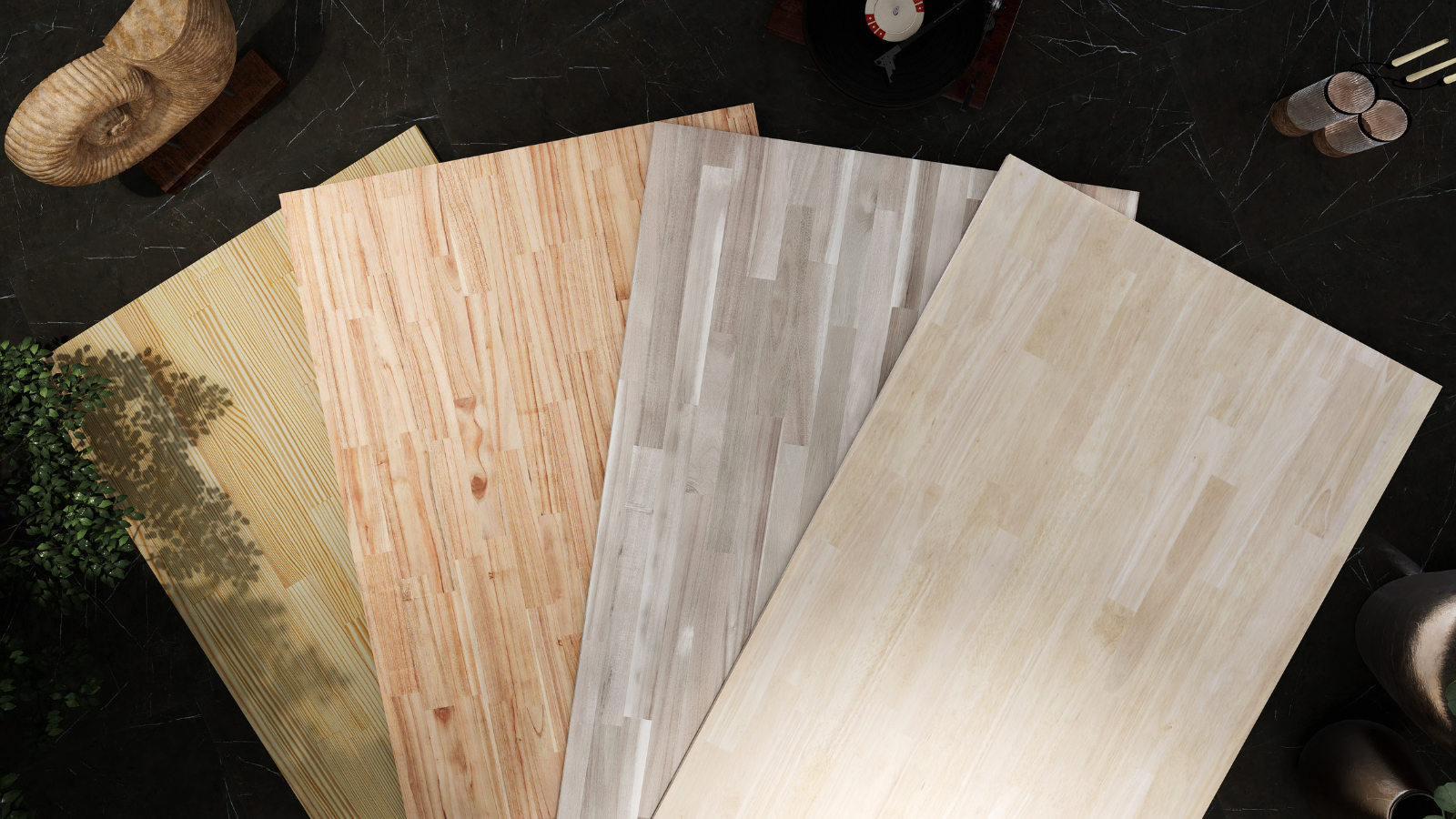
SSR sees this connection directly through its wood product programs. Finger Joint Board, for example, is not simply a finished board. It can become a component for furniture, doors, stair parts, countertops, and other applications. Its value depends not only on the species of wood, but also on dimensional stability, joint quality, moisture control, grading, and consistency from one shipment to another.
The same principle applies to SSR’s Butcher Block Countertops and Stair Parts. The manufacturing process needs to account for the final application rather than treating the wood as a generic commodity.
This is where the relationship between material manufacturing and downstream production becomes increasingly important.
Efficiency Is Becoming a Manufacturing Strategy
Efficiency in woodworking is often associated with machinery, but the larger issue is how efficiently the entire manufacturing system works.
For wood manufacturers, efficiency starts long before a finished product reaches a customer. Raw material selection, kiln drying, grading, cutting, finger jointing, sanding, machining, finishing, inspection, and packaging all contribute to the final result.
At SSR, these stages are part of a broader manufacturing process designed for export production. Rubberwood and other wood species need to be processed according to the requirements of the final product and destination market. Moisture control, for example, is not simply a technical specification. It can influence machining, dimensional stability, finishing, and the performance of the finished product.
This is why manufacturing efficiency cannot be separated from quality.
A production line that moves quickly but creates inconsistent output does not create a better manufacturing system. For global wood suppliers, the objective is to maintain production efficiency while keeping product quality stable at commercial volumes.
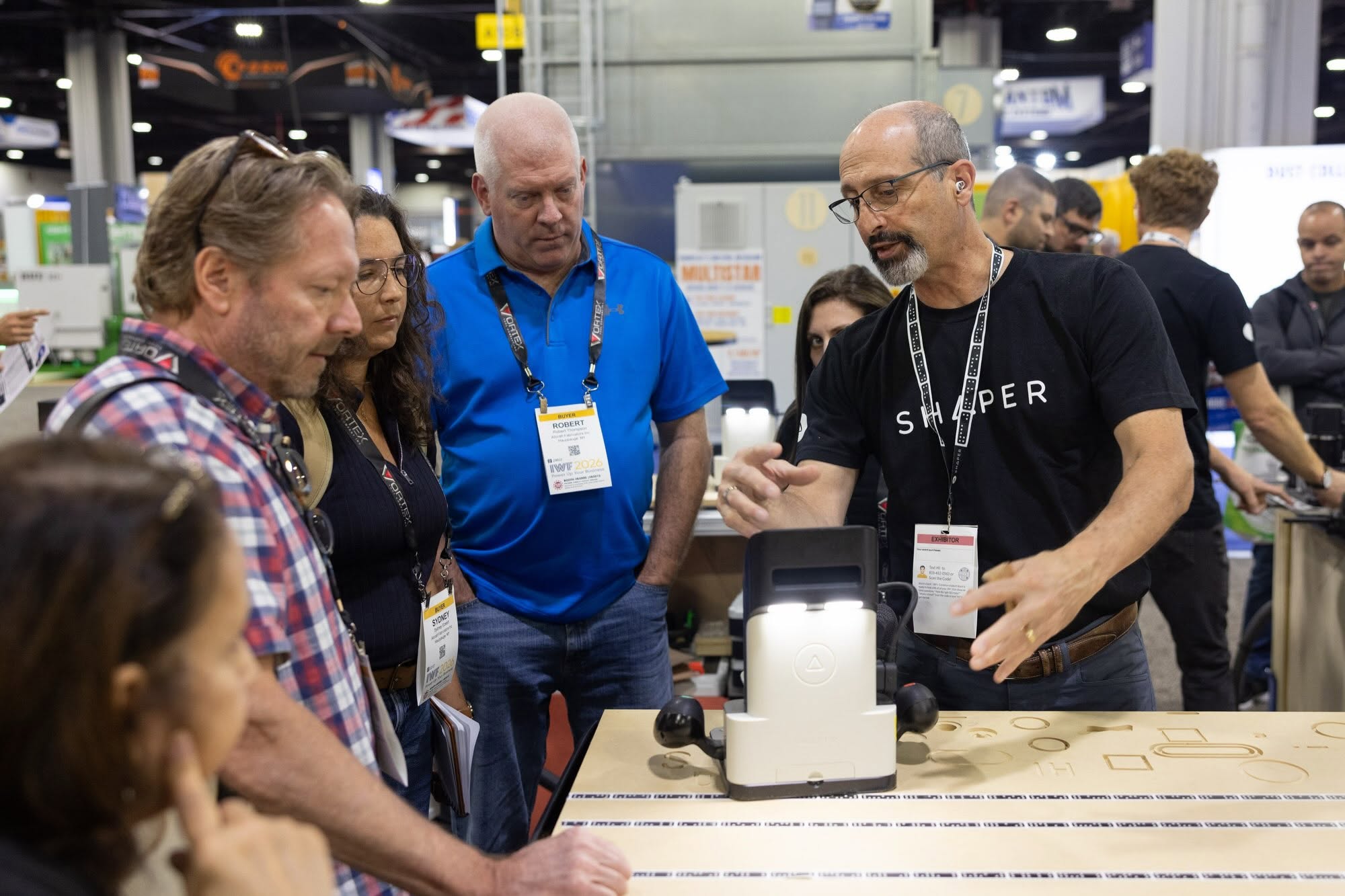
Wood processing and quality control are closely connected in export-oriented manufacturing.
Customization Is Changing the Meaning of Standardization
Another change visible across the woodworking industry is the balance between standardization and customization.
Manufacturers still need standardized processes because consistent production is essential for quality and cost control. At the same time, customers increasingly require products adapted to specific applications, dimensions, species, grades, or finishing requirements.
This creates a different definition of standardization.
The goal is not necessarily to make every product identical. It is to build a manufacturing system capable of producing different specifications consistently.
This is particularly relevant to SSR’s product categories. Finger Joint Board can be manufactured in different dimensions, wood grades, and specifications depending on the customer’s application. Stair components and countertop products can also require different thicknesses, sizes, and finishing requirements.
For SSR, this means flexibility has to exist within a controlled production system. Customization cannot come at the expense of consistency.
That balance between flexibility and repeatability is becoming increasingly important as global wood buyers work with suppliers across different markets.
Technology Is Changing the Role of the Manufacturer
Technology is changing more than production speed. It is also changing what manufacturers need to understand about their own operations.
Modern woodworking increasingly depends on better control of production data, machinery performance, material utilization, quality inspection, and process consistency. As production systems become more connected, manufacturers have greater visibility into where waste occurs, where defects originate, and where production can be improved.
For SSR, technology is part of a broader manufacturing ecosystem rather than an isolated investment.
The role of the manufacturer is gradually moving toward process management: understanding how raw materials behave, controlling production variables, maintaining consistent quality, and adapting production to different product requirements.
This is particularly important for export manufacturing, where a product may pass through several stages before reaching its final application. The manufacturer’s responsibility is therefore not simply to produce wood products, but to control the variables that determine whether those products perform consistently in another market.
The Material Still Matters
Despite the growing role of technology, wood remains at the center of the woodworking industry.
Different species behave differently. Moisture content, grain structure, density, color variation, and natural characteristics all influence how wood performs during processing and in its final application.
This is one reason material knowledge remains important even as manufacturing becomes more automated.
SSR’s experience with rubberwood and other wood species reflects this reality. Rubberwood, for example, requires appropriate drying, grading, processing, and quality control before it can become a reliable export product.
For products such as Finger Joint Board and Butcher Block Countertops, material selection directly affects appearance, stability, machining, and application.
The future of woodworking therefore, is not simply about making production more automated. It is about combining manufacturing technology with a better understanding of the material itself.
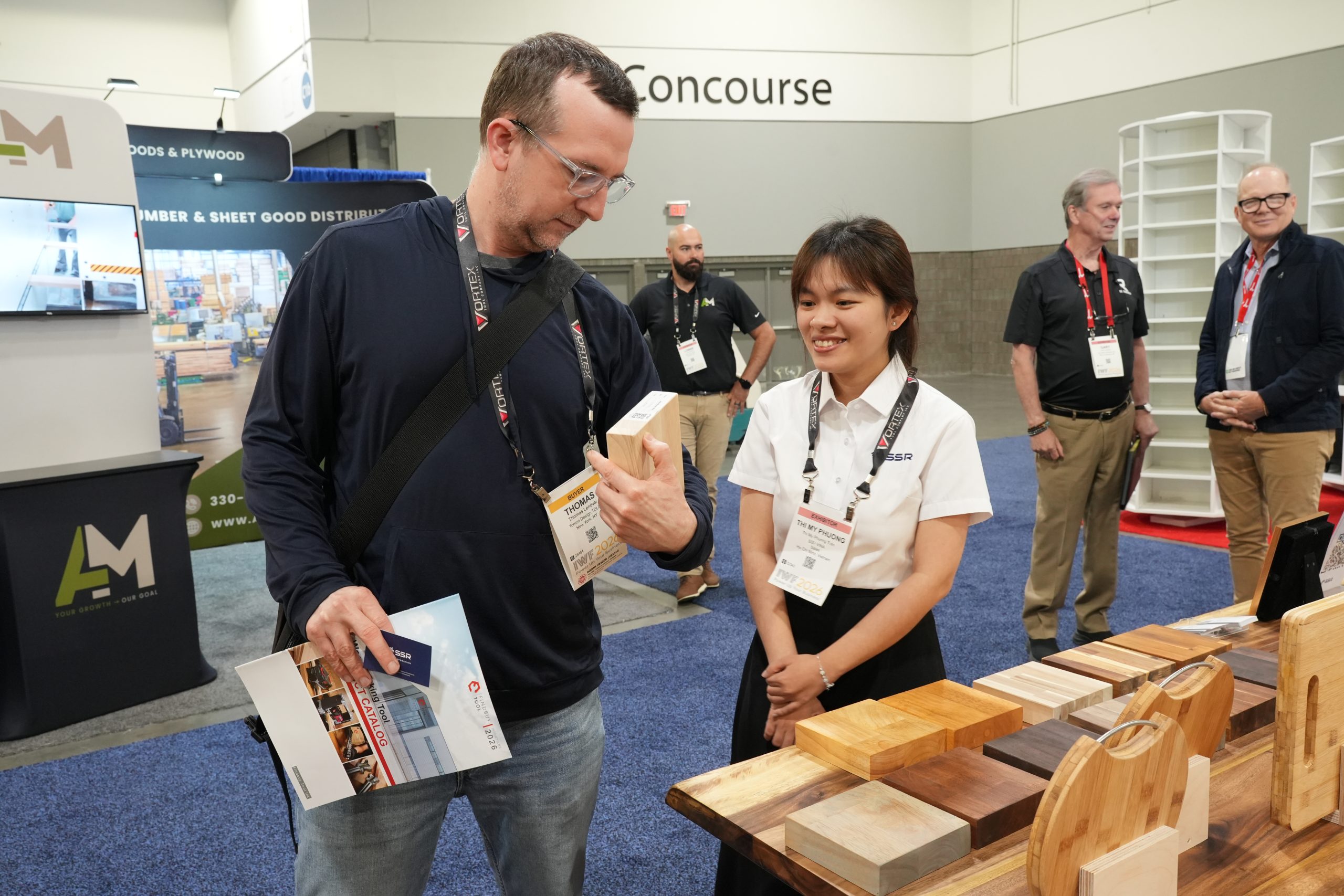
Rubberwood is processed into engineered wood products for furniture and interior applications.
Sustainability Is Becoming Part of the Production Conversation
Sustainability is also becoming more closely connected to manufacturing decisions.
For wood companies, the discussion goes beyond simply identifying a wood species as sustainable. It increasingly involves where the material comes from, how it is processed, how efficiently it is used, and how responsibly it moves through the supply chain.
SSR works with rubberwood and other plantation-grown wood materials, including FSC-certified sources. This gives sustainability a practical connection to the company’s manufacturing model rather than treating it as a separate marketing message.
Efficient material utilization also matters. Processes such as finger jointing can create value from shorter wood pieces that may not be suitable for certain solid-length applications. The result is not simply a different type of wood board, but a way to use available material more effectively while producing a standardized product for downstream manufacturing.
As sustainability requirements become more integrated into international sourcing decisions, these manufacturing considerations are likely to become increasingly important.
Global Sourcing Is Becoming More Strategic
IWF 2026 also reflected the increasingly international nature of the woodworking industry.
Wood products may be manufactured in one country, processed into furniture in another, distributed through a third market, and eventually sold to consumers somewhere else. This makes manufacturing decisions increasingly connected to international logistics, regulations, market requirements, and supply-chain planning.
For SSR, this international connection is fundamental to the business.
The company manufactures wood products in Vietnam for global markets, with products designed for applications ranging from furniture and interior components to outdoor living and construction-related uses.
Serving different markets means understanding that specifications are not always universal. Moisture requirements, product dimensions, packaging, grading, documentation, and quality expectations can vary depending on the destination and application.
Global manufacturing therefore requires more than production capacity. It requires the ability to adapt while maintaining control over the manufacturing process.
What IWF 2026 Means for SSR
For SSR, one of the most useful takeaways from IWF 2026 was seeing how closely the future of wood manufacturing is connected to the wider woodworking ecosystem.
The show reinforced the importance of developing products around real applications rather than treating wood products as standalone commodities. It also highlighted the need for manufacturers to combine material knowledge, production control, quality management, and flexibility.
These principles are already relevant to SSR’s direction.
The company’s product portfolio continues to focus on wood products that can serve different stages of the woodworking and construction value chain, from Finger Joint Board and Butcher Block Countertops to Decking Tiles and Stair Parts.
At the same time, manufacturing remains at the center of the business. Product development has to work alongside production capabilities, quality control, material availability, and the requirements of international customers.
This is where IWF 2026 becomes more than a trade-show recap for SSR. It provides a useful reference point for understanding where the industry is moving and how a Vietnamese wood manufacturer can continue developing within that changing environment.
The Future of Woodworking Is Not One-Dimensional
The woodworking industry is moving in several directions at once.
Manufacturing is becoming more efficient and technology-driven, while customers are asking for greater flexibility. Sustainability is becoming more connected to sourcing and production. Global supply chains are becoming more strategic, while material quality remains fundamental to the final product.
None of these trends exists independently.
A manufacturer cannot improve automation without considering material consistency. Customization requires production control. Sustainability is connected to material utilization and sourcing. Global competitiveness depends on both manufacturing efficiency and product reliability.
For companies operating in the wood industry, the challenge is therefore not simply to follow one trend. It is to build a manufacturing system capable of responding to several changes at the same time.
For SSR, that means continuing to develop wood products and manufacturing capabilities around the practical requirements of global markets.
Beyond IWF 2026
IWF 2026 offered a snapshot of an industry that is becoming more connected, more technology-driven, and more demanding in how materials are manufactured and used.
For SSR, the value of the event extends beyond four days in Atlanta. The conversations and observations from the show provide another perspective on how wood manufacturers can develop products, production systems, and capabilities for an increasingly global market.
The woodworking industry will continue to change. Machinery will become smarter, production systems more connected, and customers more specific about what they need.
But one thing remains unchanged: the quality of the material and the manufacturing process still determine the foundation of every wood product.
SSR — Wood Manufacturing for Global Markets.
FAQ
What was IWF 2026?
IWF 2026 was a major woodworking trade show and conference held in Atlanta, bringing together companies and professionals from across woodworking machinery, technology, materials, manufacturing, and related industries.
What did SSR showcase at IWF 2026?
SSR presented its wood manufacturing capabilities and product categories for global markets, including Finger Joint Board, Butcher Block Countertops, Decking Tiles, and Stair Parts.
Why is IWF important to the woodworking industry?
IWF provides a broad view of developments across the woodworking ecosystem, from machinery and manufacturing technology to materials, components, and finished applications.
How is the woodworking industry changing?
The industry is becoming more connected across manufacturing stages, with greater emphasis on efficiency, customization, technology, material utilization, sustainability, and global supply-chain management.
What is SSR’s role in the woodworking industry?
SSR is a Vietnam-based wood manufacturer serving global markets with wood products and components for furniture, interior, outdoor living, and other applications.