A competitive price might secure the first order. Keeping customers satisfied through the tenth shipment takes something more.
Hardwood dealers face constant pressure to maintain inventory, deliver consistent materials, and protect their margins. A delayed container or a batch of poorly dried boards can disrupt operations long after the original purchase order has been confirmed.
That makes choosing a reliable hardwood supplier one of the most important decisions for dealers, wholesalers, and distributors serving international markets.
Vietnam has developed into an important manufacturing base for solid wood products, including rubberwood and acacia panels, countertops, and furniture components. Yet manufacturing location alone does not guarantee dependable supply. The real difference lies in how materials are sourced, processed, inspected, and prepared for distribution.
Here are five capabilities hardwood dealers should examine before establishing a long-term supply partnership.
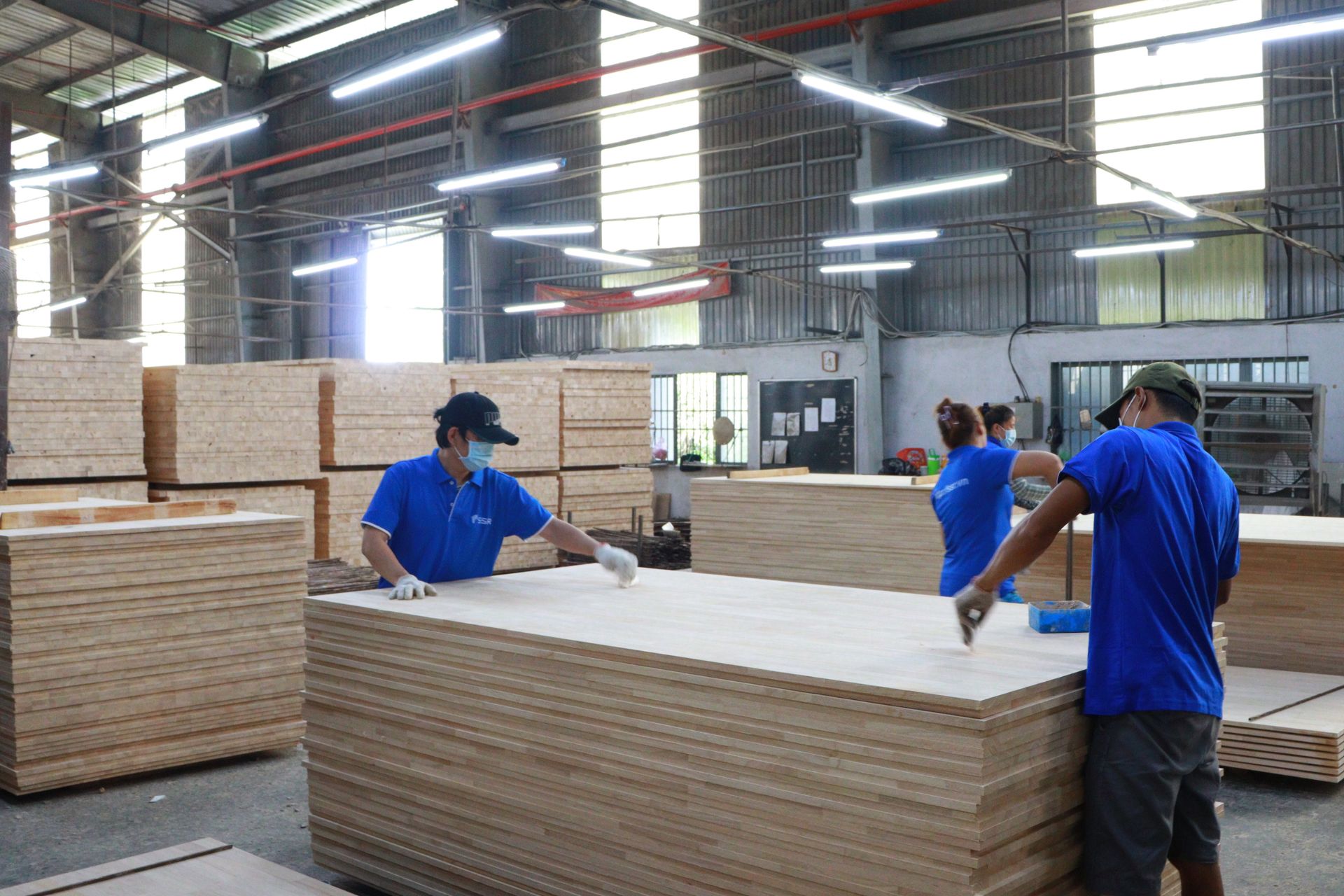
SSR Vina – A Reliable hardwood supplier in Vietnam manufacturing solid wood panels for global dealers
Consistent Hardwood Quality Starts With Moisture Control
Wood remains responsive to its environment even after processing. Changes in moisture can affect dimensions, surface flatness, and the performance of assembled products.
For hardwood dealers, this creates a challenge: materials must remain suitable for their intended applications after transportation, storage, and further processing.
A dependable hardwood supplier should establish moisture requirements before production begins, considering wood species, product construction, and destination conditions.
At SSR, kiln drying forms a core part of the manufacturing process. Rubberwood and acacia are prepared through controlled drying before moving into jointing, machining, and finishing.
Typical production moisture targets may vary by destination market, with SSR’s working specifications including:
United States: 7–9%
European markets: 8–10%
Japan and South Korea: 8–10%
Australia: 9–11%
These are program-specific manufacturing targets, not universal legal requirements. Final moisture specifications should be agreed according to the product, application, and customer requirements.
Moisture control, however, is only part of product consistency. Dealers should also review dimensional tolerances, bonding performance, surface quality, and the methods used to inspect finished boards.
SSR’s standard finger joint wood panels, for example, are available in 1220 × 2440 mm dimensions with common thickness options of 12, 15, 18, 24, and 30 mm. Product specifications can include thickness tolerances of ±0.2 mm, subject to the approved production standard.
These measurable requirements give dealers a clearer reference for receiving, evaluating, and reordering products.
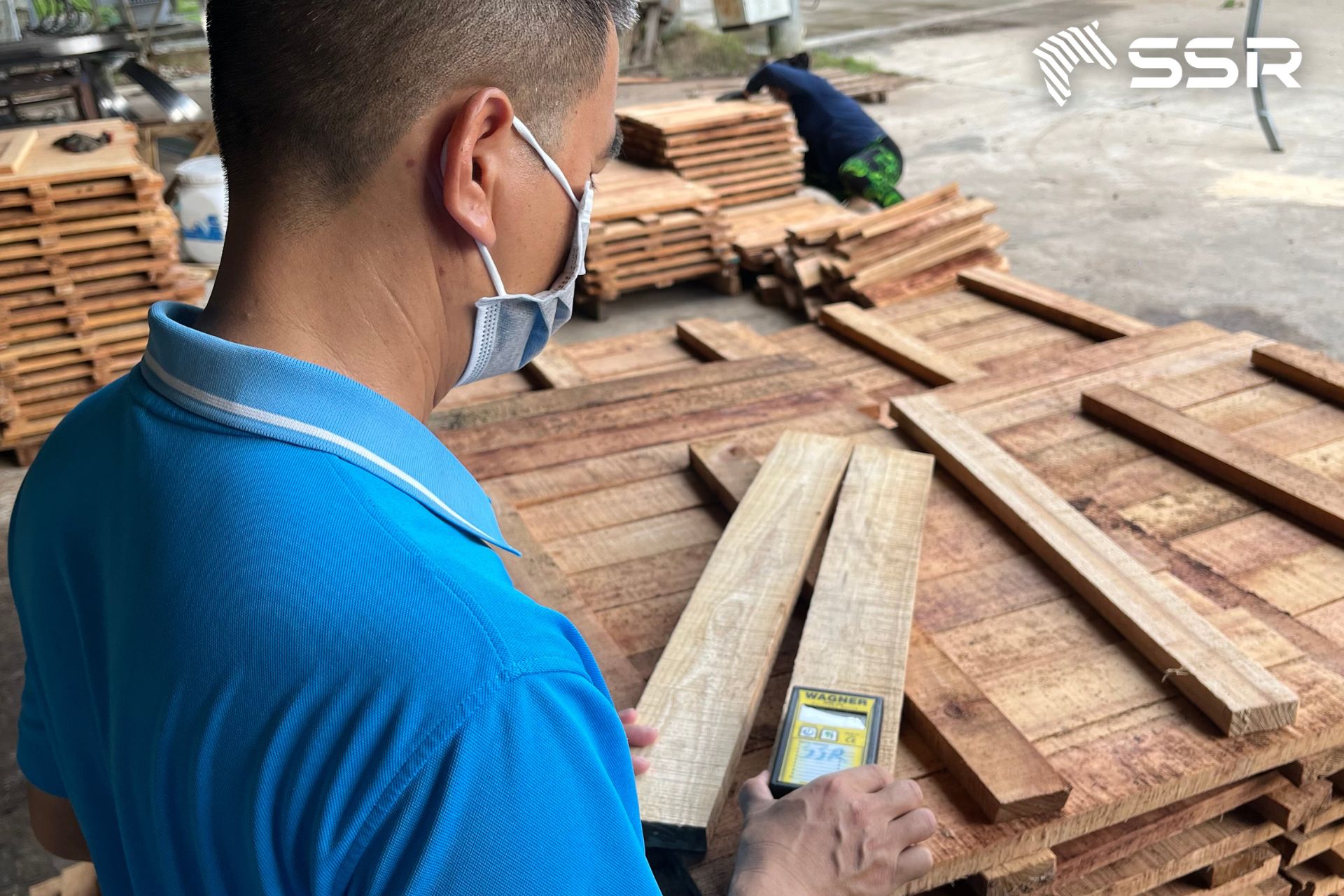
Moisture inspection helps manufacturers control material conditions before hardwood moves into jointing
Reliable Production Capacity Protects Inventory and Replenishment
An approved sample is useful, but it cannot demonstrate whether a manufacturer can fulfill repeat orders at commercial scale.
Hardwood dealers need predictable supply quantities, realistic production schedules, and the ability to replenish established product lines without major specification changes.
A reliable hardwood supplier should explain how production capacity is allocated, how incoming orders are scheduled, and which manufacturing stages are controlled directly.
SSR operates through a manufacturing network in Vietnam and Thailand, supported by four main production groups: sawmill, kiln drying, finger joint, and finishing.
The network’s reported consolidated capacity reaches approximately 18,000 m³ per month, with export operations handling more than 950 containers monthly across multiple product programs.
These figures describe SSR’s wider manufacturing and export network, not guaranteed capacity for a single hardwood product or factory. Available production slots and delivery schedules must be confirmed for each program.
SSR’s Wood Factory in Tây Ninh, Vietnam, was developed to strengthen processing capabilities through sawing, drying, jointing, shaping, and surface finishing.
For distributors, production capacity becomes valuable when it translates into dependable replenishment. Forecast visibility, order confirmation, and shipment planning all influence how efficiently inventory can be maintained.
A manufacturing partner should therefore provide more than a monthly production figure. Dealers also need visibility into lead times, minimum order quantities, and the conditions affecting future deliveries.
Learn more about SSR’s distribution supply programs.
Customizable Products Help Hardwood Dealers Serve Different Markets
Not every customer purchases hardwood for the same purpose.
A furniture manufacturer may need finger joint panels in standard dimensions, while a countertop distributor requires longer surfaces with particular edge profiles. Staircase manufacturers, meanwhile, may purchase thicker and longer boards for further machining.
A flexible hardwood supplier should be able to translate these commercial requirements into clear manufacturing specifications.
SSR works with rubberwood, acacia, and other wood species to develop products across its Wood Panel and Wood Surface programs.
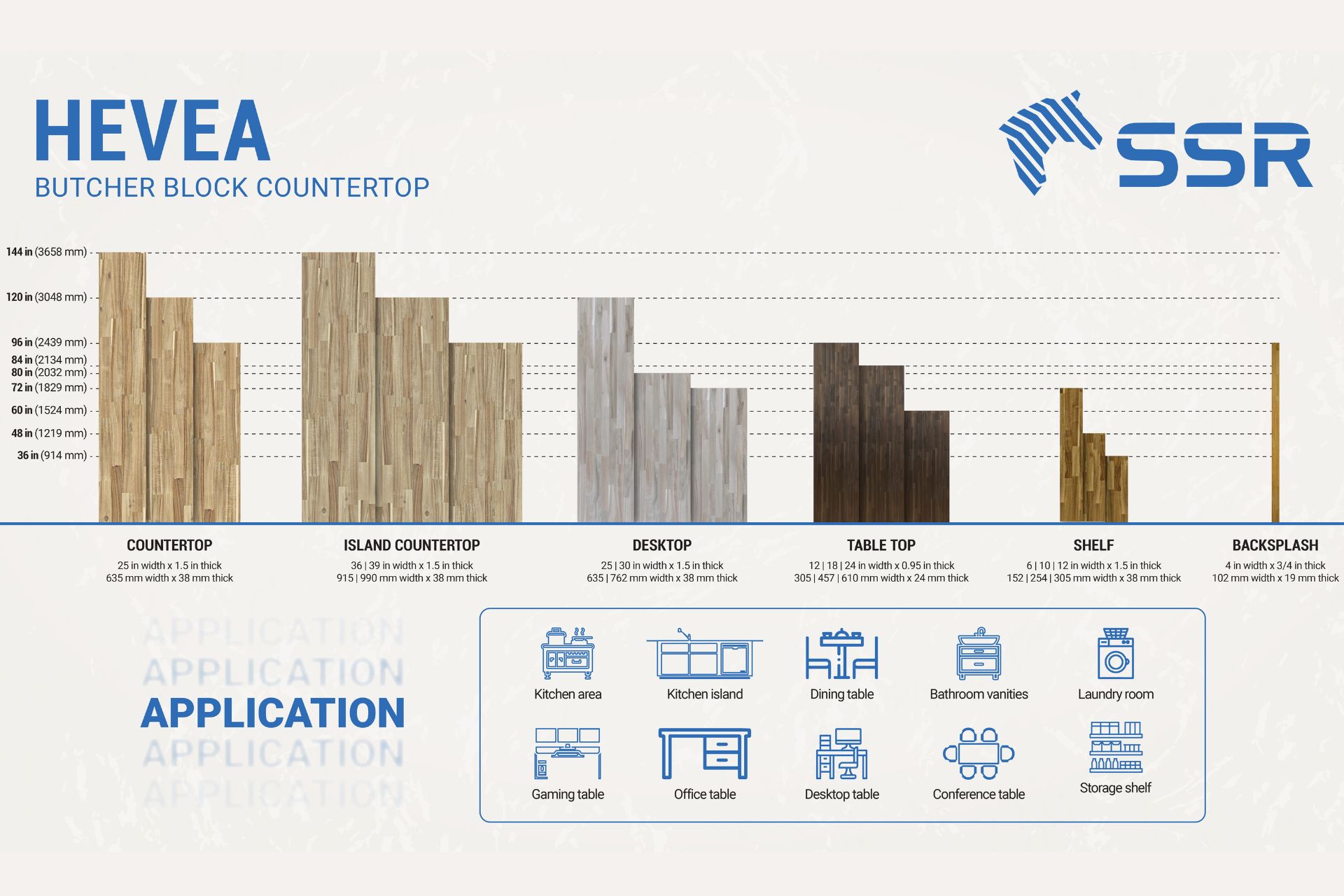
Its finger joint wood boards are available in different thicknesses and appearance grades for furniture, cabinetry, shelving, and interior applications.
Wood surfaces can also be customized according to thickness, width, length, edge profiles, and finishing requirements. Depending on the product, these may include unfinished, sanded, oiled, or UV-finished surfaces.
The ability to manufacture multiple specifications is valuable, but customization needs discipline. Material grades, appearance limits, and approved samples should be clearly documented before volume production begins.
Otherwise, changing a product specification can introduce unnecessary variation between orders. We support OEM and ODM development through technical review, sampling, and approved production references, helping distribution partners establish product ranges tailored to their markets.
Vietnam hardwood manufacturer producing customized acacia and rubberwood panels for distributors.
Responsible Wood Sourcing Requires Traceability and Documentation
International hardwood distribution increasingly involves more than confirming the wood species and purchase price.
Retailers and importers may require documentation covering material origin, product identification, manufacturing records, and relevant certification claims.
A trustworthy hardwood supplier should be able to explain where materials originate and how they are managed throughout production.
Forest Stewardship Council (FSC), Chain of Custody certification establishes requirements for identifying and tracking eligible forest-based materials through processing and distribution. FSC claims also require the appropriate certification scope and supporting documentation.
Product-specific requirements vary between markets. In the United States, for example, EPA TSCA Title VI regulates formaldehyde emissions from certain composite wood products, including hardwood plywood, MDF, and particleboard. Solid wood panels are not automatically covered by the same rules, making correct product classification essential.
SSR works with plantation-based rubberwood and acacia supply sources in Vietnam, alongside manufacturing and quality management procedures supporting international orders.
For dealers, the practical question is whether documentation can be matched to the actual goods purchased. Certification status, product scope, batch information, and shipment records should be verified before commercial claims are made.
A reliable hardwood supplier should treat documentation as part of routine supply operations rather than something prepared only when a customer requests it.

Material identification and documented sourcing help hardwood distributors manage traceability requirements across international supply chains.
Export-Ready Packaging and Communication Complete the Supply Chain
Manufacturing quality means little if products arrive damaged or shipments cannot be coordinated with customer demand.
Hardwood dealers must account for international freight, warehousing, container unloading, and subsequent delivery. Heavy wood panels and countertops are particularly vulnerable to edge and corner damage when packaging is inadequate.
An experienced hardwood supplier should understand how products will move through the distribution network before designing the packing method. SSR supports export packaging configurations that may include carton edge protection, plastic wrapping, customized labels, pallet stacking, and additional strapping or wrapping.
Packaging requirements differ depending on whether products are destined for wholesale warehouses, retail stores, or e-commerce fulfillment. Clear communication matters just as much as protective packaging. Dealers need accurate order confirmations, production updates, shipment documentation, and early notice of changes that could affect delivery.
SSR develops distribution programs around agreed product specifications, container planning, and reorder requirements. The objective is to maintain continuity between the approved product, the manufactured shipment, and future replenishment orders.
Good communication cannot eliminate every logistics risk. It can, however, help importers make decisions before delays or inconsistencies become more expensive problems.
Made in Vietnam, Built for Global Hardwood Distribution
The right hardwood supplier does more than manufacture products to an approved specification. Consistent quality, dependable production, customization, traceability, and export coordination must work together throughout the supply relationship.
Vietnam offers established manufacturing capabilities for plantation-based hardwood products, with rubberwood and acacia supporting a wide range of furniture, interior, and home improvement applications.
SSR combines its Vietnam manufacturing operations with product development and distribution support for international dealers, wholesalers, importers, and retail partners.
Its Wood Panel and Wood Surface programs are developed around customer requirements, with attention to manufacturing control and repeat-order consistency.
Dealers evaluating a new hardwood supplier should begin with the product specification, expected volume, destination market, and distribution requirements. These details provide a stronger foundation for comparing manufacturers than price quotations alone.
Looking for a hardwood manufacturing partner in Vietnam?
Contact SSR to discuss wholesale hardwood panels, wood surfaces, manufacturing specifications, and supply programs for your market.
Frequently Asked Questions
What should hardwood dealers look for in a reliable supplier?
Hardwood dealers should evaluate product quality, moisture control, manufacturing capacity, customization, material traceability, and export capabilities. Consistency between shipments is especially important when maintaining repeat inventory.
Why choose a hardwood manufacturer in Vietnam?
Vietnam has established wood processing capabilities and access to plantation-based species such as rubberwood and acacia. Manufacturers can supply solid wood panels, countertops, furniture components, and customized products for international distribution.
What is the difference between a hardwood supplier and a hardwood manufacturer?
A hardwood supplier provides wood products to customers and may operate as a trader, distributor, or manufacturer. A hardwood manufacturer directly processes materials into products through operations such as sawing, kiln drying, jointing, machining, and finishing. Some companies, including SSR, combine manufacturing capabilities with international supply services.
Editorial links and image recommendations
For publication, the strongest internal links are SSR Wood Panel, Finger Joint Wood Board, For Distributors, and Inside Manufacturing: Quality Control. These connect the article’s manufacturing discussion to relevant product and commercial pages.
The external links to FSC and the U.S. EPA are included in the relevant article sections. They provide authoritative technical support without diverting the article toward unrelated industry news.
For photography, I recommend replacing the illustrative images with original SSR factory images, particularly the kiln drying, finger joint, material inspection, and packaging stages. Real manufacturing photography will strengthen the article’s credibility and provide more meaningful evidence than generic AI-generated factory visuals.