
The U.S. home improvement market is not giving suppliers a simple growth-or-decline story in 2026. Homeowners are still spending on their houses, but the way they commit money to projects appears to be changing as higher borrowing costs, housing uncertainty and more cautious household budgets influence renovation decisions.
That distinction was unusually clear in recent comments from Lowe’s Chairman and CEO Marvin Ellison. Speaking at the Goldman Sachs Global Consumer and Retail Conference on September 15, Ellison described homeowners as taking smaller and more deliberate projects rather than committing as frequently to large discretionary renovations such as complete kitchens and bathrooms. He also said Lowe’s expected the second half of 2026 to look broadly similar to the first rather than assuming a sudden housing recovery.

U.S. home improvement market and residential renovation demand in 2026
For retailers, distributors and home improvement suppliers, that may be the more useful signal. Demand has not simply left the market; part of it is being divided into smaller projects, moved toward replacement needs or postponed until consumers feel more comfortable making larger commitments.
Home Improvement Demand Is Becoming More Selective
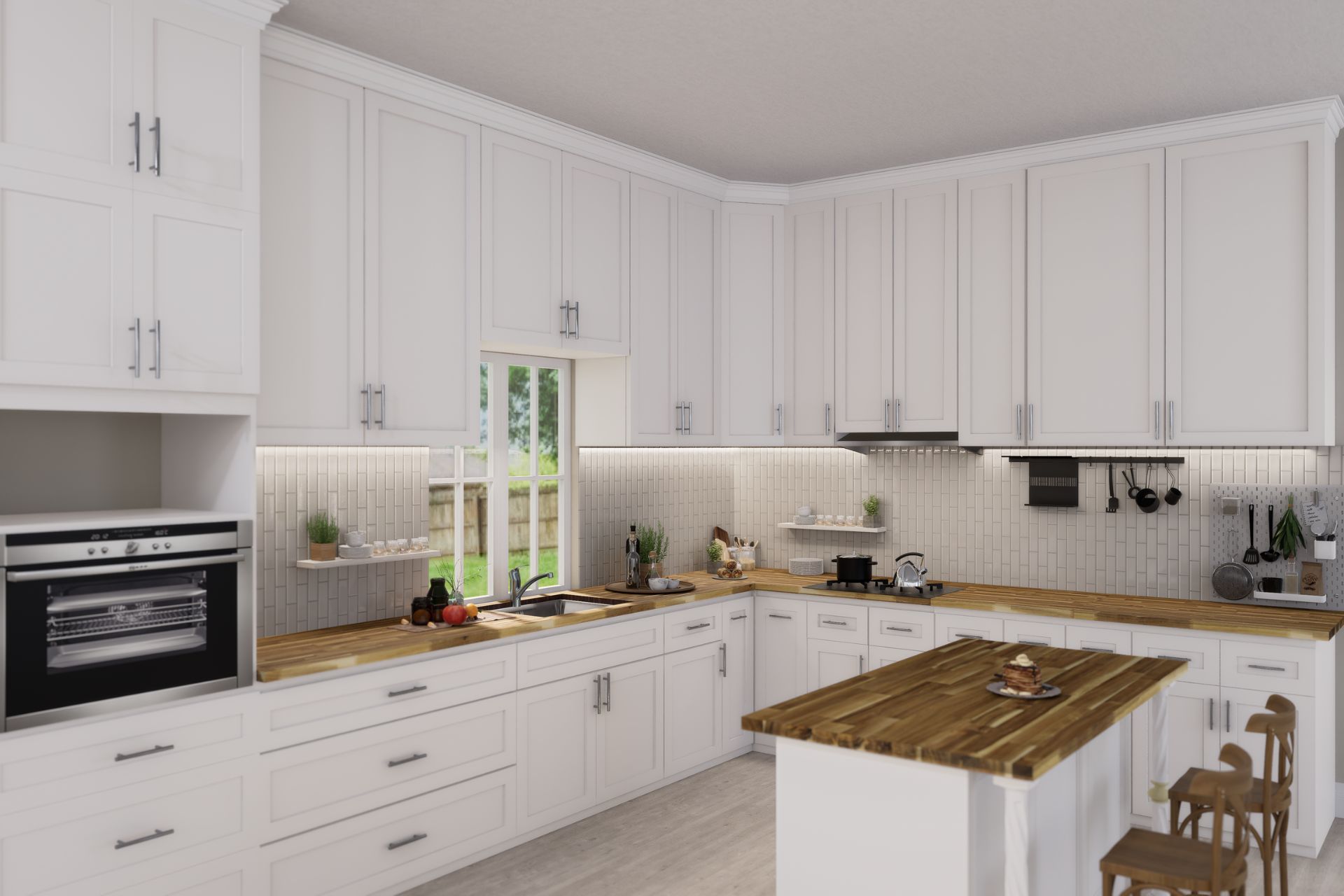
A full kitchen renovation can involve cabinetry, countertops, flooring, appliances, plumbing, lighting and installation at the same time. When consumers become more cautious, projects of that size are easier to delay than a damaged surface, an outdated vanity or a component that needs replacement.
Ellison’s September comments suggest that homeowners are increasingly breaking some of those larger projects into more manageable decisions. He specifically discussed customers still coming into Lowe’s for products such as countertops and cabinets even when the activity does not amount to the same level of complete kitchen renovation seen in stronger housing cycles.
That matters for the home improvement products industry because project size can change product demand without eliminating it. A consumer who postpones a major renovation may still replace a countertop, repaint cabinetry, install a new vanity or address a maintenance issue that cannot wait.

Smaller home improvement project with kitchen countertop replacement
Lowe’s Numbers Show Where the Pressure Is
Lowe’s second-quarter results offer another view of that divide. The company reported $26.0 billion in sales and comparable sales growth of 0.2%, while online sales increased 15.7%. Pro and Home Services performed strongly enough to help offset continued pressure on discretionary DIY spending.
The company consequently moved its full-year comparable-sales outlook from a previous range of flat to 2% growth to approximately flat. Lowe’s said current demand trends contributed to that revision.
According to Lowe’s second-quarter 2026 results, the home improvement market continues to show a clear split between discretionary purchases and more necessary home projects.
The category details are arguably more useful to suppliers than the headline sales figure. Lowe’s reported strength in areas including lumber, millwork, rough plumbing and electrical, while Kitchen and Bath showed demand around repair and refresh projects such as vanities, bathing products and toilets.
Its survey of core Pro customers also indicated steady backlogs but smaller homeowner projects increasingly focused on repair and maintenance rather than larger remodeling jobs. This suggests that current home improvement demand is being supported by a mix of necessary work and smaller planned upgrades.
Repair, Refresh and Replacement Are Carrying More Weight
The current environment is creating what looks increasingly like a two-speed home improvement market. Necessity-driven work continues because homes still need to function, while larger discretionary renovations are more sensitive to financing costs, housing turnover and consumer confidence.
Replacement activity can therefore behave differently from complete remodeling. A worn kitchen countertop, damaged cabinet component, aging work surface or failing bathroom element does not always require the homeowner to redesign an entire room.
Lowe’s Home Services business provides another indication of that behavior. During the second quarter, Ellison said the company continued to see engagement from do-it-for-me customers, especially around replacement projects, while the company positioned itself to capture larger projects when homeowners were ready to pursue them again.

U.S. home improvement repair and replacement project planningFor home improvement suppliers, the distinction is important. Products that can fit both a full renovation and a selective upgrade may face a different demand environment from products whose purchase depends almost entirely on a large remodeling commitment.
The Remodeling Market Is Slowing, Not Disappearing
Independent housing research points in a similar direction. The Harvard Joint Center for Housing Studies expects annual homeowner spending on improvements and repairs to continue losing momentum through mid-2027, with year-over-year growth slowing to about 0.5% in the second quarter of 2027.
Even at that slower pace, the Center projects approximately $519 billion in spending through mid-2027. Its researchers connect the slowdown to softer remodeling permits, building-product retail activity, reduced housing starts and low levels of home sales.
The important word here is slower, rather than absent. The Harvard Joint Center for Housing Studies remodeling outlook describes a large U.S. improvement-and-repair market that is losing momentum, not a market in which homeowners have stopped working on their properties.
For businesses selling wholesale home improvement products, that distinction matters. A slower home improvement market with smaller average project scopes can favor a different assortment strategy from a market driven by rapid housing turnover and complete renovation packages.
What Changes When a Full Remodel Becomes Several Smaller Projects?
Retail programs may need to make products easier to purchase independently. Countertops provide a practical example because a homeowner can change a kitchen surface without necessarily replacing every cabinet, appliance and finish in the room.
The same logic can apply to cabinet fronts, shelves, panels, work surfaces, bathroom vanities and other interior finishing products. Instead of depending only on complete-room renovation, these categories can participate in repair, refresh and partial replacement projects.
This does not mean the market should be reduced to inexpensive DIY products. Ellison characterized Lowe’s customers as financially healthy overall but more cautious about large discretionary purchases, suggesting that the issue is partly willingness and timing rather than simply the ability to spend.
That can make specification, presentation and availability increasingly important. A product that fits familiar U.S. dimensions, arrives in a clear range of finishes and can move through retail, distribution or professional channels may be easier to incorporate into a smaller renovation decision.
The Supplier Question Is Moving Beyond Volume Alone
Slower demand often pushes manufacturers to focus first on volume. In the U.S. home improvement market, however, volume alone no longer tells the full story because demand is spread across DIY consumers, contractors, retailers, distributors and project-based buyers, each with different purchasing priorities.
The market itself remains substantial, but the way spending moves through it is changing. Professional contractors are taking a larger role in many home improvement and remodeling projects, particularly when the work involves installation, technical requirements or more complex residential upgrades. That shift is changing what buyers expect from the suppliers behind the products.
When products move through professional or multi-step distribution channels, consistency becomes more important. Contractors and distributors often need the same dimensions, finishes and specifications available repeatedly, while retailers must balance consumer choice with manageable inventory and predictable replenishment.
That difference becomes especially clear across remodeling channels. Retail programs may prioritize consumer-ready packaging, clear product differentiation and standardized sizes, while distributors often look more closely at pallet efficiency, stock availability and the ability to serve several downstream customers from the same product range. Project buyers may place even greater weight on repeatability, technical consistency and confidence that the same specification can be reordered later.
Rather than treating those requirements as separate issues, successful home improvement suppliers increasingly have to consider them as part of one product program. Manufacturing capacity still matters, but it has to work together with assortment planning, packaging, lead times, specification control and supply continuity.
Inventory strategy is becoming particularly important in the current U.S. market. Large discretionary remodeling projects remain under pressure, which can make retailers and importers more cautious about carrying too many slow-moving SKUs. Buyers still want enough variety to cover different applications, but unnecessary complexity can create additional inventory risk.

Suppliers may need product programs that can serve retail, distribution and professional channels across different renovation sizes.
Importers face a related challenge because purchasing decisions are made months before merchandise reaches a U.S. store or warehouse. SSR’s product programs for importers are developed around residential applications and repeat supply requirements rather than treating each item as an isolated export product.
That approach becomes more relevant when the market is fragmented across repair, refresh, replacement and full-remodel projects. Buyers may need a range that can serve several project sizes rather than relying on one type of renovation demand.
Countertops Illustrate the Opportunity Clearly
Wood countertops are one example of a product that can sit between those different project types. They can be specified as part of an entirely new kitchen, but they can also be used for an island update, laundry area, work surface, breakfast bar or selective countertop replacement.
For retailers and distributors, that creates multiple possible selling occasions from the same basic category. Species, dimensions, edge profiles, finishes and packaging can then be organized around the customer and channel rather than assuming that every purchase comes from a complete kitchen renovation.
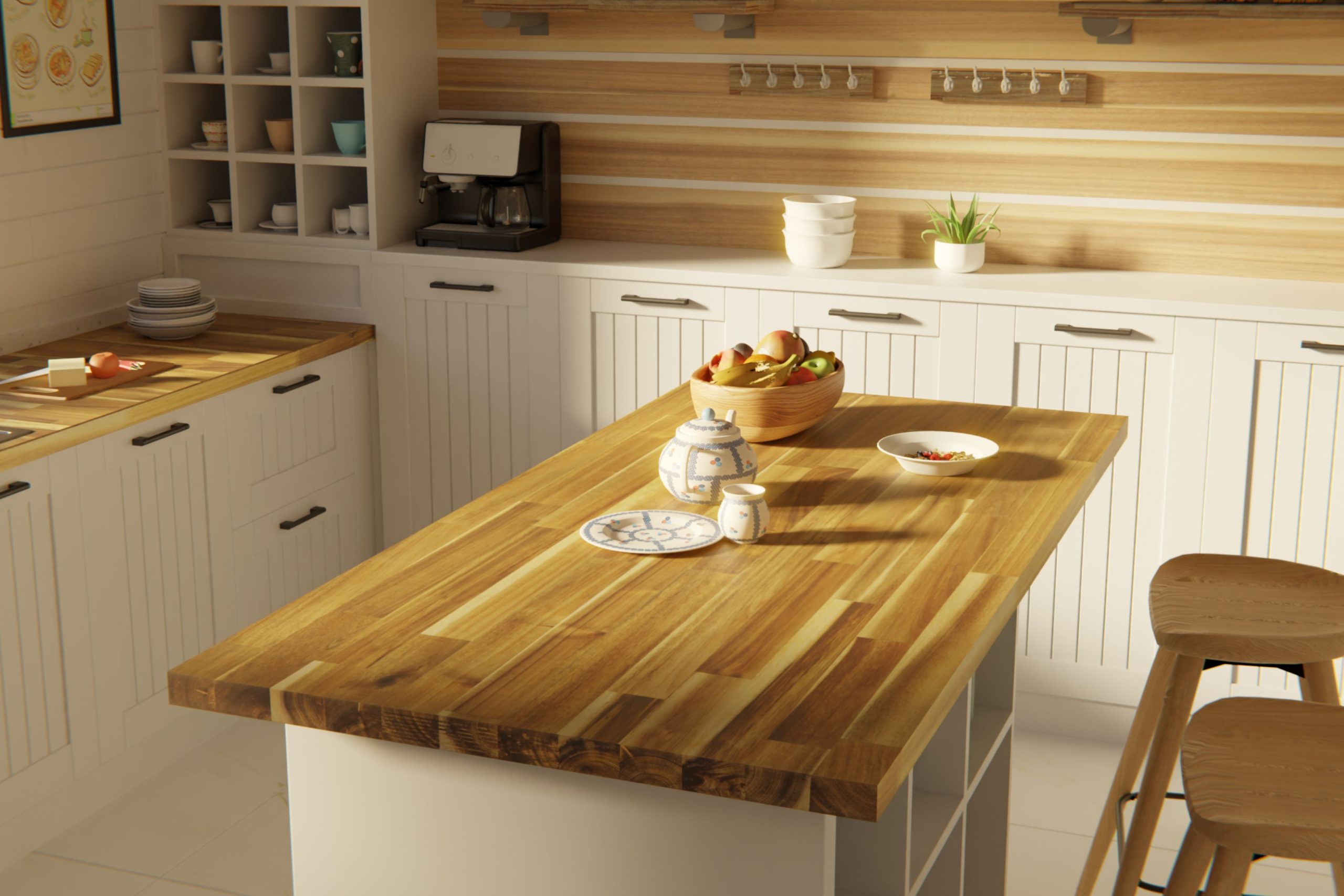
SSR Butcher block countertop for U.S. home improvement and kitchen renovation
The commercial relevance in the current market is not simply manufacturing volume. It is the ability to configure products around applications, specifications and repeat supply requirements.
Working With SSR on Home Improvement Programs
As U.S. home improvement demand becomes more fragmented across full renovations, selective upgrades and replacement projects, retailers, distributors and importers may need product programs that can respond to more than one type of customer need. SSR works with partners to develop wood product programs around market specifications, channel requirements and repeat supply, covering categories such as butcher block countertops, wood panels, shelving, cabinet components and other residential wood applications.
With manufacturing and supply operations in Vietnam and Thailand, SSR can support both established programs and new home improvement products being developed for the U.S. market. Partners can work with SSR on dimensions, wood species, finishes, packaging and production requirements based on the intended retail, distribution or project application. To explore a program for your market, contact SSR or review our wood surface programs.
The U.S. home improvement market remains too large to describe with a single demand number. In 2026, the more meaningful question may be not whether Americans are still improving their homes, but how much of the home they are willing to improve at one time.
A Gradual Recovery Is the More Useful Working Assumption
Nothing in Ellison’s latest outlook suggests that suppliers should plan around an immediate remodeling boom. Lowe’s is operating under the assumption that the near-term housing environment remains difficult, while continuing to invest in Pro customers, home services, online channels and categories that can gain share without waiting for the broader market to recover.
For the home improvement supply chain, that may be the most practical takeaway. Businesses can prepare for eventual improvement in larger discretionary projects while still building product programs around the repair, replacement and selective-upgrade demand that exists today.
The U.S. market remains too large to describe with a single demand number. In 2026, the more meaningful question may be not whether Americans are still improving their homes, but how much of the home they are willing to improve at one time.